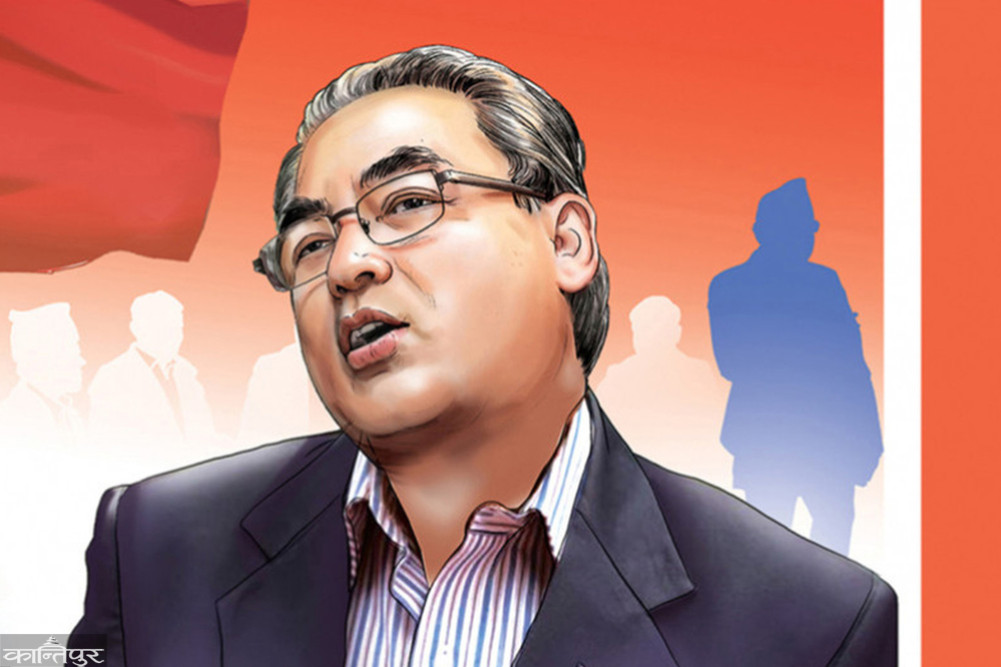
Thapa had supported Oli when the power struggle between Dahal and Oli escalated in the then NCP. Oli has been treating him as a 'confidant' due to his quiet nature but his unwavering adherence to the party's official line.
We use Google Cloud Translation Services. Google requires we provide the following disclaimer relating to use of this service:
This service may contain translations powered by Google. Google disclaims all warranties related to the translations, expressed or implied, including any warranties of accuracy, reliability, and any implied warranties of merchantability, fitness for a particular purpose, and noninfringement.
UML has recommended Vice President Ram Bahadur Thapa (Badal) among the 16 MPs for the proportional representation in the House of Representatives. Thapa is the number one choice of Chairman KP Sharma for Oli in the men's category of the indigenous/tribal 'cluster'.
The UML Central Secretariat has already finalized the names of 16 proportional MPs for Thapa and sent them to the Election Commission on Saturday. UML has won 9 seats directly, and has got 16 MPs through proportional representation. Thapa is the most senior leader among the 16 proportional MPs of UML. According to a UML leader, Thapa is likely to be the leader of the party's parliamentary party.
Thapa, a favorite of then Chairman Pushpa Kamal Dahal while in the Maoists, became equally beloved by Oli after joining the UML. There are some specific reasons why Oli likes him.
In the 2074 BS representative election, an electoral alliance was formed between UML and Maoists to unify the party. UML Chairman Oli and Maoist Chairman Dahal were engaged in a joint election campaign. Dahal's son Prakash passed away suddenly on Mangsir 3, 2074 BS. The election campaign continued even while Dahal was in mourning. Dahal deployed Thapa alongside Oli in that campaign. The rift between Oli and Thapa grew at that time. Oli was impressed by Thapa, who spoke little but did not deviate from the party's official line.
In 2075, the Nepal Communist Party was formed after the UML and Maoists united. Oli and Dahal became the two chairmen of the NCP. The UML and Maoists, which were formed together, won 174 seats in the parliament. In 2074, Thapa became a member of the National Assembly.
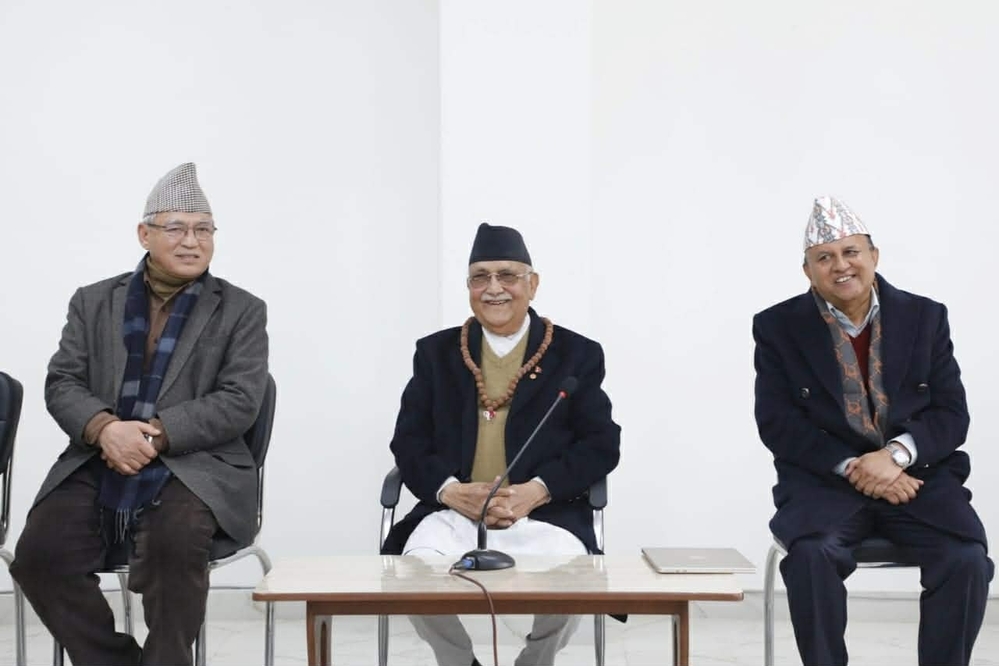
Although there was an agreement that Oli would lead the government and Dahal would run the party, it did not last long. Less than a year after the formation of the NCP, a power struggle began between Oli and Dahal. When their power struggle reached the point of displacing each other, Thapa, who was in the central secretariat, supported Oli. At that time, Oli was the Prime Minister and Thapa was the Home Minister. Home Minister Thapa worked in the confidence of the then Prime Minister Oli. This was the second major influence Thapa had on Oli.
Oli was in a minority in the then 9-member central secretariat of the NCP. He was supported by leaders Ishwor Pokharel, Ram Bahadur Thapa and the then general secretary Bishnu Poudel. Madhav Kumar Nepal and Jhalanath Khanal, Bamdev Gautam and Narayan Kaji Shrestha stood in Dahal's favor.
After 2077 Poush, when the dispute reached its peak and the party was on the verge of splitting, many former Maoist leaders sided with Dahal, but Thapa chose Oli. After Thapa emerged as the charioteer of the crisis, Oli has been advancing.
Even though the UML suffered a major defeat in the elections held on Falgun 21, Oli has been advancing Thapa as the leader of the parliamentary party. When the power struggle between Oli and Dahal was at its peak, the Supreme Court heard a petition in February 2018 and restored the UML and Maoists to their previous status. While leaders with Maoist backgrounds, including Dev Gurung and Pampha Bhusal, joined the Maoists, Thapa remained in the UML. The main reason for his stay in the UML was his close relationship with Oli.
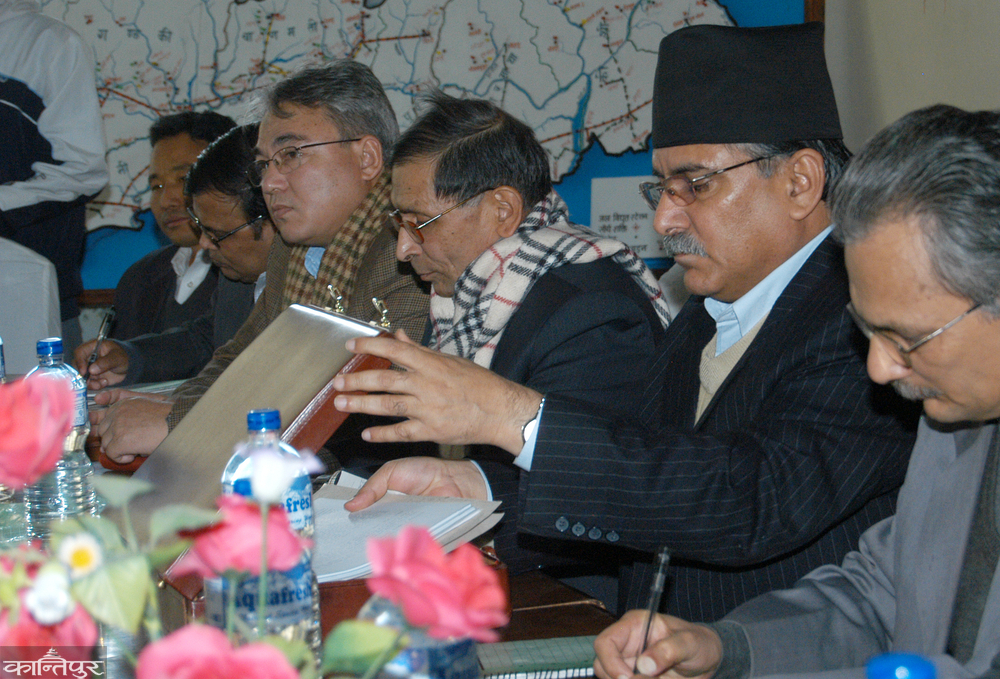
At the 11th UML general convention last Bhadra, it was possible for a leader with a former Maoist background to reach the leadership. But Oli instructed the general convention delegates to ‘use their power’ to win Thapa and another leader Lekhraj Bhatt. Thapa was elected vice-president and Bhatt deputy general secretary.
Whether he was in the Maoists or in the UML, Thapa openly supports the establishment. He was with Oli when the NCP was in power. Thapa stands in favor of establishment when there was internal conflict in the UML. This old habit of his continued until the 11th general convention of UML in Bhadra.
Thapa was the Home Minister in Oli's cabinet from 2077 and until Asad 2078. After the 2064 Constituent Assembly election, Maoist Chairman Dahal became the Prime Minister in Asad 2065 and Thapa became the Defense Minister.
In Baisakh 2066, the Maoist-led government had decided to dismiss the then Army Chief Rukmangat Katawal and appoint Force Chief Kul Bahadur Khadka as the Army Chief. The then Defense Minister Thapa had taken the proposal to take action against Katawal to the cabinet meeting. President Ram Baran Yadav overturned that decision, and Katawal was spared.
After a dispute erupted between the government and the Nepal Army, Maoist Chairman and then Prime Minister Dahal resigned on Baisakh 21, 2066.
At that time, after Maoist Chairman Dahal and Vice Chairman Baburam Bhattarai moved forward with the work of drafting a constitution from the Constituent Assembly, the other Vice Chairman Mohan Baidya's side had a different opinion. In that internal conflict, Thapa had sided with Baidya. On 30 June 2069, the CPN (Maoist) was formed under the leadership of Mohan Baidya in Boudha, Kathmandu. A week later, the Unified CPN (Maoist) was formally divided in Ashar.
In 2073, after a disagreement with Baidya in Jestha, another party was formed under the leadership of Thapa. Then, on the eve of the 2074 elections, Thapa, Dev Gurung, and Pampha Bhusal returned to the Maoists. After 2077 Falgun, Thapa remained in the UML, while other leaders remained in the Maoists.
Thapa, who was born in 2012, went to Russia (then Soviet Union) during the Panchayat period to study higher education in agriculture. He returned home without completing his studies and started full-time politics. After 2038, he joined the then NCP (Mashal) and became active in politics. He was famous as Badal in underground life. Before the Maoists started the armed war in 2052 Falgun, Rukum and Rolpa were their operational areas. He played a role in laying the foundation for the war. At that time, there was widespread talk of 'Badal' in Rukum and Rolpa saying that he had studied 'military science in Russia'. 'Badal' was a role model for those who wanted to become Maoist fighters. He was a quiet man but could clearly state the party's line, so he made an impression on Rukum and Rolpa.