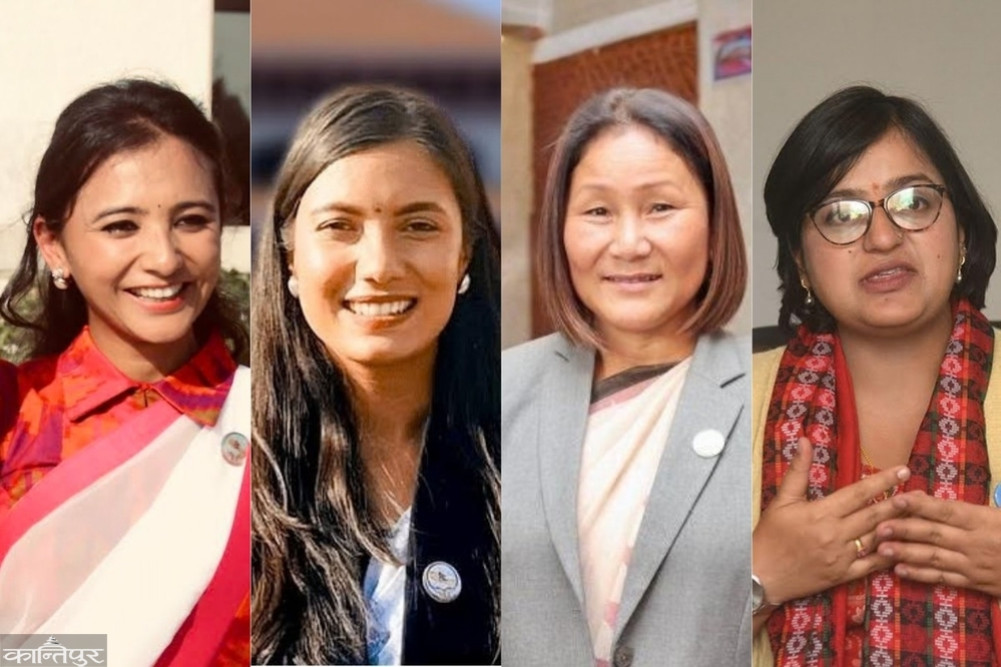
In the direct election, 11 percent of the candidates were women, 8 percent of the winners were women, and only one candidate was elected from the Congress, apart from the Rashtriya Swayamsevak Sangh (RSS).
We use Google Cloud Translation Services. Google requires we provide the following disclaimer relating to use of this service:
This service may contain translations powered by Google. Google disclaims all warranties related to the translations, expressed or implied, including any warranties of accuracy, reliability, and any implied warranties of merchantability, fitness for a particular purpose, and noninfringement.
In the House of Representatives elections, 14 women have been elected through the direct system. 13 from the Rashtriya Swayamsevak Sangh (RSS) and one woman from the Nepali Congress (NCS) won. Out of 3,406 candidates in the direct system, 395 (11 percent) were women. Among the major parties, the Rashtriya Swayamsevak Sangh (RSS) gave tickets to 16 women, UML and NCP (CPN) gave tickets to 12 women, and Congress (NCS) gave tickets to 11 women. The share of women who won directly is about 8 percent.
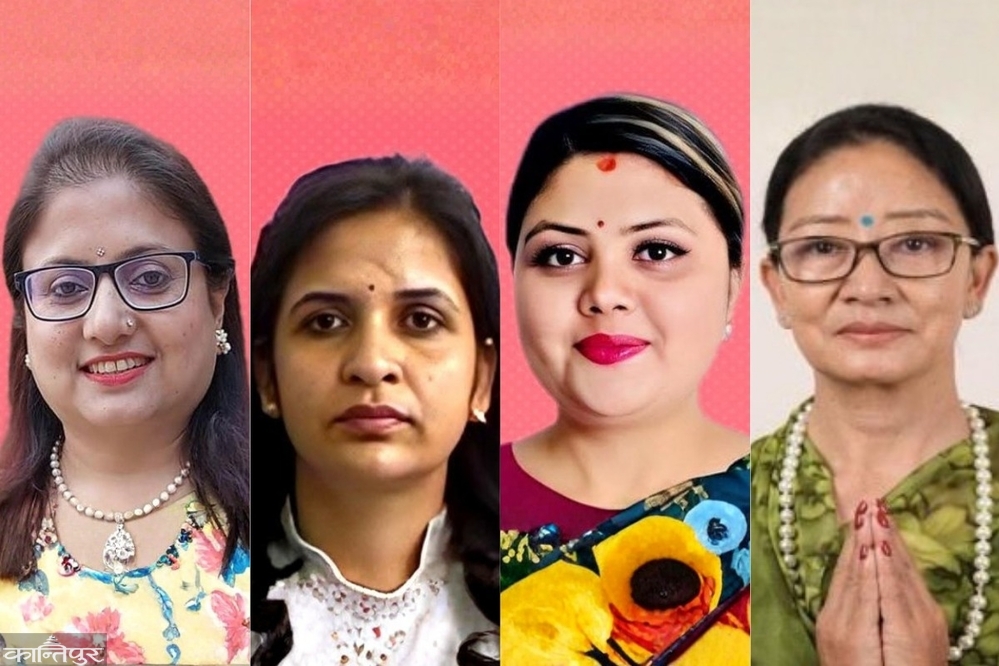
From the Rashtriya Swayamsevak Sangh (RSS), Indira Rana Magar, Toshima Karki, Sobita Gautam, Nisha Dangi, Ranju Neupane, Rubina Acharya, Bina Gurung, Komal Gyawali, Asha Jha, Nitima Bhandari Karki, Asika Tamang, Gauri Kumari, and Pushpa Kumari Chaudhary won the election. Basana Thapa won from the Nepali Congress (NCS). Indira, Toshima, Sobita, and Nisha have become members of the House of Representatives for the second time, while the others are new.
Former Deputy Speaker Indira Rana Magar has become a member of the House of Representatives, defeating former Speaker Devraj Ghimire in Jhapa-2. She got 60,110 votes while Ghimire of UML got 11,338 votes. She became a member of the House of Representatives through the proportional system in 2079. Before entering politics, she was the chairperson of the NGO Bandi Sahayata Nepal. The organization works for the education, rights and safe childhood of young children of women serving prison sentences. Indira was included in the BBC-100 Women in 2017.
Tosima Karki from the Rashtriya Swayamsevak Sangh (RSS) has won for the second consecutive time from Lalitpur-3. She got 43,096 votes this time. Her nearest rival, Jitendra Kumar Shrestha of the Nepali Congress, got 9,455 votes. Tosima is a doctor who served the citizens during the 2072 earthquake and the COVID pandemic. She volunteered in Madhesh Province, Sindhupalchowk, Nuwakot and other districts. She also worked at Patan Hospital for some time. She has been raising her voice against malpractices in the medical sector since 2071/72. She briefly became the Minister of State for Health and Population in the Pushpa Kamal Dahal-led government in Magh 2079. She used to raise her voice on the issues of quality health services and medical education for citizens while being on the Education, Health and Information Technology Committee of the Parliament. She took to the streets in support of the Gen-G movement last Bhadra.
Rubina Acharya has become an MP from Morang-6, defeating Congress leader Shekhar Koirala. She got 55,513 votes, while Koirala lost by 12,850 votes. Born in the Oil Corporation area of Biratnagar-4, Rubina has studied MBA from Kathmandu University. In the 2074 House of Representatives elections, she was active in the election campaign from Bibeksheel Sajha. She worked in the Bagmati Province Committee of the youth organization of the Bibeksheel Sajha Party. While remaining active in the party, she also became a central member. She was involved in the movement launched by Dr. Govinda KC for medical education reform. Asha Jha won from Morang-5. Jha got 30,434 votes, while her nearest rival Phool Kumar Lalwani of the Nepali Congress got 9,415 votes. Asha from Biratnagar-13 has a bachelor's degree in public health. Before entering politics, she was a health volunteer. She is also a construction entrepreneur. Sobita Gautam, on the other hand, has won the election for the second consecutive time by changing her constituency. She had won the election in Kathmandu-2 in 2079 and filed her candidacy in Chitwan-3 this time. While Sobita won with 59,277 votes, her nearest competitor, Renu Dahal of the Nepal Communist Party, got 20,615 votes. Advocate Sobita hosted a program called 'Health Concern' on Nepal Television for more than four years. Rubina Acharya has become an MP from Morang-6, defeating Congress leader Shekhar Koirala. She got 55,513 votes, while Koirala lost 12,850 votes. Nisha Dangi, who became a member of the House of Representatives through proportional representation in 2079, has won from Jhapa-1 this time. She got 45,680 votes, while her nearest rival Keshav Raj Pandey of the Congress lost 10,550 votes. Born on 16 Mangsir 2053, Nisha was the youngest member of the previous House of Representatives. She hails from Bhadrapur Municipality and was active in media before entering politics. Ranju Neupane of the Rashtriya Swayamsevak Sangh (RSS) won from Kathmandu-1. She got 15,455 votes while her nearest rival Prabal Thapa Chhetri of the Nepali Congress got 6,364 votes. Ranju joined the Bibeksheel Nepali Party in 2070. She was only 21 years old when she became a candidate for the mayor of Kathmandu Metropolitan City in 2074. She had contested as an independent candidate from Kathmandu-5 in 2079 but failed to win the election. Before uniting with the Rashtriya Swayamsevak Sangh (RSS) last November, Ranju was the general secretary of the Bibeksheel Sajha Party.
Bina Gurung won from Kaski-3. She won the election with 37,750 votes, while her nearest rival Manoj Gurung of the Nepali Congress got 12,780 votes. Born in Parbat and making Pokhara her workplace, 53-year-old Bina was active in social service. She is the founding president of Sanjeevani Didi Bahini Sangh Nepal and has worked for women's unity and empowerment. After joining the Rashtriya Swayamsevak Sangh, she became the treasurer of the Gandaki Province Committee. She is the only woman directly elected to the House of Representatives from Gandaki.
Komal Gyawali won from Kailali-1 with 17,862 votes. Her nearest rival, Janakraj Chaudhary of the Nepali Congress, got 12,867 votes. Born in 2035, Komal is a resident of Tikapur. Komal, who completed her Bachelor of Science (BBS) in Management, was an agricultural entrepreneur before entering politics full-time. Her active political journey began with the Nagarik Unmukti Party. She joined the Rashtriya Swayamsevak Sangh (RSS) after leaving the Unmukti Party.
Bhandari Karki won the election from Sarlahi-1 on the basis of politics. She got 44,181 votes while her nearest rival, Shambhulal Shrestha of the Nepali Congress, got 7,871 votes. She entered the election by prioritizing women empowerment, education promotion, and local development.
Asika Tamang, who has been raising her voice against the injustices and distortions of society, has also become a member of the House of Representatives. She won from Dhading-1 by securing 39,128 votes. Her nearest competitor, Bhumi Prasad Tripathi of UML, secured 15,032 votes.
Three female candidates of the Rashtriya Swayamsevak Sangh (RSS) - Binita Kathayat (Jumla), Goma Tamang (Sunsari-1) and Tasi Lhanjom (Humla) - were defeated.
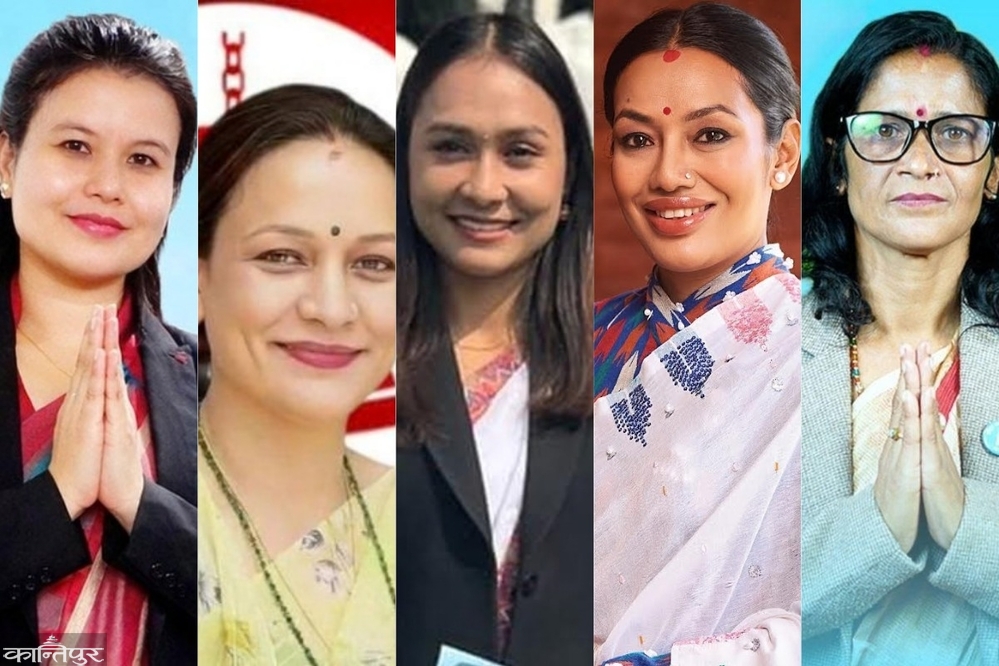
Gauri Kumari won from Mahottari-4 with 30,132 votes. Her competitor, Surendra Kumar Yadav of the Janata Samajwadi Party, secured 8,742 votes. Gauri has completed her studies up to the certificate level in science. Pushpa Kumari Chaudhary of the RSS won the election from Saptari-1. She secured 38,195 votes. Sumit Kumar of the Swabhiman Party was in second place, who secured 7,847 votes.
Three female candidates of the Rashtriya Swayamsevak Sangh (RSS) - Binita Kathayat (Jumla), Goma Tamang (Sunsari-1) and Tasi Lhanjom (Humla) - were defeated.
Earlier, 9 women were directly elected in 2079 and 6 in 2074. There is a constitutional provision that 33 percent women must participate in the federal parliament (House of Representatives and National Assembly). Therefore, the proportional representation system has been used to increase the representation of women to one-third. In the 611-member Constituent Assembly, 30 women won the election in 2064 and 10 in 2070. Congress's Basana Thapa won from Dailekh-1. She got 12,372 votes while her nearest rival, UML's Rabindra Raj Sharma, got 11,796 votes. Born in Kathmandu, Basana entered politics from a student organization close to the Congress in 2057. She became an active member of the Congress in 2061 and was defeated as a central member in the 14th general convention of the Congress.
UML leader Binda Pandey responded that the current victory was more a result of the party wave than women/men. She said, ‘Those who rise up on the wave of change win, and there were many women who won from the Maoists in 2064 as well.’ She said that due to the party wave, even unknown people win based on election symbols.
Politician Sucheta Pyakurel calls the current election results a rebellion. ‘The tsunami wave of the post-rebellion came in this election. Some women won in that wave,’ she says, ‘Leaders like Toshima and Ranju won the election through rebellion. But patriarchal thinking is also dominant in the new party, the Rashtriya Swayamsevak Sangh (RSS).’