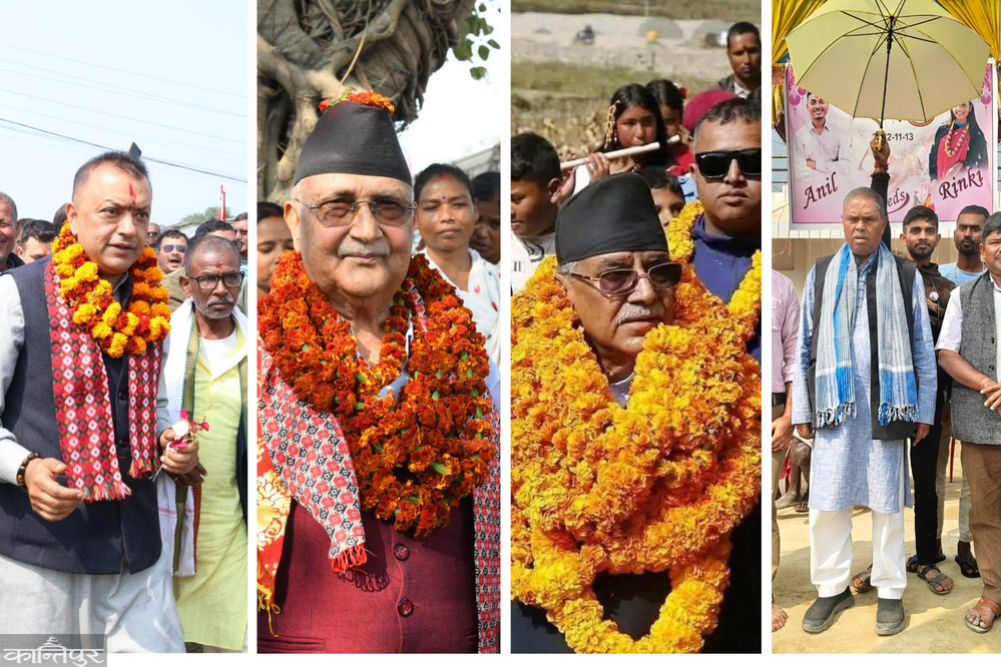
Analysts believe that the results were due to the snap election against the backdrop of the Gen-G movement.
We use Google Cloud Translation Services. Google requires we provide the following disclaimer relating to use of this service:
This service may contain translations powered by Google. Google disclaims all warranties related to the translations, expressed or implied, including any warranties of accuracy, reliability, and any implied warranties of merchantability, fitness for a particular purpose, and noninfringement.
The new mandate has dealt a major blow to the old political parties that have been at the center of politics for decades. Madhesh-centric parties including the Congress, UML, and NCP have lost public trust in this election and are in a state of severe decline.
While the issue of amending the constitution is being raised, saying that due to the current mixed electoral system, a single party cannot bring a majority and will not provide political stability, the Rashtriya Swayamsevak Sangh (RSS) is oriented towards a single majority. The initial results of the direct vote count and proportional representation have shown encouraging results for the RSS. The RSS was established just five months before the 2079 elections. The main reason for the surge in public support for this party, which has emerged as an alternative political force, in a short period of time is the recent entry of the then mayor of Kathmandu Metropolitan City, Balendra Shah, into the party and the citizens' growing expectations for him.
On the other hand, analysts say that the long-standing game of 'musical chairs' in power, corruption, impunity, partisanship of state institutions, and growing public disillusionment with governance have led to citizens' disillusionment with the old parties. Political party leaders argue that the expansion of information technology and the influence of social media have affected public opinion formation. They say that critical and abusive content going viral on social media has further weakened the image of the old parties.
 Former Chief Election Commissioner Bhojraj Pokharel says that long-standing disappointment has exploded in the elections. ‘For 15-20 years, the top leaders of the three parties had been playing the ‘musical chairs’ of power. In the meantime, major corruption scandals occurred, impunity flourished. The work of imprisoning others and protecting themselves was done. State institutions were destroyed by partyization. The people were aggrieved by this,’ says Pokharel, ‘The people were looking for an alternative, now they have an opportunity.’
While some political party leaders said that the public wave towards the Rashtriya Swayamsevak Sangh (RSS) was also linked to a geopolitical background, Pokharel said that they should not think from that angle. ‘Now, there is no need to look east or west regarding the election results. The people are able to make independent decisions,’ he said.
Kathmandu University Associate Professor Uddhav Pyakurel believes that the main factor in the increase in distrust towards the old parties is the change in social structure and access to information. ‘The sources of information have expanded. Mobile phones are in every hand. When a video that was once liked comes up again and again due to the effect of the algorithm, there is no patience to listen to long analysis and arguments. Similarly, the effect of the video content has been seen,’ he said. He believes that the citizens also dislike the governance style of the old parties.
Analysts believe that the result has come about because of the immediate elections in the background of the Gen-G movement. Pyakurel said, ‘Everyone has now been exposed due to the act of running the government in turns and tearing each other apart.’
The Congress had tried to address the issue of the Gen-G movement by replacing Sher Bahadur Deuba, who has been in power since 2048, from the leadership, and also by injecting newness into the party’s policies and programs. Amid the obstruction of the then establishment party, the Congress had formed a new central working committee under the leadership of Gagan Thapa and entered the elections by holding a special general convention on 27-30 Poush.
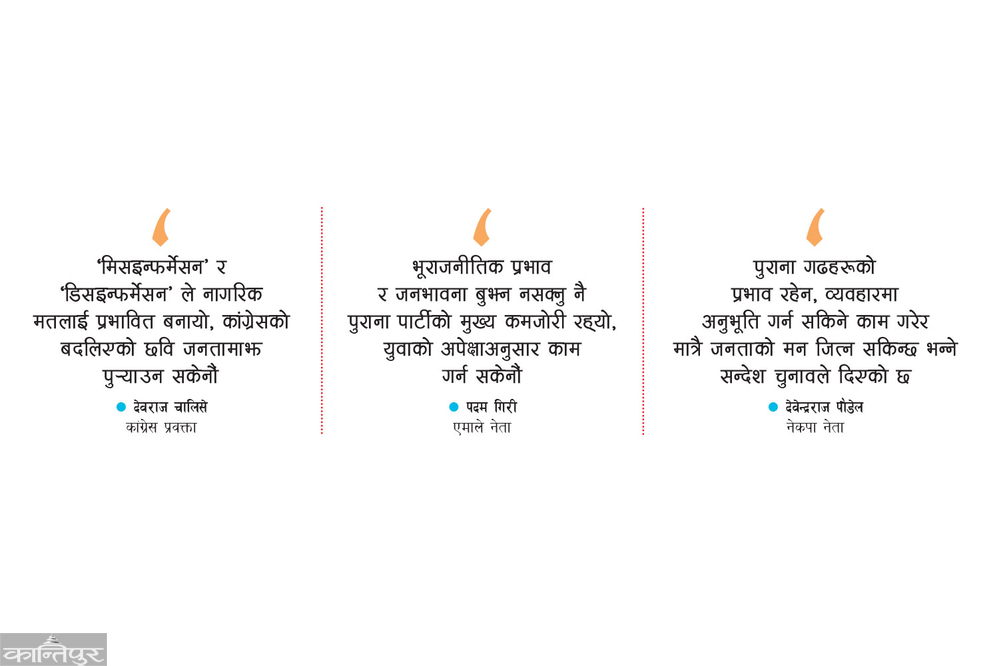
However, Congress spokesperson Devraj Chalise says that they faced unexpected consequences due to their failure to explain these changes to the people. ‘We were unable to convey the changed image of the Congress to the people,’ he said, ‘There was also insufficient time to dispel the misinformation spread about us and establish the Congress among the people.’
Accepting the election results, he said that the party would further improve, correct itself, and engage in dialogue with the people. ‘The election is a test for the party. This election has also taught us a lesson to study well for the upcoming exams,’ said spokesperson Chalise. ‘The election has revealed that the organization has a large number of leaders and a decreasing number of cadres. This is also a result of the parties being very much affected by the politics of the next government.’
UML leader Padam Giri said that the main weakness of the old parties is their inability to understand geopolitical influence and public sentiment. ‘We could not work as per the expectations of the youth. We could not even convey the achievements of the work done to the people,’ Giri said, ‘The parties could not do anything to alleviate the disappointment and anger of the citizens.’ He said that the party would accept the public opinion. ‘The people have given us a chance to be corrected. We will move in that direction,’ he added, ‘We will support and oppose the new government based on its merits and demerits. I wish it to work as per the expectations of the people.’
NCP leader Devendra Raj Poudel said that the election had destroyed the party’s traditional organization. ‘There has been a change in the thinking of the voters. There is no continuity in the affiliation with any party,’ he said, ‘Now the organizations of political parties have collapsed. The influence of the old strongholds is gone. This election has taught us that people can only be won over by doing practical work.’ Poudel said that this situation has arisen because the election is being held in the heat of the Gen-G movement.
Even though the Congress, UML and NCP, which have a long and struggling history, have shrunk in terms of numbers, their role in parliament will be important, says political science professor Krishna Pokharel. He said that the test for the Rashtriya Swayamsevak Sangh (RSS) to run the country with the utmost respect for the mandate has now begun. ‘According to the vote count so far, the Rashtriya Swayamsevak Sangh (RSS) will lead the government as the largest party,’ he said, ‘Now the test for the Rashtriya Swayamsevak Sangh (RSS) has begun.’