There is a large group of people who have come to Kathmandu from different parts of the country for their profession, business or studies. Some have come in search of employment, while others have come for a bright future for their children. But due to financial constraints, some say they cannot go to their villages to vote. What do citizens who are unable to vote say? What are their views on the elections? Kantipur has spoken to some representative figures.
We use Google Cloud Translation Services. Google requires we provide the following disclaimer relating to use of this service:
This service may contain translations powered by Google. Google disclaims all warranties related to the translations, expressed or implied, including any warranties of accuracy, reliability, and any implied warranties of merchantability, fitness for a particular purpose, and noninfringement.
The election for the House of Representatives on 21 Falgun is approaching. The silence period is ongoing. Candidates have already started their formal election activities with the promise of bringing positive changes to the voters. Voters who have heard the election announcements and promises of various parties and independent candidates want to make good use of their precious votes in this zero hour and bring the capable and active to the parliament.
There is a large group of people who have come to Kathmandu from different parts of the country for their profession, business or studies. Some have come in search of employment, while others have come for a bright future for their children. Just as everyone's struggle stories are different, so are their objectives. Some citizens living in Kathmandu with various professions have already gone to vote. Some are still thinking of going. Some say they are thinking of not going to their villages to vote due to financial constraints.
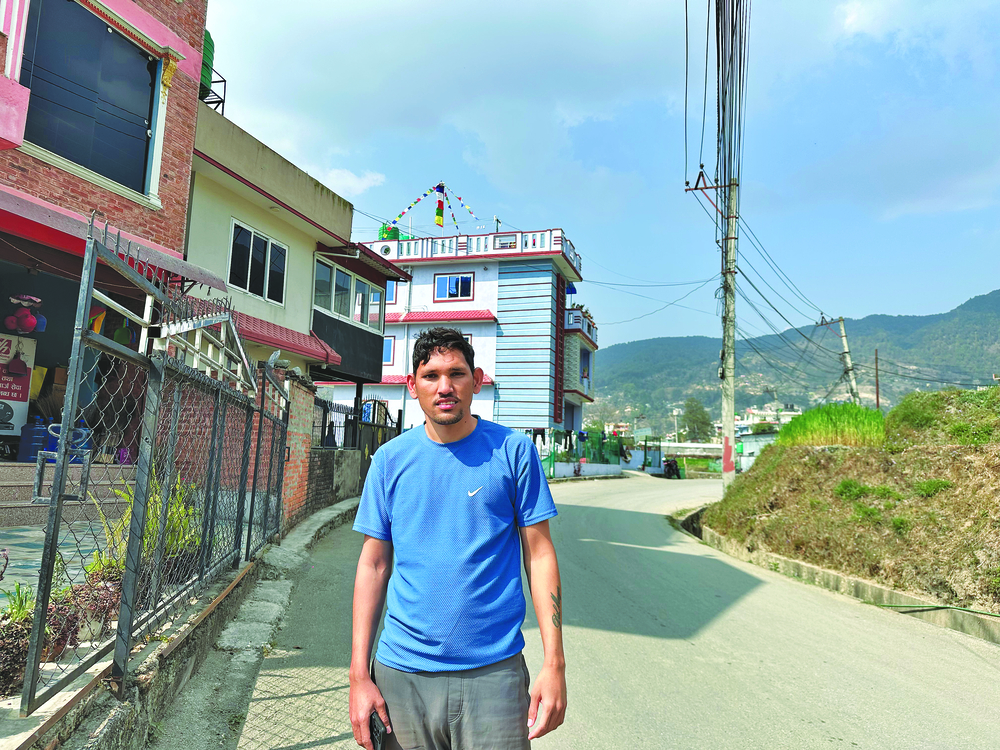
What do citizens want? What is their opinion on the election? What kind of country do they want? Kantipur has talked to some representative figures about this. Aman Chaudhary (20), who lives a modest life in the expensive city of Kathmandu, was found working at a grill house in Tokha, Kathmandu. He hails from Sarlahi, Jagatpur and has been working here for the past 5 years. When Aman was in grade 9, his father went to Saudi Arabia for foreign employment.
Aman's family, who had built a house in the village by taking out loans, was struck by lightning the day before he was to return to Nepal. After that, Aman became the sole support for his sister and mother. The debt from building a house began to weigh him down. Aman, who had been studying a lot and imagining a bright future, was forced to drop out of school and come to Kathmandu in search of work. 'While my friends were studying with books and pens in their hands, I had to hold an iron with my hands,' Aman laments. Aman now earns 29,000 rupees per month. That is why he is living and teaching his sister in grade 11. Since he has not studied, Aman wants to teach her sister as much as she wants.
Seeing the election atmosphere at this time, Aman wants to go home. But the expenses incurred while going home made him anxious. ‘I am the only one earning in the family. I incur expenses while going to and from the village. It has been said that even if it takes 2/4 days to work by the time I come back after voting, I will still be working. I am in a dilemma,’ he said. Aman has voted only once so far. ‘Do you open Facebook or only get news and videos about the elections? I am interested,’ Aman says with a smile when he sees him talking about all the politics, when he reads the
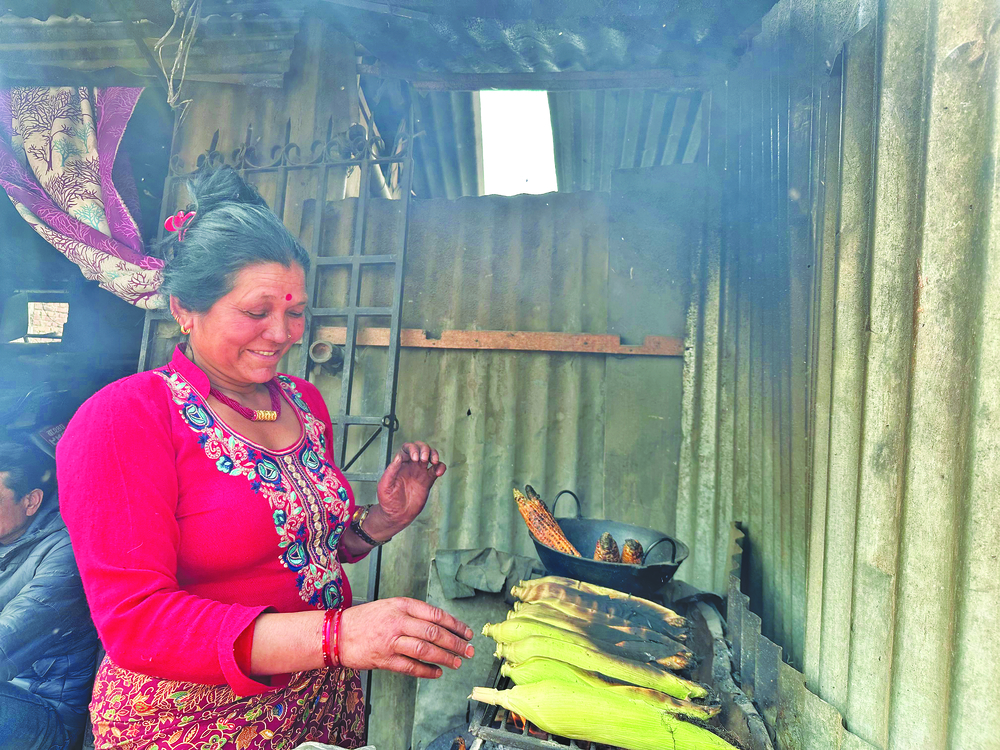
, he also says that he wants to enter politics. No matter which party wins, he wants the country to develop. Another character struggling to support his family in Kathmandu is Durga Sunar (52). She was found roasting corn in Tokha and is making a living by selling corn, almonds and water from a cart all day long. Durga, from Shivpuri, Nuwakot, has been in Kathmandu for 21 years. She started roasting corn only a few years ago. Her husband owns a furniture shop. One of the two sons is in Malaysia, while the other daughter is in Bahrain. ‘If I had found a job in Nepal, I wouldn’t have wanted to send my children abroad for work,’ says Durga.
Durga is not very enthusiastic about going to vote after hearing about the country’s situation and the leaders. ‘Even if I vote for someone, my sorrow doesn’t go away. Those we voted for go to wherever they want, we go wherever we want,’ she said. ‘The market price has not affected anything. We have to pay 35,000 per month for the same furniture. Let alone other things, how expensive it is to buy a sack of corn. If the leader were to reduce the price, then I would vote!’ She says that she will not go to vote after spending money on her work. She says, ‘I don’t really enjoy the election. With the money I spend going to the village, I can earn money by buying corn and burning it. What else can I do?’
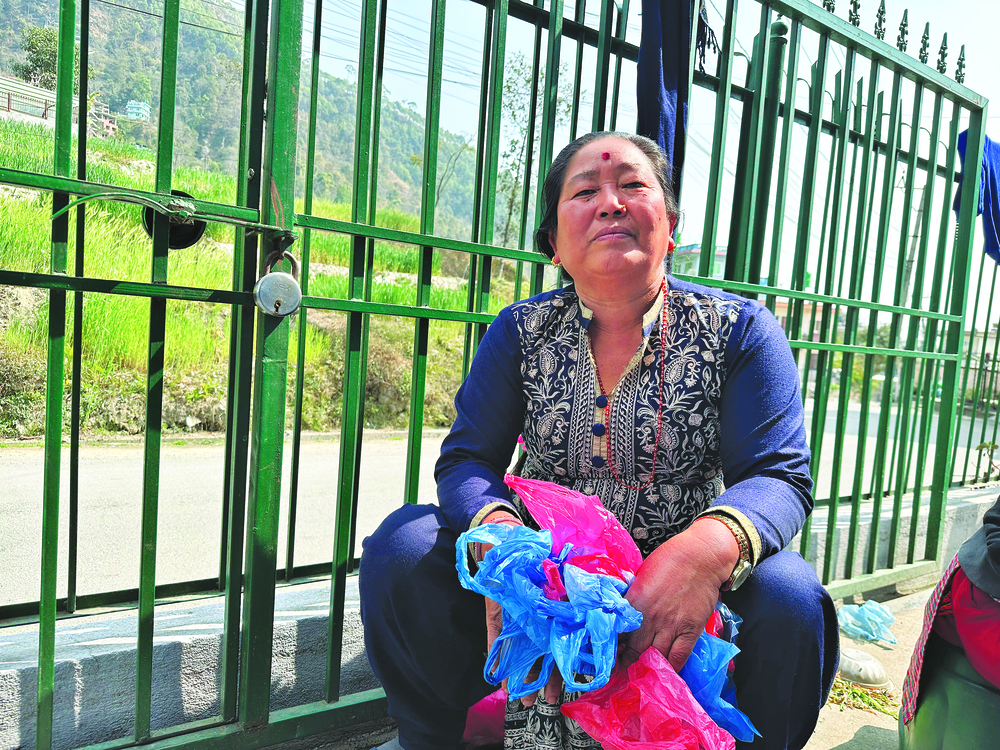
Even though the election is coming, Phulmaya Tamang (45) is not very touched by its excitement. She lives in Ratmate village of Sindhuli, where she sells greens such as Rayo, Chamsur, Bethe and Tinkune by spreading them on the road to Suvidhanagar. She moved to Kathmandu 15 years ago and lives in Duwakot. She has built a hut on rented land. Every day, she buys greens from Bhaktapur and brings them to Tinkune to sell.
Phulmaya's 21-year-old son works in a shop. Her daughter is studying in the 8th grade. She says that even a small amount of money earned by selling greens will help her meet household expenses. She says that she will not vote in the elections even if she wants to. 'It costs around 3,000 to go home and come back. It takes a few days to earn that much, but with that much money, I can finish one of my tasks,' she said. She says that she does not have the courage to go to the village now because she does not earn as much as before. 'If I had enough money, I would have left without thinking. What can I do, my income is not much,' she said.
Leelamaya Shrestha of Sindhupalchowk has been selling almonds/water from a basket near Tokha Bhootkhel Park since last November. But she is saddened to hear that she will no longer be allowed to sell there either. ‘The management committee here has said that she will no longer be allowed to sell,’ she said. Leelamaya, who came to Kathmandu 21 years ago, initially worked in the agricultural sector. Her husband, Jamie, works. But she started selling almonds after Leelamaya had health problems. Earning Rs 4-500 daily, she is now worried about what to do next. ‘Even if it is a little, it has helped with household expenses. Time would have passed more easily there than in a room. What to do next is what is troubling her,’ she said.
She knows that the country is currently in the midst of elections. But she says that she will not go to the village due to health problems. ‘I would have gone to vote, but I am a little sick. "We can't even travel by car, it's very difficult," she said. "What if elections come for us who suffer all day and eat dinner? What if they don't?" Still, she says she prays that peace prevails in the country no matter whose government comes.
Sasikala Budhathoki (32), who lives in Tokha and runs a clothing business, is from Hariwan, Sarlahi. She also says that she cannot leave her job and go to the village to vote. She is worried that business is not like before, but the high cost has caused her more pain. "Earlier, the clothing shop was very good. Nowadays, it is also expensive. That is why business is not like before," she says. "Once it becomes a business, you invest. There is no question of leaving your job suddenly for the election." She says that she has not been able to go to vote so far, and says that many people have called her from the village to vote.
Sasikala was not very interested in politics before. But these days, the news and election-related videos appearing on social media have aroused her curiosity. ‘Whenever you open Facebook, TikTok, or Instagram, election news and videos come up. Nowadays, there is a lot of interest in elections,’ she says. Sher Singh Sijapati (28) from Bardiya, who has not been able to find a job even after reading the
, gets very angry during elections. He is a health assistant and has been living in Kathmandu, Basundhara, for the past nine months after working in Pyuthan for some time. But since he has not been able to find any work, he sometimes drives a pathao.
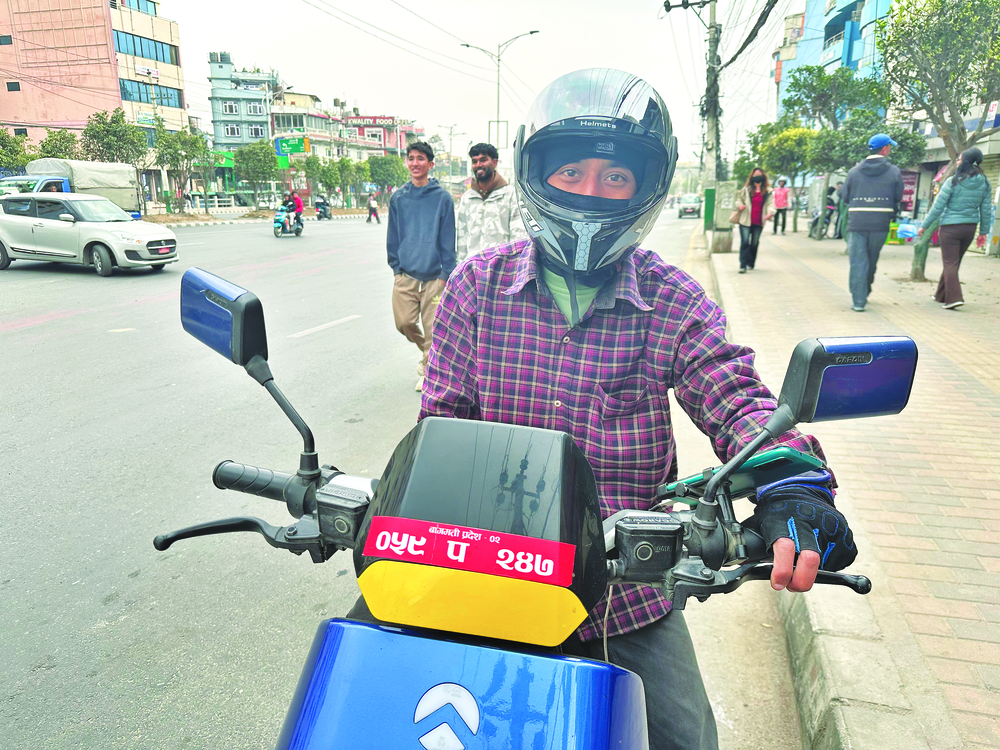
He says that even when the elections come, he is thinking of not going to the village. ‘I was thinking of going to vote, but money has stopped me. If I had the money, I would have gone with a bike,’ he sounds angry after coming to Kathmandu for nine months and still not getting a job. ‘Even after studying, I can’t find a job. And who will I vote for?’ He feels sad when he sees his friends and colleagues going abroad. ‘But it also hurts to see young people like us studying but having to stay unemployed here. Now, I want jobs to be created in the country,” he wants the government formed after the election to end unemployment and address the issues of the youth.
Dilip Majhi, a resident of Katari, Udayapur, was found running a Pathao. He was taking Korean language training until some time ago. He said that he is now running only Pathao after the results did not come as expected. He said that although he wanted to go home for the elections, he decided not to. “I want to go. I find the elections like a festival. But I will have to spend my own money on going and coming, so even if I wanted to, I was stopped by money,” he said. Even if he does not get to go to the elections, he wants the best to win. No matter which party gets the majority, 23-year-old Majhi wants all youth like him to get jobs in the country. He says, “Let there be an environment where we can see a future in our own country. We should not be forced to dream of going to another country to raise a family or fulfill our desires.”
Similarly, Sunita Lama (55), a resident of Shivpuri-3, Nuwakot, was seen busy at a grocery store in Tokha-1. Although she was happy as the election was approaching, she said that she would not go to vote. She says, "I have been doing business. After leaving my job, my expenses will increase. There is not much business at the moment. That is why I did not feel like going to vote this time. I could not go because I had to find a loan." Having voted for many people many times, she says that the election atmosphere is enjoyable. She said that since business is in a slump and traveling to the village will increase the expenses, she could not go home even if she wanted to.

