According to the report, around 1.5 million people live in the constituency, making it impossible to establish access to the polling stations designated as per the law.
We use Google Cloud Translation Services. Google requires we provide the following disclaimer relating to use of this service:
This service may contain translations powered by Google. Google disclaims all warranties related to the translations, expressed or implied, including any warranties of accuracy, reliability, and any implied warranties of merchantability, fitness for a particular purpose, and noninfringement.
Voters who have temporarily resided in their constituencies for work or study have not been able to go to their constituencies. The number of those who are deprived of their right to vote is large. Despite having their names on the voter list, some voters are not in a position to go and vote. In order to solve this problem, the Policy Research Institute had suggested to the government that voters who reside in one constituency and are registered in another constituency be given the right to vote (inter-constituency) in direct and proportional elections.
Last November, a research report on ‘Measures to ensure the right to vote for Nepali citizens living abroad and outside the constituency in Nepal’ was submitted. According to the report, since about 1.5 million people live in inter-constituencies, they cannot access the polling stations prescribed by law. Looking at international practice, many countries around the world have been providing facilities for their citizens to vote from abroad. It was recommended to set up one polling station in each of 753 local levels to ensure the voting rights of citizens who have temporarily resided.
While Nepal has not been able to provide citizens residing in the country with the opportunity to vote in the constituency, the report states that 151 countries around the world have already practiced external voting in their elections. Italy, France, Portugal, Tunisia, and others have put forward postal voting, internet voting, and electronic voting to allow citizens to participate in parliamentary representation and the political process. Election Commission Information Commissioner Suman Adhikari said that despite repeated discussions, it has not been implemented. He said, "The election law should be amended to ensure the right to vote for temporary voters living in the constituency. This cannot be implemented until the government makes a law."
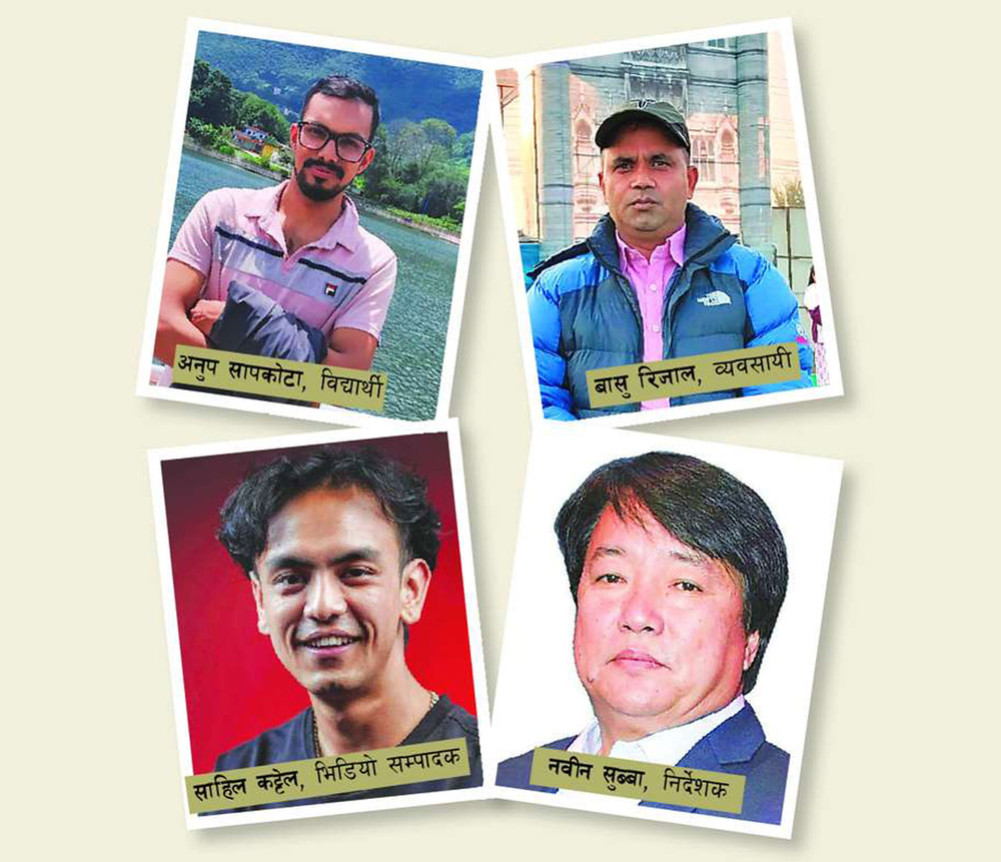
Anup Sapkota of Parbat is studying Chartered Accountant (CA) in Kathmandu. He voted for the first time in 2074. At that time, he was in Parbat. Now, he has no enthusiasm to vote. He complains that there has been no change in the country even after voting. He is looking at this year's election competition differently. ‘The old parties and leaders have done nothing, the new ones do not get a chance to work, that is why I do not feel like voting. There is no point in voting/not voting. I have stopped thinking that whoever votes will change.’ Stating that if the franchise had been in Kathmandu, he would have voted in proportional representation, he said, ‘Actually, I would not have voted, but I would have voted for some party in proportional representation.’ He said that there has been no change in the structure of the province. He suggests that it would be good if the new representative can make the economy dynamic, bring new schemes and employment arrangements.
Basu Rijal, who has been doing business in Butwal, Bhairahawa, is a voter of Dang-2. But he will not go to his village to vote in this election. In 2070, he voted from Dang. He believes that there should be no compulsion to go to his village to vote. ‘Voters should be able to vote from wherever they live. "As long as I am not allowed to vote from where I live, I will not vote," he says. "I don't have to run around to vote. I should be allowed to vote from where I am. Only by doing this can I exercise my right to vote." He said that the forced situation of going to the village should be improved. He alleges that many citizens like him are deprived of voting due to the weakness of the state. He says, "The right to vote is seen as a natural right, but the fact that citizens do not have easy access to the right to vote is a weakness of the state. The state should pay special attention to this."
Director Naveen Subba is currently busy shooting a film. His desire to vote is not going to be fulfilled this time, like other elections. A voter from Ilam-2, he is active in the film industry while staying in Kathmandu. "I have not voted so far, I have not had time due to work. Traveling is a problem," he said. He wants to exercise his right to choose a representative by voting, but he has not been able to go to the village and vote due to time and work. She said, "How nice it would be if I could vote from where I am? I have to go to the village to vote, and the time is not available." She said that there should be a system for citizens to vote at a convenient place to choose their representatives.
Amrita Aryal, a voter from Morang-3, lives in Baneshwor. A mother of two, she is not in a position to go to the village to vote because of her child. However, her husband has already arrived to vote. She could not leave Kathmandu due to the expenses of going to the election and the child's education. She said, "I think I will have to pay the child's fee with the expenses of going to the election." She last voted in 2064. After coming to Kathmandu, she has not been able to vote. She enjoys standing in line to vote, but she is also saddened by the compulsion to go. "It would be nice to be able to vote from where I live," she said.
Sahil Kattel of Ilam is a video editor. He is from Ilam-1, whose work area is Kathmandu. However, his name is not in the voter list. ‘I wanted to vote, but I decided not to because I didn’t have an ID.’ Even though he didn’t go to vote, he is currently closely monitoring the election atmosphere. He, a member of the Gen-G generation, insists that there is no new party like the one being discussed at the moment. He said, ‘Nowadays, they are getting talk about new parties, new people, but the party is also old and the people are also old.’ He said that even though he didn’t go to vote, there is discussion in his family about who to vote for.