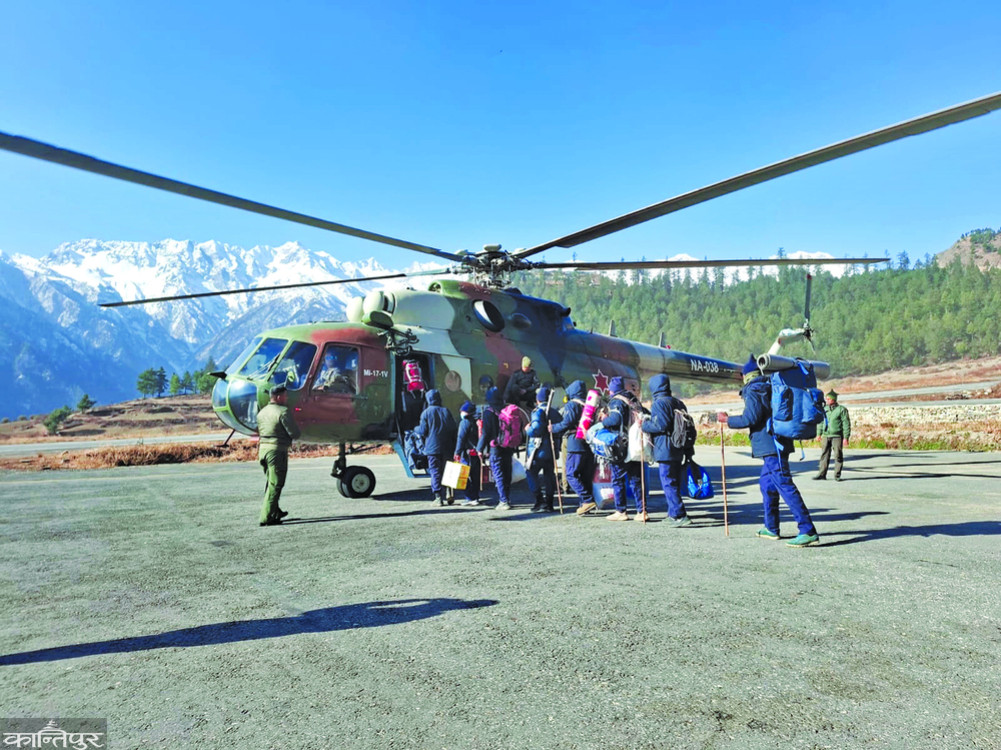
Candidates and parties are not allowed to engage in any activities that could influence the election, including soliciting votes, campaigning, posting on social media, speeches, gatherings, discussions, reviews, etc.
We use Google Cloud Translation Services. Google requires we provide the following disclaimer relating to use of this service:
This service may contain translations powered by Google. Google disclaims all warranties related to the translations, expressed or implied, including any warranties of accuracy, reliability, and any implied warranties of merchantability, fitness for a particular purpose, and noninfringement.
The silence period for the election to elect members of the House of Representatives to be held on Thursday has begun from midnight on Monday. According to the election code of conduct, no activities that may influence the election, including campaigning, speeches, gatherings, discussions, reviews, etc., will be allowed during the silence period, which will last from 48 hours before the start of voting day until the end of voting.
The Election Commission has stated that no one can solicit votes, post on social media, or engage in activities that may influence the election during the silence period. Acting Chief Election Commissioner Ram Prasad Bhandari said that if anyone is found to have made financial transactions that may influence the election during this period, they will be disqualified from participating in any election process for six years, starting with the cancellation of their candidacy. “A zero-tolerance policy will be adopted against activities that may influence the election,” he said.
During the silence period, political party officials, candidates, party affiliates and other individuals, organizations or bodies that must follow the code of conduct will not be allowed to hold any kind of discussion, interaction, meeting, conference, workshop, seminar, etc. during the election campaign. The silence period has been implemented 48 hours before voting to prevent disputes or clashes between competitors during voting and to prevent voters from being intimidated by any unpleasant incident. After the silence period begins, the Returning Officer’s Office will also ask the concerned party or candidate to remove the propaganda materials placed within 300 meters of the polling station. According to the schedule set by the commission, the parties that registered their candidacies on 6 Magh had been campaigning and seeking votes since 4 Falgun.
During the silence period, political party officials, candidates, party affiliates and other individuals, organizations or bodies that must follow the code of conduct will not be allowed to hold any kind of discussion, interaction, meeting, conference, workshop, seminar, etc.
Section 17 of the election code of conduct mentions the silence period as ‘special conduct to be followed from forty-eight hours before the polling day until the polling station closes on the polling day’. It states that political party officials or candidates and party fraternal organizations or related persons must follow the prescribed conduct. The section states that election propaganda, including any type of discussion, interaction, assembly, conference, workshop, etc., is not allowed, and that the propaganda materials of political parties or candidates placed within 300 meters of the polling station must be removed 48 hours before the polling day.
Similarly, it states that no one should solicit votes or campaign for the election through any method, process or means, and no message, information or propaganda materials in favor of or against a political party or candidate should be posted, shared, or responded to through social media, online, print or any other means. Although a 48-hour silence period is implemented in Nepal before the start of polling day, some countries have the practice of setting a silence period of 24 to 72 hours. The silence period frees the election personnel and security forces from all kinds of work and facilitates the management of the election in a peaceful environment. During this period, polling stations are set up, lines are managed for voters, and the peace and security situation is assessed.
Former Chief Election Commissioner Dinesh Kumar Thapaliya says that the silent period is practiced as a time provided to the voters to make an informed, conscious and open-minded decision to vote for the ‘qualified and chosen’ candidate.
Commission’s directives
The Commission has directed the bodies entrusted with the responsibility of monitoring the code of conduct to ensure the implementation of the Election Code of Conduct 2082 to conduct the elections in a free, fair, impartial and fear-free environment. The Commission has directed the Election Code of Conduct Monitoring Officers, including the Assistant Chief District Officer/Head of the Office of the Controller of Treasury and Accounts, who are authorized to monitor at the district level, to do so, stating that financial manipulations and activities that may affect voters may occur during the silent period.

The Commission has directed that ‘Monitor the effective compliance of the conduct prescribed by the code of conduct by all parties from the 48 hours before the day of voting as mentioned in the code of conduct until the polling station closes on the day of voting (18 Falgun 12 midnight to 21 Falgun)’.
The Commission has asked the parties to monitor the compliance with the ‘conduct to be followed on polling day’ in Section 18 of the code of conduct and to make the implementation of the provision effective by conducting detailed monitoring within their districts and, if any acts are found to be contrary to the code of conduct and the Election (Offences and Punishments) Act, 2073 BS, to exercise the powers of the monitor in collaboration with the District Code of Conduct Monitoring Committee and ensure effective implementation of the election code of conduct.
The Election Commission has also requested the parties not to do/perform any acts specified as prohibited under the prevailing law and the election code of conduct during the campaign ban period.
65 political parties are competing under 61 election symbols for the first-past-the-post (direct) election. 3,406 candidates, including 3,017 men, 388 women and 1 other, are in the election race for the direct election. Similarly, 3,135 candidates, including 1,363 men and 1,772 women, are in the race for the proportional election system. Elections will be held for 165 constituencies for the direct election and 110 seats for the proportional election.
There are 18,93,689 voters in this election, including 9,663,358 men, 9,240,131 women and 200 others. Similarly, 186,142 temporary voters have been registered, according to the commission.
23,112 polling stations have been determined for the election in 10,967 polling stations across the country. 143 temporary polling stations have been determined. 79,727 Nepal Army, 75,797 Nepal Police, 34,567 Armed Police Force, 1,921 National Investigation and 149,090 Election Police have been deployed for election security.
215,000 employees are being deployed in the election. The commission has printed a total of 42.251 million ballot papers for direct and proportional representation. Four international and 39 national organizations have been granted permission to observe this election.
Prime Minister Karki's call to make the election historic
Prime Minister Sushila Karki has urged all voters to participate in the election. Addressing the countrymen on Monday afternoon before the start of the silence period, she urged all voters to participate in the election to move the country forward on the path of political stability and prosperity.
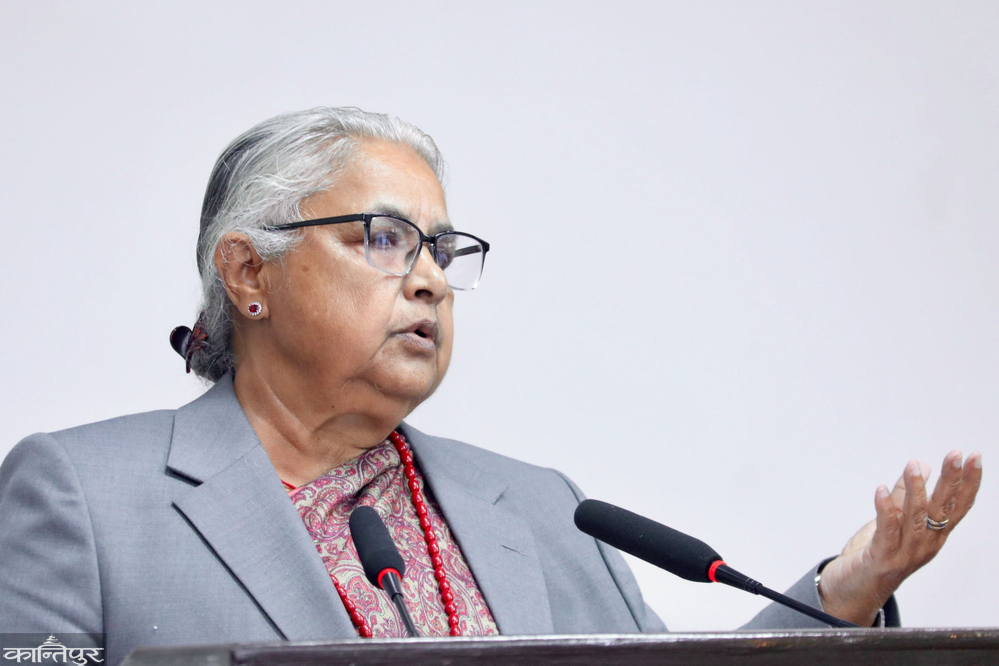
‘Voting is not just about stamping an election symbol and sending someone to victory, it is a decision to make about your future and that of your children,’ Karki said. ‘Therefore, I sincerely appeal to you to go to your polling station and vote on 21 Falgun (Thursday), even if it means leaving other work.’
She claimed that managing the difficult transition, leading the country from the violent mode to a peaceful exit and returning it to the path of the constitution is the first duty, and that the government has succeeded in establishing the rule of law and moving forward with stability on the path of the constitution. She said that this achievement is the result of the restraint and cooperation of all Nepali people.
She also requested everyone to maintain peace and non-violent behavior on the eve of the election. ‘Peace is the true identity of Nepal, there is healthy competition in elections, there are different opinions, but there should be no misunderstandings and animosity between us,’ she said.
Stating that the Election Commission has completed all the preparations as per the schedule in a short and difficult time, she said that the Government of Nepal and the Commission are fully committed to conducting the elections in a fair, clean and fearless manner.
Prime Minister Karki expressed her satisfaction that she had taken the leadership of the government after the Gen-G movement of 23 and 24 Bhadra and was able to bring the country to the threshold of the elections. ‘Today, I am satisfied that we have overcome that difficult transition and have reached this point, establishing the rule of law and successfully moving forward on the path of the constitution with stability,’ Karki said, ‘This achievement is the result of the restraint and cooperation of all the Nepali people.’ She commented that the country has once again reached an important turning point in history.