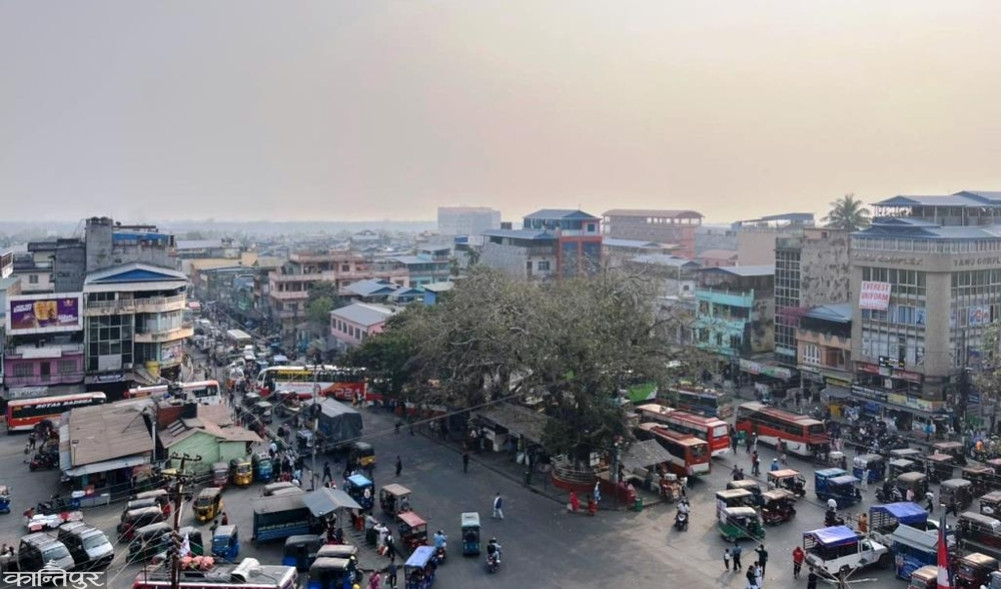
Despite the expansion of industrial, commercial, and urban settlements, the citizens of Sunsari are struggling with problems such as drinking water, health, education, land titles, flooding, and employment.
We use Google Cloud Translation Services. Google requires we provide the following disclaimer relating to use of this service:
This service may contain translations powered by Google. Google disclaims all warranties related to the translations, expressed or implied, including any warranties of accuracy, reliability, and any implied warranties of merchantability, fitness for a particular purpose, and noninfringement.
Sunsari, a district of Koshi Province, is known as a prominent district in eastern Nepal economically, industrially, agriculturally and politically. Located in the Terai region, this district is considered one of the dynamic districts of the province due to its fertile land, developed urban structure and multi-ethnic social structure.
Although the district headquarters is Inaruwa, Dharan and Itahari have developed as major centers in terms of trade, education, health and service sectors.
Spread over an area of about 1,257 square kilometers, Sunsari is bordered by Udayapur to the north, Bihar of India to the south, Saptari to the east and Morang to the west. The land of this district, which falls within the influence area of the Saptakoshi river system, is considered suitable for agricultural production. This is why rice, wheat, maize, sugarcane and vegetables are the main agricultural products here.
The population of Sunsari was 763,487 according to the 2068 census. According to the 2078 census, it has reached 934,461. Of which 454,755 are males and 480,386 are females.
After the local level restructuring, there are two sub-metropolitan cities, four municipalities and six rural municipalities in Sunsari. Of the 12 local levels in Sunsari, Itahari Sub-metropolitan City has the highest population of 198,098. Of these, 94,308 are males and 13,709 are females. The second most populous level is Dharan Sub-metropolitan City. Dharan's population has reached 173,096. Of these, 82,683 are males and 90,413 are females.
Similarly, Barahakshetra Municipality has the third highest population of 91,891. Of these, 43,178 are males and 48,713 are females. The population of Inaruwa Municipality is 75,920, the population of Duhabi Municipality is 67,051, the population of Ramdhuni Municipality is 63,378, the population of Harinagar Rural Municipality is 49,501, the population of Bhokraha Narsingh Rural Municipality is 49,371, and the population of Koshi Rural Municipality is 48,000. The population of Gadhi Rural Municipality is 39,478, the population of Dewanganj Rural Municipality is 39,367, and the population of Barju Rural Municipality is 35,533.
The district is home to the coexistence of various castes, languages, and cultures. The main residents here are the Tharu, Yadav, Muslim, Rai-Limbu, Kirat, Brahmin, Kshetri, and Madhesi communities. Along with Nepali, Maithili, Tharu, Urdu, and various local languages are in daily use.
Dharan and Itahari Sub-metropolitan Cities have become the centers of urban development in the district, while Inaruwa is known as the administrative center. Barahakshetra, Duhabi and Ramdhuni areas are expanding due to industrial and commercial activities.
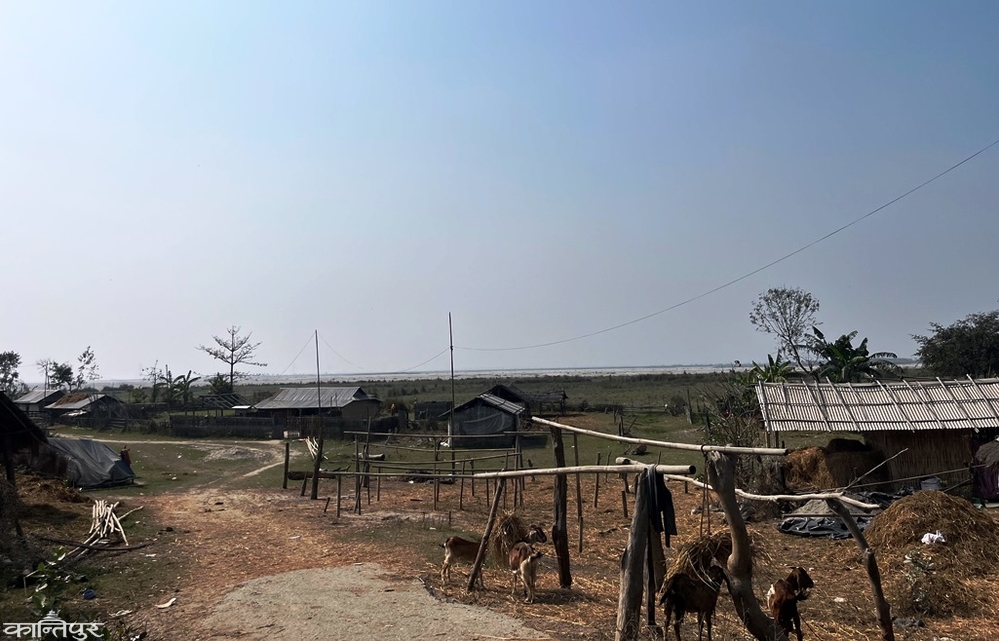
Sunsari is an important part of the industrial corridor of eastern Nepal. Dharan-Itahari-Duhabi area is considered a major one for industry, trade and service businesses. Jute, agricultural processing, small and medium industries, transport, education and health services have made the district's economy dynamic. Transport access is easy as the East-West Highway passes through the district. Trade with the hilly districts and India is also active through the Koshi Highway.
Sunsari is also considered important from a religious and tourism perspective. Barahakshetra Dham is known as the center of faith for Hindus, while the Chatara area is a place of religious, historical and cultural importance. Dharan-Bhedetar area has become an attraction for domestic tourism.
Politically, Sunsari district is one of the influential constituencies of Koshi Province. This district, which has four constituencies of the House of Representatives, is a place where major political parties compete. Dharan and Itahari are particularly active in terms of political activity and public interest.
Sunsari, known as the economic backbone of Koshi Province, seems to be moving at a rapid pace from the outside. Industrial expansion, growing cities, commercial activities, and population growth have become its new identity. But the problems faced by the citizens under this development are still waiting for a solution. The gap between development and daily struggle has now become the real story of Sunsari.
Dharan, Itahari, and Duhabi regions are considered the economic center of eastern Nepal. New houses, road expansion, commercial complexes, and industries are being added. But citizen dissatisfaction is increasing as basic service management has not been expanded in the same proportion. In particular, the drinking water problem has become the biggest challenge in the urban area. Poonam Rai of Dharan Sub-metropolitan City-12 says, ‘They say the city is developed, but when you wake up in the morning, you worry about whether water will come or not.’ After the onset of winter, there is no daily water supply, and at times you have to buy water from tankers.’
This is the main problem of the entire Dharan people. The drinking water problem, which has become the agenda of every election, has not been resolved yet. But another local, Sushila Rai, says that the agenda is the same for all political parties. ‘There is a shortage of water in winter. Right now, water comes for 2 days, and that too does not go into the tanks. Despite repeated announcements of plans to expand the drinking water project, we have not been able to realize a permanent solution,’ she said.
The drinking water problem is not limited to Dharan. This problem is also prevalent in other rural areas of the district. Prabin Limbu, 35, of Barahakshetra Municipality-5, Bharaul, says that even though the government has promised to provide taps to every household for clean drinking water, it has not been completed yet. ‘Many wards of Barahakshetra Municipality still do not have taps and people are forced to drink well water,’ he said.
Another major issue is the disparity in development within Dharan. Locals complain that areas such as Mantar, Sumantar, Saune, Khoria and others in Dharan-4 are still deprived of basic facilities like roads, health, drinking water, and phone networks. Locals say that they have not been able to experience it even after the declaration of a sub-metropolitan city. Bablu Magar, a local of Sumantar, said that they do not feel like residents of Dharan sub-metropolitan city. He says, ‘We have many problems. It takes time to reach the road, landslides, towers, and health posts,’ he said.
Locals say that they are forced to come to the market area even to study. The problem of having to walk for hours to go to school is still there. Leaders appear only when seeking votes. They assure that they will solve the problem, but they do not appear after winning the election. During the election, the locals of Dharan-4 have demanded that the candidates take initiatives for roads, drinking water and phone networks.
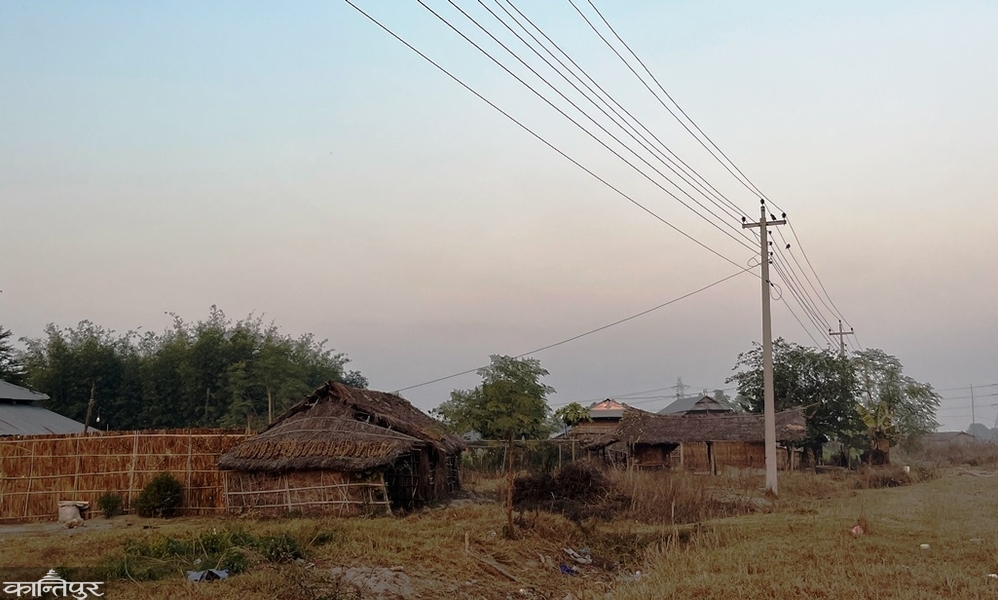
In every election, the problem of landless squatters is included in the manifestos of most parties. They raise this problem with priority. But it has not been resolved. Out of the 12 local levels in the district, excluding Itahari Sub-metropolitan Municipality and Inaruwa Municipality, the number of landless Dalits, landless squatters and irregularly settled families is found to be 41,034 in 10 local levels. According to the Land Problem Resolution Commission, Sunsari, there are 5,639 landless Dalits, 14,905 landless squatters and 20,490 unorganized settlers in the district.
According to the commission, Dharan Sub-metropolitan City has the highest number of 13,328 families without land ownership documents. Of these, 1,387 are landless Dalits, 3,821 are landless squatters and 8,120 are unorganized settlers. Similarly, 10,593 are in Barahakshetra Municipality, 4,138 are in Ramdhuni Municipality, 2,835 are in Duhabi Municipality, 2,255 are in Koshi Rural Municipality, 1,917 are in Bhokraha Narsingh Rural Municipality, 1,377 are in Gadhi Rural Municipality, 1,638 are in Barju Rural Municipality, 1,129 are in Devaganj Rural Municipality and 1,834 are in Haringara Rural Municipality. The number of squatters in the district is not known as the two municipalities have not provided details.
As the number of migrants increases with development, the expansion of unorganized settlements has also accelerated. The number of squatter families living on public land, river banks and in risky areas is significant. Sita Devi Mandal of Itahari says, ‘We just need a place to live.’ They get assurances when elections come, but no one looks for them later.’ She says that the lack of land deeds also causes problems in loan facilities and social security.
Although the Saptakoshi River is the lifeline of Sunsari, it has become a permanent risk of flooding. The residents of the Koshi coastal area live a life of terror every monsoon. This river has sustained the lives of thousands of families. But ironically, the Koshi River, which gives life, has been a cause of disaster for the residents of the coastal area for years. Due to floods and river erosion, the citizens living in the settlements on the banks of the Koshi have not been able to feel safe housing.
There is an island, ‘Sri Lanka’, between the Koshi River in Barahakshetra Municipality and its western part; this island is located in Belka Municipality-2 of Udayapur and Barahakshetra Municipality-6 and 8 of Sunsari. To reach the island from the east, one has to take a boat, while to reach the western part of the Koshi from Udayapur, one has to take a suspension bridge.
There is a lack of road transport and physical infrastructure to reach the Sri Lanka Island located in the western part of the Koshi River. One has to cross the Koshi by boat from Prakashpur to the east, while one has to go here by road via Udayapur district.
For the locals living in Barahakshetra-9 Sri Lanka Tappu area, the onset of monsoon means the beginning of a season of fear. As the rain increases, the river flow intensifies, land erosion starts, and settlements are at risk, which repeats itself every year here. Local Chaudhary is a living example of the continuous struggle with the Koshi. Due to river erosion, he has had to change his residence several times. ‘I have changed my residence five times so far, this is my sixth house,’ he lamented, ‘I built a house, lived in it for a few years, then the flood came again and everything is at risk. As soon as the rains start, I start worrying about how to save my family. If the government had built a strong embankment on the Koshi, we would have been safe, and the erosion that has been happening every year would have been stopped.’ According to him, when a flood comes, the first priority is not to save the house but to save lives. He said that many families cannot sleep at night when the sound of the river increases.
A local woman, 59-year-old Rahima Khatun, said that the erosion of the Koshi has made her lose faith in the future. ‘It is not certain whether the house built today will stand tomorrow or not,’ she said, ‘The land under cultivation has been washed away many times. The crops planted with hard work can be finished in a single night. We have to live in fear every year.’
According to the locals, the risk is increasing as the river keeps changing its course. Although the government has announced plans at various times to control the Koshi, long-term security has not been felt in the coastal settlements. Locals say that safe rehabilitation, construction of strong embankments and effective programs to control erosion are needed.
The residents of the Koshi banks are now seeking a permanent solution rather than relief materials. They expect an end to the compulsion to build, lose and relocate houses for years. The residents of Sri Lanka Tappu have expressed their desire that the Koshi River, which has been the basis of life, should no longer be a threat, but a symbol of safe coexistence.
The Saptakoshi River has not only taken away the lives of thousands of people for five decades, but also their rights. Despite having land deeds and land tax papers in their hands, the victims are still unable to exercise their rights to their ancestral lands.
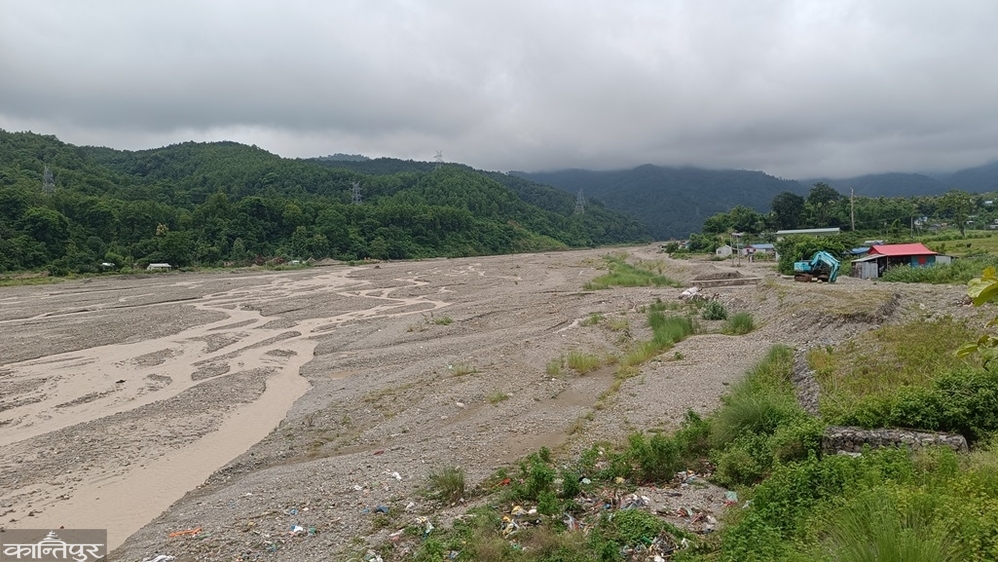
Thousands of families in Barahakshetra, Chatara, Mahendranagar and Prakashpur have become rich on paper but landless in practice. The floods five decades ago washed away their homes and land. But even now, the state has not been able to ensure compensation and permanent rehabilitation.
Raj Bahadur Rai, 70, of Barahakshetra-7, was displaced by the Koshi flood in 2042. The land title deed given by the state is still in his hands, but that land has now disappeared under the waters of the Saptakoshi River. The reality of being forced to pay land tax for land washed away by the river decades ago has become the life story of the Koshi victims of Sunsari.
Raj Bahadur has been paying taxes in the hope of receiving compensation for 2 bighas of land. ‘I have the title deed in my hand, but the bank does not accept it as collateral nor can I cultivate it. I have to pay land tax for land that cannot be used,’ said a local. Thousands of families displaced by the inundation and erosion of the Koshi have now become ‘landowners on paper but landless in practice’. Even though the ownership of the land that was washed away five decades ago has been passed down through generations, the state has been continuously paying land tax for the land that cannot be used. The Durga Poudel family of Barahakshetra Municipality-10 is another example of this. ‘The land has gone to the river, but we are paying tax hoping that the state will provide compensation,’ he said. ‘Neither the land has been received, nor has the state provided any compensation.’ More than four thousand households in Barahakshetra, Mahendranagar, Prakashpur, Madhuban, Paschim Kusaha, Sripur Jabdi and Haripur areas of Sunsari affected by the erosion of the Koshi have been waiting for compensation for decades. The victims have lost their cultivable land, houses, crops and livelihood.
Khagrendra Dahal, 55, of Bange, who is now living like squatters, says, ‘The Koshi washed away the land.’ He said that even though the government has promised to provide land to the flood victims in exchange for land acquisition, they have not received it yet. ‘There is a red certificate, but no land. When we voted 7 times, they only promised us that they would give us a red certificate. After winning the election, they became MPs and ministers, but they did not fulfill the promises they made to us,’ he said.
Similarly, the flood victims have been in need of relief for 17 years. It has been 17 years since the eastern embankment of the Saptakoshi River burst on Bhadra 2, 2065 and was destroyed by the flood. But the hearing on the relief and compensation of the flood victims has not been completed yet. The flood caused huge losses in Sunsari, Saptari and the Bihar region of India. 7,563 families in Sripur, Haripur and West Kushaha of Sunsari were displaced. 6,800 bighas of land were buried with sand by the Koshi flood, making it unusable. "For 17 years, there has been no decision on whether the flood victims will get relief," says local Panch Narayan Mandal. There is still a pile of sand in the fields where rice is grown. They are forced to grow vegetables and watermelons on top of that pile to make a living. He says, "There is still sand in 1300 bighas, it is not possible to cultivate in that sandy area." He said that the government has promised to remove the sand, but it has not done so.
Mohammad Nur of West Kushaha 4, shortly after the Koshi dam broke and the settlement was flooded, 5 bighas of land became a ravine. Even now, the sand in his field is the same. He said, "Even though the government has promised to remove the sand, it has not been removed yet." Earlier, he used to grow about 300 maunds of rice in that field. Now, there is no way to plant rice. He is currently cultivating watermelons and leafy vegetables in his field. Due to lack of irrigation, vegetable farming is also not a pleasure.
Despite the government's claim that access to health services has expanded, the citizens of rural and tappu areas of Sunsari are still unable to easily get quality medical services. Despite the increase in the number of health institutions, locals complain that treatment is still concentrated in the cities due to the lack of services, equipment and specialist manpower. Najma Khatun of Dewanganj Rural Municipality says, 'Only general medicines are available at the health post. If you are seriously ill, there is no option but to take you to Dharan.' She said that transportation and treatment costs are a huge burden for families with weak financial conditions. The problem of patients' conditions becoming more complicated if they do not receive timely treatment has become common here.
Health services are still in a poor state in the southern and riverside settlements of Sunsari. Despite having a population of around 12,000, Sri Lanka Tappu, which falls under Barahakshetra Municipality, is forced to face daily problems due to lack of basic education, health and physical infrastructure. Locals say that even for minor illnesses, they have to go out of the district for treatment.
According to local Ram Kumari Chaudhary, there is a big problem when people get sick because there is no hospital in the village. ‘There is no ambulance service.’ It is even more difficult when they get sick suddenly,’ she said. Pregnant women, senior citizens and chronically ill people are most at risk due to the lack of health facilities.
Although this Tappu, located in the Bhangal area of the Koshi River, is administratively under Barahakshetra Municipality, they are forced to travel through Udayapur district for government work. Due to the geography surrounded by the river, the development of education, health, road and transport infrastructure has not been able to expand effectively yet.
According to local 45-year-old Ram Magar, travel is completely affected during the rainy season due to the lack of a permanent bridge connecting Udayapur. ‘You can walk from the suspension bridge, but vehicles cannot ply during the rainy season. It becomes a big problem if you get sick,’ he said.
Similarly, locals complain that the Suryakunda area of Barahakshetra Municipality is still lagging behind in basic development infrastructure. Despite being an area with religious and tourist potential, health, education, roads and physical infrastructure have not been expanded sufficiently.
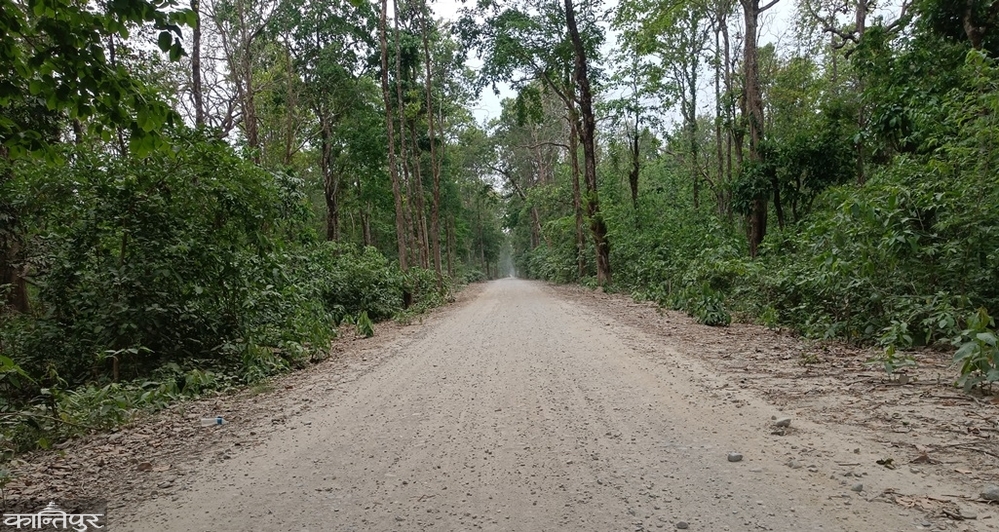
Local Reshu Rai, 25, says that they are forced to go to distant health institutions even to get basic health services. She said that since there is no health institution in the village, it is difficult to get timely treatment when they get sick. Despite the expansion of roads, there is a situation where people have to walk for hours due to the lack of regular transport facilities.
Another serious problem in Sunsari is human-elephant conflict. The incidence of wild elephants entering settlements near the forest areas of Barahakshetra, Chatara and Koshi is increasing. Farmer Tek Bahadur Chaudhary says, ‘We work hard in the fields all day, but elephants come at night and destroy everything.’ According to locals, it has become common to have to stay in shifts all night to chase away elephants. Even after compensation is given for crops, people do not go to file reports due to the cumbersome process.’
On December 25, two local women were injured in a wild elephant attack in the Kalindra Community Forest in Nadaha, Barahakshetra Municipality-03. Maiya Bik, 72, and Pujan Bik, 34, were attacked by an elephant while returning home after cutting grass from the Kalindra Community Forest near the Nadaha-Dharan road section. Locals are terrified because of the elephants. A local has even lost his life because of the elephants. According to local Sujan Chaudhary, locals hang plastic on the fences of their houses to prevent elephants from entering their houses. This prevents elephants from sneaking into houses. But this has not solved the elephant problem. He said that elephants are afraid of them even when going to the forest or walking alone in the forest.
The main road connecting the eastern hilly districts and the open Nepal-India border are at high risk of drug trafficking and use. Drugs are a major challenge in this area. In Sunsari, drug users are increasing, especially in Dharan, Itahari, Duhabi, Inaruwa and border areas, which are considered drug transit areas.
According to the District Police Office, Sunsari, the situation has become worrisome as drug-related cases have been increasing continuously in recent years. According to police data, 432 drug-related cases were registered in the fiscal year 2079/80, and 685 people were arrested. Similarly, only 512 drug-related cases were registered in the fiscal year 2080/81. During that period, 802 people were arrested. Police said that most of those arrested are youths between the ages of 16 and 35. Similarly, the District Police Office, Sunsari, has reported that more than 350 cases have been registered so far in the current fiscal year and more than 550 people have been arrested.
Police have stated that drugs including brown sugar, marijuana, tramadol, nitrovate, and corex are being used more in Sunsari. Recently, the number of youths using drugs through injection has also been increasing.
Advocate Sagar Chemjong, who lives in Dharan Sub-metropolitan City-15, says that drugs are currently the main challenge in Sunsari. He said that drug trafficking and the number of users in Sunsari are increasing significantly and especially the youth are getting addicted to it. He says, ‘Not only drug users, but the number of youth involved in drug trafficking is also increasing.’
Locals complain that theft, robbery, domestic violence and social crimes have started increasing in the district due to drug addiction. Parents and stakeholders are worried as even school and college students are being affected by it. Social worker Lila Bhujel says that drug control is still becoming a challenge despite school-focused awareness programs, increased surveillance and stricter border controls by security agencies. She says that the drug problem in Sunsari is no longer just a security issue but is now seen as a social crisis.
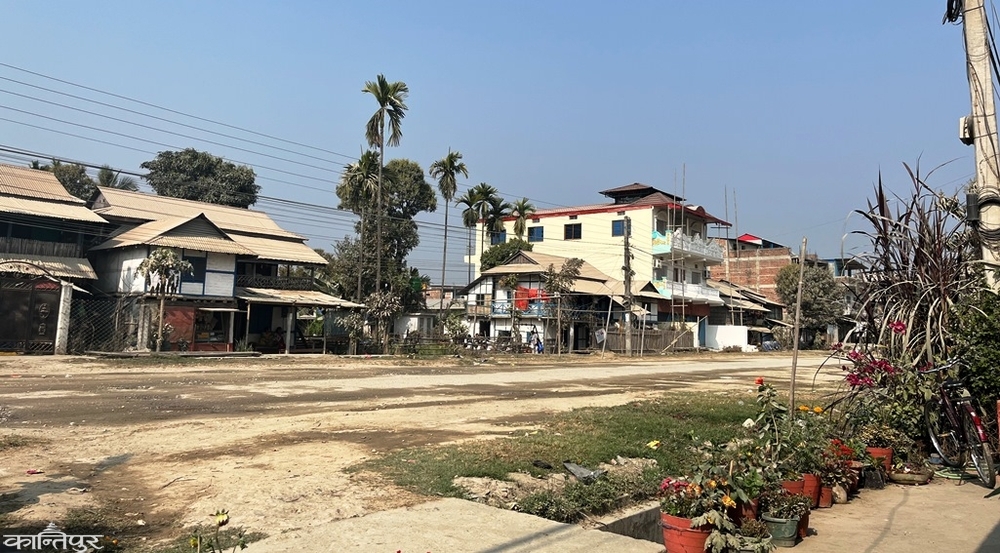
Sunsari district, which is located in the fertile land of Koshi Province, is considered one of the most important districts in the province in terms of agricultural production. With the second largest arable land after Jhapa, the livelihoods of thousands of families in Sunsari depend on farming. Despite the great potential for agricultural production due to the flat terrain spread throughout the district, irrigation potential and easy access to the market, the daily life of farmers is still limited to struggle.
According to government agricultural statistics, there are about 81,756 hectares of cultivable land in Sunsari. Of these, more than 70,000 hectares are under regular cultivation. Rice cultivation is the largest area in the district, while corn, wheat and vegetable cultivation have also become the main source of income for farmers. Although the green fields show potential for production, the problems faced by farmers have remained the same for years.
Amir Alam, a 65-year-old farmer from Bhokraha Narsingh Rural Municipality, has been dependent on farming all his life. According to him, most families here earn their living from corn, rice and vegetable farming. However, he says that production is affected due to lack of timely fertilizer, improved seeds and adequate irrigation. Despite good production in the fields, the problem of difficulty in transporting agricultural produce to the market has not been solved yet due to lack of upgrading of village roads.
The experience of the youth of the village is no different. According to local youth Hari Mandal, most of the youth are forced to go abroad every day due to lack of employment opportunities in the village. He believes that the new generation is moving away from the agricultural profession due to the failure to make farming modern, commercial and income-oriented. He says, if there is an environment of permanent income in the agricultural sector, the youth are ready to stay in their own villages.’
He complains that even though the government has announced various subsidies and facilities for farmers, these programs have not reached the actual farmers effectively. Raj Rai, a 58-year-old farmer from Rural Municipality-6, says that despite voting in elections several times, the village has not developed as expected. There is a lack of irrigation and fertilizer to increase agricultural production. ‘We are facing losses every year due to lack of fertilizer when planting crops according to the season. Farmers’ hard work has not been valued. There is a similar problem with marketing. There is a compulsion to sell vegetables grown with hard work at a cheap price,’ he said. He said that domestic products have to be sold cheaply and products imported from abroad are sold at a high price.
Despite having sufficient cultivable land, production capacity and labor force in Sunsari, the agricultural sector is still struggling with structural problems. Due to weaknesses from policy formulation to implementation, farmers have not been able to get the return on their hard work. Locals say that it is necessary to make agriculture safe, ensure the price of produce and create employment in the village.
Local issues are still at the center of the election. The 9-kilometer Nadaha-Dharan road connecting Barahakshetra-Dharan has been on the election agenda for decades, but its construction has not been completed. Farmers, traders and patients are suffering due to the muddy roads in the rainy season and dusty roads in the winter. Even patients reaching the BP Koirala Institute of Health Sciences are affected by the road problems. Shobha Dewan, a local of Barahakshetra Municipality, says that patients have suffered due to the road problems. She says, "Since I have to travel to Dharan due to my pelvic pain, I have to come 2-3 times a week now, but the road is bad and I feel frustrated and distressed. When I have pain, it makes the problem worse."
54-year-old Shobha remembers traveling this road since she was a child. Even though her mud and mud house have been converted into concrete, this road is still the same. It is muddy in the rainy season and dusty in the winter. This road, which is located on the border of Dharan and Barahakshetra, has not been constructed even after decades. Only 1 kilometer of the road in the middle of the forest has been blacktopped.
According to Ramesh Karki, Mayor of Barahakshetra Municipality, the road connecting Ramdhuni Municipality-6 and 7, Barahakshetra Municipality from Nadaha to Dharan was blacktopped from the budget of Rs 5 million received from the federal government. ६ किलोमिटर ठेक्का लागे पनि बजेट अभावले बाटो निर्माण अधुरै रहेको मेयर कार्कीले बताए ।