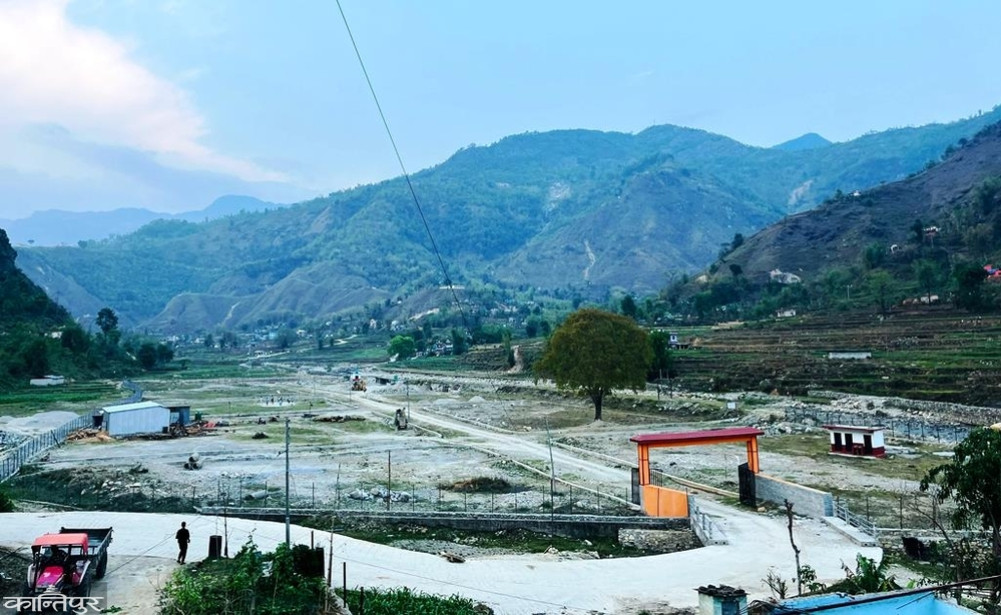
Migration, foreign employment, and dilapidated infrastructure are having a long-term impact on Syangja's agriculture, tourism, and economy.
We use Google Cloud Translation Services. Google requires we provide the following disclaimer relating to use of this service:
This service may contain translations powered by Google. Google disclaims all warranties related to the translations, expressed or implied, including any warranties of accuracy, reliability, and any implied warranties of merchantability, fitness for a particular purpose, and noninfringement.
‘A village is not like a village, a city is not like a city. No matter what someone does, you don't even recognize the place where you were born.’
As mentioned in the poem of poet Hem Hamal, due to the rapid migration and the increasing attraction towards foreign employment, the rural beauty is being lost, and the cities are not like villages anymore. The district headquarters, which have become deserted after federalization, are also not like cities.
Syangja is a district located in the hilly terrain between the two big cities of Pokhara and Butwal. The Siddhartha Highway connecting Syangja, famous in the agricultural sector, is located here. This highway has been waiting for upgrading for years.
Syangja, which is connected to the tourist capital Pokhara, is considered important for agricultural products. Most of the people of this district depend on the agricultural profession. Milk, vegetables, chicken and eggs are exported to the tourist city of Pokhara in large quantities from here. Orange farming in Syangja, which is becoming self-sufficient in milk, is the backbone of the economy. Oranges have become the main source of income for most of the people here. Syangja, known throughout the country for its orange production, is today facing the challenges of lack of infrastructure expansion and rapid migration.
Remittances from foreign employment are fueling the stoves of many households. In recent years, drinking water, electricity and roads have reached villages. The appearance of government schools has changed. But these facilities are not enough. Dilapidated highways, lack of industries and factories, delays in public services and increasing migration have overshadowed Syangja.
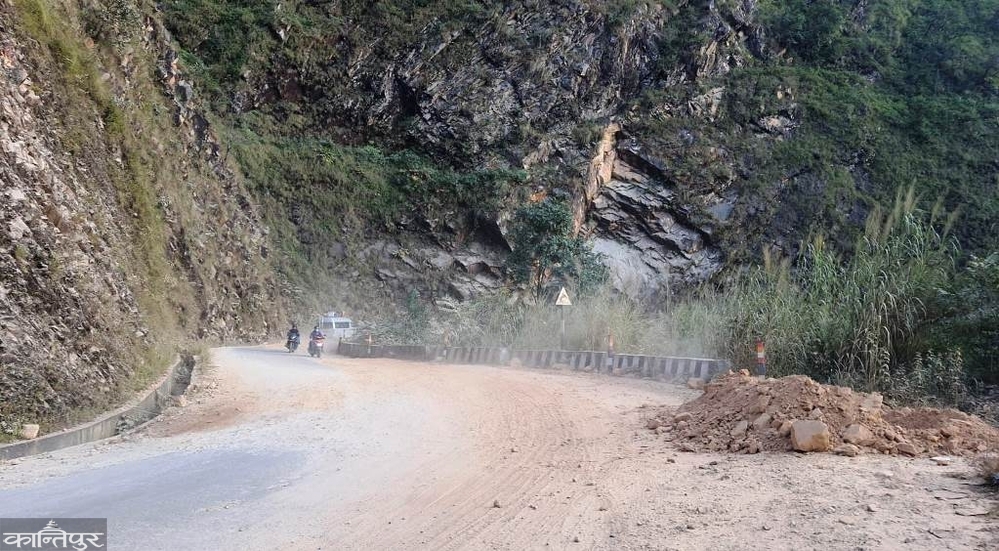
There has been a wave of migration from here to cities including Pokhara and Butwal. Even if we look at the population and voter statistics of the municipalities in the rural areas of the district, most of the people of those municipalities are temporarily living in urban areas.
Farmers have started farming in a modern way from traditional farming. However, the farmers are suffering because their produce is not getting a market. Electricity and internet service have reached the villages. However, due to migration, the cultivable land in the villages is becoming increasingly barren.
Putalibazaar, which is located at an altitude of 850 meters above sea level, is the headquarters of this district. This district is at an altitude of 366 meters (Keladi) to 2512 meters (Panchaseko Lake) above sea level. This district is bordered by Tanahun in the east, Gulmi in the west, Parbat and Kaski in the north, and the Kaligandaki River in the south by Palpa district. Before the construction of the Muglin-Narayangadh road, the Siddhartha Highway was considered the main highway of Nepal reaching Sunauli-Palpa-Syangja-Pokhara-Kathmandu. Now, this highway has become dilapidated, affecting trade, tourism and daily movement.
Syangja is home to Nepal's largest hydroelectric project - Kaligandaki A (144 MW), the largest hill irrigation project Chapakot Tar Irrigation Project (1,000 hectares), and Nepal's first model rural tourism village (community homestay) Sirubari. Which has helped in bringing in domestic and foreign tourism.
According to the National Census 2078, Syangja has a population of 253,024. Currently, this district is divided into 11 local levels, including 5 municipalities and 6 rural municipalities, and 97 wards. Syangja, which has two constituencies, had 244,890 voters in 2079 BS, while this year it has increased by 8,255 voters to 248,819 voters, according to the District Election Office.
Only promises in elections, silence in implementation
Elections have been held regularly in the country since 2064 BS. Every time, candidates contest elections with manifestos full of promises. However, implementation is weak. Farmers are the ones who suffer the most in Syangja, which has a majority of farmers. Farmers here have been complaining about the lack of markets. Locals are demanding that the district's agricultural produce be sold and tourists be brought in only if the Siddhartha Highway is upgraded. Businessmen here complain that even though political parties have always made the Siddhartha Highway an election agenda, they have not paid attention to its upgrade.
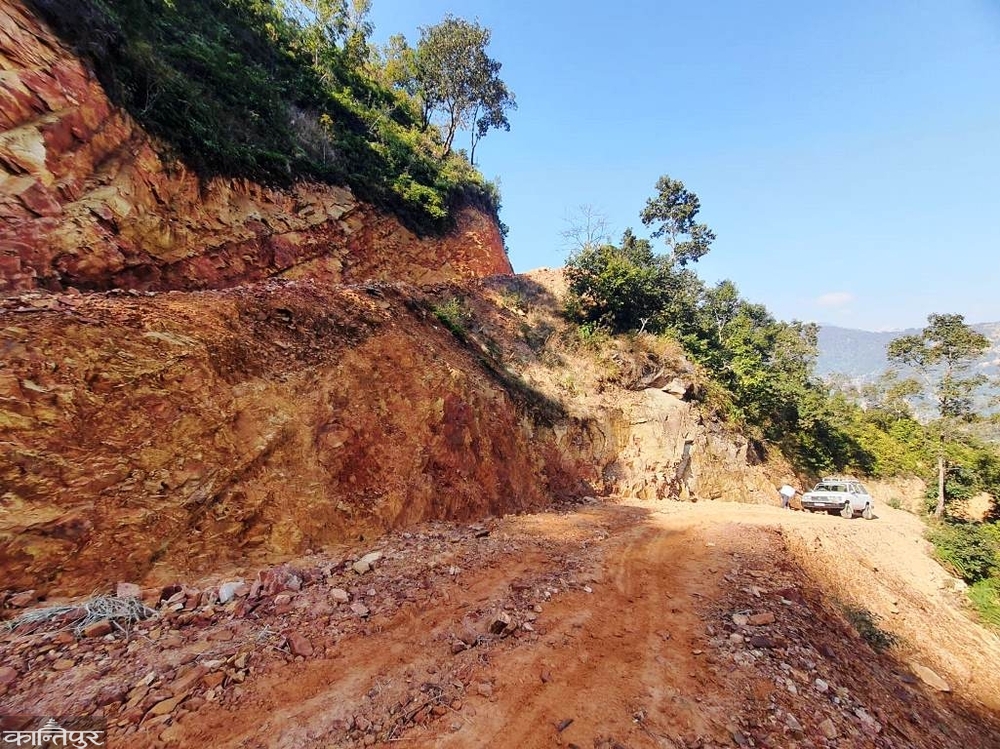
Ghanshyam Gautam of Putalibazaar Municipality-4 Gautamdada says, ‘In Syangja, development will accelerate even if not only the leaders but also the employees want it. Here, there is only talk and no big work.’ This time, voters have been saying that they will not vote for those who make Siddhartha Highway an election agenda. Candidates from both constituencies of Syangja have included the upgrading of Siddhartha Highway as a major point. In fact, Syangja is ahead in the civil service sector as well. There are examples of most of those who are from Syangja reaching the leadership level of the administrative sector. However, Gautam said that even after reaching the administrative leadership from here, they have not been able to change the face of their own district.
Orange farming is considered the main source of income for farmers in the district. Orange farming has started not only in the fields of Syangja but also on the slopes. Farmer Min Prasad Koirala said that orange farming can bring in good income. ‘If you give it time two or three times a year,’ says Koirala, ‘if you can endure hardship, you can earn lakhs of rupees sitting at home.’
Although the livelihood of families involved in agriculture is going on normally, the long-term economic base seems to be weakening due to the marketing of products, lack of industries and factories, and the emigration of youth abroad. Remittances from foreign employment have supported many households. But since it has not been converted into small cottage industries and agricultural commercialization, the local economy has not been stable, says agricultural expert Ramkrishna Bhatta.
Syangja is expected to produce 56,836 metric tons of food grains. In terms of food availability, the district is food secure. There are statistics that 44 percent of households can afford to eat their own produce throughout the year and only 9 percent of households can afford to eat their own produce for less than 3 months.
In recent years, drinking water, electricity and road infrastructure have been expanded in villages. As the physical condition of community schools has improved, the quality of education has also been gradually improving. But the dilapidated road condition has directly affected trade, tourism and transportation, says Ravindra Shrestha, former president of the District Chamber of Commerce and Industry. Shrestha says, ‘Even big and small businessmen have to rush to pay taxes. How is this considered development? Has federalism come to the district?’
Before the unification of Nepal, the current Syangja district was divided into the Bhure Takure state, which was previously under the Chaubise state, and the Rajoutas – Gahrau, Bhirkot, Satau, Nuwakot, Dhor and Paiyun states. Later, most of Dhor and Paiyun were merged with Tanahun and Parbat, and the remaining 4 states, Gahrau, Satau, Nuwakot and Bhirkot, formed the Syangja district.
Kaligandaki River, fertile lands like Chapakot and Ratnapur formed by Kaligandaki, natural shade of Andhikhola and the banks of the river, Panchase Lake, Kolma Barahchaur, Chandrakot, Chitre Bhanjyang's Grihkot and the view of the hills and mountain ranges seen from Siruwari of Panchmul, Palpa, Parbat, Gulmi, some parts of the Terai and the Himalayan views seen from Tamkekot of Nibuwakharka and many other places from where sunrise and sunset can be seen . These features are the natural tourist attractions here .
Syangja is believed to have been the auspicious place of Bhrigu Rishi in the past . Syangja is also considered a religious land like Andha-Andhi Daha and Srangakumar Samadhisthal, based on the legends associated with King Dasharatha and Srangakumar of Ayodhya. Similarly, in the Swasthani Vrat Katha, it is also believed that the 'Shadow Area' where the remains of Sati Devi fell while being carried by Lord Shiva is also located in this district. Syangja has made a name for itself not only in Nepal but also in the world with its religious sites such as Vishal Shaligram, Ramdighat, Keladighat, Uttar Ganga, etc. Chhaya Kshetra Chhangchhangdi, Panchase Dham, Chandikalika, Manakamana, Keladighat, Hungighat, Ramdighat, Gahraunkalika, Jagatra Devi, etc. Other temples, Buddhist monasteries and mosques are also tourist attractions here.
The lifestyle, festivals, food and costumes of the various ethnic groups in Syangja have become a place to study. It is especially suitable for studying, researching and observing the mother tongue, festivals, costumes and lifestyle of the indigenous and nationalities of the district such as the Gurung, Magar and Kumal communities. This district, which is rich in folk culture and has the best cultural heritage of Nepal, is home to the Kaligandaki River region, where Nepal's only Shaligram is found, and the rafting on it is considered a world-famous rafting trip.
Syangja is also a suitable district for paragliding. There is the first and only school in Nepal that teaches paragliding here. In 2074, an international paragliding competition was also held in Swarek, Syangja. Tourism campaigner Ganeshman Gurung says that despite Syangja being the gateway for tourists going from Pokhara to Lumbini/Bhairahawa via Syangja and from Lumbini/Bhairahawa to Pokhara or Muktinath via Syangja, the district has not been able to benefit from such tourists due to lack of good infrastructure such as hotels and restaurants. ‘The natural and cultural heritage of tourist attractions has been neglected due to lack of systematic tourism development,’ he says.
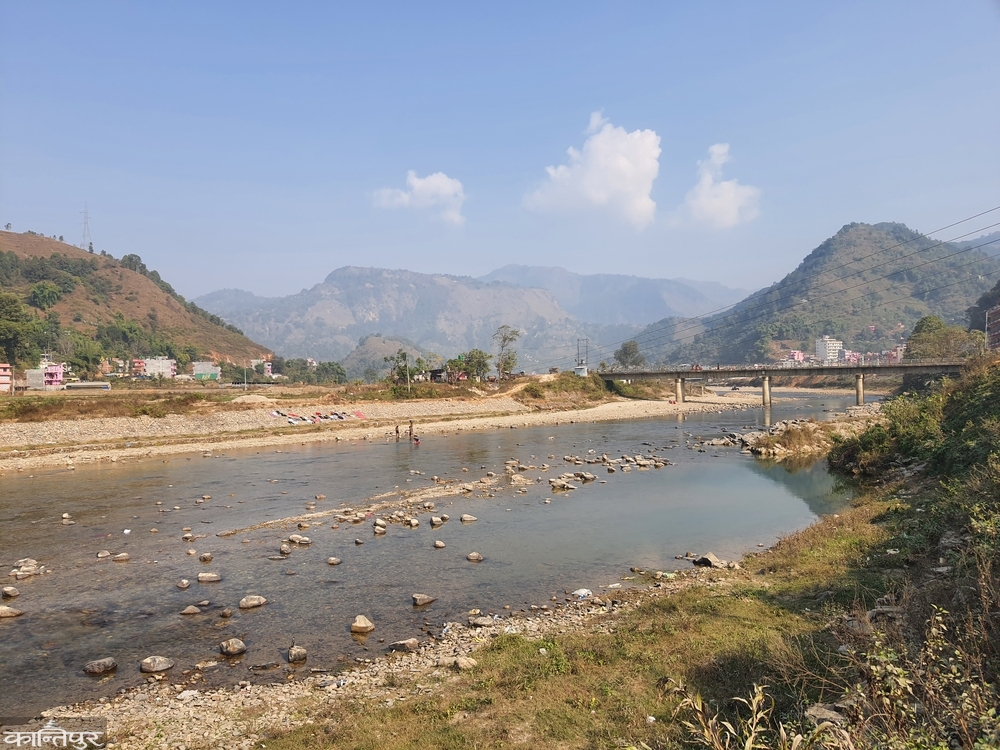
This district is located in a hilly area and has a variety of landforms. Mainly covered by the Mahabharata hills, the north and central parts of this district are made up of high mountains like Panchase, Swarek, Daheredeurali, Nuwakot Bhalupahad, Pelkachaur Manakamana, Chitrebhanjyang, and Gahraukot. Although it is said that minerals like slate, limestone, marble, gold, and iron ore are found in some of the hilly parts here, research has not been done. In fact, even without soil testing, farmers are still unaware of what crops will increase production. The main rivers in Syangja are Kaligandaki, Andhikhola, Jyagdikhola, Setikhola and Daraukhola. There are 724 streams and 423 wells in Syangja.
Villages are emptying due to migration and monkey terror According to the 2078 BS census, the population growth rate of the district is decreasing. Villages are emptying. The young generation has gone for foreign employment, while frustration in agriculture is increasing due to monkey terror. Dhruv Pangeni of Waling Municipality-10 says that villages are emptying due to monkeys. Pangeni, who is also a former ward president, said that many people in his ward were forced to migrate to the Terai due to monkeys. ‘Although it is natural to migrate from villages to cities in search of employment, education and access to health services, the locals are forced to migrate because they cannot manage monkeys,’ he said.
Sushma Chhetri of Galyang Municipality-1, who has been earning a living by farming in the village, said that despite the availability of facilities like schools, electricity and internet, farming in the village is not possible due to monkeys. ‘Despite being a village, there has been improvement in government schools. There are roads, electricity and internet facilities. However, monkeys will eat up the crops by the time they are harvested. Even if they bring a little bit of food to the house in the farm, monkeys will not keep it,’ she said. She said that the monkeys started migrating after they started eating food and leaves in the house.
There are two old age homes and one children’s home in Syangja. The only children’s home in the district is being run by donations. This orphanage, which has 46 children, was opened 15 years ago under the leadership of Kamala Parajuli. Single women, senior citizens and people with disabilities here depend on social security allowances. But some citizens are still deprived of citizenship and social security allowances. Children with disabilities have problems in school admission, and the management of special classes has not been effective, says Jeevan Poudel, head of the Social Development Office. Although most of the 52,000 households in the district are covered by health insurance, not all citizens have been covered.
Recently, cases against corruption at the local level have been increasing. The Commission for the Investigation of Abuse of Authority has seen an increase in the number of complaints filed against public bodies in Pokhara. The audit report of the Auditor General has shown that the arrears have not decreased as expected.
On the one hand, the district's economy, which is facing problems in the sale of agricultural products due to lack of infrastructure expansion, is supported by remittances. On the other hand, there are challenges of migration, dilapidated highways, dissatisfaction with public services and good governance. Local residents expect employment in their own country, a transparent governance system and access to various levels of the state for marginalized communities. Shrestha, a businessman and former president of the District Chamber of Commerce and Industry, says that Syangja can transform its potential into prosperity only if the Siddhartha Highway is upgraded in a timely manner, agricultural commercialization, religious tourism promotion and internal employment for the youth can be created.