Although the hopes of building a dry port, the Mahakali Corridor, and an industrial zone have given hope to the residents of Kanchanpur, the slow implementation of the plans has not brought immediate improvements in people's lives.
We use Google Cloud Translation Services. Google requires we provide the following disclaimer relating to use of this service:
This service may contain translations powered by Google. Google disclaims all warranties related to the translations, expressed or implied, including any warranties of accuracy, reliability, and any implied warranties of merchantability, fitness for a particular purpose, and noninfringement.
The 129.5-kilometer border with India stretches from Bhimdatta Municipality-9, Khalla Musetti, through Dodhara Chandani to Doke Bazaar in Punarbas. The border area includes districts of Uttarakhand and Uttar Pradesh on the Indian side.
The capital of India, Delhi, is 350 kilometers away from here. Rudrapur, an industrial area of Uttarakhand, is only 100 kilometers away. Despite being close in terms of distance, goods coming from Delhi and Rudrapur usually come through Dhangadhi, Nepalgunj, and the eastern border.
According to the 2078 census, Kanchanpur, which has three constituencies, has a population of 513,757. The number of voters is 314,385. There are 55 candidates in all three constituencies in the upcoming elections.
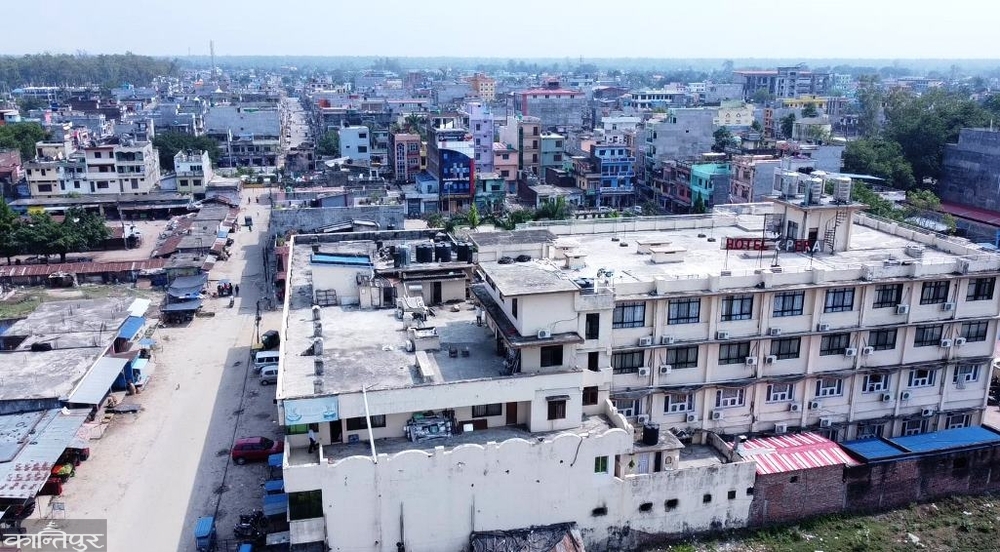
The main markets in the district are Mahendranagar, Bailauri, Dodhara, IBRD, etc. Most of the consumer goods in these markets are imported from India. Recently, agricultural goods have also been imported from India.
Out of the area of 161,141 hectares of the district, 37 percent is cultivable, 55 percent is forest and rivers and 8 percent is other . There are only a few agricultural industries in the name of industry Laljhadi Rural Municipality and Beldadi Rural Municipality are lagging behind in terms of development. The rural roads of these local levels are still muddy in the rainy season and dusty in the winter. Laljhadi Rural Municipality is one of the least developed in the district. This local level on the banks of the Dodo River has been subject to flooding and erosion for years. Recently, the construction of a bridge in Dodama has connected Laljhadi to the road network. Before that, the road to and from this rural municipality used to be closed during the rainy season. Most of the settlements in Laljhadi are flooded every year during the rainy season. The youth here go to India and third countries for employment. Since there are no employment opportunities at the local level, the number of them going to India and third countries has also been increasing in recent years.
Farmers are worried about fertilizer, seeds and markets
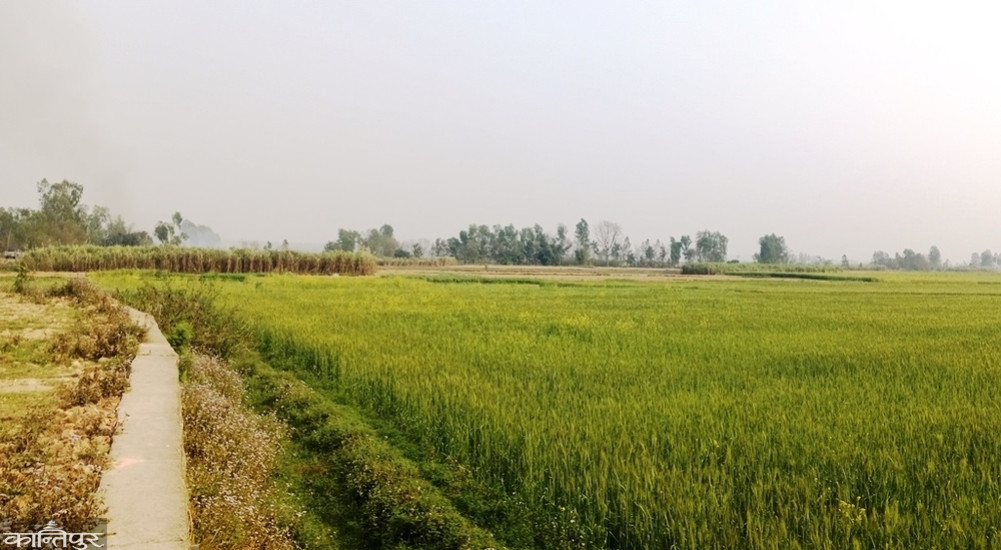
Kanchanpur is known for agricultural products. Rice, wheat, sugarcane, vegetables, mustard and banana are the main crops produced here. Out of about 60,000 hectares of cultivable land in the district, rice is cultivated on 52,000 hectares. The productivity of rice here is 4.4 metric tons per hectare. Similarly, wheat is cultivated on 32,000 hectares. Sugarcane is cultivated on 7,000 hectares, and vegetables, mustard and other crops are also cultivated.
Although agricultural production is good, farmers are facing problems of fertilizer, seeds and irrigation. Even now, there is a lack of timely fertilizer and irrigation. Due to which commercial farmers are suffering. ‘We never get seeds and fertilizers on time, and even bringing them from India is a problem,’ said Bir Bahadur Khadka, a farmer from Bhimdatta Municipality-11, ‘There is no market for the produce we cultivate. We have to sell it very cheaply when it is produced.’ The Khadka family has been cultivating vegetables commercially for a decade. But during the season, the vegetables they produce often do not get any price.
Once upon a time, the Dodhara Chandani area across the Mahakali River was famous for parwal cultivation. The vegetables produced here would reach Delhi directly. Traders would reach their homes with trucks to take the parwal. But when India tightened the quarantine and other strict measures, farmers who used to cultivate parwal here have now turned to other farming. Some produce parwal sporadically, but they have to take it to Mahendranagar for sale.
Locals say that parwal cultivation can be increased by setting up a collection center in Dodhara Chandani. ‘If it weren’t for the market problem, we would still be cultivating parwal,’ said Khadke Budha, a vegetable farmer from Kutiakbar, Dodhara Chandani Municipality-10. ‘Nowadays, we produce a little parwal, some for home consumption, and some for sale.’ He has been producing vegetables according to the season, including parwal. 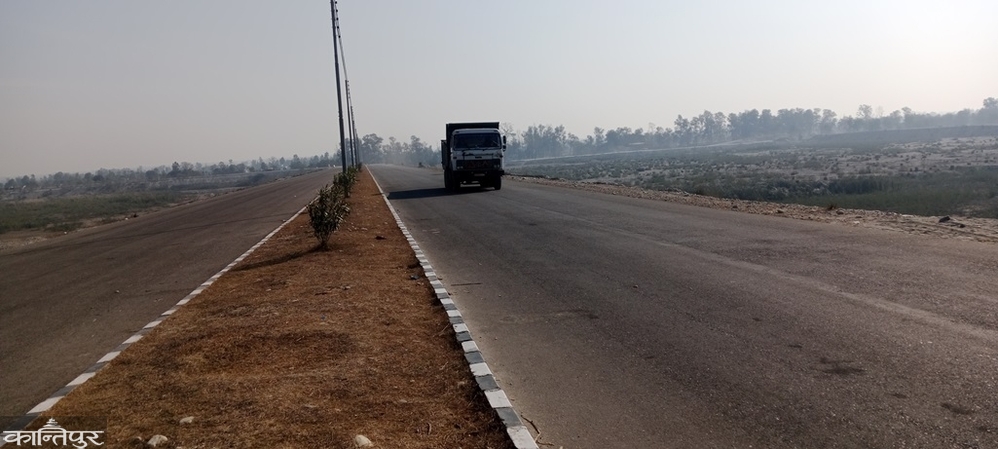
‘The main problem facing farmers here is the lack of timely fertilizer and irrigation,’ said Hari Prasad Paneru, head of the Agricultural Knowledge Center, Kanchanpur. ‘There is also a problem of not getting a market for the produce here.’ According to him, products such as rice, wheat, and corn meet the demand of the district. Other districts also export. Apart from this, vegetables are also exported to meet the demand of the district. During the rainy season, in Shrawan, Bhadau, and Asoj, the production here is not enough.
Tourists are not in the tourist area
Shuklaphanta National Park is the main tourist destination of this area. Despite being an area bordering India, the number of tourists visiting the park is very low. Moreover, the number of foreign tourists is negligible.
Shuklaphanta National Park, spread over an area of 305 square kilometers, is known for its wildlife including tigers, rhinoceroses, buffaloes and blackbucks. A herd of rare buffaloes can be seen in the vast grassland, which is considered the largest in South Asia. There are more than 2,300 buffaloes here. According to the latest census, the number of tigers here has reached 43. Shuklaphanta is also known as a protected area with a large number of tigers in a small area.
Despite having sufficient potential to attract tourists, the number of tourists coming here is very low. According to the park office, the number of tourists visiting the park in the last fiscal year was 3,722. In the previous fiscal year, 4,06 tourists had entered the park. Of which, the number of foreign tourists is very high. Before the Corona pandemic, the number of tourists visiting Shuklaphanta had reached around 12,000.
‘Due to the lack of tourism infrastructure and lack of publicity, many foreign tourists have not been able to enter here,’ said Purushottam Wagle, the park’s conservation officer. ‘There is also a lack of quality hotels around the park, and there is no other infrastructure.’ According to him, air fares are also expensive for foreign tourists.
Tourism entrepreneurs say that if the necessary infrastructure is built along with the publicity of the park and tourists are attracted, the income of the residents of this area can be improved. But they say that for this, some special facilities should be provided by the state. They say that tourism activities will increase if air fares are reduced, especially for foreign tourists, and if entry to the park is made easier. 'Necessary initiatives should be taken by the government, from publicity to tax exemptions,' said tourism entrepreneur Parmanand Bhandari. 'Good roads should be constructed inside and outside the park, along with transportation services.' He said that special emphasis should be placed on roads that can be used for safaris all year round inside the park, along with quality scaffolding.
The situation is similar not only in Shuklaphanta but also in other tourist destinations in the area. Tourist activities in areas such as Jhilmila Lake, Bedkot Lake, Lingeshwor Dham, and Zholunge Pul in Chure are also very low. Tourist traffic is low in other areas, except for the crowds at Brahmadev and Siddhababa Temples in Mahendranagar during the Purnagiri Mela.
Road connecting southern region has been abandoned for years
The road connecting Kaluwapur to Belauri on the East-West Highway has been abandoned for years . The road, which has been in discussion since the Panchayat period, has not been blacktopped yet . This road, which has been a major election agenda in every election in the past, has become the main election agenda of the candidates this time too .
It has been 5 years since the last time a contract agreement was signed for the construction of the Kaluwapur-Belauri road section . A contract agreement was signed with Santoshi Thegim Construction Company in 2077 Poush for Rs 116.4 million to complete the work within three years . The work that was supposed to be completed in three years has not been completed even in 5 years .
According to the contract, 9 kilometers of Belauri section from Kaluwapur to the south and 6 kilometers of Nile road via Domilla to the north were to be blacktopped . Work has not even started on the 6 kilometers to the north. The remaining work on the 1.5 kilometers to the south has recently progressed, said Padam Madai, chief engineer of the Infrastructure Development Office, Mahendranagar.
The Kaluwar-Belorauri road section is 24 kilometers long. Of this, 5 kilometers fall in the Shuklaphanta National Park, so work has not been able to proceed due to the lack of construction permission. ‘The park has now also given its consent, and preparations are underway to propose a multi-year contract,’ Madai said, ‘There is a delay due to other construction companies.’ According to him, the second extension of the deadline for the section currently under construction is until Chaitra.
The situation of the Shuklaphanta displaced is similar
Those displaced during the expansion of the then Shuklaphanta Wildlife Reserve (now the park) have not been able to be rehabilitated yet. Due to the lack of rehabilitation of those displaced during the expansion of the eastern part of the park, they are living in various camps including the core area and other forest areas of the park.
Since the work of expanding the park began in 2036, various commissions and committees have been formed since 2037 for the rehabilitation of the displaced. So far, 32 commissions have been formed. But the problem of the displaced remains the same. Although various commissions have collected data of 2,473 displaced people, subsequent commissions have reduced the number. However, the displaced people have been saying that they will not accept the number.
The last time the 32nd commission was formed under the coordination of former Appeal Court judge Jayanand Paneru, the number of displaced people was 2,027. Earlier, in 2071, the commission of former judge of the Court of Appeal Thakur Prasad Sharma had submitted a report stating that the number of displaced persons was 1,480 and that they should be rehabilitated.
The Paneru Commission had submitted its report on 2081 Paush 26. The committee, which set a time limit of 3 months from the date of its first meeting, has mentioned in its report that those living in parks and forest areas should be given 1 million rupees as relief per family and that they should be removed from the forest area immediately. Similarly, it has suggested giving 700,000 rupees to families living outside the forest area and 500,000 rupees to families who have received land certificates but have not been able to use the land.
The report states that 11 people have filed applications saying that they have not been able to use the land and some are yet to file applications. ‘Our generation is about to end while demanding rehabilitation, our sons and daughters are getting old,’ said Jay Bahadur Rokaya, who is also the coordinator of the Reserve Displaced Persons Struggle Committee, ‘Leaders make promises during elections, but no one returns after that.’ The displaced people say that despite repeated protests, sit-ins and even sit-ins in Kathmandu, they have not been heard.
Mahakali III canal built, water not flowing
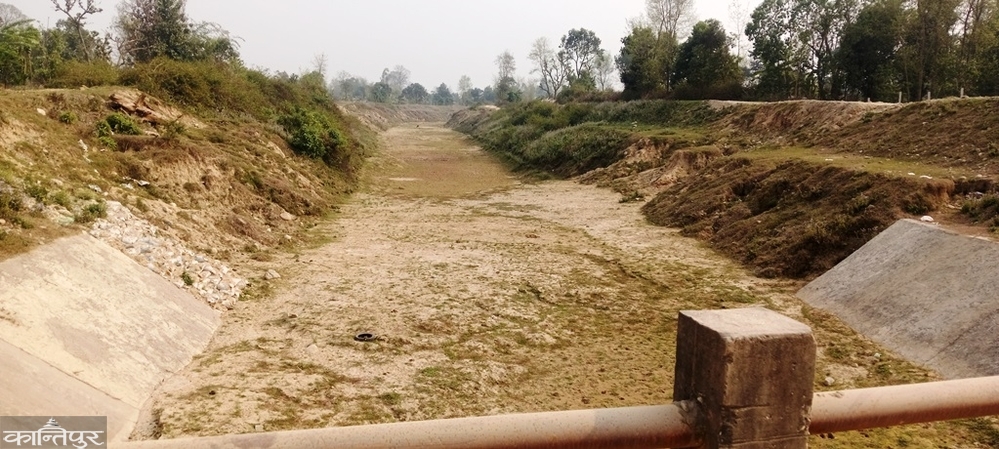
It has been 20 years since the construction of the third phase of the Mahakali Irrigation Project began. The canal construction work began in the fiscal year 2062/2063. Sometimes due to compensation disputes and sometimes due to budget shortages, the construction of the canal progressed slowly. When the project was made a national pride project, it gained momentum.
So far, 28 kilometers of the main canal have been constructed under the project. The canal was also tested two years ago. Currently, 22 branch canals are under construction in the area. Since there are some old irrigation systems, if water comes in the canal, it can be delivered to the farmers' fields.
But the Indian side has been reluctant to release water from Tanakpur Barrage to Nepal on various pretexts. The Indian side has been taking a stance that the water will be operated only after the inauguration at a high level. Due to which, even after the canal is built, water has not been able to flow.
According to the third phase of the Mahakali Irrigation Project, 22 branches can provide irrigation facilities to 5,000 hectares through the 28-kilometer main canal that has been constructed. The main canal from Brahmadev to Phuleli in Shuklaphanta Municipality has been constructed, while a 20-kilometer canal from Phuleli to Godavari in Kailali is under construction. 9 branches will be constructed in the area.
So far, Rs 9 billion has been spent on the project construction. Of which Rs 1.72 billion has been spent on compensation. After the project is completed, irrigation facilities will reach 33,520 hectares in Kanchanpur and Kailali. According to the Mahakali Treaty, 1,000 cusecs of water will be available for irrigation in the third phase of the canal from the Tanakpur Barrage.
Earlier, the first and second phases of the Mahakali Irrigation Project have been constructed to receive water from the Sharda Barrage. The first and second phases of the canal have been constructed from 2042 to 052 up to Belauri in Kanchanpur. The canal, which was built in two phases, provides irrigation facilities to 11,600 hectares. 350 cusecs of water has been provided for the canal from the Sharda Barrage.
Under the third phase, a canal will also have to be built for irrigation in the Dodhara Chandani area. For which, India has made arrangements in the Mahakali Treaty to provide water from the Sharda Canal. But while a survey has been done for the construction of the canal on the Nepal side, there is no sign of any progress on the Indian side. It is expected that the agricultural production of this area will further increase if the project is completed and water is operated.
Hopes for dry port, industrial area and Mahakali corridor
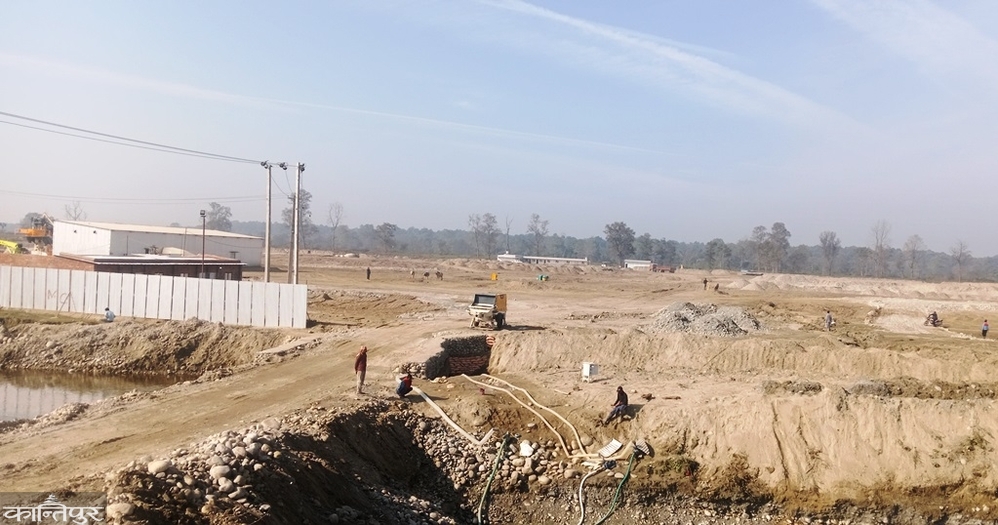
A dry port is under construction in Dodhara Chandani Municipality 1 with the assistance of the Indian government. After the construction of the dry port, which has been in the news for a long time, some hope has arisen among the residents of this area. The residents of the Dodhara Chandani area, which has been lagging behind in terms of development and construction, have become even more excited.
Indian construction company Comt Construction has been awarded a contract worth Rs 2.4 billion for the dry port being built with the assistance of the Indian government. The contract agreement has been signed to complete the work within three years and the work has already started. Last July, the Intermodal Transport Development Committee handed over the land for the construction work.
Although 42 hectares of land in the Gaurishankar Community Forest were allocated, structures will now be built on only 25 hectares. Administrative buildings, warehouses, kitchens, security, quarantine houses and load-unload sheds will be constructed in the area. In addition, walls will be built on all sides. ‘Construction materials have started arriving now, and work is also underway,’ said Intermodal Transport Development Committee engineer Anish KC. ‘The construction work will now move forward rapidly after the master list is approved.’ According to him, the construction company will bring construction materials including cement, iron rods, furniture from India. An application was made for the same tax exemption.
Even though a dry port is constructed, it is expected that there will be a boom in this area if the import and export of goods is facilitated. In addition, the work on the dry port that was supposed to be built in Daiji of Bedkot Municipality is currently stalled. Even though the foundation stone of the industrial zone was laid 5 years ago, other work has not progressed. Locals expect that industries will open up and create employment after the establishment of the industrial zone.
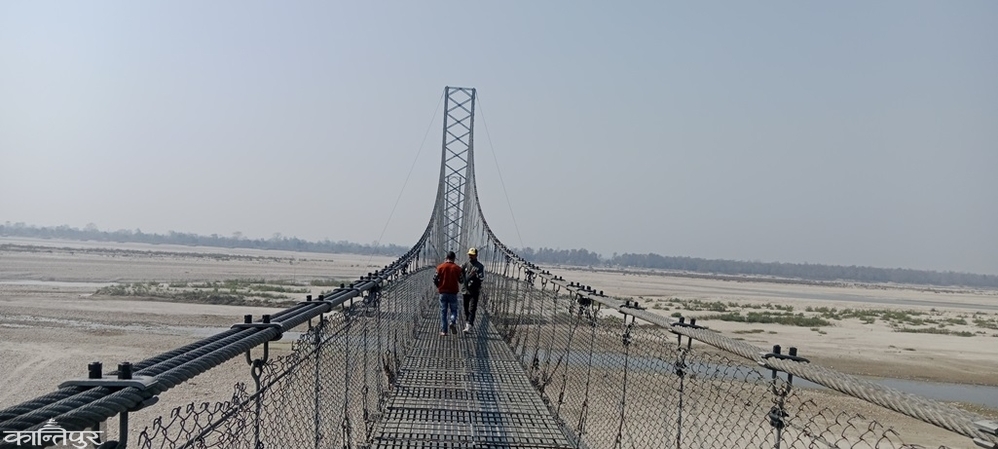
Along with the dry port in Dodhara Chandni, after the construction of the industrial zone in Bedkot, the Mahakali Corridor, which is being built along the banks of the Mahakali, has been assuring leaders that this area will become a tri-country border. A four-lane concrete bridge and a six-lane access road have been constructed on the Mahakali River. The leaders have come up with a plan to connect the same route with the Mahakali Corridor and expand it to Tinkar Bhanjyang as a trade point. The work is progressing at a slow pace. Despite the slow pace of work, some hope has been raised among the locals. The educational situation in the district is better than in other areas. With the establishment of Sudurpaschim University, higher education in this area has become easier. Campuses for studies up to the bachelor's level are in operation at all local levels except Laljhadi Rural Municipality in the district. Along with the central campus of Sudurpaschim University, affiliated campuses of Tribhuvan University are also in operation in the district headquarters, Mahendranagar. This has removed the compulsion to go abroad for higher education. The health service situation has not yet improved. Although there is a Mahakali Provincial Hospital in the district headquarters, locals are still forced to go to Dhangadhi or India for complex treatment. In rural areas, the health service situation is still very complicated.
It is seen that there is a problem in getting services easily from government agencies. Service recipients are still forced to suffer in offices such as transport, land revenue and survey. Recently, complaints about irregularities at the local level have been increasing.