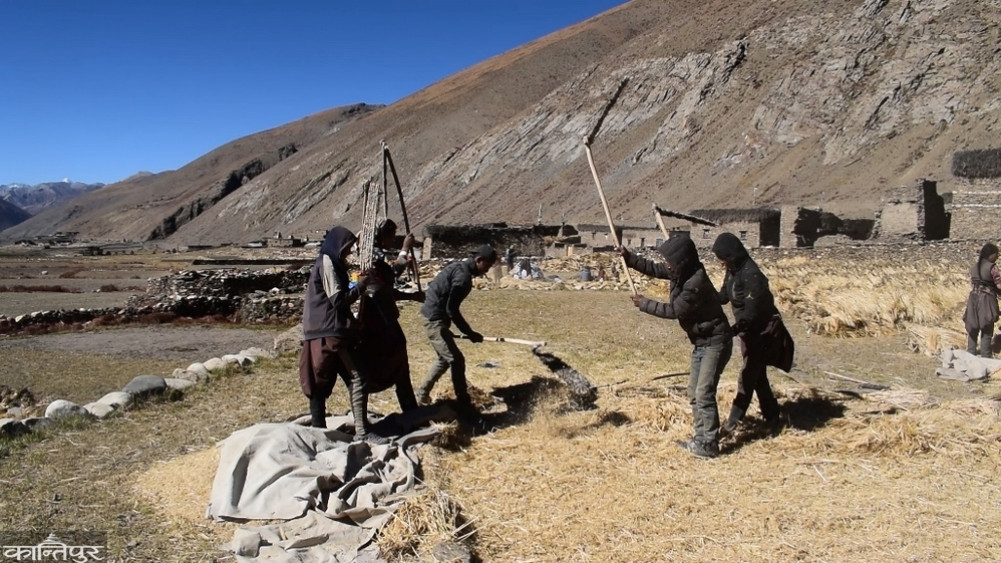
As the Yarsagumba collection declines, the residents of Dolpa are being attracted to foreign employment, while the considerable potential in agriculture, tourism, and hydropower is being undermined by a lack of infrastructure.
We use Google Cloud Translation Services. Google requires we provide the following disclaimer relating to use of this service:
This service may contain translations powered by Google. Google disclaims all warranties related to the translations, expressed or implied, including any warranties of accuracy, reliability, and any implied warranties of merchantability, fitness for a particular purpose, and noninfringement.
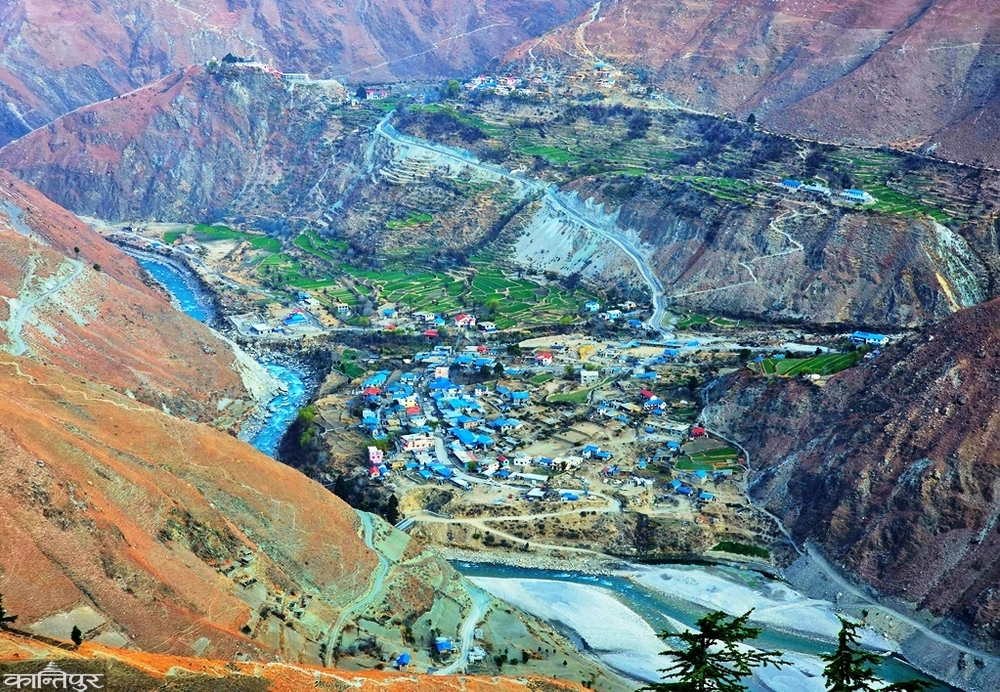
Geographically, Dolpa, the largest district in Nepal, is divided into three regions: Upper, Middle, and Lower. Spread over an area of 7,889 square kilometers, Dolpa's major potential areas are herbs, tourism, agriculture, hydropower, and the Bheri Corridor. Despite its large geography, the population is only 42,774.
The main source of income for the residents of Dolpa, located northeast of Surkhet, the capital of Karnali Province, is herb collection. Hundreds of valuable herbs including Yarsagumba, Jatamsi, Forest Garlic, and Sajaino are found in Dolpa. Of these, Yarsagumba remains the main source of income. Yarsagumba, also known as the yellow gold of the Himalayas, has been collected here since 2040 BS.
Yarsagumba, found in the high Himalayan foothills above 4,000 meters in the district, is collected from Jestha to Asard every year. During this period, most Dolpa residents lock themselves in their homes and take their livestock and children to the high Himalayan areas to collect Yarsagumba. The task of collecting Yarsagumba, which costs up to one thousand rupees per head, is considered very challenging.
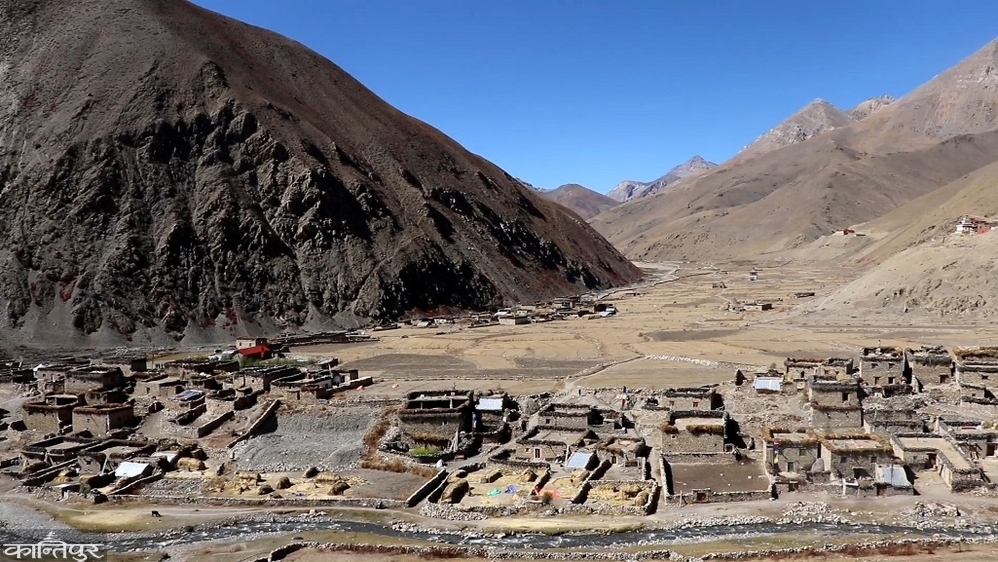
According to the District Police Office, Dolpa, more than 12 people have lost their lives every year while collecting Yarsa due to falling ill, falling sick and slipping due to having to reach the high mountainous areas covered with snow. Ruplal Budha, a local collector from Karelikada, Tripurasundari-1, said that since Yarsa is the main source of income for the year, they are forced to go to Patan with death in their hands. ‘Until four or five years ago, a single family would earn 10 to 15 lakh rupees by collecting Yarsagumba in a period of two months.’ At that time, they used to earn a lot. Now, due to climate change, they have stopped earning,’ he said, ‘Today, it is difficult to earn 200,000 to 300,000 rupees.’ He said that the money earned in this way is spent on educating children, celebrating festivals, treating health and building a house.
Recently, the Yarsagumba has become endangered due to human encroachment, said Nurendra Aryal, Chief Conservation Officer of Shey-Phoksundo National Park. ‘Every year, thousands of people visit the Patan area. The amount of waste they produce is increasing. Due to which, Yarsagumba production is decreasing year by year,’ he said, ‘It seems necessary for the state to pay attention to the sustainable management of Yarsagumba, which is the main source of income for Dolpali.’ He said that since there are deaths every year during Yarsagumba collection, it would be a great relief for the families if the state itself insured them for two months.
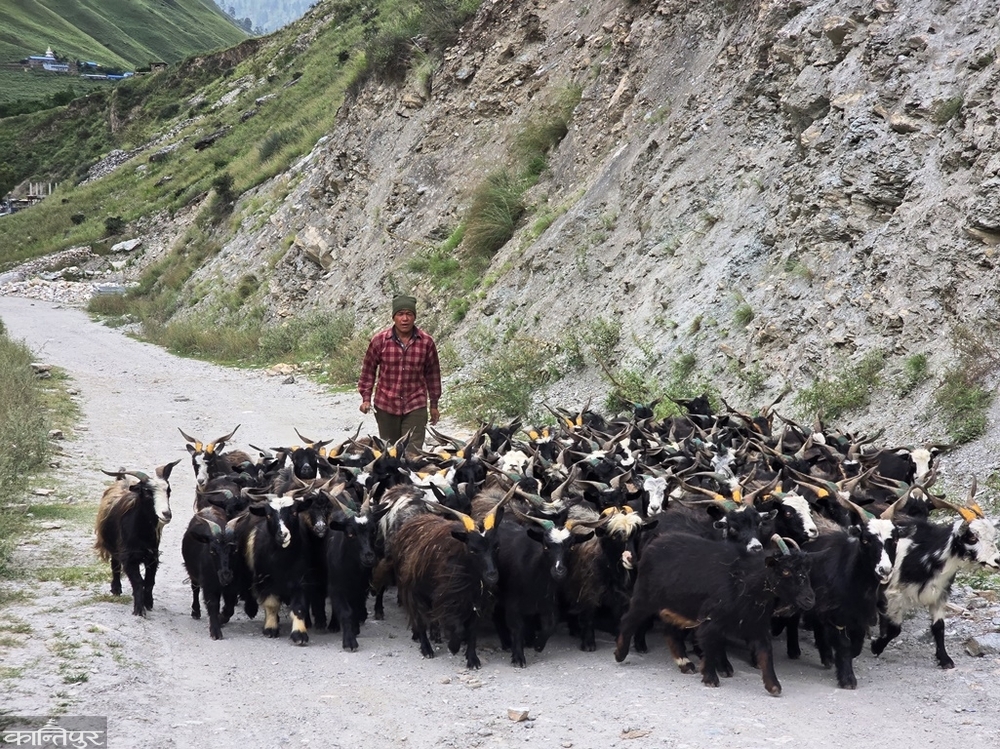
As Yarsagumba is becoming scarce, there has been an increase in the number of Dolpali youth leaving in search of foreign employment. According to the District Administration Office, 1,164 people have obtained passports so far. The office says that the number of youth making Rahadani is also increasing. Dilip Giri, a youth from Tripurakot, said that due to the decline in herbal production and the lack of employment opportunities in the district, the youth of Dolpa are forced to go for foreign employment.
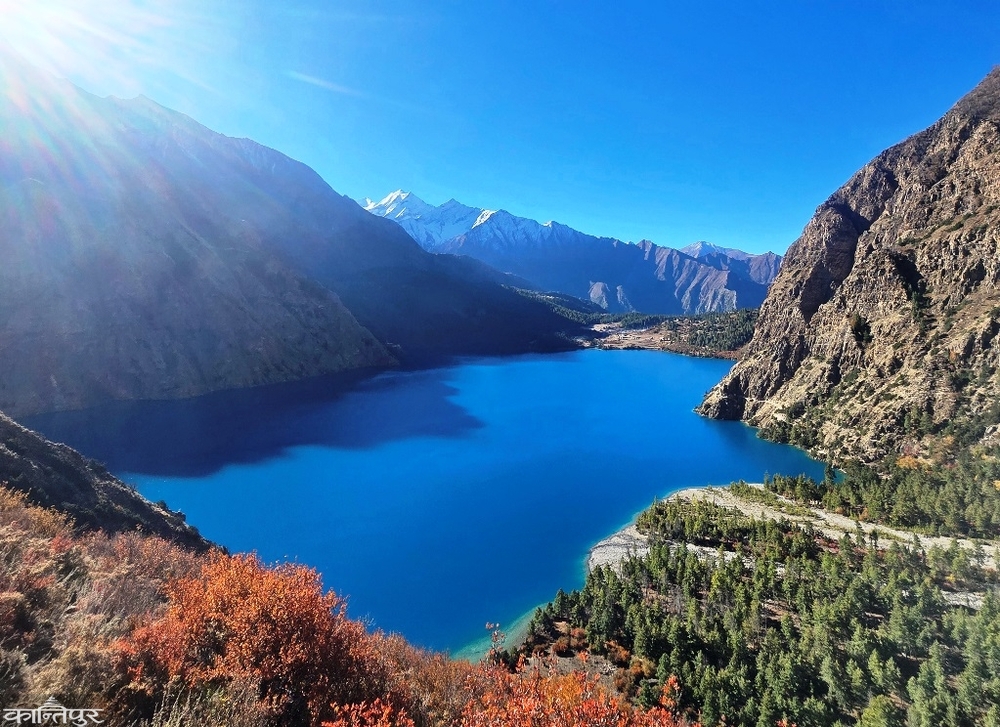
Along with herbs, another major potential of Dolpa is tourism. Nepal's deepest lake Phoksundo, She-Gumba, Tripurasundari Temple, the world's highest human settlement Dho Tarap, Jagdulla Lake and dozens of beautiful tourist areas are located in Dolpa. Due to the state's failure to pay attention to the development, promotion and promotion of such religious, natural and historical areas, tourists have not been able to enter as expected.
Tourism entrepreneur Jitendra Jhakri said that the number of tourists visiting Phoksundo Lake has been increasing year by year in recent times. He said that millions of tourists can be attracted by developing road infrastructure to reach Dolpa for domestic and foreign tourists, providing comfortable hotels and a trekking route from Suligard to the lake. He said that if more tourists enter the district, Dolpali will get employment opportunities and local products will also find a market.
Chief District Officer Junu Hamal says that Dolpali, which is rich in natural resources, has a dream of developing education, health, roads, communication and electricity. ‘I got the idea from the residents here that we should also provide all possible support to the employees coming to the district,’ she said, ‘Dolpa is also rich in religious, natural and cultural aspects. But it is necessary to prepare basic infrastructure for development here.’
Another potential of Dolpa is agricultural production. Apples and walnuts produced in Dolpa are sold and distributed to Surkhet, Nepalgunj, Kathmandu, Pokhara, Rukum and Salyan. Commercial production of apples and walnuts has been going on in Thulibheri and Tripurasundari municipalities, Jagadulla and Mudkechula and Kaike rural municipalities of the district.
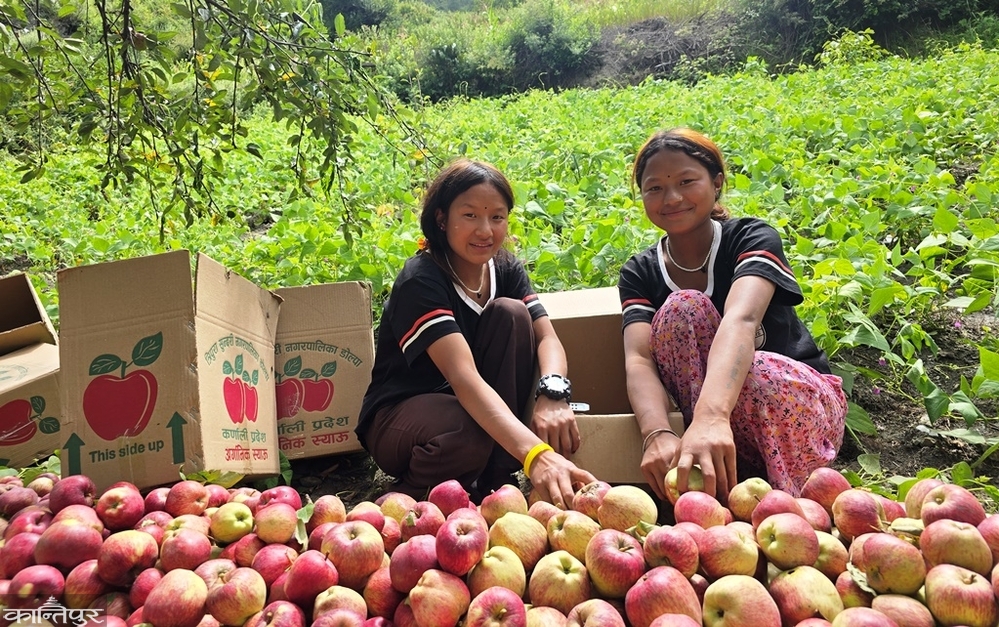
Ram Bahadur Gurung, the owner of the Model Apple Farm of Tripurasundari-3, said that with the connection of the road in Mangsir, Dolpa has shifted towards apple and walnut production. ‘For the past three years, traders have started buying apples at Rs 55 to 60 per kilogram right from the fields.’ This rate has been increasing every year. Due to which the source of income of farmers has also increased,’ he said.
From last Shrawan to Asoj, 400 metric tons of apples were exported from Dolpa alone, earning Rs 22 million from it, informed Govinda Malla, the head of the National Agriculture Modernization Program Implementation Unit Office, Dolpa. According to him, apples are cultivated in an area of more than 1,000 hectares and this rate is increasing every year. He said that if the state can make a special policy to promote and develop apple farming, the taste of Dolpa apples can also be internationalized.
Another possibility for Dolpa is hydroelectric power generation. A 106 megawatt hydroelectric project is under construction in Jagadulla rural municipality of the district. If the project is completed, it is expected to open the door to another development in the district. Another 328 megawatt Bharabung Tatukhola hydroelectric project is to be built in Kaike and Charkatangsong rural municipalities of the district. For this, the Department of Power Development has completed the necessary study and environmental impact assessment process and has started the approval process.
Deputy Director of the department, Gokarna Raj Pant, said that the feasibility study and environmental impact assessment for the project have been completed and submitted to the Ministry of Forest and Environment for approval along with the approval of the Ministry of Energy, Water Resources and Irrigation.
Along with this, the Bheri Corridor is also a basis for the Dolpa potential. The corridor, which connects China's Morimla checkpoint in Dolpa to India's Rupahidiya, is also an important project of the Karnali Provincial Government.
Currently, 56 kilometers of the corridor from Jajarkot to Talnubagar are blacktopped. The 61-km road upgrade work from Talnuba to Dunai has been taken forward.
Although the contract was awarded three years ago for the construction of the 25-kilometer road from Dunai to Lasicap, the work has not been completed. The 35-kilometer road track from Lasicap to Sisaul is yet to be opened. Gyalbo Thapa Bhote, a young man from Upper Dolpa, said that despite the efforts of the general public and district leaders to hand over the 35-kilometer section from Lasi Kap to Sisaul to the army, they have not succeeded. He says that since the area has hard rocky terrain, no one except the army can work there.
‘The 40-kilometer road track from Morimla to Sisaul has already been opened.’ If this corridor is completed, Chinese goods can be imported directly into the Nepali market, and Nepali products can be transported directly to the Chinese market. The people of Dolpa and the state can also benefit from this,’ he said.
The situation in the district before Mangsir 2075 was dire. At that time, the main means of transportation for the people of Dolpa was the ship. To travel outside the district, one had to wait for months for a ship. Since the plane ticket was available only on the basis of accessibility, the general public was forced to walk for three to four days to find a vehicle.
For education and health treatment, they had to carry people to the vehicle. There was no alternative to horses and mules to transport daily necessities. Since the transportation cost was expensive, the general public was forced to bear the high cost. However, after the road was connected, the accessibility of transportation has increased and daily necessities reach Dolpa directly.
There is a direct bus service from Dolpa to Nepalgunj and Kathmandu. However, due to the lack of concrete bridges in places along the Bheri corridor, the direct bus service is disrupted for about 6 months during the rainy season.
The service delivery situation at Dolpa District Hospital has also improved compared to the past. The hospital has stated that the service delivery has also improved after the construction of the new building structure of the hospital and the management of staff, equipment and medicines. ‘Currently, there are nine doctors including one MDGP doctor in the hospital. Successful surgeries for pregnant women, hernias, appendicitis, etc. have been performed,’ said Dr. Sizan Rawal, Chief of the Health Service Office, Dolpa. ‘We are providing the best possible health facilities to the people of Dolpa. If the state arranges more manpower and medical equipment, the hospital services can be made even better.’ He also said that due to the lack of road infrastructure in the upper part of the district, the citizens there are facing problems in getting health treatment.
Although these facilities are available in the lower part of the district, the residents of Upper Dolpa are deprived of education, health, roads, electricity and communication facilities. Even though the district hospital in Dunai provides basic facilities, the situation remains that patients of complex nature have to go outside the district for treatment.
Moreover, the residents of Upper Dolpa have no option but to charter a helicopter to go outside the district for health treatment. Upper Dolpa has not yet been connected to the national road network. As a result, Upper Dolpa is deprived of quality education, health, electricity and communication facilities.
She-Phoksundo, Dolpobuddha and Charkatangsong rural municipalities in Upper Dolpa are deprived of reliable telephone and internet facilities, said Pemma Chhewang Gurung, a resident of Dolpobuddha rural municipality. ‘The government has not yet provided 4G service in Upper Dolpa, so we have been deprived of access to communication and electricity.’ Due to the lack of road facilities, even when people in Upper Dolpa fall ill, they are forced to die prematurely without receiving treatment,’ he said. ‘We do not care whether we have a state or not. Agricultural production is very low.’ We are living in such a situation. He said that if the government expands the road to Upper Dolpa and permanently opens the Chinese border crossings of Morimla and Cato, life will be much easier.
Construction of three concrete bridges stalled
The construction of three concrete bridges connecting the three districts under the Bheri Corridor has been stalled for a year. However, there is no decision to resume the work. The construction of the Chalgard Khola bridge in Tripurasundari-1, the Khadang Bheri River bridge in Ward 5, and the Talnu Bagar concrete bridge connecting Rukum West and Jajarkot have been stalled for about eleven months.
The construction of all three bridges to be built in the Bheri Corridor connecting Dolpa via Jajarkot has been stalled for about eleven months. YPMR JV Bharatpur, which was entrusted with the construction of all three bridges, has stopped the construction of all bridges after only one year of starting the work. Only the concrete bridge over the Chalgard River in Dolpa and the foundations on both sides of the Talnubagar bridge have been constructed. After that, no further work has been done.
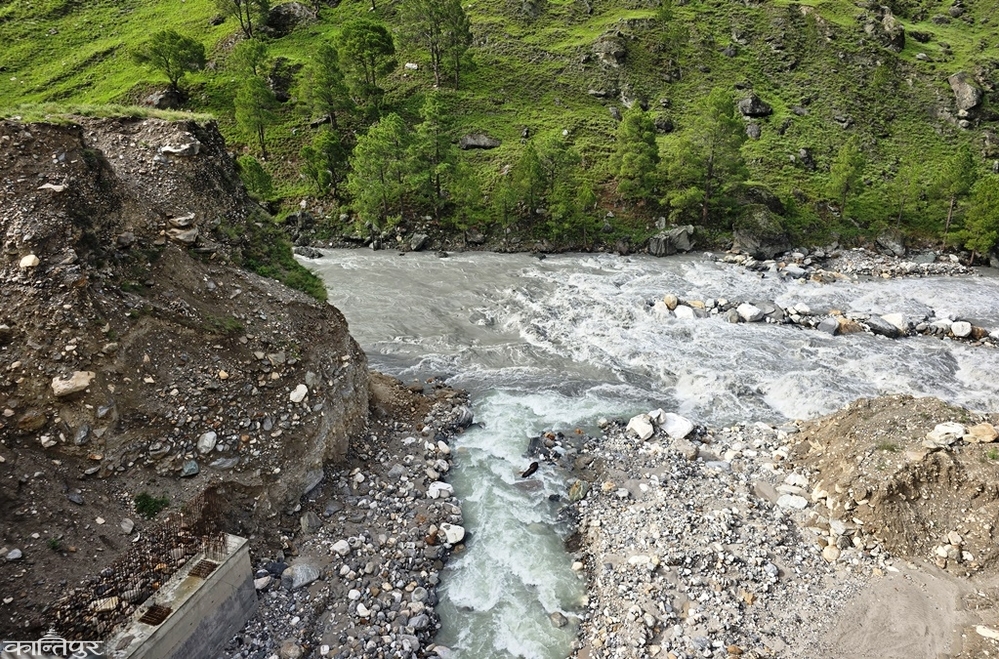
Meanwhile, work has not started in Khadang. Locals have been obstructing the construction of the bridge at an inappropriate place above the settlement for about a year. 'We have completed about 30 percent of the work on the Chalgard River and Talnubagar bridges. It took about a year to complete that work. We will not do the rest,' said Resham Bhattarai, proprietor of YPMR JV, 'All three bridges are one project. It has been a year since locals obstructed the construction of the Khadang bridge. Construction equipment and materials worth crores of rupees, including rods, excavators, crushers, etc., that were brought are lying idle. Work on the bridges at both other places cannot be done until the dispute over the mine is resolved.''
He said that he has invested crores of rupees in this work. 'If the Bridge Sector Office Surkhet gives a written letter saying that only the Chalgard and Talnubagar bridges should be built and the Khadang bridge should be built after the dispute over the mine is resolved, I will start the work immediately.'' Otherwise, the work on the remaining ones cannot be done by leaving one unfinished,'' Bhattarai said.
Devendra Bhattarai, Acting Office Chief of the Bridge Sector Office Surkhet under the Road Department, said that if the work does not start by this Falgun, the necessary legal process, including stopping the Peski, will be taken forward.
The state of good governance in the district is deteriorating. In Dolpa, which has eight local levels, there is irregularity and the condition of service delivery is critical. A municipal employee in the district said that the pressure from public representatives on the work to be done according to the rules at the local level is increasing, and there is a problem of being seen as unreasonable and facing lawsuits.
‘There is pressure to distribute the municipality’s development budget arbitrarily. Along with this, pressure is given to hire contract employees indiscriminately. As a result, the development budget is forced to be spent on salaries and allowances,’ he said. He said that office heads and employees in municipalities do not last for the full term due to unnecessary intimidation by public representatives.
The situation of migration in Dolpa is very low. According to local tradition, Dolpa people believe that one should not leave the village where one was born. Even if one builds a house in an urban area outside the district, they sometimes go for special work and eventually live in their own village, local Nirmal Prasad Upadhyay said.
He said that it would not be good to leave the house where one has lived since their ancestors wherever they go for employment or work.
There are 24,100 voters in Dolpa, which is the only constituency for the House of Representatives. Six candidates are in the fray for the upcoming Falgun 21 election.
Lanka Bahadur Rokaya from UML, Karna Bahadur Budha from Congress, Dhan Bahadur Budha from Nepali Communist Party, Dev Singh Aidi from National Independent Party, and independent candidate Omendra Bahadur KC have entered the election. Progressive Democratic Party candidate Bikash Budha has already coordinated to support UML. Similarly, Ujjaya Nepal Party candidate Dil Bahadur Bista and Miteri Nepal Party candidate Junu Bhandari have joined the Congress.
The commitment of most candidates in the district is to build the Bheri Corridor, maintain good governance, expand education, health, communication, and electricity services.