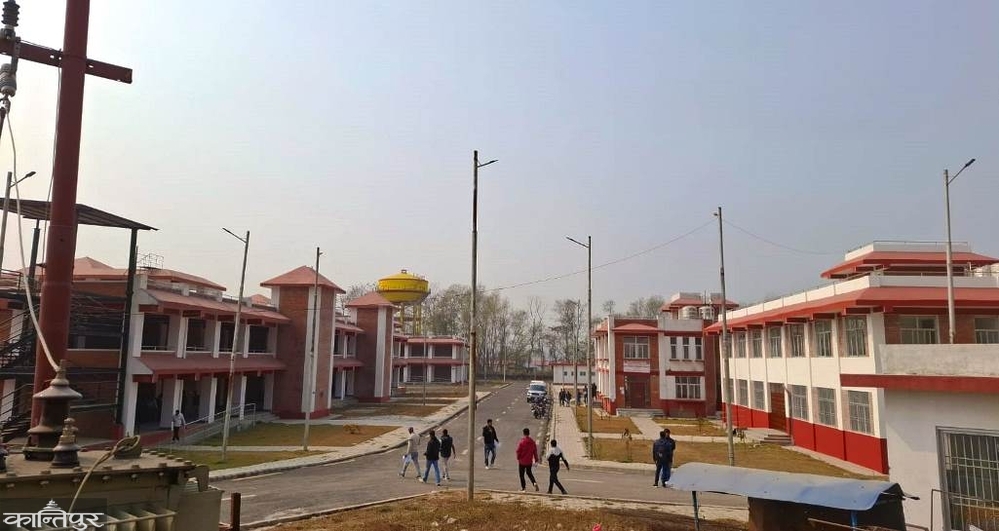
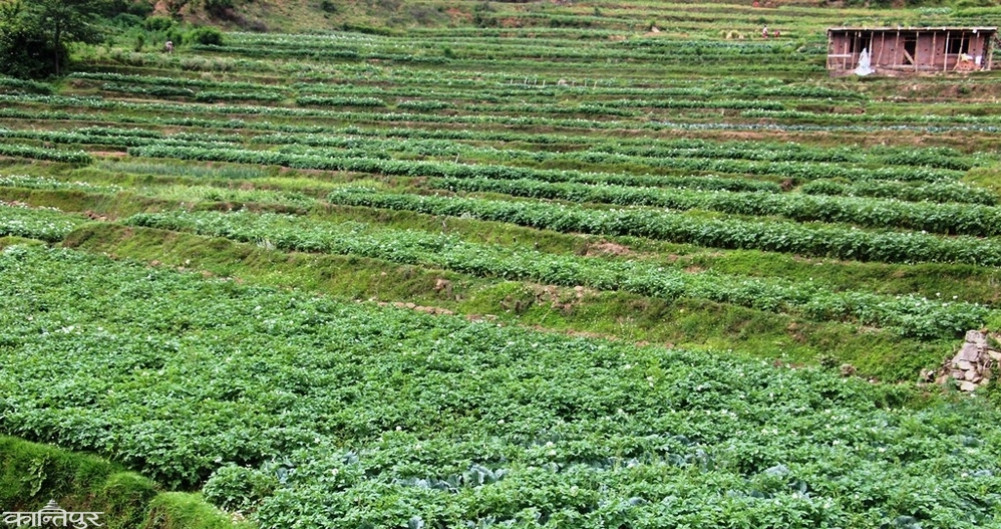
The common agenda of the candidates in this year's election includes squatters, unorganized settlements, problems in buffer zones, and legalization of marijuana cultivation. Although promises have been made to distribute land titles to squatters for a long time, this has not been fulfilled yet.
We use Google Cloud Translation Services. Google requires we provide the following disclaimer relating to use of this service:
This service may contain translations powered by Google. Google disclaims all warranties related to the translations, expressed or implied, including any warranties of accuracy, reliability, and any implied warranties of merchantability, fitness for a particular purpose, and noninfringement.
Makawanpur has an area of 2426 square kilometers in 10 municipalities. It occupies 1.65 percent of the total area of Nepal. The lowest part of the district is Hattidhunga in Bagmati Rural Municipality, 166 meters above sea level, while the lowest part is Simbhanjyang in Thaha Municipality, 2585 meters above sea level.
Makawanpur was named Mukundapur after the Sen dynasty king Mukunda Sen. There is a legend that over time, Mukundapur was corrupted to Makawanpur. Makawanpur is located in the lap of the Mahabharata range to the north of the district and the Chure Parbat (Shiwalik Hills) to the south.
The residents of the northern and western parts of the district are engaged in vegetable farming on a commercial basis. They are earning their income from that. Most of the residents of the eastern part are based on subsistence agriculture. Ramesh Phuyal of Hattisudhe, Bakaiya Rural Municipality-3, said that he has invested Rs 10 million in the poultry farming business and has provided employment to seven people. Chitra Bahadur Karki of Bakaiya Rural Municipality-4, who cultivates vegetables, said that he is earning Rs 2.5 million annually.
Hetauda, the capital of Bagmati Province and the headquarters of Makawanpur, has an industrial zone established 52 years ago. About 7,000 people have found employment in the industries in the industrial zone and other industries outside. In recent times, commercial farming of mangoes, dragon fruits, etc. has been progressing in some wards of Hetauda Sub-metropolitan City. Youth have been attracted towards it. Nowadays, rather than getting a job in the industry, people are attracted to go abroad for employment or to become self-employed in poultry farming, animal husbandry, vegetable and fruit farming.
The main employment destinations of the youth here are Kathmandu and abroad. Most of the industries in Hetauda are working as unskilled laborers. Only a few youth are self-employed. Youth have also started small industries and commercial agriculture, animal husbandry, mushroom and mango farming with small investments. Drug use is also seen as a serious problem in and around the district headquarters, Hetauda.
Makawanpur Multiple Campus Chief Yam Silwal says that after completing 12th grade, young people start planning to go abroad. ‘After completing 12th grade, most people dream of going abroad. Youths try to do work that will generate income in a short time, and the idea that they will earn income through hard work and investment for a long time has not dawned on them. ’ Makawanpur Chamber of Commerce and Industry President Pramod Singh Ranabhat says that despite the country’s not investment-friendly environment, young people are afraid to invest in any sector.
In remote villages of Makawanpur, there is a problem of not finding a market for agricultural products. Local farmers say that when they bring their agricultural products to the market, the cost price does not even increase and the vegetables and other products they produce are not sold and they have to resort to illegal farming. Suman Nagarkoti, 34, of Khairang, a remote village in Makawanpur's Raksirang Rural Municipality-9, said that the residents of Khairang started cultivating marijuana after the cauliflower, radish, and cabbage they produced were not sold. He said, "It is not sold by growing other vegetables. It seems that they are resorting to illegal farming here after traders started coming to the village to buy them."
Some youths here have also fallen into the trap of the police due to illegal farming such as marijuana and opium. "Many youths have been arrested while carrying marijuana and opium and are in Bhimphedi jail," said Rajkumar Malla, chairman of Raksirang Rural Municipality. "We have tried to build a road in the said village that will allow vehicles to travel for 12 months, only then will agricultural products be able to find a market." Chairman Malla said that due to the lack of a market for agricultural products, the villagers have had to resort to illegal farming and their living standards have not changed.
After the establishment of federalism in the country, municipalities have become the closest government to the locals. Citizens' trust in local governments has increased. Most municipalities have been delivering social security allowances to their homes. Basic health services are being provided from health posts in the wards. Health workers regularly stay at the health posts.
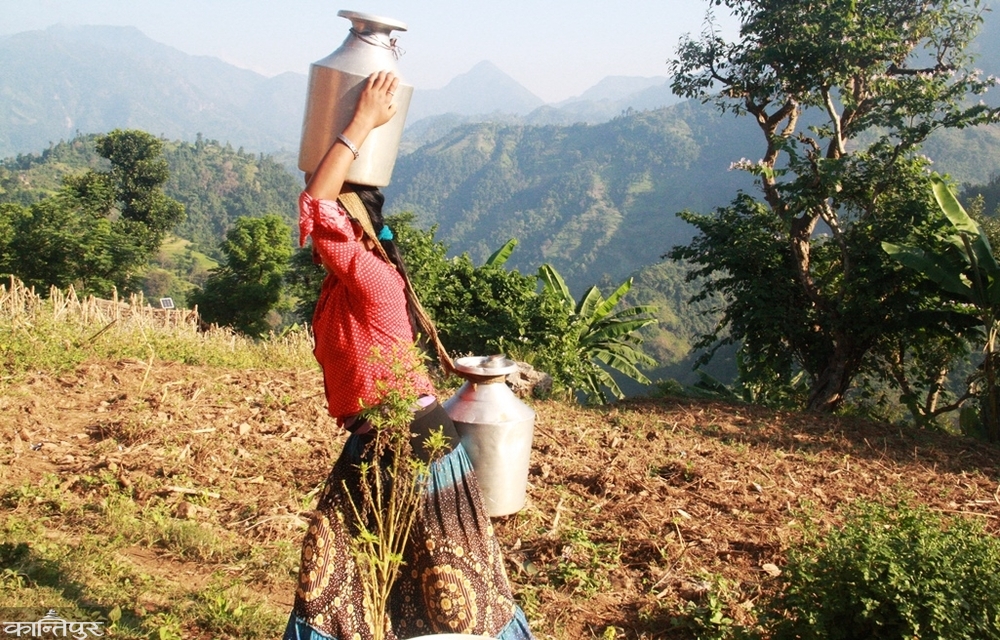
The remote Raksirang Rural Municipality has operated a 10-bed hospital. It has been providing 24-hour health services, including MBBS, in the hospital. This municipality has established health facilities in all 9 wards. The municipality has also established a water testing laboratory. Ram Bahadur Chepang of Thadochuri, Raksirang Rural Municipality-5, said that the municipality has done good work in the health sector with its own resources.
Residents of endangered and marginalized communities have benefited more from the social security allowance. The main means of change in the lives of the endangered Banakariya community, which lives only in Manahari Rural Municipality of Makawanpur, is the social security allowance. The government has been providing social security allowance since 2066 BS with the aim of bringing the Banakariya community into the mainstream of the state. They receive social security allowance as soon as they register their birth. The dropout rate at the school level has decreased due to scholarships and midday meals.
The rate of children dropping out of school has decreased after schools in remote Kailash and Raksirang Rural Municipality of Makawanpur started providing midday meals. Lalumaya Chepang, Principal of Silinge Secondary School in Silinge, Raksirang Rural Municipality-6, said, “The municipality has provided scholarships to students of grades 9 and 10, and the number of dropouts is very low because midday meals are provided to all.”
All 10 local level centers of Makawanpur are connected to the main highway. The road from the highway to the municipality center in Raksirang and Kailash rural municipalities is in the process of being blacktopped. There are 7 road routes from Hetauda to Kathmandu. 4 of them are short but risky as they have not been upgraded. The Kantilokpath, which was started 69 years ago, has not been completed yet.
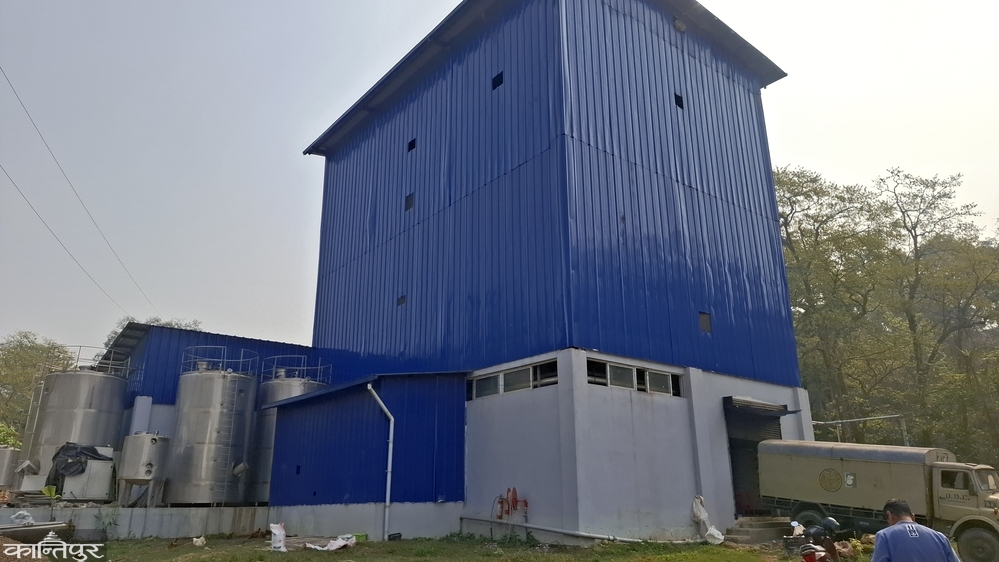
Although there is no water problem in Hetauda Sub-metropolitan City, the remote Raksirang rural municipality has a drinking water problem. In Ward-6 Silinge, the water source dries up during the dry season, causing a drinking water problem. Lalumaya Chepang, the principal of Silinge Secondary School, said that there is a water problem here after the dry season, "There is also a problem in arranging drinking water for students during the summer." There is a severe water problem in Bharata, another remote Kailash rural municipality in the district. During the rainy season, they are still forced to drink water from Balesi, while during the dry season, they are forced to drink water from a well located below the village in Kholsi. The residents of the area have been requesting water from the local government to the federal government for drinking water. In Makawanpur, 98 percent of the villages have received electricity. The milk powder plant built by the Bagmati Province government with its own investment in Hetauda Sub-metropolitan City-10 has not yet been operational. The industry, whose construction began four years ago without a feasibility study, has been unused for a year due to the lack of a procedure to determine which body will take charge of its operation since it was ready in 2081 Paush and started trial production. The powder plant, built by Bagmati Province with an investment of Rs. 470 million, is an industry established with the aim of collecting milk that is more than the demand and making powder and preventing farmers' milk from going to waste. The industry, which was started without a feasibility study, was tested for production. Since then, the industry has not been able to be used regularly for powdered milk production, informed Binod Kumar Bhattarai, Secretary of the Ministry of Agriculture and Livestock of Bagmati Province. Although the industry was built in coordination with the Dairy Development Board under the ministry, no one has shown interest in operating it. The ministry says that the board has not even made a working procedure for a year regarding which body will operate the industry.
Similarly, the construction of an international-level agricultural wholesale market in Thanabharyang, Hetauda Sub-metropolitan City-11 has been completed. But it has not been put into use. The wholesale market, which was built at a cost of about 300 million rupees, 70 percent of which was provided by the provincial government and 30 percent by the Hetauda Sub-metropolitan City, is in an unused state. The office of the Chief Election Officer for the House of Representatives elections to be held on Falgun 21 is located in the wholesale market. The provincial government has given the responsibility to operate the sub-metropolitan city, but the work procedure has not been established, said Hetauda Sub-metropolitan City Mayor Meena Kumari Lama.
The number of people going for foreign employment from Makawanpur is 25,712. According to the 2078 census, although this number is low compared to other districts, there are fewer young people in the village. Locals say that in some villages, there is no youth manpower even to go to Malami. Due to the increase in migration and exodus, Makawanpurgadhi and Raksirang rural municipalities have also made arrangements for grants to return those who have migrated to the village from elsewhere and those who have left the village to other places. However, it does not seem to have had much effect. Man Bahadur Thing of Dandabas, Thaha Municipality-7, says, "The youth of the village have gone to the cities and abroad for employment, and only the elderly remain in some houses in the village." According to him, most of them have not left the village because of lack of education, roads, and land to earn a living, but they have mostly left the village for job opportunities and employment.
Service recipients are receiving services in the government offices of Makawanpur as usual. Advocate Madan Dahal says that government, non-government, and community organizations in the district are providing services to citizens in a smooth manner. "Although they are getting services smoothly because they have received the necessary documents, residents of remote areas have had to invest more in time and money," he said. Residents of the northern part of Makawanpur have been demanding the establishment of an area administration office in Thaha Municipality for a long time. They are forced to come to Hetauda to receive the services provided by the district administration. Thaha Municipality Mayor Bishnu Bista said that the establishment of the Thaha Municipality area administration will make it much easier for the residents of this area. According to the Auditor General's report, the amount of uncollected income is increasing in all municipalities of Makawanpur. The least uncollected income is shown by Indrasarobar Rural Municipality at Rs 13.8 million. The highest amount of uncollected income is shown by Hetauda Sub-metropolitan Municipality at Rs 51.14 million. Similarly, Thaha Municipality has shown an uncollected income of Rs 48 million and Bagmati Rural Municipality at Rs 26.3 million.
Floods and landslides are a recurring problem in Makawanpur. Most of the land here is at high risk from the point of view of soil erosion. The issue that arises in every election here is to provide land ownership certificates to squatters and unorganized settlers. On the other hand, since the last election, some candidates have even promised to legalize marijuana cultivation.
The common agenda of the candidates in this year's election is squatters, unorganized settlements, problems in the buffer zone, and legalizing marijuana cultivation. Although the candidates have been promising to distribute land titles to squatters for a long time, they have not been fulfilled yet.
Some parts of Makawanpur are attractive areas for domestic and foreign tourists, but their visibility and infrastructure have not been developed. Thaha Municipality Mayor Bista said that if the Thankot-Chitlang tunnel is constructed, the entire Thaha Municipality can become a tourist attraction center.
According to the details released by the National Statistics Office, there are 105,691 poor people in Makawanpur. The office's data shows that out of the 458,493 population in Makawanpur, 105,691, or 23.46 percent of the population, are below the poverty line. The statistics office said last year that The data has been mentioned in the report 'Small Area Poverty Estimates-082' released on December 10. According to Manohar Ghimire, Director of the National Statistics Office, a person who can spend Rs 72,908 annually is above the poverty line.
The report also makes public the poverty rate of all 753 municipalities across the country. According to the report, out of the 10 local levels of Makwanpur, Raksirang Rural Municipality has a population of 25,996 as per the 2078 census, 17,063 or 65.64 percent of the residents are poor. According to this data, Raksirang is the poorest municipality in the district. Raksirang is also ranked sixth among the poorest municipalities in the country.
Similarly, the least poor municipality in Makwanpur is Hetauda Sub-metropolitan City. Out of the total population of Hetauda, 193,575, only 14,910 or 7.7 percent of the residents are poor.
Out of 10 local levels, Makawanpur has 8 rural municipalities. Of these, Bhimphedi is the least poor municipality. Bhimphedi has shown itself to be in the position of a municipality with only 5,381 or 25.1 percent poor out of a population of 21,516.
Bhimphedi is in the third place among the least poor municipalities in the district. Thaha Municipality is in the second place. Out of a total of 38,870, 9,620 or 24.75 percent of the citizens of Thaha Municipality are poor.
District-wise, the poverty rate is highest in Achham at 49.58 percent and lowest in Kaski at 5.63 percent. Baitadi, Bajura, Mugu, Doti, Kalikot, Bardiya, Kapilvastu, Bajhang and Rolpa have populations below the poverty line. The poverty rate in 34 districts is less than the national average of 20.27 percent and the poverty rate in 43 districts is higher than the national average.
In 2068, in the micro-area estimates of poverty in 58 municipalities in Nepal, the highest poverty rate was 49.6 percent in Gulariya in Bardiya and the lowest was 1.3 percent in Pokhara. At that time, out of 75 districts, the highest poverty rate was 64 percent in Bajura and the lowest was 4 percent in Kaski.
Makawanpur district, which is connected to the federal capital, is rich in biological and ethnic diversity. If this can be fully utilized, Makawanpur can be transformed into a strong and capable district of the country, says Dr. Yam Silwal, head of Makawanpur Multiple Campus. ‘Makawanpur still looks like a dark place under the lights, but awareness from all sectors is necessary to remove the darkness.’