If women's representation in the federal parliament is not sufficient through direct elections, it should be supplemented through proportional representation. This ensures at least one-third of women's representation in the federal parliament. However, for other clusters, such representation is ensured in only 40 percent (110 seats) of the House of Representatives.
We use Google Cloud Translation Services. Google requires we provide the following disclaimer relating to use of this service:
This service may contain translations powered by Google. Google disclaims all warranties related to the translations, expressed or implied, including any warranties of accuracy, reliability, and any implied warranties of merchantability, fitness for a particular purpose, and noninfringement.
In Amachodingmo Rural Municipality in northern Rasuwa, political parties have intensified their election campaign. Carrying their party flags, activists and sometimes even candidates are entering villagers' homes to solicit votes, one party today, another tomorrow. They are also holding rallies and meetings. The House of Representatives elections to be held on 21 Falgun have heated up politics in this mountainous district, like in other parts of the country.
In Amachodingmo, where 9 out of every 10 people are Tamang, elections always bring expectations of different levels. ‘What we need most is education, health and employment. We also have to move forward in politics,’ says Navina Tamang (from UML), former vice-chairwoman of the rural municipality. ‘During elections, they promise to do whatever they want. But after winning, they don’t come back for five years.’
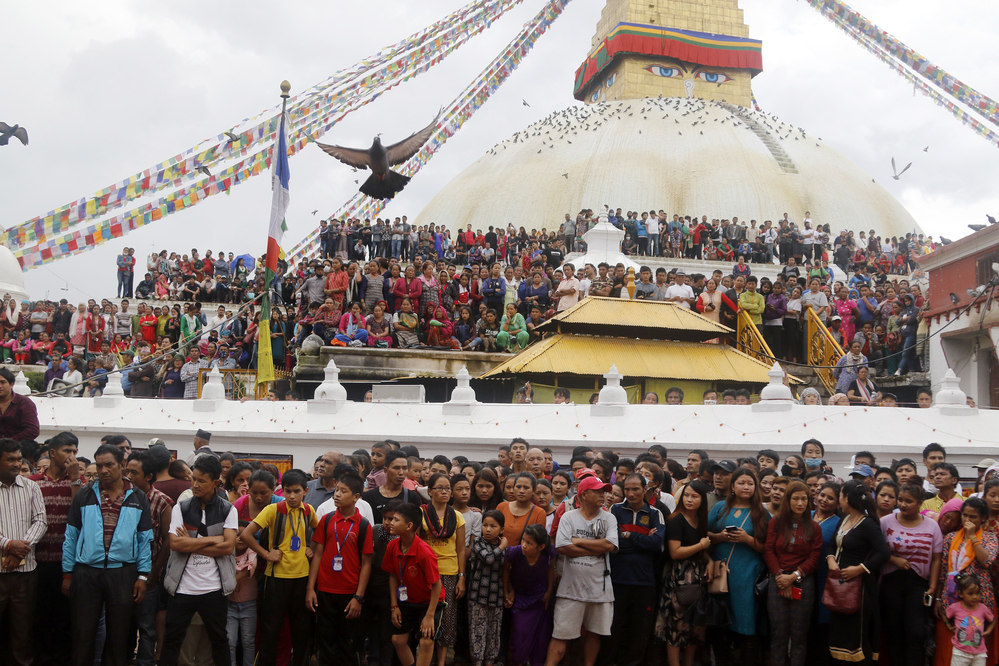
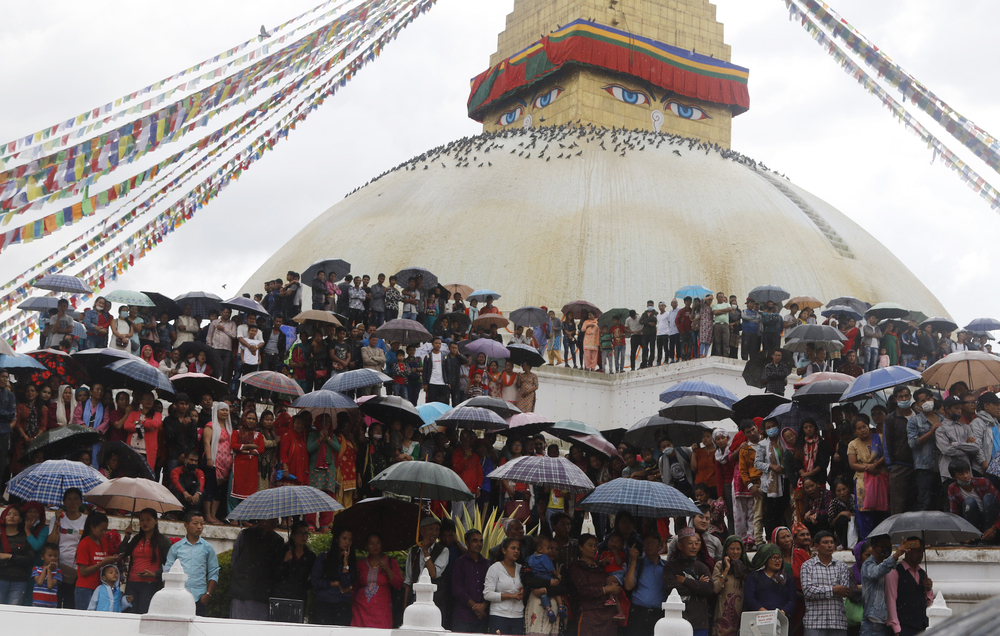
The Tamangs, the fifth largest community in Nepal by population, are about 6 percent. In Bagmati Province, one out of every five people is Tamang. Seven districts, including Rasuwa, Nuwakot, Dhading, and Kavre, have the first and second largest numbers of Tamangs. In more than two dozen local levels in central Nepal, one out of every two is Tamang. The Tamang community has the first and second largest numbers in 74 municipalities. However, such a demographic distribution has not yet been translated into parliamentary power.
Tamangs have not received MPs representing their population in any of the elections since the restoration of democracy in 2047. In all three parliamentary elections before the Constituent Assembly, Tamang representation was only two percent. Although Tamang representation increased slightly to 2.7 percent in the two Constituent Assembly elections where the share of the proportional system was significantly increased, it was only half of their demographic proportion. The results of the two elections after the constitution was drafted are also similar - about half of their population. To understand why this imbalance repeats, we need to look at the structure of the electoral system.
The principle of proportional inclusion was enshrined in the Constitution with the aim of bringing historically excluded communities into the political mainstream, and a mixed electoral system was adopted to address it. However, the results of the last two elections have raised the question of whether the current provisions of the Constitution and the electoral law are sufficient to eliminate the structural disparities in political representation.
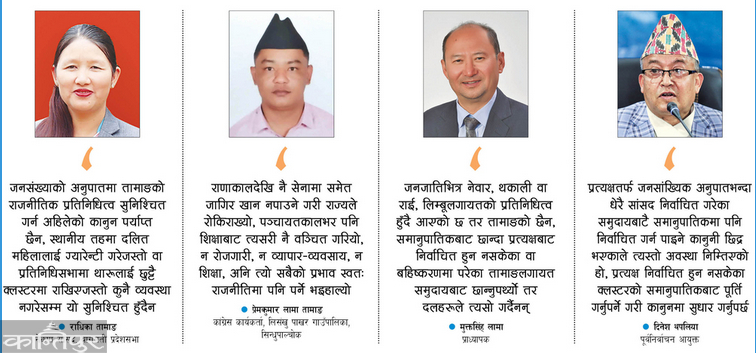
As voters prepare to cast their votes in the coming week, the question has become even more pressing: How can the Tamang community convert its demographic presence into political power? Radhika Tamang, a member of the NCP in the Bagmati Provincial Assembly, says the current law is inadequate to ensure Tamang political representation in proportion to the population. “Unless some provision is made, such as guaranteeing Dalit women at the local level or placing Tharus in a separate cluster in the House of Representatives, Tamang political representation in proportion to the population will not be ensured,” she said.
The House of Representatives Election Act guarantees about 29 percent of the seats to indigenous/tribal communities for the 110 seats on the proportional representation side, but Tamangs have been left out when candidates from the Newar, Thakali or Rai/Limbu communities, who are already represented in a similar proportion to the population, are given priority. The Tamang community is below the national average in statistics such as literacy rate, health indicators and human development index. Unemployment and poverty rates are also higher in areas densely populated by the Tamang community.
In Panchpokhari Thangpal Rural Municipality of Sindhupalchowk, two out of every three locals are Tamang. Nimachhiring Lama, a young businessman from the same rural municipality, says that the issue of political representation has become more complicated due to the inequality of development. He says that infrastructure construction including roads and the lack of quality education and basic healthcare services in the village. ‘Our community is lagging behind in development,’ he says, ‘that is why the issue of political representation should become an even bigger issue.’ In Lisankhu Pakhar Rural Municipality of Sindhupalchowk, more than half of the population is Tamang.
Prem Kumar Lama, a Congress worker from Lisankhu Pakhar, says that in addition to infrastructure, Tamang settlements need socio-economic development and their political representation at the same time. ‘Since the Rana period, the state has prevented them from getting jobs even in the army. "They were deprived of education in the same way throughout the Panchayat period," he says, "neither employment, nor business, nor education, and all of that automatically affected politics." He said that education should be made a priority and programs targeted at the Tamang community should be made, and for that, people from the Tamang community should be in political responsibility.
In the 275-member House of Representatives, 165 MPs (60 percent) are elected through the direct election system and 110 (40 percent) through the proportional election system. The proportional election system has been adopted to include historically excluded communities in politics. According to this system, when parties submit their closed lists to the Election Commission, half of the candidates must be women. Khas Arya (31.2 percent), Adivasi Janajati (28.7 percent) and Madhesi (15.3 percent), Dalit (13.8 percent), Tharu (6.6 percent) and Muslims (4.4 percent) must also be included.
The House of Representatives Election Act guarantees that one-third of the federal parliament (including the National Assembly) will be elected by women. According to this, if the representation of women in the federal parliament is not sufficient through the direct election of the House of Representatives and the National Assembly, it must be filled through the proportional representation list submitted by the parties with 50 percent women. This ensures at least one-third representation of women in the federal parliament. However, the representation of other clusters is not guaranteed at the federal parliament or the House of Representatives level. Such representation is guaranteed only in 40 percent (110 seats) of the House of Representatives.
According to Pre-Election Commissioner Dinesh Thapaliya, this situation has arisen because of a legal loophole that allows communities that have elected more MPs directly than their population ratio to be elected through proportional representation. For example, in the 2079 election, the Khas Aryas were elected through the direct system to reach 35 percent of the entire parliament. Which in itself is more representation in proportion to the population of that group. Another 13 were added from proportional representation to take it to 48 percent. That is, one out of every two members of the House of Representatives was from the Khas Arya community. However, even if only Chhabilal Bishwakarma was elected directly, and 15 other Dalits were added proportionally, the representation of Dalits in the House of Representatives did not even reach 6 percent. Which is less than half of their population ratio.
‘Khas Arya, who were already overrepresented, were also brought in through proportional representation,’ says Professor Muktsingh Lama, ‘However, since the Dalit community was not elected directly, the remaining part had to be elected through proportional representation, otherwise their participation decreased significantly.’ This situation is not only in the case of Dalits, but also in the case of tribals. ‘The Newar, Rai, Limbu and other communities within the tribal community have been represented since before, but the Tamangs have not,’ says Professor Lama. ‘That is why when choosing through proportional representation, Tamangs and other communities who could not be directly elected or who have been excluded for a long time should have been selected from within the tribal community, but the parties are not doing so.’
Pre-election Commissioner Thapaliya says that the law should be amended so that parties should directly nominate women and other clusters in proportion to their population and compensate the clusters that could not be elected from them through proportional representation.
‘By doing this, the proportional model was guaranteed even in the direct sense,’ he said, ‘Proportional representation was ensured for those who were not elected.’ Thapaliya said that this is also the spirit of the constitution. Article 84 of the constitution, which accepts proportional inclusion as a principle, provides for the provision of proportional representation if one-third of women cannot be elected directly. That means that there is a constitutional provision that at least one-third of the candidates must be women, and Thapaliya argues that the constitution has been misinterpreted by not guaranteeing it when making the law. Senior advocate Raju Chapagain says that it will be difficult to have a parliament that reflects the diversity of Nepal unless direct candidacy is also made proportional. ‘The essence of the constitution is to make the organs of the state proportional and inclusive,’ he says, ‘But, if we take the provisions of the constitution arbitrarily, that is our current crisis.’
Pre-election Commissioner Thapaliya says that until that is done, representation of Dalit, Tharu and Muslim communities will never be achieved through the proportional system alone. ‘Currently, when candidates are elected through proportional representation, they are first selected from clusters that have a large percentage,’ he said, ‘even if representation has already been reached, first the Khas Aryas are selected and then gradually from other communities. The seats that parties will get will run out before reaching the Tharus or Muslims who are at the bottom.'
The share of the direct election system is 20 percent more than the proportional system. Since marginalized communities cannot be elected through that system, the composition of the parliament is largely determined by the results of the direct election system. Even if the proportional system reduces the imbalance to some extent, there will be no significant improvement in the composition of the entire parliament.
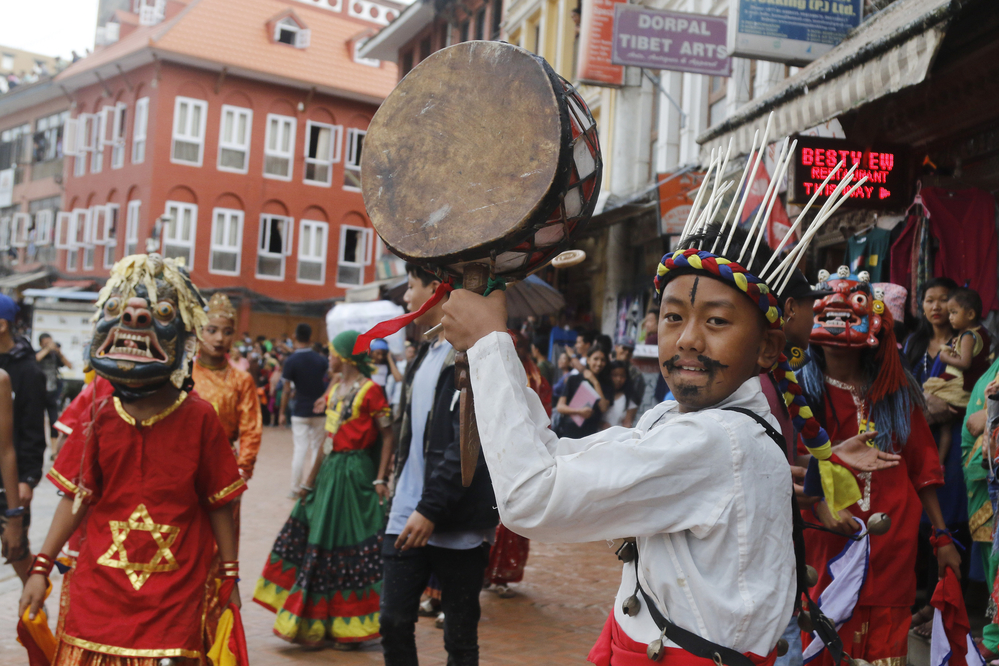
Even in constituencies in districts like Dhading, Rasuwa, and Nuwakot where Tamangs are in the majority, Tamang candidates cannot win directly on the strength of population alone. Bagmati Province MP Radhika, who has been a member of the Constituent Assembly, says that it is difficult for Tamang candidates to win elections due to difficulties in accessing ticket distribution levels within the party, the money required for elections, and even the language. 'If you mess up your grammar when you speak, no one cares,' she added, 'if I mess up, I get trolled. Whereas Nepali is not my mother tongue.' According to her, the party gives tickets only based on linguistic proficiency and speaking ability. ‘How much can he speak? Whether he can attract the crowd by giving a speech in a meeting is considered when giving tickets,’ she said. ‘That is why Tamangs do not get tickets in the first place, and even if they do, it is difficult to win.’
Leaders from around Kathmandu, including Hit Bahadur Tamang, Bahadur Singh Lama, Buddhiman Tamang, Sher Bahadur Tamang, have been in politics for a long time. However, their representation has been only symbolic. Former executive director of Nepal Electricity Authority, Kulman Ghising, is contesting the election for the first time as a candidate of the Ujjaya Nepal Party from Kathmandu-3.
Smita Moktan, a social activist from Temal Rural Municipality in Kavre (where three out of every four Tamangs are in the population), said that the Tamangs are not seeking any additional facilities but want someone who can speak for their community in parliament. ‘Even among Tamangs, women’s representation is still very low,’ she said. ‘Although proportional inclusion is called for in the constitution and law, it has not worked for us.’
On 5th February, Nepal Tamang Ghedung discussed ‘Issues and representation of the Tamang community in the upcoming House of Representatives elections’ and prepared a list of common demands and urged voters not to vote for parties and leaders that do not address them. ‘In the results of the House of Representatives elections, 2082, representation of the Tamang community should be ensured in proportion to the population, both directly and proportionally,’ is number one on the list of common demands. ‘The parties do not seem ready to bring the Tamang community, which has lagged far behind in the human development index due to historical oppression,’ said Ghedung, saying, ‘As long as the fifth largest community remains behind in the process of development and enjoyment of rights, the development and prosperity of the entire country is not possible.’
NCP provincial lawmaker Radhika says that there is a possibility that Tamang representation may decrease further after this election. "Right now, Tamang candidacies are very low," she said. "Tamangs have also been left behind in the priority list of proportional representation submitted by the parties."

