While candidates in Bajura are repeating their election promises, voters are looking for concrete plans to provide basic infrastructure, employment, and end malnutrition.
We use Google Cloud Translation Services. Google requires we provide the following disclaimer relating to use of this service:
This service may contain translations powered by Google. Google disclaims all warranties related to the translations, expressed or implied, including any warranties of accuracy, reliability, and any implied warranties of merchantability, fitness for a particular purpose, and noninfringement.
The remote hilly district of Bajura has also been engulfed in election fervor. Candidates for the upcoming elections are repeating the past trend of leaders visiting the doorsteps of residents of remote and remote settlements, including the Sikhs in the Himalayan region, only during elections to solicit votes.
Candidates are going door to door in rural settlements to hold tol sahaba and interact with them. Voters here are demanding development plans needed in the villages and are demanding issues like poverty, shortage, food crisis, education, health and employment. The residents of Bajura, which is lagging behind even in basic infrastructure, are saying that they have to demand the same issues in every election.
This time, it seems that the candidates have made social media an important medium of campaigning. But Bajura voters seem to be looking for a commitment to work rather than speeches. They want a result-oriented plan and a clear and concrete blueprint to prevent the repetition of past unfulfilled promises. But the candidates do not seem to be presenting any such concrete blueprint.
During the door-to-door campaign, leaders and activists involved in the campaign, including UML candidate Lal Bahadur Thapa, are calling for votes to save the country, saying it is a 'struggle between burning the country and building it'. Thapa is a leader who was elected to the House of Representatives from Bajura in 2074.
Congress candidate Janakraj Giri is insisting that he should vote to protect democracy and complete the work that he could not complete in the past for the development of the district. Giri was elected to the House of Representatives from Bajura in the 2056 election. Nepali Communist Party candidate Prakash Bahadur Shah, who said that he had allocated budget for the operation of many development and infrastructure projects in Bajura when he was in the provincial government, reached the House of Representatives and is seeking votes, promising to raise his voice more strongly for the development of Bajura.
In the first election held in 2015, the residents of Bajura were not able to elect representatives from their own district. In that election, Bajura and Achham were the same constituency. Dil Bahadur Budthapa of Achham was elected as the representative of Bajura as well in that election. Since then, through the elections until 2079, the people of Bajura have voted for leaders who embraced various political ideas and principles. But Bajura continues to lag behind in the poverty index, the living standards of the district residents have not improved, and the general voters of Bajura are dissatisfied with the fact that education, health, employment opportunities and other development infrastructure have not improved. Amid such dissatisfaction and complaints, the people of Bajura are also waiting for the day to vote in another election.
The history of present-day Bajura is linked to the transformation of the 22 kingdoms under the then Jumla (Sinja, Khas) empire into a twenty-two kingdom structure over time. Bajura was also part of the larger Sinja kingdom.
It is said that the Doti kingdom had become powerful towards the end of the fourteenth century. During the Doti empire, Bajura was known as the Barju kingdom. The copper plate of Abhaya Malla 1298 and the copper plate of Sumatibrahra 1348 mention the words Bajura and Baju. Historians are of the opinion that Dugar Singh (1575), the brother of Bajhangi King Bhim Singh, the founding ruler of Bajura, was Dugar Singh. According to the genealogy of the Bajhangi kings, Dugar Singh, the brother of Bhiu Singh, the 39th king of Bajhang, was the first king of Bajura. According to Purna Prakash Nepal 'Yatri', it is said that Piu Tharpu ruled Bajura until after 1465 and the descendants of Jasudhar Pandit ruled. The last king of Bajura (Barjukot) was Gajendra Bahadur Shah. There is no written evidence to show how the name of Bajura came to be. Therefore, historians have different opinions regarding the name. There is also a mention of the word 'Barju' in Abhaya Malla's copperplate and a corruption of the word 'Bajra' in the book 'Sudurpaschimanchal Bikas Kshetra Mechi to Mahakali'.
According to other legends, it is said that the name Bajura came from the corruption of 'Jhurra Baj' and Baj Jhurra became Bajura. A falcon had to be sent from Bajura Palace to Sinja Palace as per the king's order. The falcon was caught by setting a trap. The male falcon was called Shahi and the female falcon was called Jhurra. After the king ordered to send a falcon to his court, when he set a trap, a falcon (female) fell into the trap. The female was sent to the king's court with the news that Jhurra had caught the falcon in the trap. The king wanted a royal falcon but got a wrinkled falcon, so he named the coat Bajhurra Kot, after the name of the female falcon. There is also a legend that the name Bajhurra Kot was corrupted and later became Bajuri Kot and later Bajuri Kot became Bajura.
According to the description mentioned by Dr. Rajaram Subedi in the context of the naming of Bajura, there was a falcon in the Bajura Kot earlier. The royal falcon (male) helped in catching the prey and the green-colored bird (pearl bird) that identifies and picks pearls from the sea. There was a huge demand for falcons in the Indian market. In the Jumla region, the falcon (falcon) was sold at a high price. After being tied to the Bajura Kot and released, the falcon was tied to a trap when the pigeons came to roost. Since it was a place to raise falcons, there is a legend that Bajuro was called Bajura instead of Bajura and later on it was named Bajura. Therefore, this legend seems to be the strongest opinion in the name Bajura. The borders of the then Baise-Chaubise kingdom were constantly changing and fragmenting. The Bajura kingdom, which had a low population and low income, was also called Five Hundred Bajuro.
As mentioned by Dr. Bam Bahadur Adhikari, the borders of the then Bajura kingdom were from Porakhya Deurali to the west, from Chaukhutte Deurali and Ikarigad to the east, from Malagadh to the north and from Sisintawa, Jethi Bahurani to the south.
In 038 BS, the geography of Bajura was further expanded. The former Wai, Jukot and Sappata village panchayats under Kalikot district across the Karnali River were separated from Kalikot and merged under Bajura. On 2034 Jestha 14, the Bajura headquarters was shifted from Tante in Kuldevmadau to Martadi.
Bajura has been gaining ground in recent years in terms of representation in the state. Until a decade ago, a common slogan in the district was ‘The development of the district has lagged behind due to the lack of effective representation of Bajura at the central level.’ No matter which party, Bajura’s representation in the government and effective representation in the relevant party are necessary.’
After the establishment of democracy/republic, influential ministers from Bajura to the provincial chiefs in the federal and provincial governments represented Bajura. But the complaints that the residents of Bajura have not been able to experience the expected development have not gone away.
In the 2015 elections, Bajura and Achham were placed in the same constituency. In that election, Dil Bahadur Budhthapa of Achham, representing the Nepali Congress, was elected. In the 2038 election for the National Panchayat member, Narsingh Giri was elected from Bajura, and in the 2043 election, Prakash Bahadur Singh was elected. Padam Bahadur Shah, Prakash Bahadur Singh, Narsingh Giri were the people's representatives before 2046.
In the elections held during 2048–2079, Devraj Joshi, Hikmat Jung Shahi, Janakraj Giri, Devraj Joshi and Karna Bahadur Thapa, Lalbadur Thapa, Badri Prasad Pandey, Maha Nepali, Basundhara Rokaya, Pemba Bhote, Karna Bahadur Bik and Double Bahadur Shah, Dayal Bahadur Shahi and Madan Kumari Shah (Garima Shah) became federal parliament representatives through direct and proportional representation. After federalism, Baldev Regmi and Prakash Bahadur Shah, Naresh Kumar Shahi and Padam Bahadur Shahi, and Junakumari Dani and Santosh Sharma Thapa were elected to the Provincial Assembly in 074. Prakash Bahadur Singh became the first minister from Bajura. During the Panchayat period, he became the Minister of State for Home and Forests in 043 BS. After the establishment of democracy, Janakraj Giri became the Assistant Minister for Land Reforms and Management in 057 BS. After the establishment of the Federal Democratic Republic, Karna Bahadur Thapa became the first cabinet minister and then Badri Prasad Pandey. During the same period, Karna Bahadur Bik also became the Minister of State for Supplies. In the provincial governance structure, Devraj Joshi of Bajura became the provincial chief of Sudurpaschim Province in 078 BS. Prakash Bahadur Shah became the Minister of Internal Affairs and Law in the Sudurpaschim Province government from 074 to 078 BS and later the Minister of Economic Affairs and Planning. Santosh Kumari Sharma (Thapa) became a minister without a department in the provincial government for about a month. Naresh Kumar Shahi, who was elected in 2079, was the Minister of Economic Affairs.
Even though seven ministers, ministers of state and assistant ministers have been appointed from Bajura in the federal and provincial governments since the establishment of democracy, there is a public complaint that Bajura has not been able to make the expected leap in development. But Prakash Bahadur Shah, an influential minister in the provincial government, says that he has allocated the highest budget in the province for the Martadi-Kolti road upgrade, Khaptad-Martadi road under the province's Gaurab, road bridges, schools, drinking water and irrigation sectors in Bajura.
The foundation of educational awareness has also started late in Bajura. According to the 2078 census, the total literacy rate of this district has reached 71.25. Of which 63.32 percent are female and 79.83 percent are male. According to the details of the Provincial Policy and Planning Commission, there are currently 260 educational institutions in Bajura.
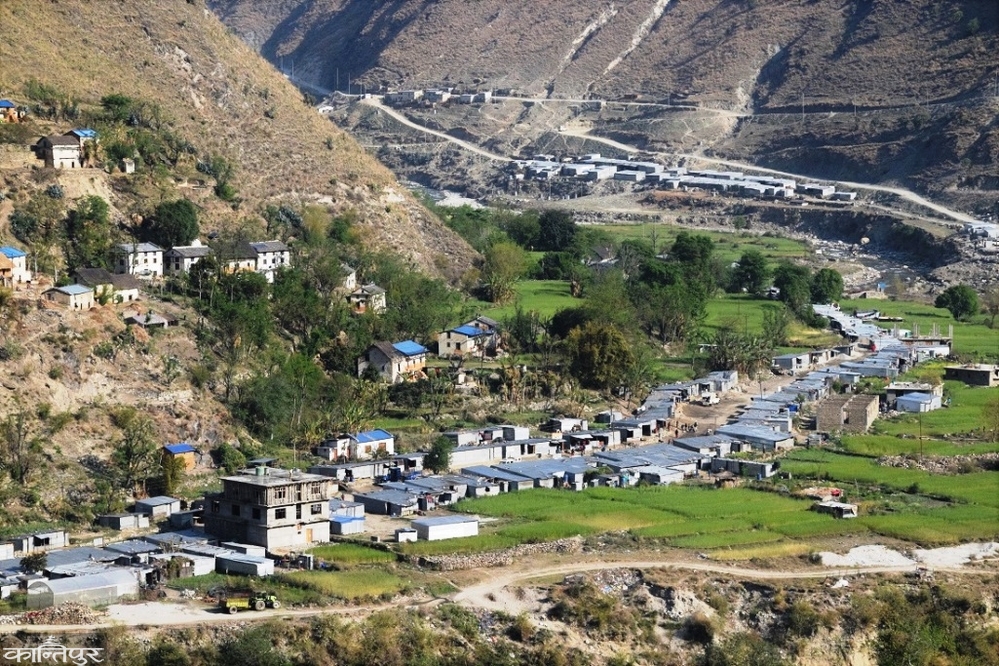
When looking into the educational history of Bajura, the first school in the Kunda area was established in 2008 BS at Janaprakash in Kolti. But at that time, the Kunda area was not included in the current Bajura. Narsingh Giri was the one who lit the lamp of education in Bajura. He was the first teacher in Bajura. He established Narsingh Primary School in 2014 BS, says Bajura's educational and cultural scholar Jaharsingh Thapa.
The first campus was established in Bajura in 2057 BS. But the campus where regular studies and teaching are conducted was started in the district headquarters Martadi in 2063 BS. In recent years, Bajura's representation in various service groups including administration, foreign affairs, security, engineering, medicine, education, agriculture and animal husbandry has been increasing. Dr. Narayan Regmi is currently the highest-ranking government official from Bajura. He is the Joint Secretary of the Administration Group.
Although Bajura is known as a district of poverty and deprivation, it is rich in natural resources. The famous Badimalika region is located in this district, where it is claimed that if tourism infrastructure is developed, it will change the economic development of the Far West. ‘If Badimalika is taken up for infrastructure development with a long-term development plan, it will definitely contribute to the economic prosperity of the country,’ says Suresh Raj Pandit, former head of Bajura Campus. ‘So far, the policy makers here have not thought about the tourism potential of Badimalika with a view to taking economic benefits.’
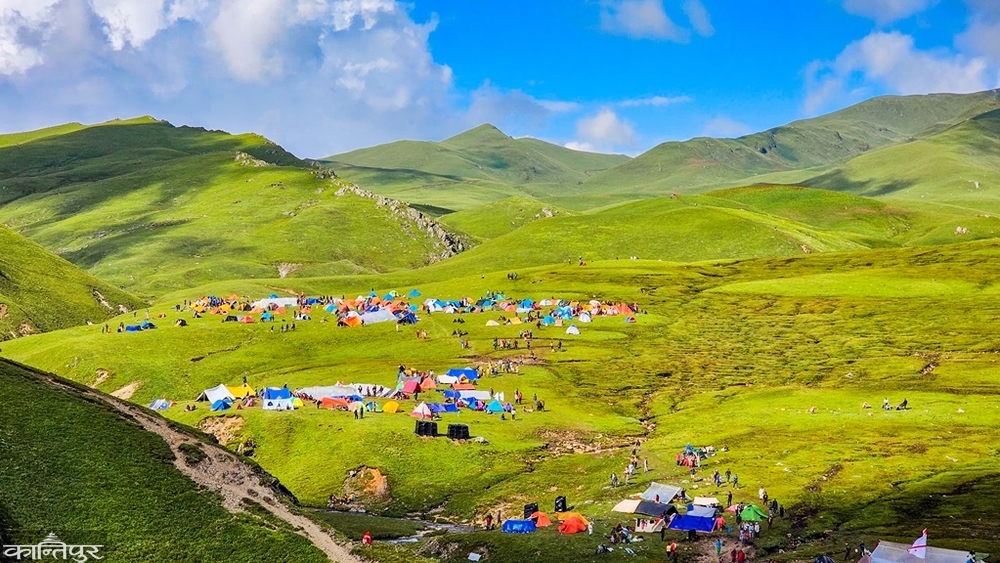
Badimalika is a heritage of religious faith and is rich in rare natural diversity in Nepal. Badimalika, which is located in Bajura, is at an altitude of about 14,000 feet. There are 22 flat fields here. Triveni, Bishnupani, Khetiveti, Lauri Binayak, Dharmadwar are the main attractions of the Badimalika area. During snowfall, there is a possibility of ice skating at Triveni Patan. This area is a storehouse of biodiversity. It is estimated that hundreds of species of herbs are found here. In addition, the Badimalika area is also the habitat of rare wildlife. It is a three-day walk from the Bajura district headquarters. The number of tourists visiting here is increasing every year. This year, the Nepali Army has reconstructed the temple in Badimalika, which has further increased its attraction.
The Budhinanda area in the Budhinanda municipality area is another important religious tourist area of Bajura at an altitude of about 16,000 feet. The importance of this area is added by Budhinda Lake. It has been seen from an informal study that Budhinanda is the second highest lake after Tilicho.
The fact that the lake in the Budhinanda area, which is full of religious faith and immense natural beauty, is the second highest in the world has become public, but its importance has expanded further. Here, along with the temple of Budhinanda Devi, there is a lake amidst rocks. There are nine other lakes around. To reach Budhinanda, one has to cover a three-day walk from the district headquarters, Martadi. 'If we want to develop Bajura economically, we must turn Budhinanda's tourism potential into an opportunity,' says Janak Kumar Rokaya, the mayor of Budhinanda Municipality. 'So far, eight to ten thousand pilgrims and domestic tourists reach Budhinanda every year. Nothing will come of this. There is a possibility of attracting millions of foreign tourists here.'
The main area of Khaptad, which has immense potential for religious and natural tourism, lies in Bajura. The famous Khaptad Daha, which is also known as the meditation area of Khaptad Swami, is considered the backbone of the tourist beauty of this area. The easiest and shortest route to reach Khaptad is through Bajura. ‘No government has prioritized Khaptad as a tourist center in its budget and plans,’ said Bhim Khadka, former executive director of the Khaptad Area Infrastructure and Tourism Development Committee.
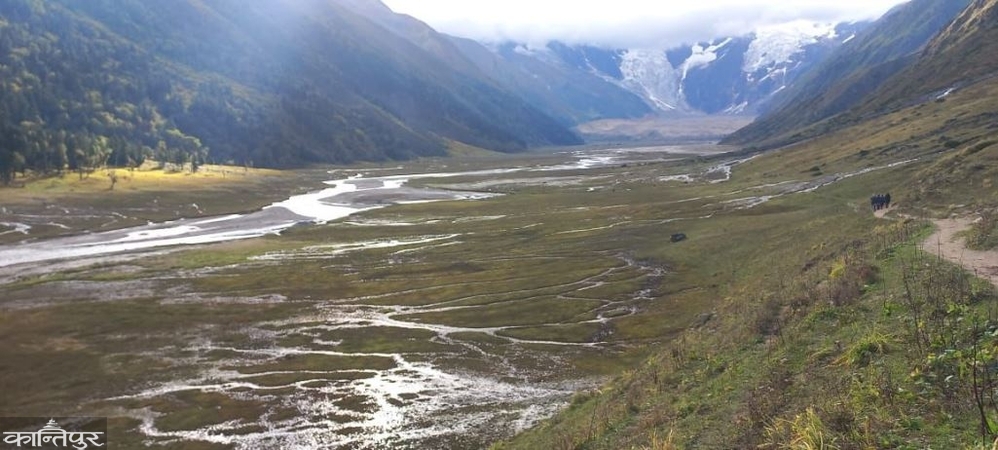
Another famous tourist destination in Bajura is Ranisain. Ranisain, located in the Himali Rural Municipality, is the border of Bajura and Humla and the eastern base camp of Saipal Himal. ‘It is said that Ranisain is the best route to climb Saipal,’ says Naresh Kumar Shahi, a member of the Provincial Assembly from Bajura. ‘From here, it is closer to Mansarovar.’ Ranisain is indescribably beautiful and picturesque. The glacier lake in Ranisain has enhanced its beauty. Every year, Buddhists from Bajura and Humla gather here and worship in the monastery. Ranisain, which is located at an altitude of about four thousand meters, is also called the Valley of Bajura.
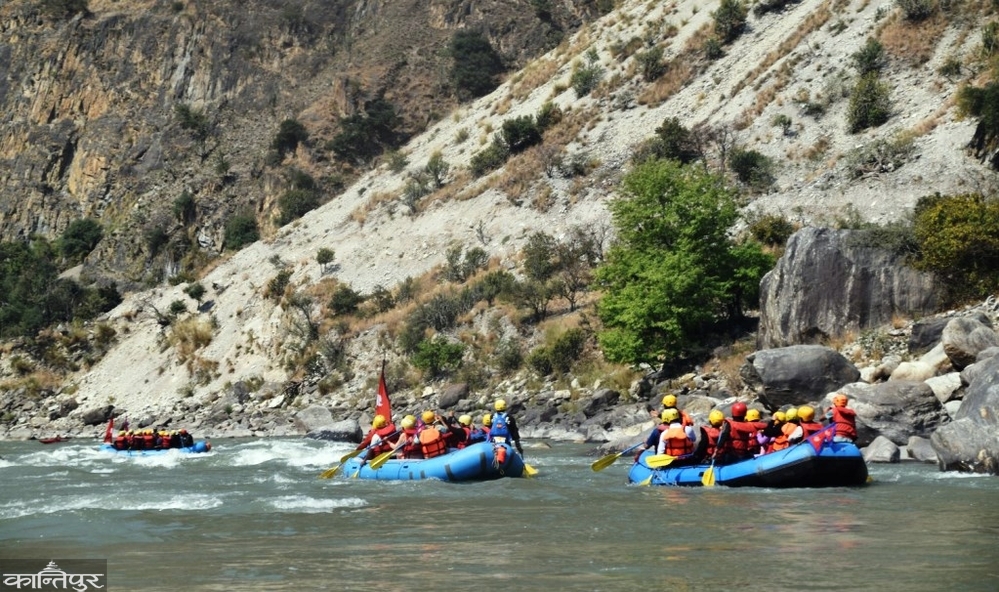
Similarly, the Himali and Swamikartik rural municipality areas of Bajura, where the Karnali River flows, are considered very suitable for rafting. Local people's representatives say that there is a possibility of floating on the Karnali River flowing between high rocky mountains. Locals say that this is the easiest way to climb Rara Lake and Saipal Himal.
Barjukot and Kudikot in Bajura have historical importance. Now it is the main tourist destination of Bajura. In the past, the last king of Bajura, Dugar Singh (1650-1660 BC), Gajendra Bahadur Shah, ruled from Barjukot. Currently, the municipality and other areas are also making plans to preserve this place. To reach Kudikot Palace, one has to climb at least two hundred meters vertically from all sides. Even today, there is a tradition of worshipping at this fort during festivals such as Badadasain, Chaitedasain and Sri Panchami.
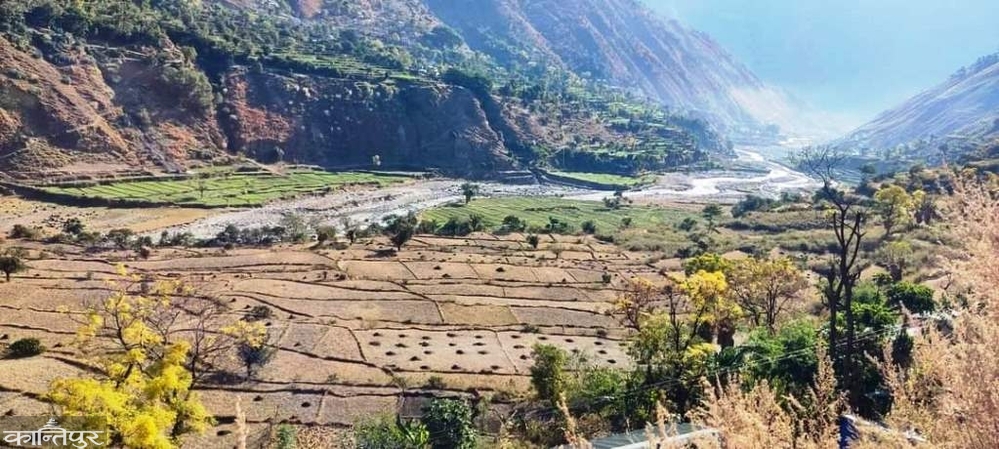
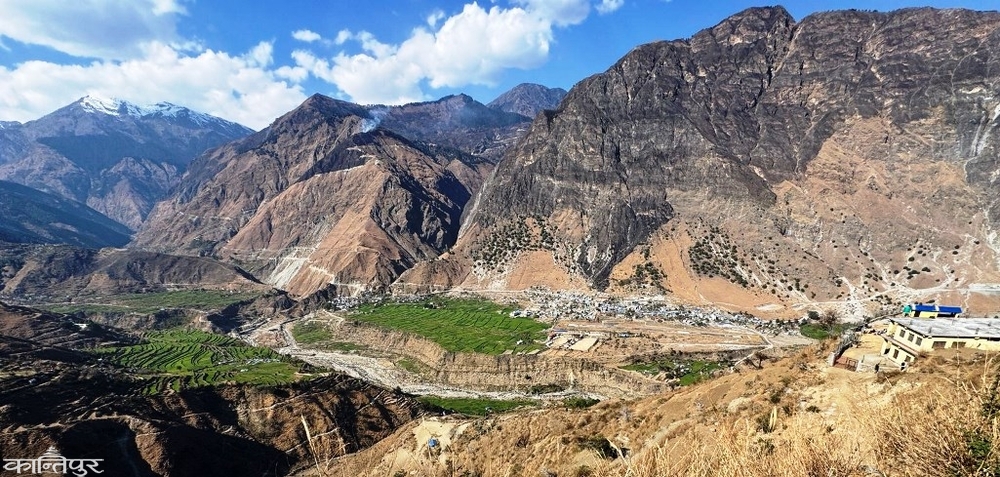
Chhededah is also another important tourist destination here. In the middle of Chhededah Lake, which is full of natural beauty, there is a temple of the Khapar deity. The surrounding Butyan and the greenery of the forest make Chhededah like a natural park. The tourist route to Khaptad, Badimalika and Rara passes through this lake, which is located on the border of Atichour, Gudukhati and Dogadi VDCs. Due to lack of conservation The disappearing Chhede Daha Lake is at risk of natural disasters. Bajura, which was formerly part of the Seti Zone, is currently one of the nine remote and mountainous districts of the Sudurpaschim Province. With an area of 2,188 square kilometers, Bajura is spread over an area ranging from 726 meters to 7036 meters above sea level. According to the records of the Statistics Office, 32 percent of the district is urban and 68 percent is rural. Mugu and Kalikot are to the east of Bajura, Bajhang to the west, Achham and Kalikot to the south, and Humla to the north. Covering about 15 percent of the country's area, this district has only 11.5 percent of its land area that is cultivable, while 37.8 percent of its land is still barren. Bajura is still a remote district with an agro-based economy. According to the 2011 census, the population of this district was 138,000. 998 .
Bajura, which is a constituency of the House of Representatives, has nine local levels, including four municipalities and five rural municipalities. Budhiganga, Triveni, Badimalika, and Budhinanda are municipalities, while Khaptad Chhededah, Swamikartik Khapar, Himali, Jagannath, and Gaumul rural municipalities are municipalities. Except for Badimalika Municipality, which is the headquarters area, no other local level center has a blacktop road.
In a report recently released by the Statistics Office, Bajura is ranked third among the 10 districts with the highest poverty rate. Bajura's poverty rate is 47.81 percent. Similarly, Bajura's Triveni Municipality is among the 10 local levels in the country with the highest poverty rate. It is stated that 65.17 percent poverty rate is reported in this municipality. According to the Human Development Index 2015 prepared by UNDP, Bajura's human development index is 0.364 6.
Out of the 218,800 hectares of Bajura, 24,319 hectares are cultivable, and only 6,792 hectares are cultivated. According to the Directorate of Agricultural Development, Far West, out of the nine districts of Far West, Bajura accounts for 4.63 percent of the food and crop area, 2.17 percent of the vegetable and horticulture area, and 9.62 percent of the fruit and spice area. Similarly, in Bajura, food and crop production in the last fiscal year was 53,720 metric tons, vegetable and horticulture 4,160 metric tons, and fruit and spice production 8,260 metric tons. According to the same data from last year, milk production in Bajura was 17.8 million liters, meat production 1,676 metric tons, and egg production 484,000 heads.
There are 29 banks and financial institutions in Bajura, which has industrial credit flow in the Far West. The lowest is in Bajura. According to Nepal Rastra Bank Dhangadhi, the industrial credit flow percentage in Bajura is only 0.44 percent out of the nine districts. Deposit collection in Bajura is only 2.5 percent and credit is only 0.96 percent out of the nine districts.
Another basic problem faced by the people of Bajura is the problem of availability of health services. The people of the rural areas here are beyond the reach of affordable and quality health services. According to the data of the health office in Bajura, 11 newborns died in 080/81. Incidents of childbirth on the road in this district are made public from time to time. Women and children in the remote rural areas of Bajura are in a vicious cycle of malnutrition.
There are malnourished women and children in all the nine rural municipalities of Bajura. According to last year's data, more than 287 children under the age of 5 who came for treatment at the local health institution in Bajura have been found to be malnourished since birth. Malnutrition There are also incidents of children losing their lives every year. According to the Muktikot Basic Health Center of Swamikartik Khapar Rural Municipality, two children lost their lives last year. In Muktikot village alone, 25 children were affected by malnutrition last year. Of these, 11 were acutely malnourished. According to the Health Office Bajura, 93 children under the age of 5 were malnourished in 2008/09. However, when the data from local health institutions and the Nutrition Rehabilitation Center at Bajura Hospital is combined, it is seen that 287 children were malnourished during that period. Last year, 51 malnourished children received treatment at the Nutrition Rehabilitation Center at the District Hospital alone. Public health expert Gyanendra Dawadi, who has been studying the malnutrition situation in Bajura, says that there is a need to work with a very big plan and goal to break the vicious cycle of malnutrition in Bajura.
According to Dawadi, women and children in Bajura are affected by malnutrition due to extreme poverty, child marriage tradition, lack of nutritious food, lack of health care, sanitation, public awareness, rest and care during pregnancy, and excessive workload for pregnant and lactating women. The district hospital is located in the district headquarters, Martadi. The 15-bed hospital currently has eight people, including three specialists, and one specialist doctor is working in the four Kolti basic hospitals in the northeastern region.
According to the 2078 census, out of 28,041 households in Bajura, 5,350 families have tap water inside their homes, 19,701 have tap water outside their homes, 39 families have wells, and 172 families drink water from rivers and streams. Similarly, 458 families do not have toilets. 25,751 families in Bajura still cook food on firewood.
Electricity has reached the homes of 22,921 families in the district. The details of the Provincial Policy and Planning Commission mention that there are gold, copper, iron, lead, and uranium mines in Bajura. 94,430 hectares of this district are covered by forest. There are 57 small and large lakes in Bajura.
Due to migration, most of the residents here are seen locked up in their houses in the settlements. In recent years, migration has increased in the district. As the youth leave the village due to lack of employment, only women and senior citizens remain in the village. Cultivable land is becoming barren, while the number of students in educational institutions is decreasing. Teachers say that due to the decrease in the number of students studying at the undergraduate level, it is even becoming difficult to operate educational institutions in some places.
Rural areas are devoid of youth. Even as voting day approaches, most villages are not as active as before. Most of the youth are in India in search of work have entered. Youth and working-age men from every household have gone to various cities in India for employment. From village gatherings and meetings to social functions, men are present only sporadically. Most of the working-age men from Bajura go to various cities in India and work as watchmen. Since the income from watchmen alone is not enough, most of them clean vehicles in the morning and some do heavy lifting.
In recent years, there has been an increase in the number of people going to third countries. ‘There are 110 families living in our village. Out of these, only 15 families have men at home, and even if there are no young people,’ said Kalche Giri of Budhiganga Municipality-7, ‘There are only women in the village. There is no electioneering in the village like in the past.’ However, the plan to reduce the compulsion to migrate and do hazardous labor in India by creating employment in the village Villagers say that none of the candidates who have reached their doorsteps have listened to them .
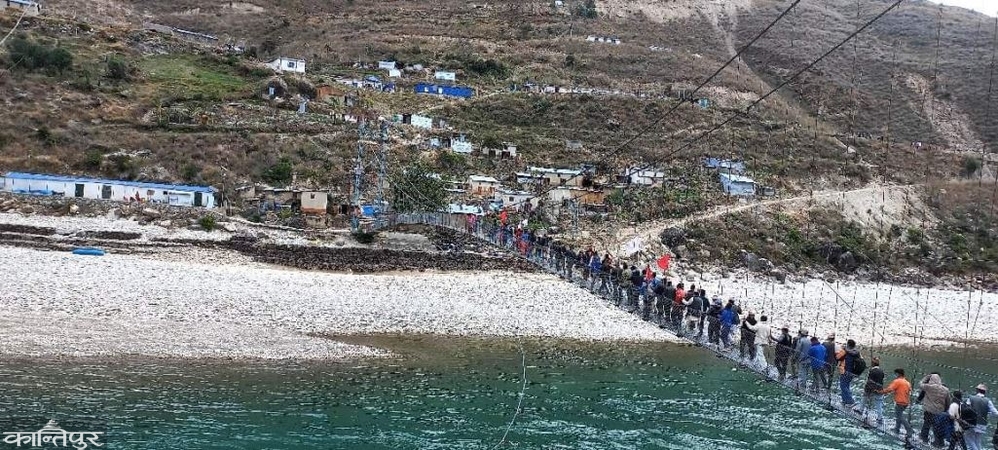
Infrastructure development including roads, irrigation, food and school buildings are the main demands of the people of Bajura. In Bajura, which has nine local levels, except for Badimalika Municipality, the headquarters of which is Martadi, no local level center has been reached by blacktop roads After the opening of the dirt road track of the corridor, the remote Himali, Swamikartik Khapar and Jagannath rural municipalities of Bajura have been connected to the road network. Residents of the remote northeastern Kunda area of Bajura have finally been able to see vehicles after transportation vehicles started plying on the dirt road of the Karnali Corridor three years ago.