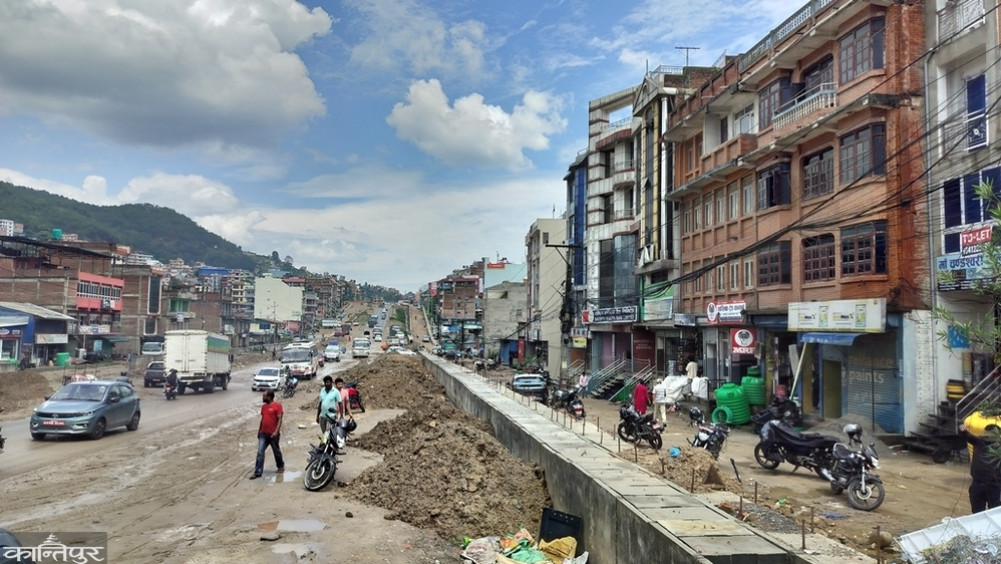
In recent years, the population in urban areas of the district has been increasing, while rural settlements are becoming deserted.
We use Google Cloud Translation Services. Google requires we provide the following disclaimer relating to use of this service:
This service may contain translations powered by Google. Google disclaims all warranties related to the translations, expressed or implied, including any warranties of accuracy, reliability, and any implied warranties of merchantability, fitness for a particular purpose, and noninfringement.
Kavre, which is connected to the capital Kathmandu, is considered important for agricultural production. Most of the people in this district depend on agriculture. This district exports milk, vegetables, poultry and eggs in large quantities to the Kathmandu Valley.
Kavre, which is self-sufficient in milk, is known as the district that produces the most chickens after Chitwan. After agriculture, the main occupation of the residents of this district is trade.
In recent years, the population in the urban areas of the district has been increasing, while rural settlements are becoming empty. Even if we study the population and voter statistics of the municipalities in the rural areas of the district, it is found that most of the people of those municipalities live temporarily in urban areas.
In recent years, some attraction of the youth towards agriculture has increased. Farmers have started farming in a modern way from traditional farming. However, they have not yet been able to find a good market for agricultural products. People's lifestyles are becoming technology-friendly. With the arrival of electricity and internet services to the villages, their lifestyles are also changing.
There are more voters in rural areas than the population.
According to the 2078 census, the population of Kavre is 3,64,039. Thousands of people in the district are leaving their homes in search of education and employment. In some municipalities, the number of voters is higher than the population, so the number of people leaving their permanent addresses and living elsewhere is higher. Especially in rural areas, the number of voters is higher than the population.
In urban areas, the number of voters is higher than the population. This is especially seen in Banepa Municipality, which is considered the commercial center of the district. Banepa Municipality, known as the commercial city and educational center of the district, has a large number of people living for education and employment. According to the Election Commission, there are 326,611 voters in Kavre for the 2082 Falgun 21 House of Representatives elections.
The population of Chaurideurali Rural Municipality in the district is 14,076. The number of voters in this rural municipality is 22,278. The population of Bhumlu Rural Municipality in the district is 15,678. The number of voters in this rural municipality is 18,156. The number of voters in Mandandeupur Municipality with a population of 30,381 is 30,494. Similarly, the population of Banepa Municipality is 67,690.
The number of voters in this rural municipality is 40,910. The population of Khanikhola Rural Municipality is 12,211 and the number of voters is 10,610. The population of Temal Rural Municipality is 16,957 and the number of voters is 22,955. Similarly, the population of Dhulikhel Municipality is 33,726 and the number of voters is 27,915.
Namobuddha Municipality with a population of 26,170 has 27,675 voters, while Panauti Municipality with a population of 51,504 has 40,710 voters.
Panchkhal Municipality with a population of 35,000 has 32,407 voters, while Bethanchowk Rural Municipality with a population of 14,959 has 15,335 voters. Mahabharat Rural Municipality in the district has a population of 16,069 but 12,925 voters. Similarly, Roshi Rural Municipality with a population of 23,790 has 24,291 voters.
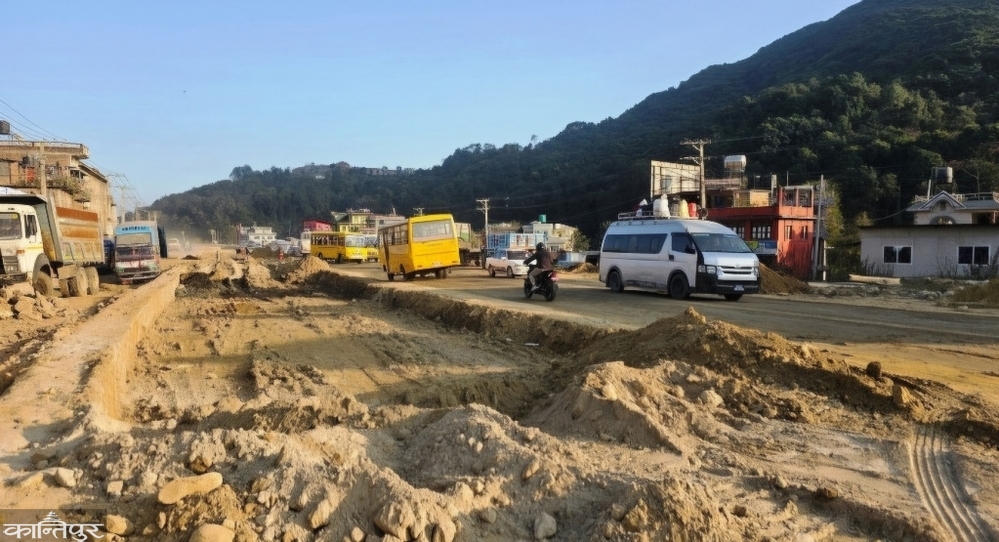
A flood of promises with elections, zero implementation
Elections have been held continuously in the country since 2064. Every time, candidates contest elections with manifestos full of promises. However, implementation is weak. Farmers have been seen to be the worst hit in Kavre, where farmers are in the majority. Farmers here are not getting paid for milk on time and are constantly facing shortages of fertilizer and seeds. In recent years, infrastructure has been damaged due to disasters. However, the political leadership has not played the role it should have when it comes to reconstruction.
There is always a shortage of fertilizer when needed.
When it is time to plant crops, Sukumaya Shrestha of Subbagaun, a farmer from Panauti-5, has only one concern, ‘How will we afford fertilizer to plant crops?’ ‘All we get is 5 kg of urea fertilizer, where can we get that easily? We have to stand in line for hours to get it, and one sack of fertilizer is needed to plant a crop,’ she said. According to her, whether it is rice or potatoes, farmers have to suffer a lot to get 5 kg of fertilizer.
Pavitra Thapa of Panauti-5 complained that they have not been getting enough fertilizer for the past 2-3 years. ‘You can get 5 kg of fertilizer,’ she said, ‘You have to go to 10 places to get that 5 kg of fertilizer, you have to have documents, you have to suffer a lot.’ She said that the crops will not produce well because there is not enough fertilizer. ‘The crops will not be good if there is not enough fertilizer,’ she said, ‘For the past five years, we have not been able to apply sufficient fertilizer to maize, potatoes, and rice. Earlier, there was enough fertilizer, and the crops were good, but now it is difficult to get fertilizer.’ She said that there is a problem of sometimes not getting seeds and sometimes not getting fertilizer during planting.
Alok Kumar, the head of the agricultural materials company Kavre, said that due to the quota system implemented by the government in the distribution of chemical fertilizers, it has not been possible to distribute fertilizer to the farmers of Kavre as per their needs. According to him, 22,000 to 25,000 tons of chemical fertilizers are required according to the needs of the farmers here. He informed that the office has 1,672 metric tons of chemical fertilizers in stock. That is why the required amount of fertilizer could not be distributed to the farmers, he said. He said that the office has 348 metric tons of DAP and 20 tons of potash fertilizer in stock. According to him, the government has not been able to distribute sufficient amount of fertilizer to the farmers in Kavre as per the quota allocated by the government. ‘Farmers here mainly grow potatoes, corn, and rice, 2/3 of the crop is planted with potatoes, in which farmers use a lot of chemical fertilizers,’ he said, ‘There is a practice of farmers using urea in excess of the required amount, which creates a shortage of fertilizer and reduces the fertility of the soil. It seems necessary to make farmers aware of this.’
Milk farmers do not receive payment on time
Sundar Nepal, a farmer from Aapghari, Mandandeupur Municipality-10, who has been producing 25-26 liters of milk daily, has not received payment for his milk since Asoj. He said that although payments were made regularly before, there has been a problem of delay in payments for the past one and a half years.
But he said that he was forced to take loans from cooperatives and groups to meet other expenses. ‘There is a situation where we have to take loans to get our own money,’ he said, ‘There is no interest on the pending amount, while we have to pay the interest on the loan.’ According to him, farmers are being directly and indirectly affected in this way. This problem is not only his alone but is a common problem for most of the milk farmers of Mandandeupur Municipality-10 and 12.
Fraud from private dairy: Payment stopped for 3 months
Like the farmers of Mandandeupur, the farmers of Panchkhal Municipality-2 are also suffering from delayed milk payments. According to Rameshwor Dahal, ward chairman and dairy entrepreneur of Panchkhal Municipality-2, the farmers who supply milk through a milk cooperative are about four months behind in payment.
Ward Chairman Dahal said that the dairy run by him through the Mahadevsthan Dairy Cooperative Society has not been able to pay the milk farmers since October. Dahal said that the main reason for the delay in payment is the fraud of a private dairy. ‘Earlier, we had done business with a private dairy named Vijay Dairy,’ he said, ‘The said dairy ran away with around 20-25 lakh rupees, later the company itself closed.’
He admitted that after the incident, the process of trying to collect the amount became complicated and that this had an impact on the farmers’ payments. ‘There were attempts to arrest the employee and take the case process forward,’ he said, ‘but the fraud got stuck as the amount could not be managed immediately.’ Dahal said that he would take the responsibility of collecting the farmers’ money himself and was preparing to pay the farmers even after processing the loan. He informed that 300 liters of milk is collected daily from 30 to 35 farmers associated with that dairy.
Dairy production is the main source of income for farmers in Kavre. About 200,000 farmers are directly involved in dairy production in this region. This has ensured employment and regular income for thousands of families. According to the Kavre District Milk Producers Cooperative Society Limited, about 300,000 liters of milk are collected daily from various places in the district and supplied to markets including the Kathmandu Valley.
But despite such a large production and contribution, farmers have not been able to receive payment for milk on time in recent times, said Narayan Prasad Badal, former president of the organization and ward president of Dhulikhel Municipality-11. According to him, out of the 13 local levels of Kavre, milk farmers in Mandandeupur and Panchkhal municipalities are not receiving payment on time. He said that farmers have been facing similar problems time and again due to poor financial management and lack of monitoring between private dairies, cooperatives and the dairy industry.
Farmers are concerned that if payments are not made on time, farmers will be forced to take loans, the interest rate will increase and milk production will be at risk in the long run. Farmers suggest that the relevant bodies should create an effective mechanism to ensure timely payments for the sustainable development of the dairy sector.
Beyond the hills, development is always behind
Due to the lack of infrastructure development, the locals here have been facing many problems in their daily lives. Due to the lack of paved roads and bridges in many settlements of Khanikhola and Mahabharat rural municipalities, the locals have been forced to suffer a lot during the rainy season. The situation of life-threatening situations is repeated repeatedly when the sick, pregnant women and the new-born cannot be taken to health institutions on time. Even for simple medical treatment, they have to walk for hours, while in serious cases, they are forced to be carried on a stretcher or on their heads.
Mekh Bahadur Thing of Mahabharat Rural Municipality-1 says that farmers' income has been affected due to the inability to transport agricultural products to the market due to the lack of convenient transportation. According to him, the number of farmers engaged in vegetable farming and animal husbandry has been decreasing as milk, vegetables and fruits are wasted due to road blockages due to the monsoon. 'During the monsoon, vehicles do not ply here,' he said. 'When vehicles do not ply, not only farmers but also patients have to walk for hours to get medical treatment.'
16,069 residents of Mahabharat Rural Municipality are affected due to the lack of a good road network, bridges and well-equipped health institutions. Transport does not ply here during the monsoon. According to Rural Municipality Chairman Kanchhalal Jimba, the Pinthali-Rajbas-Charkilla-Devitar road section connecting Mahabharat is blocked due to landslides during the monsoon. ‘Landslides that occur with rain and bridges on the road connecting the municipality have not been built,’ he said, ‘that is why transport cannot be operated during the rainy season.’ He informed that transport can be operated during the winter.
He said that in cases where emergency patients and treatment at local health posts is not possible, there is a compulsion to rescue them by helicopter.’ According to him, in the month of Shrawan alone, 4 pregnant and postpartum women have been sent to Kathmandu by helicopter for further treatment. ‘The road is blocked by landslides, vehicles are not able to ply due to the lack of bridges, it takes 8/10 hours to reach the district headquarters,’ he said, ‘When the patient’s condition is complicated, there is no option but to rescue them by helicopter.’ According to him, there is a problem of lack of infrastructure and manpower to provide services from well-equipped health institutions from the municipality itself. However, he informed that the municipality is trying to provide quality health services.
The health department of the rural municipality has informed that 2 people were rescued by helicopter in the fiscal year 2077/78, 5 in 2078/79, 4 in 2079/80, 5 in 2080/81 and 4 in a single month in 2082/83. In the last fiscal year, no one had to be rescued by air in Mahabharat Rural Municipality. The government has been providing air rescue facilities through the President's Women Upliftment Program to take pregnant and postpartum women in remote districts who are at risk of death to well-equipped hospitals.
In the procedure issued in 2075, women who are suffering from prolonged labor pains, difficulty in giving birth, death of a child in the womb, swelling of the limbs during pregnancy, excessive bleeding, and anemia are defined as pregnant and postpartum women who are at risk of death. It is mentioned that the rescue of postpartum women will be done by ship and helicopter. According to the procedure, the residents of Mahabharat Rural Municipality of Kavre have received this facility.
Forced to be carried to a health facility by stretcher or on a stretcher
Like Mahabharat Rural Municipality, Khanikhola Rural Municipality is known as another geographically remote area of Kavre. Due to the backwardness in infrastructure including roads, bridges, health education, and other aspects, the 12,201 citizens here are forced to suffer a lot even to get basic services. Due to the lack of transportation even during the rainy season, especially the disabled, elderly, and pregnant women, if they have health problems, they have to walk for hours on foot, carried on a stretcher or on a stretcher to get treatment at a health facility.
On Bhadra 4, 24-year-old pregnant Sajina Gole reached Taldhunga Health Post in labor. After she could not be delivered at the health post, preparations were made to send her to Kathmandu for further treatment. At that time, Khanikhola Rural Municipality did not have the facility of air rescue through the President's Women Upliftment Program. As her health condition was very bad, there was a concern about how to take her to Kathmandu.
Due to the rain and damaged roads, normal transport was not possible. Municipality Chairman Indra Bahadur Thing and the youth of the village carried the pregnant Sajina on a stretcher and walked for two hours from Ward 6, Majhtar, to Bagmati Rural Municipality-5, Bhorleni, Makawanpur. From there, she had to be taken by car to Hetauda and from Hetauda to Kathmandu by ambulance.
‘Transportation does not work during the rains,’ he said, ‘the government had not approved the program for air rescue for this municipality, which is why it was difficult to take the patient to the hospital on time.’ According to him, that is why the patient had to be taken on a stretcher for treatment. "Even if the bridge connecting Khanikhola Rural Municipality and Bagmati Rural Municipality of Makawanpur is not built, people are forced to walk," he said. "Even after 9 years of the contract, the bridge has not been built. It takes 6/7 hours to reach the district headquarters. It is not easy to reach there even during the rainy season." He said that Khanikhola Rural Municipality received government approval to rescue pregnant and postpartum women in danger of death by helicopter in the second week of last Bhadra. He said that this is believed to make the rescue easier despite the geographical difficulties. Due to the lack of health, education and employment opportunities, most of the youth of these two municipalities have been forced to migrate to foreign employment or cities. In the long term, unless roads, bridges and well-equipped health institutions are built, it seems that the residents of Khanikhola and Mahabharat will continue to live a risky life.
City roads are getting wider, village bridges are abandoned
The construction work of the 'Tin Khutte Bridge' located on the border of Ward-3 and 4 of Mahabharat Rural Municipality has been abandoned for years. Whereas the construction work of two bridges 'Khani Khola and Parbati Khola' was started in 2078 BS. The length of the Khani Khola bridge that has been started is 16 meters, while the bridge of Parbati Khola is 25 meters. An agreement was signed with the late Sanjeevani Pradesh JV in Asad 2078 BS for the construction of bridges at Khani Khola and Parbati Khola in Tinkhutte of Mahabharat Rural Municipality-4.
Mahabharat Rural Municipality Chairman Kanchha Lal Jimba said that there is a problem in commuting during the rainy season due to the lack of timely construction of bridges at Khani Khola and Parbati Khola. According to him, despite drawing the attention of the concerned bodies on this issue repeatedly, the work has not been completed on time. According to Birendra Bajracharya, Chief of Infrastructure Development Office Kavrepalanchok, the work has been progressing after the deadline was not completed on time as per the agreement.
He informed that the deadline has been extended till 29 Baisakh 2083 as per the fourth amendment. He said that 70 percent physical and 62 percent financial progress has been made so far after the deadline was extended in 2081/082. He informed that till now, the work of laying the deck slab of both the bridges is still pending. He informed that both the bridges are being worked on under the same package.
Source of concrete bridge of Thansingbensi connecting Mahabharat has been ensured
Source of concrete bridge of Thansingbensi connecting Mahabharat rural municipality, a remote area of Kavre has been ensured. The concrete bridge of Thansingbensi connecting Namobuddha-6 and Roshi-7 on the Chowkidanda-Sipali-Mahabharat road, which is the easiest way to reach Mahabharat, was washed away by the flood in Asoj last year. After that, even though the road network was connected to Roshi by placing a hummpipe, the hummpipe is washed away as soon as the flow increases in Roshi. The road connection with the rural municipality is usually severed during normal rains.
The rural municipality had been taking the initiative since last year to build another concrete bridge in the place where the bridge was washed away. Rural municipality chairman Kanchha Lal Zimba informed that after repeatedly visiting the provincial and federal offices to address this issue, resources were finally ensured.
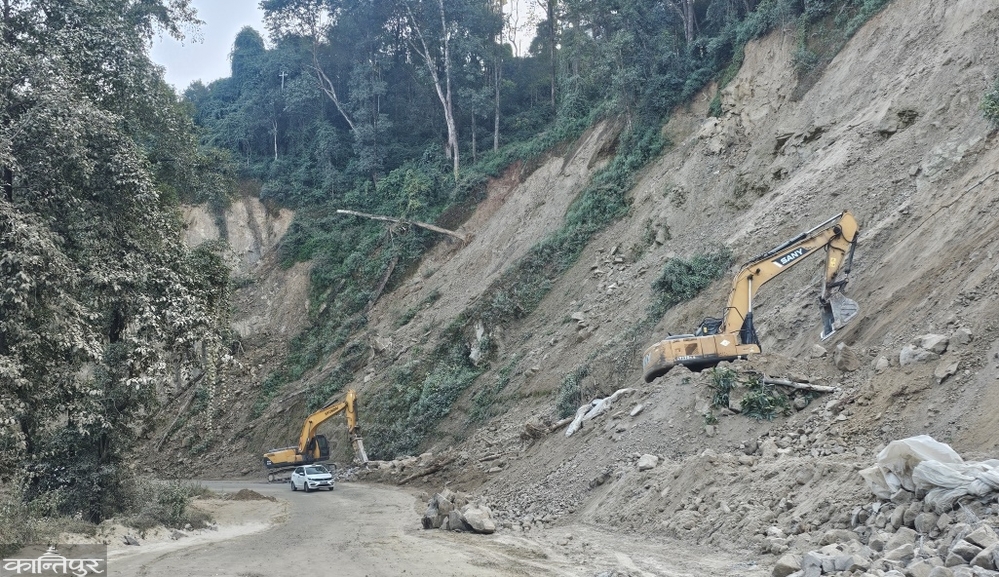
According to him, the Ministry of Finance has ensured resources of Rs 50 million for the construction of a bailey bridge in Thansingbensi and Rs 340 million for the construction of a concrete bridge. The then Physical and Infrastructure Development Minister Kulaman Ghising had promised to immediately install a bailey bridge and manage the budget for the construction of a concrete bridge while monitoring the area.
Sunkoshi Bridge connecting two districts has been abandoned for five years
The under-construction motorable bridge over the Sunkoshi River in Chehere, connecting Kavre and Sindhupalchowk, has been abandoned for five years.
An agreement was signed between the Road Department and Amar Construction Pvt. Ltd. on Bhadra 10, 2077 BS for the construction of the bridge with the aim of connecting various settlements of Saping in Bhumlu Rural Municipality-1 of Kavre and Chehere in Sindhupalchowk to the road network. The construction cost was fixed at Rs 117.42 million including VAT in the agreement. As per the agreement, the construction was to be completed by Jestha 2, 2080 BS, but the bridge is still incomplete as the construction company did not work on time.
Ward Chairman Lekh Bahadur Shrestha said that the main reason for the delay in the construction of the bridge was a dispute over the use of dredging materials and the contractor company. According to him, the dispute had flared up after the contractor tried to use the stones and soil from the river dredger to build the bridge ramp. The work was stopped due to the legal provision that materials cannot be taken from the dredger.
A team including the people's representatives of the municipality, ward chairmen, and others had repeatedly visited the site, instructing the contractor to bring soil and materials from their own sources. He informed that although the construction business had made a commitment with agreement to work from their own sources, the work was stopped last year due to the risk of increasing water flow in the river as the rainy season approached. The work that had been stopped for years has started a month ago.
He said that the work of raising pillars, constructing rams, and filling the caving mesh on the bridge is currently underway. According to him, two pillars have been constructed so far, and the slope on one side has been completed. The slope on the other side, gabions, machinery walls, and access roads are still to be constructed. So far, 60 percent of the work has been completed.
Although the construction contractor has resumed work, he said, it has not been done regularly. ‘If the work is to be done in this condition, it seems that it may take a few more years to complete the construction of this bridge.’ He complained that even though the contract for the construction of the bridge was taken by Amar Construction, there was no regular coordination with the ward. According to him, the construction contractor has not provided any formal information to the ward about the estimate, extension of the deadline and completion date of the work.
Bridge not built even after 9 years
It has been 9 years since the foundation stone of the concrete bridge over the Sicredobhan Bagmati River connecting Kavre and Makawanpur was laid. Due to the non-completion of the bridge, the locals of the Dandapari area (Khani Khola and Mahabharat) have faced problems in commuting to the state capital Hetauda. A dirt road has reached the banks of the Sicredobhan Bagmati River in Khanikhola Rural Municipality-5 from both districts. Local Arjun Lama said that the locals of the southern region have faced problems due to the non-construction of the bridge. "This bridge will bring us closer to the provincial capital Hetauda, and we can reach Hetauda in two hours," he said. "In winter, the road is mostly unpaved. The bridge is not built. Vehicles cannot ply in the rain. We have to travel for six hours to reach Banepa for work." He said that if the bridge is built, local products will find a market and it will be easier for food transportation and emergency medical services.
Despite repeated extensions of the deadline for the construction of concrete bridges on the Bagmati River in Khanikhola-5 of Kavre and Bagmati-5 of Makwanpur, Sicredobhan, only 40 percent of the work has been completed in nine years, said Ward Chairman of Khanikhola Rural Municipality-5, Buddhi Bahadur Syangtang.
Mahavir/Shikhar/Tamakoshi JV Company had signed an agreement on Asad 30, 2074 for the construction of a 115-meter-long concrete bridge. The agreement was signed to complete the bridge on Bhadra 30, 2076. After the work did not progress, the deadline was extended again to Falgun 14, 2077. He said that after the last extension of the deadline, the work has accelerated. According to him, even though the concrete bridge is being built after 9 years, the locals have faced additional problems after the Hattisar-Sigradovhan road leading to the bridge was washed away by the flood in the second week of Asoj 2081. He complained that the budget for the construction of the access road to the bridge was not managed by the local, provincial and federal governments at all three levels. The bridge construction work was progressed after a bid was invited from the District Development Office, Makawanpur in 2073. This bridge is currently being looked after by the Physical Infrastructure Office, Makawanpur.
Roshi flood causes permanent damage to BP Highway
Eight kilometers of the 12-kilometer road section from Chowkidanda in Namobuddha, Kavre to Kaldhunga in Roshi Rural Municipality under the BP Highway were completely damaged in the flood in the second week of Asoj 2081. The completely damaged highway was put into operation after temporary repairs. Thousands of passengers traveling via the National Highway had to face many hardships when the highway was blocked even during normal rains.
The incident of Asoj 2081 was repeated in Asoj 2082. The flood in Roshi Khola due to continuous rain on Asoj 18 damaged about 9 kilometers of the Bhakunde-Nepalthok road section under the BP Highway. Dinesh Lama, Chairman of Roshi Rural Municipality, informed that the continuous rain on the 18th damaged the temporary diversion made in the border area of Namobuddha Municipality and Roshi Rural Municipality from Chowkidanda to Boksekuna, Ghumune, Dalabensi, Piple, Mamti.
The damaged highway was put into operation last year with an investment of about 100 million. The reconstruction work of the BP Highway, which has been damaged repeatedly, is now progressing at a rapid pace. The Road Division Bhaktapur has set a target to complete the highway reconstruction work within two years. Currently, the highway is being reconstructed into a double lane.
According to Suman Yogesh, Senior Divisional Engineer of the Road Division Bhaktapur, work is currently underway in three sections for the reconstruction of the BP Highway. According to the contract details of the three sections of the reconstruction, a contract of Rs 1.22 billion has been signed with Khani/Kamaljit/Awan JV for the reconstruction of the 8.5-kilometer road from Dalabeshi to Charsay Besi. 13 percent of the work has been completed so far. A contract of Rs 1.14 billion has been signed with Lama/Nawakantipur JV for the reconstruction of the 11-kilometer road from Charsay Besi to Bhakunde Besi. 14 percent of the work has been completed so far.
Similarly, work has begun on the reconstruction of the 2.2-kilometer road from Dalabeshi to Sukkhapahiro after an agreement was signed with Uma/Bhandari/Amarjyoti JV for Rs 685.8 million. So far, 10 percent of the work has been completed. According to the Road Division Bhaktapur, the plan for the reconstruction of the road from Barkhekhola to Sukkapahiro is in the study phase. ‘The work of installing RCC walls has already started in the area damaged by last year’s floods,’ he said. ‘Preparations are also being made to install plumb walls from the river in Chowkidanda, and work is underway to widen the road with RCC walls in Charsay Besi and Bhakunde Besi.’ According to him, work is being done to expand the work in various sections of the highway, and work is being done to widen the road from Dalabesi-Mangaltar section to Charsay Besi. He said that the goal is to complete the construction of the structure by next Baisakh and start the operation of the road. He said that the road will be reconstructed within two years by increasing the work at this pace.
The construction of BP Highway (Dhulikhel-Sindhuli-Bardibas 160 km road) was started in the fiscal year 2053/54 with the grant assistance of the Japanese government. The construction was completed in sections on 18 Ashad 2072 and formally handed over to the Government of Nepal by the Japanese government.
Araniko Highway being expanded to 6 lanes
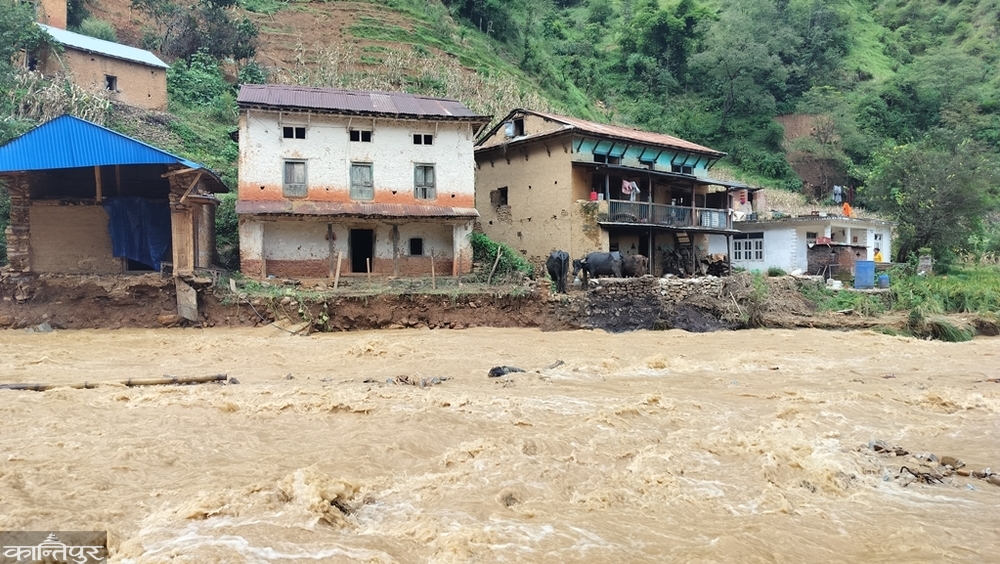
The Araniko Highway in the district connecting the eastern districts to Kathmandu is being expanded to 6 lanes. The expansion work of the Sanga-Dhulikhel road section under construction under the Araniko Highway has been completed to date by 53 percent. According to Bijay Kumar Mahato, Chief of the Suryabinayak-Dhulikhel Road Project Office, 53 percent of the work has been completed on the Suryabinayak-Dhulikhel section so far. He informed that 63 percent of the work has been completed on the Sanga-Dhulikhel section and 45 percent of the work has been completed on the Suryabinayak-Sanga section.
According to him, pavement work is currently underway in Suryabinayak-Jagati, pavement preparation is underway in Jagati-Basghari, work has been affected in Bansghari-Nalinchowk due to difficulties in moving poles, and pavement preparation is underway in Nalinchowk-Sanga. Similarly, underpass work is currently underway in Sanga and 70 percent of it has been completed, he informed.
He said that work is currently underway on the Sanga-Dhulikhel road section. According to him, blacktop work has been completed on the 1-kilometer Dhulikhel-Banghari road section and the 1-kilometer Pulbazar-Janagal road section. He said that blacktop work is currently underway on the Bansghari-28 Kilo section. According to him, pavement preparation is currently underway on the Pulbazar-28 Kilo road section and the Janagal-Sanga section of Banepa.
According to him, Lama Construction Company Pvt. Ltd. had taken a contract for the first section of the Sanga-Dhulikhel 8-kilometer road expansion work to be completed within three years at a cost of Rs 4.564 billion. As per the agreement signed with the construction contractor on Mangsir 27, 2079, the contract for the expansion work of the first section expired on Mangsir 26, 2082.
The project has stated that a contract for the second section of the Suryabinayak-Sanga 7.5-kilometer expansion under the plan was awarded at a cost of Rs 3.8893 billion. The deadline for the expansion of that section expired on Poush 18, 2082. He said that work has progressed on both sections after the deadline has been extended and there is no shortage of budget for the expansion. According to him, work is now underway at a rapid pace after the deadline has been extended and the target for completion of both sections by Ashar is set.
New contract for Dhulikhel-Khawa road, work pace remains the same
A new contract has been awarded for the Dhulikhel-Khawa road under the Araniko Highway connecting the eastern border due to the negligence of the construction entrepreneur. A new contract agreement has been awarded for the Dhulikhel-Khawa road under the Araniko Highway. The Road Division Office, Bhaktapur, has awarded a new contract for the expansion of a 4-kilometer section of the road.
Although Gauri Parbati Construction Services Pvt. Ltd. had signed a contract agreement on 2079 Jestha 20 for Rs 2019.46 million, the work was to be completed by 2080 Chaitra 19 as per the contract, but even after the deadline was extended by 11 months, the Road Department had cancelled the contract after only 25 percent of the work was completed. After the contract was cancelled, Gauri-Parbati Construction Services Company filed a case in the Patan High Court. After the case was dismissed on 25 Asad, the division re-issued the contract according to the new procedure.
According to the office, Avon Kali JV Kathmandu has taken the contract for the work with a budget of 315.6 million. The company has committed to completing the work in 14 months. The agreement was signed with Avon Kali JV Kathmandu on 27 Kartik 2082.
According to the agreement, machinery walls, plum concrete, slope protection and other works are currently being carried out under the expansion work of a four-kilometer road section, informed Suman Yogesh, Chief Senior Divisional Engineer of the Road Division Office, Bhaktapur.
According to him, as part of the expansion work, a thick cement-mixed base will be laid, two-stage blacktop DBM and asphalt blacktop, and slope protection will be done. He said that the slope protection work is a bit challenging. ‘A time limit of 14 months has been set,’ he said, ‘We have a plan to complete the work before that, we have a plan to complete the work by the upcoming Jestha, so far 20 percent physical progress has been made.’
Disaster causes housing problems
There is a dilapidated building of Mahakal Basic School in Kalanti, Simpani, Panauti Municipality-12, Kavre. Krishna Bahadur Tamang lives in class 4 of the school. He has been living there for shelter, not for studies. .
He and his family left home to save their lives from a landslide caused by heavy rains on Asoj 12, 2081. They stayed at a relative’s house for a few days. There was a fear of landslides to stay in their own house. ‘We stay with relatives for a few days,’ he said, ‘we didn’t always get to stay, our house was at risk of landslides, where to go, how we were going to raise our family, after explaining our problems to the ward office, arrangements were made to stay in the closed school, and after that it has become a little easier.’
According to him, it is not safe to build a house on the land we have. He said that he does not have the money to buy new land and build a house. ‘That is why we have been living in this school for the past one and a half years,’ he said, ‘we cannot always stay in this school, it is very cold here too, it is difficult to protect the children from the cold.’ According to him, I have been thinking about building a house, but since there is no safe place, I am confused about how to build it. ‘We received 25,000 rupees as the first installment given by the government to build a temporary shelter,’ he said, ‘how can we build a temporary shelter with that much money?’ There is no safe place to build that tent, how and where are they going to build it?'
Bhavani KC's family from Panauti-12 Roshi has been living in a tent in Banepa for one and a half years. After losing their home after the floods and landslides in the second week of Asoj 2081, Bhavani's family has been forced to live in a rented room for one and a half years. She said that the family's main source of income has also been lost after the flood washed away the house along with the agricultural land. 'We are currently living in a tent in Banepa, paying a monthly rent of Rs 12,000,' she said. 'We no longer have a place to live in Roshi, and there is no land left to build.' She complained that she had not even received the first installment of the housing grant that the government was supposed to provide after the flood.
According to her, a temporary tent has been built in the village with the help of the Red Cross and local organizations. ‘Sometimes when we go to the village,’ she said, ‘there is nothing to build a house here, Panauti is a small village, we have planned to build a house there, but we are not in a position to build it immediately.’
The District Administration Office’s report states that last year’s floods and landslides caused a lot of human and material damage in Bethanchowk, Roshi, Panauti, Temal and Namobuddha municipalities out of the 13 municipalities in Kavre. According to the report, 79 people from Kavre died in the floods and landslides, 88 were injured and 6 people went missing. Similarly, the office has a report that 2,979 houses were completely damaged.
Thousands have been left homeless after the floods and landslides completely damaged them. Some are staying with relatives, some are staying in tents, while some are taking risks and living in collapsed houses. Although the government provided Rs 25,000 as the first installment for the construction of temporary housing for the affected people, it could not arrange temporary housing in a safe place.
The administration's details state that Rs 78.575 crore has been released as the first installment for 3,143 families from 13 municipalities in the district for the construction of temporary housing. Similarly, 1,412 affected people from 9 other municipalities, apart from Panauti, Banepa, Mandandeupur and Chaurideurali rural municipalities, have received the second installment. For which, the office has received Rs 48.225 crore, of which Rs 35.3 million has been released to the affected people, according to the office's details.
Good governance is in the form of talk, arbitrary mining is going on without any worries
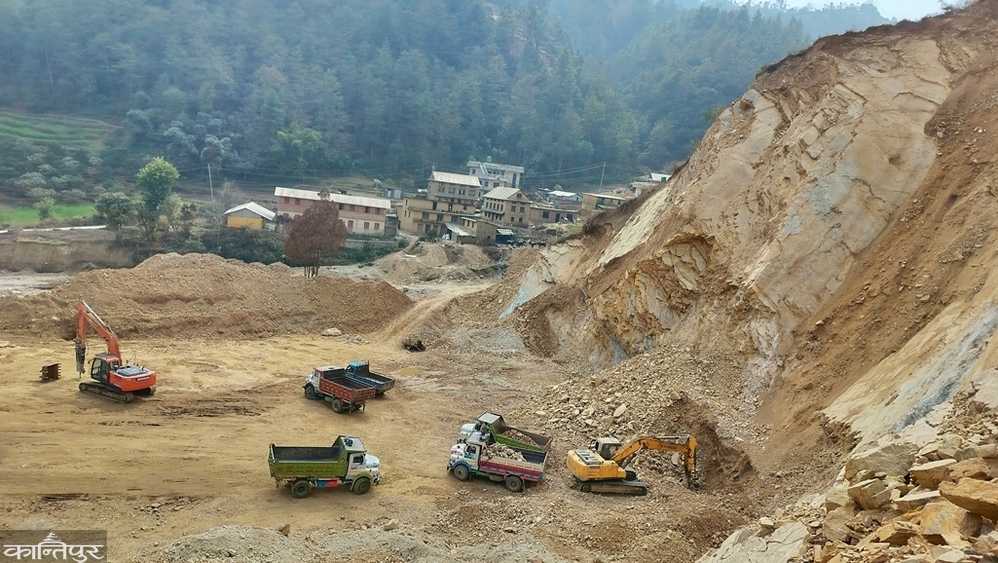
There are many mining and crusher industries, especially in Bethanchok rural municipality and Panauti municipality in Kavre. A report has shown that the mining and crusher industries in operation are not in accordance with the standards. The indiscriminate excavation of the mining and crusher industries operating against the standards has also caused human casualties.
A landslide occurred at 5:30 pm on May 8th while quarrying stones in Roshi, Panauti-12. The excavator driver died on the spot while digging. The deceased excavator driver was Ram Bahadur Timalsina, 35, a resident of Khanikhola Rural Municipality-2 and currently living in Sunthan, Panauti Municipality-9.
The residents of the place are in shock after the incident. The incident had further worried the locals who were already in shock after the village was completely destroyed by the flood and landslide in the second week of Asoj 2081. A local from Gurung village, Panauti-12, said that the indiscriminate excavation by the miners and crushers caused a lot of damage last year. ‘They throw the dust from the mines directly into the river,’ she said, ‘The dust blocked the river and caused such a disaster last year. We have always had to live in fear because of their whims.’ Panauti Municipality Deputy Mayor Geeta Banjara says that there is a provision that allows mining to be carried out only until 5 pm. However, the mine operators have been ignoring that provision.
On the morning of Ashad 10, a dry landslide occurred at the Ganeshsthan Mineral Industry in Chalal Ganeshsthan. The locals were even more terrified because the dry landslide was not natural but artificial. Locals have said that the dry landslide occurred while digging downwards instead of descending from above while digging downwards. Although mining is supposed to be done from the top and then descending, one of the shareholders of the mine said that the excavation was done from the bottom. ‘When mining from the top and then descending, it uses more labor, cost and resources,’ he said, ‘We excavated from the bottom to reduce costs.’ He admitted that the dry landslide that occurred in the mine also occurred during the excavation process.
Gyan Prasad Timalsina, an engineer at Bethanchowk Rural Municipality, clarified the criteria to be adopted while mining and said that serious risks will increase if safe excavation methods are not adopted. According to him, there is a provision that mining should be done by gradually creating a slope from the top of the hill, clearing the area and descending downwards. He said that workers, surrounding settlements and communities will be safe during excavation in this way.
But engineer Timalsina believes that the risk of landslides will increase significantly when digging from below, making workers and settlements unsafe. ‘During excavation in this way, there is a high possibility of landslides, which can cause great human and material damage,’ he said. ‘Although it seems easy and immediately beneficial to the operator, such work puts the entire settlement and community at risk.’
Ramkrishna Nirman Sewa, a mining industry called Ramkrishna Construction Service, runs day and night in front of the door of 67-year-old Sher Bahadur Tamang of Chalal Dobhan in Bethanchowk Rural Municipality-4. The fear of the risks that a mining industry operating on his own land may pose has worried him. He earns 2,000 rupees per trip from the material excavated from the mine. ‘There is a bit of fear during the rainy season, a bit of worry when it starts to rain,’ he said, ‘There is a fear of landslides from the mine and floods from the nearby river.’
In Kartik 2081, the District Security Committee had decided to close the illegally operating stone and crusher industry, considering public complaints of huge loss of life and property due to illegal stone and crusher operations. Stating that after the floods and landslides, the flow of the river changed its course, settlements were at risk, surrounding areas were also destroyed and washed away, and landslides occurred, and dust and gravel increased the level of the rivers, it had decided to request the National Disaster Risk Reduction and Management Authority for a study as a serious and detailed study is required in all aspects of the current situation, including the geological conditions of the settlements, mines, river and forest areas.
Chief District Officer Gopal Kumar Adhikari said that if illegal stone and crusher industries are found to be operating without implementing both decisions, action will be taken according to the law. According to him, a joint team of the District Security Committee and the District Monitoring Committee has been monitoring mining and crushing industries.
In municipalities that the government has declared as flood-affected areas, they are operating without even conducting geographical and environmental assessments. After most of the mining and crushing industries in this area were found not to be operating as per the standards, the District Monitoring Committee has closed down five mining and crushing industries that were operating against the standards after an on-site inspection, said Deepak Gautam, coordinator of the District Monitoring Committee and head of the District Coordination Committee.
According to him, the monitoring conducted by the task force formed in coordination with the district administration found that some mining and crushing industries were excavating without obtaining permission, and some were not following the prescribed standards. Based on the same report, instructions were given to the concerned municipalities and industries for improvement and mining and crushing industries that violated the standards were closed down.
According to him, three mines in Panauti Municipality, one in Mandandeupur Municipality, and one in Roshi Rural Municipality have been closed during the monitoring. ‘There are many reasons for the disaster, but the study shows that the mining and crusher industry is one of them,’ he said. ‘Now, the mines that are being exploited are being strictly controlled to prevent loss of life and property of citizens.’
Mining and crusher industries have come into operation in the municipalities most affected by the disaster. In 2081, the mining and crusher industries in the municipality started operating only 3 months after the disaster. In Bethanchok Rural Municipality, 4 mining and crusher industries are operating, and 3 of them are registered and operating according to legal procedures, said Tara Rana Timalsina, the vice-chairwoman of the municipality. According to her, she said that the remaining 1 mining and crusher industry has been instructed to operate after completing the legal procedures.
Similarly, only 8 out of 13 mining and crusher industries in Panauti Municipality have completed the legal process after obtaining approval from the municipality, informed the Deputy Mayor of the Municipality, Geeta Banjara. ‘The local body will only give approval to operate the industry and monitor whether the standards of the Department of Mines are followed or not,’ she said, ‘We will only give approval to operate the industry after the Department of Mines gives permission, and 5 mines and crushers that are operating without following the standards, registration, renewal and completing the legal process have been directed repeatedly.’
Similarly, 1 mine and crusher industry is operating in Namobuddha Municipality and 1 in Roshi Rural Municipality after the disaster. Similarly, 1 crusher industry is operating in Mandandeupur Municipality after the disaster. Jitendraman Tamang, the vice-chairman of the municipality, informed that five crusher industries are operating in Bhumlu Rural Municipality after the disaster and that all the industries have received approval from the municipality and completed all legal procedures.