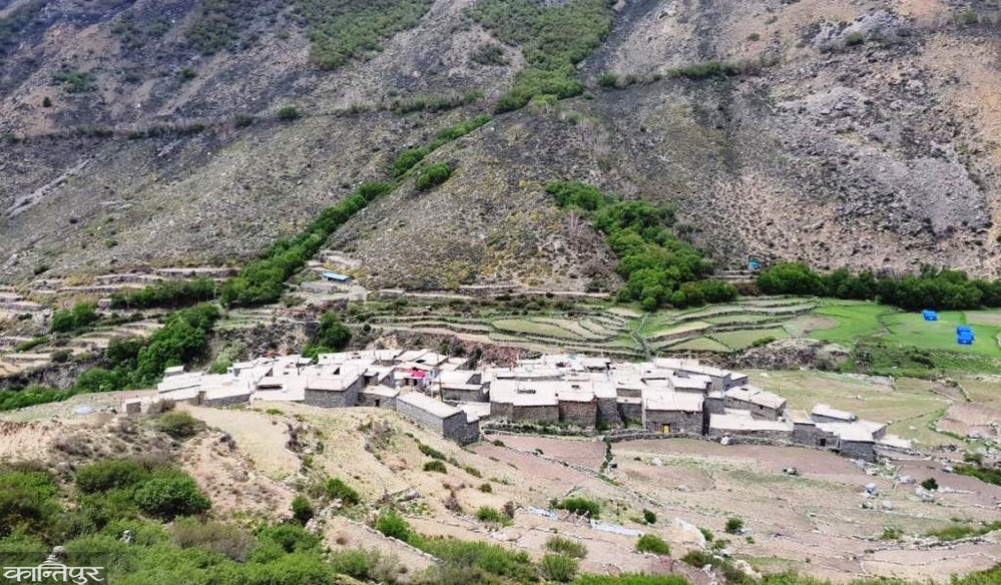
Locals have also been facing great hardship in the flow of services. Residents of the upper areas of the district headquarters Simkot and residents of Limi are forced to walk for a day to reach the center of the rural municipality.
We use Google Cloud Translation Services. Google requires we provide the following disclaimer relating to use of this service:
This service may contain translations powered by Google. Google disclaims all warranties related to the translations, expressed or implied, including any warranties of accuracy, reliability, and any implied warranties of merchantability, fitness for a particular purpose, and noninfringement.
Most of the locals in Humla, a mountainous district of Karnali, located at an altitude of 1,524 to 7,337 meters above sea level, depend on herb collection and animal husbandry.
The residents around the district headquarters, Simkot, are involved in employment, trade and agriculture, while other local levels are engaged in herb collection, animal husbandry and agriculture. Herbs such as Guccichayu, Katuki, Volte, Setak Chini, Panchaule, Jatamsi and others are found in Humla. ‘People in the upper settlements keep sheep and goats in their homes, and a single family has up to 250 sheep and goats,’ said Kailash Rokaya, principal of Balmandir Secondary School in Simkot. ‘They go to Patan to graze the sheep and goats during the summer and rainy season and collect various herbs according to the season, while those who live at home depend on farming.’
Humla has recently become the gateway to Mansarovar-Kailash. After the 2072 BS earthquake, those going to Kailash Darshan had started using this route. But due to the Corona epidemic, the movement of Indian pilgrims was stopped for almost 4 years. After China opened the pilgrimage last year, about 11,000 Indian pilgrims have reached Mansarovar via Humla, according to the District Police Office.
Every year, Indian tourists enter China from Baisakh to Asoj via the district headquarters Simkot and Hilsa. For which, road facilities have been provided to the Chinese border. About one and a half dozen hotels have been opened in Simkot and 35 in Hilsa due to the pilgrimage. Due to this, about a thousand people including hotel business, tourism business, porters have found employment, said Ram Bahadur Bhandari, Chairman of the Nepal Chamber of Commerce and Industry.
According to him, a dozen tourist hotels have now opened in the district headquarters Simkot with an investment of Rs 5 million to Rs 15 million due to the pilgrimage. After the road facilities were provided in Humla a year ago, the construction of pucca houses has increased. According to the Chamber of Commerce and Industry, there are about 500 hotels and shops operating in Simkot.
The employment destination of most of the youth of Humla is the Chinese market Taklakot. According to the District Administration Office, 10,955 youth went to Taklakot last year. The youth enter China with the permission of the District Administration Office. Kunsang Tamang of Halji in Namkha Rural Municipality said that they earn up to 150,000 rupees per month by working in Taklakot except during snowfall.
He said that since Taklakot is a new city, there is no problem in getting work like carrying heavy loads, building houses, and repairing roads. Pemba Tamang of Namkha Rural Municipality-5 said that daily wage earners in Taklakot earn an average of 300 Chinese yuan (sukr) per day. According to him, the Nepali exchange rate of the currency is 19 rupees 45 paise. According to him, the Nepali herbal trade in Taklakot is also good. Due to this, he informed that some traders from Humla also go there every year to sell herbs including Yarsagumba, Furu, Gucci mushrooms, and Thakna. Local businessman Vijay Lama said that economic activity has been increasing in Humla for the past few years due to the Mansarovar-Kailash pilgrimage. According to him, about 40 large and medium-sized hotels in Simkot are fully booked during the pilgrimage season. He informed that up to one crore rupees have been invested in one hotel. ‘During the season, young people earn up to Rs 5,000 by working as porters,’ he said, ‘Up to 100 tourists stay in a single hotel, up to 82 flights have taken place at Simkot airport, 5 helicopters are ready to transport tourists from Simkot to Hilsa, the Mansarovar pilgrimage has increased economic activity dramatically.’
But the problem of lack of market for agricultural products and herbs is big in Humla. Apples have been cultivated in an area of 284 hectares across the district. This year, 2,593 metric tons of apples were produced. Of which, only about 1,000 metric tons of apples have been exported. ‘Traders from Nepalgunj and Surkhet come and negotiate, we are forced to sell apples at whatever price they ask,’ said local farmer Chakra Bahadur Rokaya. ‘The road was opened recently, we are not able to take them out and sell them ourselves, so big traders have started coming to the village and forming syndicates.’ According to him, this year, farmers sold apples for Rs 45 per kilo. In Surkhet and Nepalgunj, apples were bought and sold for Rs 200 per kilo.
According to farmers, when they send apples out themselves, they are forced to pay transportation fees of up to Rs 40 per kilo. Govinda Budha of Simkot-4 said that even though the roads reach, local products including beans, peas, potatoes, urad dal and quinoa have not been able to find a market.
Similarly, businessman Lakpo Lama said that the business of herbs has declined due to high transportation fees. ‘In the absence of a collection and processing center for herbs, ungraded herbs have to be sent,’ he said, ‘that neither finds a market nor a good price.’ Due to lack of irrigation and extreme cold, only one crop of yam grows in a year in all villages of Namkha Rural Municipality. ‘That production is not enough to feed the farmers for even 3 months, 90 percent of the residents here use food from outside,’ said Namkha Rural Municipality Chairman Prem Bahadur Lama, ‘The youth go to Taklakot for employment, others are earning a living by raising sheep, collecting herbs and seasonal trade.’ He said that since only one crop is grown, there will always be a shortage of fertilizers and seeds.
According to the National Census-2078, the poverty rate in the district has come down from 60 percent to 35 percent. ‘The economy based on agriculture and animal husbandry is gradually oriented towards trade and tourism,’ said Dr., former member of the Provincial Planning Commission. Dipendra Rokaya said, ‘Humla can make a leap forward economically if it can integrate herbs, high mountain agriculture, border trade and responsible tourism into the value chain.’
Humla was declared a literate district on Jestha 21. According to government data, the literacy rate of the district is 97 percent in the age group of 15 to 60 years. But due to the lack of quality education in rural areas, children of Lama and Tamang communities are forced to go outside the district to receive Buddhist education, said Sanjok Tamang of Limi.
According to him, Himshikhar Basic School in Tilgaun, Limi, Namkha Rural Municipality-6, was closed four years ago, while only 13 students are studying in Bhrikuti Primary School in Jang. Although 40 students are enrolled in Sunkhani Primary School in Halji, most of them are not regular. ‘There is no education above grade 5 in Limi, schools are closed for about 6 months due to snowfall and rain, so there is no option but to send children outside the district to receive Buddhist education,’ he said. ‘If you need to receive education above grade 5, you have to go to the municipal center Yalbang or the district headquarters Simkot.’
His 3 sons are living in Kathmandu and are receiving Buddhist education. He says that many people are attracted to Buddhist education because they can live as lamas in various monasteries after receiving Buddhist education. According to the National Census-2078, about 21 percent of the 55,394 population in the district is Lama and Bhote. After the interest of parents and students towards Buddhist education increased, a monastery named Namkha Khungjong was started in Namkha-4 Yalbang 3 years ago. In which about 300 children are studying.
Similarly, the residents here are facing great hardship for treatment. Last year, 21 pregnant and critically ill patients were brought to Surkhet by helicopter. This year, 18 people have been rescued. ‘There are only nominal health institutions in the village, and there is always a shortage of medicines and health workers,’ said Sant Bahadur Rokaya, a teacher at Bhrikuti Primary School. ‘There is no option but to refer patients by helicopter as there is a risk of death if they are taken to the district hospital by road.’ Sarita Bohara, a senior nurse at the district hospital, said that only routine check-ups are done due to lack of equipment and electricity.
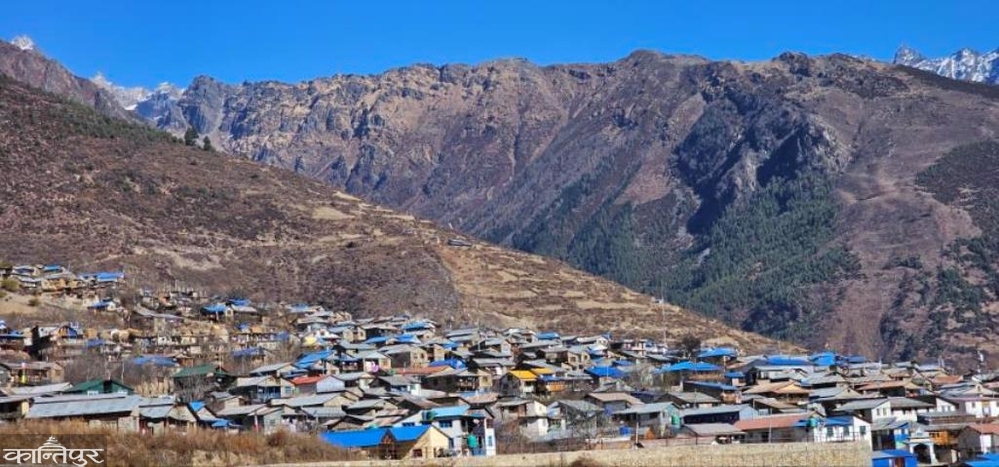
Locals have also been facing great hardship in the service delivery. Residents of the upper areas of the district headquarters Simkot and residents of Limi are forced to walk for a day to reach the rural municipality center. Yubaraj Rawat of Sarkegad-1 Jairgaun said that the residents of Tanjakot, Adanchuli, Chankheli and Sarkegad rural municipalities are suffering due to the lack of official-level employees at the area administration office.
Two weeks ago, he walked for nearly 4 hours to reach the area administration office to get his son Nawaraj's citizenship. He complained that he had to walk a day to reach the district headquarters due to the lack of employees. 'Employees are never found at the village government office,' he said. 'We have no option but to go to the district headquarters even to make a general recommendation.'
Shivraj Sharma, head of the District Coordination Committee, said that road facilities have not reached 13 of the 44 wards in Humla. According to him, Humla was connected to the national road network since Asad 32. The Karnali Corridor has connected all the municipalities in the district to the road network.
But he complains that even though the road was connected to the Chinese border via the Khulalu-Simkot-Hilsa road, he has not been able to benefit. 'After the road was opened, only illegal goods including Chinese alcohol have been transported. Even though there is a customs office at the border, there are never any employees,' he said. 'If commercial and daily consumer goods could come legally from China, the price of Humla would have been reduced by at least half.'
Before connecting to the national road network, Humla was forced to pay a transportation fee of Rs 125 per kilogram to consume food by ship. 'After the road was built, we no longer have to wait in line for hours to buy rice once a week,' said Dayaram Budha of Simkot-4. 'Earlier, the price of a 30-kg bag of rice has come down from Rs 5,000 to Rs 3,000. It would be a great relief if we could easily get food all year round.'
Electricity from the central transmission line has not yet reached Humla. Electricity service has reached nearly 2,000 homes in the district headquarters Simkot and Kharpunath rural municipality through the Hildum Khola Hydropower Project. Naresh Raj Jaisi, head of the Infrastructure Development Office, Humla, said that electricity service has reached nearly 7,000 homes through 14 small hydropower projects across the district. According to him, 63.88 percent of locals are consuming water from public drinking water taps. Out of 11,204 homes in the district, 7,157 homes have reached public taps.
There is a major electricity problem in Humla. ‘Even if it rains or snows, the electricity in Hildumkhola goes off. It takes weeks to get the power back on,’ said local businessman Vijay Lama. ‘Telephone service is shut down due to power problems, and small industries and businesses are shut down for weeks.’
Solar-powered telephone towers have been set up in rural areas. Ujjwal Phadera, a youth from Sarkegad-3, said that they had to go without contact for weeks when the sun was out. ‘Let alone the internet, we have to go up and down the hills looking for a tower to even make a call,’ he said. ‘On sunny days, the mobile tower is charged by solar power and the network comes. Since there is no electricity in the village, we are forced to go to neighboring villages to charge our mobile phones.’
Sharma, the head of the District Coordination Committee, says that transport services will be shut down during snowfall due to the lack of upgrading of the Karnali Corridor. ‘The newly opened track is rough and narrow, and the long journey by car makes even ordinary people sick when they reach Surkhet,’ he said. ‘Since road transport is not reliable, there is no alternative to paying expensive fares and traveling by plane.’
Private airlines flying from Nepalgunj to Simkot have been charging Rs 13,830 for charter flights. Sita, Tara and Summit Airlines have fixed the fare at Rs 8,900 for regular flights. Local Jasbir Rokaya complained that passengers were being affected when airlines cancelled regular flights on various pretexts and gave priority to charter flights.’
According to him, passengers are forced to suffer due to the lack of bridges at about a dozen places in the Karnali corridor. ‘सुर्खेतबाट सिमकोट पुग्न २८ घण्टासम्मको यात्रा गर्नुपर्छ, कच्ची सडकको ठाउँठाउँमा गाडीले नतान्दा यात्रुले गाडी नै धकेलेर यात्रा गर्नुपर्ने बाध्यता छ,’ उनले भने, ‘साघुँरो र भर्खरै बनाएको कच्ची सडकमा यात्रा गर्दा दुर्घटनाको जोखिम उत्तिकै छ ।'
सडकको अवस्थाका कारण दुर्घटना बढिरहेको पनि ट्राफिक प्रहरीको तथ्यांकलेसमेत देखाउँछ । कर्णाली प्रदेश राजमार्ग व्यवस्थापन तथा ट्राफिक कार्यालयका अनुसार गत आर्थिक वर्षमा ३१ वटा दुर्घटना हुँदा ११ जनाको मृत्यु भयो भने ४२ जना घाइते भए भने चालु आवको ६ महिनामा ९ वटा सवारी दुर्घटना हुँदा ५ जनाको मृत्यु भयो भने ४४ जना घाइते भएका छन् ।
कर्णाली करिडोरअन्तर्गतको सिमकोट–हिल्सा सडक गत मंसिर पहिलो सातायता बन्द छ । सडकखण्डको ठाउँठाउँमा हिउँ जमेपछि चिनियाँ सीमा हिल्सासम्मको आउजाउ बन्द भएको हो । ‘कर्णाली करिडोरका दुवै खण्डलाई बाह्रै महिना चल्ने बनाउने एजेण्डासहित उम्मेदवारहरु घरदैलोमा आएका छन्,’ स्थानीय अगुवा पूर्ण बुढाले भने, ‘उम्मेदवारहरु कृषि, सिँचाइ, खानेपानी, स्थानीय सडकलगायत पुरानै एजेण्डमा देखाएर मत मागिरहेका छन् ।’
हुम्लामा ढुवानी भाडा महँगो हुँदा बजेट अभावमा झण्डै १ सय ५० योजना अलपत्र परेको पूर्वाधार विकास कार्यालयको तथ्यांक छ । कार्यालयका अनुसार सबै पालिका अस्पतालको काम अधुरो छ । ‘अरु जिल्लामा ५० लाखमा बन्ने योजना हुम्लामा डेढ करोड खर्चिनुपर्ने बाध्यता छ,’ पूर्वाधार विकास कार्यालय हुम्लाका प्रमुख नरेशराज जैसीले भने, ‘खानेपानी, सिँचाइलगायतका केही योजना त पञ्चायतकालदेखि नै अलपत्र छन् ।’
उनले सुर्खेत–नेपालगन्जमा प्रतिबोरा ८ सय रुपैयाँमा पाइने सिमेन्ट सदरमुकाममा १२ सय र नाम्खामा २ हजार रुपैयाँसम्म पर्ने बताए । त्यस्तै फलामे छडको मूल्य सुर्खेतमा प्रतिकिलो १ सय २० रुपैयाँ छ भने सिमकोटमा २ सय ३० र नाम्खामा ३ सय ५० रुपैयाँमा पाइन्छ । हुम्लामा मजदुरी गर्नेको अभाव पनि अर्को समस्या हो ।
बाहिरबाट आएका मजदुरलाई प्रतिदिन १ हजार ५ सयदेखि २ हजार रुपैयाँसम्म ज्याला दिनुपर्ने बाध्यता छ ।
कर्णाली करिडोरको चुवाखोलामा पक्की पुल निर्माणको काम लामो समयदेखि अलपत्र छ । जहाँ पक्की पुल बनाउन समय लाग्ने देखिएपछि नेपाली सेनाले बेलिब्रीज निर्माण गरी हुम्लालाई गत असारमा राष्ट्रिय सडक सञ्जालमा जोडिएको थियो ।
२०७८ साल भदौमा पुल निर्माण गर्नेगरि १० करोड ४८ लाख रुपैयाँमा स्वच्छन्द/ मन्टपुमोरी जेभीले पुल निर्माणको जिम्मा लिएको थियो । ५२ मिटर लम्बाइ र सात मिटर चौडाइको पुलको पिलरको जग खन्ने क्रममा तातोपानी निस्किएपछि लामो समय कम्पनीले काम अलपत्र पार्यो । अहिले डिजाइन स्टिमेट परिवर्तन गरी पुल निर्माको काम सुरु गरिए पनि कहिलेसम्म निर्माण सकिन्छ भन्ने टुंगो नभएको आयोजनाका इन्जिनियर ओमप्रकाश कोहारले बताए ।
उनका अनुसार करिडोरमै सर्केगाड, न्यासीखोला र स्याम्नेखोलामा पक्की पुल निर्माणको काम अलपत्र परेको छ भने फुगाड, सान्नीगाड, जिट्टीखोला, बड्डीगाड, कुवाडी र सल्लीसल्लालगायतमा बेलिब्रिज विस्थापन गरी पक्की पुल निर्माण गर्न बल्ल ठेक्का प्रक्रिया सुरु भएको छ ।
हुम्लाका उच्च हिमाली बस्तीहरुमा मौसमी बसाइँसराइको समस्या उच्च छ । नाम्खा गाउँपालिकाको लिमी, हिल्सा, लाप्चालगायत गाउँका बासिन्दा बर्षेनि कात्तिकदेखि चैतसम्म चिसो छल्न सदरमुकाम सिमकोट, नेपालगन्ज, सुर्खेत, काठमाडौंलगायत ठाउँमा बसाइ सर्छन् । ‘अहिले पनि त्यहाँ ३ फिटसम्म हिउँ जमेको छ,’ नाम्खा–६ का वडाध्यक्ष पाल्जोर तामाङले भने, ‘जडीबुटीको कारण मात्र स्थानीयले गाउँ छोड्न सकेका छैनन्, नत्र गाउँमा असुविधा र भौगोलिक विकटताले बस्नै समस्या छ ।’ शिक्षा, स्वास्थ्य, सञ्चार, खानेपानीलगायत समस्याका कारण गाउँमा बस्नसक्ने अवस्था नभएको लिमीस्थित हल्जीगाउँका कर्मा लामाले बताए ।
लिमीमा हल्जी, तिल र जाङ गरी तीन गाउँ छन् । तीनवटै गाउँमा १ सय ८१ घरधुरी छ भने ९ सय ४ जनसंख्या रहेको राष्ट्रिय जनगणना–२०७८ को तथ्यांक छ । त्यसमध्ये तीनवटै गाउँमा अहिले मुस्किलले एक सय जना मात्र रहेको उनले वडाध्यक्ष तामाङले बताए । ‘अब उनीहरुको स्थायी बसोबासको व्यवस्थापन चुनौतीपूर्ण छ,’ उनले भने, ‘पहिरो र भूक्षयका कारण गाउँ जोखिममा परेको छ, त्यसको व्यवस्थापन पनि गर्न सकिएको छैन।’
५ हजार ६ सय ५५ वर्गकिलोमिटर क्षेत्रफलमा फैलिएको हुम्लामा राष्ट्रिय जनगणना–२०७८ अनुसार ५५ हजार ३ सय ९४ जनसंख्या छ । यहाँ क्षेत्री, ठकुरी, विश्वकर्मा, भोटे, ब्राह्मण, परियार, तामाङ, मिजार, मगरलगायत जातीको बसोबास छ । सन् २००१ मा करिब ४० हजार जनसंख्या थियो भने जनघनत्व ७.२ बाट बढेर करिब १० व्यक्ति प्रतिवर्गकिलोमिटर पुगेको छ । जुन उच्च हिमाली जिल्लाका लागि उल्लेख्य हो । संघीय संरचनापछि हुम्लालाई ७ गाउँपालिकामा विभाजन गरिएको छ ।