”This was the first time in Sri Lanka's modern history that the people had risen together for the country. The main demands of the movement were economic justice, an end to corruption and nepotism.”
We use Google Cloud Translation Services. Google requires we provide the following disclaimer relating to use of this service:
This service may contain translations powered by Google. Google disclaims all warranties related to the translations, expressed or implied, including any warranties of accuracy, reliability, and any implied warranties of merchantability, fitness for a particular purpose, and noninfringement.
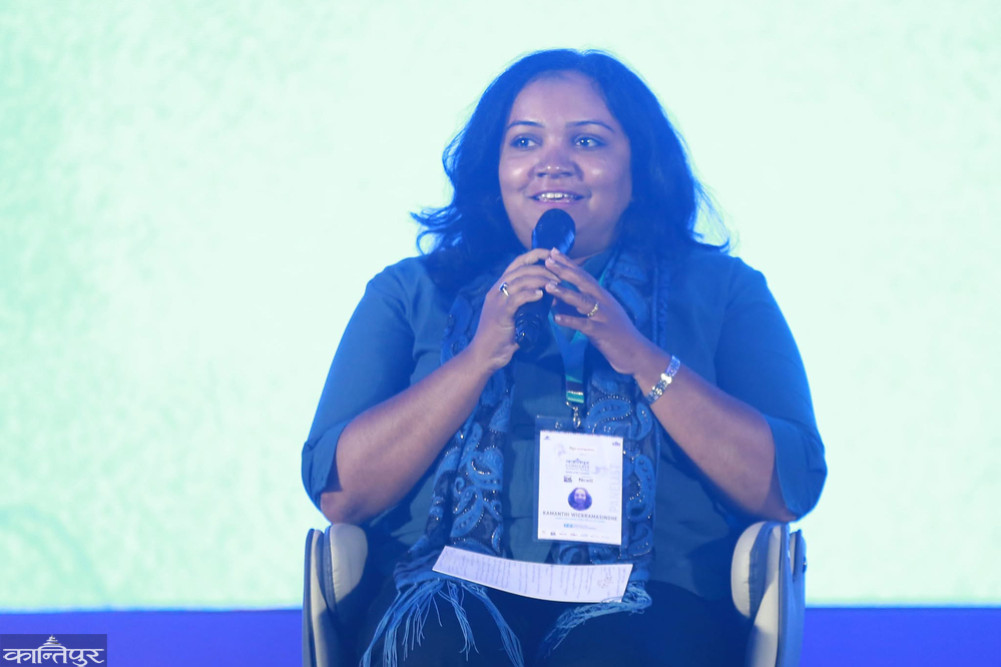
Journalist Kamanthi Wickramasinghe of the Daily Mirror has said that the people are pretending that there is no corruption in the government that came to power after the protests in Sri Lanka. Journalist Wickramasinghe made this statement at the fifth edition of the 'Kantipur Conclave', which began in Kathmandu on Monday.
Wickremesinghe said that the then government had expected economic reforms after the end of the years-long civil war, but Mahinda Rajapaksa's leadership has not been able to move forward accordingly.
She said that the Sri Lankan people elected a leader for hope and stability in the 2015 presidential election. 'The movement has taken place because the promises made to the people in the election and the expectations of the people could not be fulfilled.' Speaking at the first session of the conclave, 'From Movement to Opportunity', she said, 'People are saying that the government that came after the election after the movement is not corrupt.'
Journalist Wickremesinghe says that despite expectations of positive economic reforms and public life under Rajapaksa, nepotism and corruption have increased. 'The Rajapaksa family has returned to power. Their rule became dynastic, where there was widespread nepotism and corruption,' she said.
Wickremesinghe said that Rajapaksa's leadership had taken big economic policies and decisions including tax cuts, which had led to a serious economic crisis. She said that the economic crisis had affected the lives of people of all classes, genders, and age groups, and they had come out on the streets. 'People took to the streets as life became difficult. Citizens from all parts of the country, ages, castes, genders, or backgrounds participated in the movement. This was the first time in Sri Lanka's modern history that the people had risen together for the country. The main demands of the movement were economic justice, an end to corruption, and an end to nepotism,' she said.
Wickremesinghe said that the then government only recognized the challenge and began to crack down 15 days after the movement began.