Chitwan is considered a district with good educational standards and social and political awareness. But just as there are many opportunities here, there are also many challenges and problems.
We use Google Cloud Translation Services. Google requires we provide the following disclaimer relating to use of this service:
This service may contain translations powered by Google. Google disclaims all warranties related to the translations, expressed or implied, including any warranties of accuracy, reliability, and any implied warranties of merchantability, fitness for a particular purpose, and noninfringement.
Chitwan National Park, home to rare wildlife such as tigers and rhinos, is considered a district with a thriving economy due to agricultural enterprises such as fish, poultry, milk, and vegetable production, and a good educational level and social and political awareness. Just as there are many opportunities here, there are also many challenges and problems.
Chitwan is known nationwide for its healthcare facilities due to its two medical colleges, the Government Hospital in Bharatpur and the BP Koirala Memorial Cancer Hospital. The then Rampur Agricultural Campus and the current Agriculture and Forestry University have also elevated Chitwan in the education sector. But wildlife is not only associated with prosperity but also with suffering. During the rainy season, fear also increases with rivers and streams.
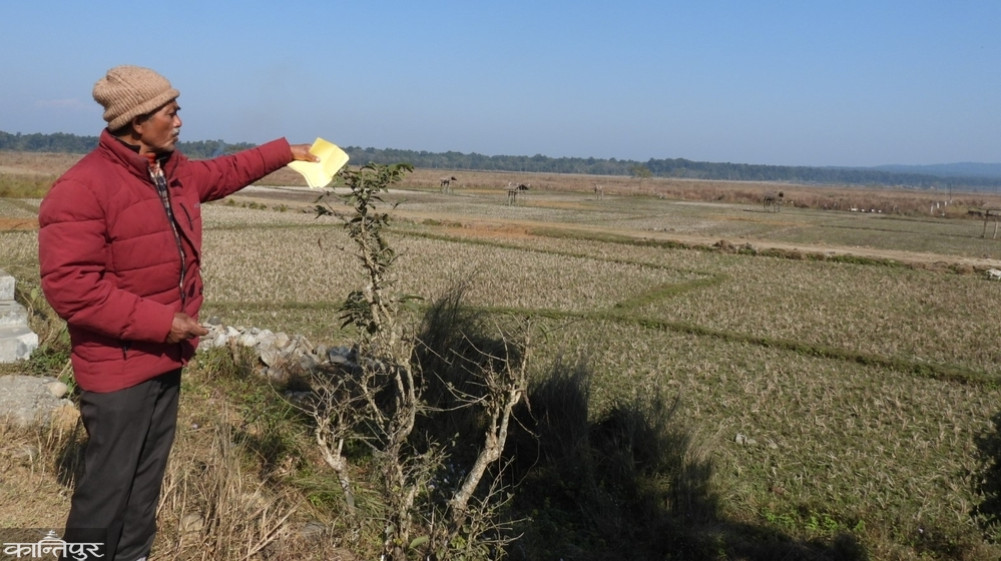
The pain caused by wild animals and floods to the locals in Pandavnagar village in Madi Municipality-1, which is located in the vicinity of Kholaikhola and Chitwan National Park, is clearly visible. Pandavnagar and the surrounding villages of Wanakatta and Dropatinagar are the habitat of the indigenous Bote community of the plains of Chitwan. The Bote people have been living here for a long time. After 2022, other communities from the hilly areas also came and settled.
A school for classes one to five in Pandavnagar was established in 2044 BS. There was a river Riu nearby. The river Riu, which had been eroding for years, was in danger of affecting the school. That is why in 2052 BS, land was purchased and the school was moved to a safer place, says Principal Tul Bahadur Nepali. The school was safe from floods, but it was not safe from the effects of migration.
This school currently has 80 students. At one time, there were up to 140 students. After 2055 BS, the number of students decreased. Currently, 67 of the students are from the Bote community. There are eight from the Dalit community, three from Tamang and two from Chhetri. At one time, there were 40/50 children from the Chhetri/Bahun community.
According to local Baburam Nepali, earlier, Chhetri/Bahun lived in Ratanpur village. Ratanpur, in the northwest area of the school, is now completely empty. ‘There was a fear of floods from the Deuta River, which comes from Someshwor. The Riu River, which flows through the border of the park, came towards the settlement with even greater force. The tiger, bear and rhinoceros were already being harassed, and the wild elephant Dhruv also added to the suffering,’ said Baburam.
The flood disaster started the migration process. In the winter of 2069 BS, Dhruv suffered a lot. Dhruv killed an elderly couple in Draupadinagar in Mangsir 2069 BS. Dhruv had killed four people from the village around Pandavnagar in a period of one and a half months.
The locals, who had been living in fear of floods and other wild animals, found it difficult to bear the fear of elephants. ‘After that, they left the village to build houses and land elsewhere. As we watched, Ratanpur was emptying before our eyes,’ Baburam said.
Madi, which is surrounded by similar problems, is always in the news during elections. This time too, candidates in Madi, which falls under Chitwan-3, started their election campaign by prioritizing Madi. Candidates from UML, CPN, and RSVP have reached Madi.
The land of Ratanpur, which has good soil for farming, looks barren today. Baburam says that many villages in this area will be protected from floods and wildlife by building strong dams on the Riu and other rivers. The Riu corridor construction plan with a strong embankment has also been included in the Madi municipality’s program.
Madi Municipality Mayor Tarakaji Mahato says that such programs that require a large budget should be included in the federal government's plan.
Madi-1 Ward Chairman Amit Lama says, 'We have not done as many programs as possible. We are coming up with plans so that no one leaves Madi and people from outside come here. But the total budget of the ward is 8 million to 10 million rupees, how much will it do?'
Madi is also the residential area of residents waiting for land titles. No one from the settlement, which was formerly called Bandarjhula and is now called Hanumanjhula, in Madi-9, has land titles. Local Jagram Chepang says that there are residents who have been living here since Kartik 2047. With the number of households increasing, now about 500 families are living here. There are more than 800 voters here.
Chitwan National Park considers this an encroached area. That is why the issue of distributing red-letter papers during elections is raised with great urgency. And after the elections, it always fades away. There is neither good road nor electricity. After going south from the district headquarters Bharatpur, after cutting through 10 kilometers of the Chitwan National Park, Madi finally enters. From Madi, one reaches here after cutting through 18 kilometers of the Chitwan National Park through east-south Bagai.
Even though it is 80 kilometers away from the district headquarters, candidates in the election reach Bandarjhula. Even now, Shankar Thapaliya of UML and Renu Dahal of CPN have reached Bandarjhula. Other candidates are also planning to cross Bagai. While the candidates were seeking votes in Madi, news came on Magh 12 that Ashok Bhattarai of Madi-1 had died after being mauled by a rhinoceros.
Similarly, blood, a knife and a hat were found in the forest of Bhanu Botek of Madi-1, who had not been in contact with his family since Magh 11. These materials, found three to four kilometers from the village, suggest that Bhanu may have been attacked by a tiger. But his other condition has not been ascertained.
It is seen that five to 25 people die every year due to wild animal attacks around Chitwan National Park. Madi region is the most affected by this problem. Around three lakh tourists from home and abroad visit Chitwan National Park every year. The park alone collects around Rs 300 million in revenue every year. Hundreds of hotels and resorts have opened under the auspices of the park. This has increased additional business and employment opportunities. But there has also been loss of human, domestic animals and food crops due to wild animals every year.
On the other hand, there have been loud voices that the park's rules and regulations have caused problems in development . Even after the lapse of time, the intermediate user committees of the park have not been formed. The issue of blacktopping the road inside the park from Bharatpur to Madi and Thori is always in the news . There is dissatisfaction among the locals that they have not been able to blacktop it because of the park . For these reasons, the park always becomes an issue in elections .
Chitwan Park has touched four districts including Chitwan . Chitwan, which has three constituencies, has also touched the park in constituencies number one and three. Shankar Thapaliya, the UML candidate in Chitwan-3, said in a press conference organized before starting the election campaign that he would address the problems faced by the locals by amending the Park Act .
Ghimire, a voter from Chitwan-3 who has been running a river cleaning campaign, says that policymakers should work with attention to the overall management of the park. He has demanded that the parties mention the issue of river conservation in their manifestos. ‘The issue of park management should also be raised keeping in mind the coexistence of humans and wildlife,’ he said.
The rivers flowing through the park are the habitat of the rare gharial. In the winter, large numbers of birds from Mongolia/Siberia come to this river in search of food. Therefore, he appeals that the candidates should make public a long-term strategy on the river issue.
The park is also linked to tourism. Tourism entrepreneurs have been demanding policy reforms for years. Tourism entrepreneurs have been raising the issue that it would be better to buy tickets for two or four days at a time instead of the rule of buying tickets every day when visiting the park. But policymakers have not paid attention to this. The issue of animal rights and domestic elephant management comes up from time to time.
River embankment is a big issue in the Chitwan elections. The UML built a strong base in the eastern part of Chitwan with the help of the embankment on the Rapti River. Renu Dahal, who resigned as the mayor of Bharatpur Metropolitan City, is now a candidate from the Nepali National Congress in Chitwan-3. The metropolis built the Narayani embankment in the western part of Chitwan from the federal budget. Renu has now raised the issue of building a similar embankment in the western part of the Rapti River. There is a problem of erosion and inundation due to the Rapti River in the Patihani, Jagatpur, and Meghauli areas.
The issue of installing strong fences in settlement areas to protect them from wild animals has also been raised as an election issue. While such issues are seen in the plains, the hilly areas of Chitwan lack basic infrastructure.
Rapti Municipality is located in the eastern part of Chitwan. Ward number 13 is located in the northern hilly area of Rapti Municipality. In this entire ward, no house has electricity yet. Ward chairman Ashok Praja said that there are 647 houses in this ward. The Bhandara-Malekhu Chepang road has crossed this ward. But the road has not been upgraded for years since the road was opened. There are many villages in this ward that are not touched by the road. One of these villages is Kanda. If you have to go to Bhandara, where the office of the Dal Bahadur Chepang Municipality is located, you have to walk up and down for an hour and a half from the village to reach Dhungabang. A jeep comes there once a day. It takes three hours to reach Bhandara in that jeep. The road is not even 40 kilometers long. But the difficulty of the hilly region takes time, and the fare costs 350.
The Bhandara-Malekhu road has been talked about for more than two decades. It has been 16 years since construction began. But this nearly 70-kilometer road is not even 20 kilometers good and wide. The construction of this road, which will lay the foundation for development for the northern part of Chitwan, connected to Dhading and Makwanpur, is at a snail's pace. It has been 13 years since the truck was opened.
In 2066 BS, when Surendra Pandey was the Finance Minister, the work on the Bhandara-Malekhu Chepang road was mentioned in the budget speech. The length of this road, which starts from Bhandara in Chitwan on the East-West Highway and ends at Dhading Malekhu on the Prithvi Highway, is 66 kilometers. Although the work was started to build a standard two-lane road, the upgrading work has not gained momentum due to insufficient budget.
This road has a 36-kilometer section towards Chitwan and a 30-kilometer section towards Dhading. Currently, only about 12 kilometers towards Chitwan and about the same number of kilometers towards Dhading have been blacktopped. The entire population of Lothar Wasbang, a hilly village in Rapti-13, is without identity cards. The hilly area of Rapti Municipality is inhabited by the indigenous Chepang community, which belongs to the marginalized category.
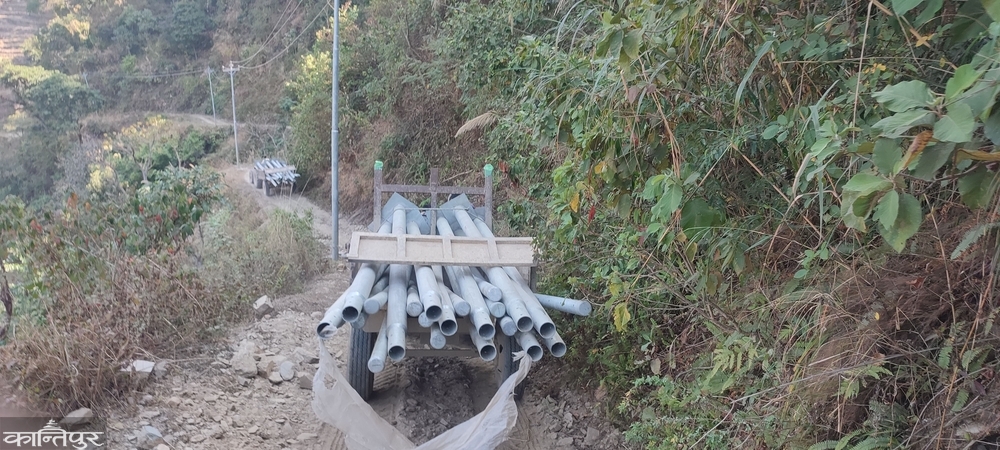 Wasbang was previously located in ward number 6 of Lothar VDC. Local Ram Kumar Chepang says that the entire ward is without land titles. ‘We Chepangs have been living in this village for generations. But we still don’t have land titles,’ said Ram Kumar.
There are 63 Chepang houses in Wasbang. This place was in Dhading district until 2032 BS. He said that since Dhading considered Chitwan and Chitwan considered Dhading, no survey had been done. When leaders reach the village during elections, they never fail to promise to provide land titles. ‘We also went everywhere, first there was land revenue in Bharatpur, we went there. Later, when land revenue came in Khairhani, we went there, but we didn’t get any land titles,’ he said.
The problem of red papers is not only in remote hill settlements but also within Bharatpur Metropolitan City. Ganeshthan in Bharatpur Metropolitan City-11 is home to people without red papers. Suman Pun Magar, chairman of Ganeshthan Toll Development Organization, says that settlement in this place began in 2024. After 2047, the number of people coming to live increased.
He said that people came to Ganeshthan from various places to take shelter due to the problem of floods and landslides. There are currently 670 households here. But according to the current policy, if the land commission distributes red papers, Suman says that the land commission can only give red papers to 30 percent of them. This settlement touches the Barandabhaar biological route.
The Barandabhaar forest area connects Chitwan National Park with Chure and Mahabharat. Rare wildlife migrates through this route. Therefore, there is a policy problem in giving red certificates in such a place. ‘Leaders have to address this. With the current policy, many people here will not get red certificates. They say they will give red certificates in the elections, but there must be courage and commitment to make policy reforms,’ he said.
Chitwan is a district with hills and plains. In the plains, except for the southern part of Madi, basic infrastructure including roads has reached other areas. Recently, construction of such infrastructure has started in the hilly areas as well. But the problem of delay is the same. Like the Bhandara-Malekhu road, the Shaktikhor-Fisling road also cuts through the hilly areas. But this road has not been completed yet.
Tourism, orange and vegetable production have flourished in the hilly areas in recent times. Due to the fact that the roads are busy, vegetables and fruits are loaded into jeeps from villages like Hapni and Kaule in the hilly villages of Ichchakamana Rural Municipality and brought to the market for sale. This process stops during the rainy season. It has been four years since the construction of a 35-meter bridge over the Rigdi River began. But the pillars have not been built either.
Poultry farming, honey, fish production, milk production and vegetable farming have flourished in Chitwan. Even though these have become commercial, there have been market problems from time to time. There is a common complaint among farmer entrepreneurs engaged in poultry, fish, milk, honey and vegetable production that they do not get the market and value due to illegal imports from India and imports that continue despite sufficient production in Nepal.
Along with problems with infrastructure and other issues, there are also stories of the hardships faced by service recipients in the district. Bini Mahadev Poudel of Bharatpur is a retired police inspector of Nepal Police. This time, he conveyed the ordeal he faced while renewing his driving license to the Hello Government. But he is frustrated with the lack of a hearing. The ordeal is related to financial transactions.
Poudel, who got his driving license from Butwal, was happy that it would be easier to renew it after the opening of the Transport Management Office in Bharatpur. After completing all the procedures, when he went to renew it, he found that there was no record in the computer. The employee asked him to either go to Butwal for the renewal or bring the record from Dhada from Butwal. The employee also gave him an option other than this.
That option was to contact a person living outside. When Poudel met the person, he was assured that everything would be done after paying 3,000 rupees. He filed a complaint with the Hello Government, disclosing all these details and the fact that he had asked for money. But no hearing has taken place. Poudel, who complained that he did not get easy services, was arrested by the CIAA team on Jestha 30 with Rs 185,000 in cash. A case was registered against Gurung on Poush 4.
The ordeal faced by former police officer Binimahadev Poudel in renewing his driver's license and some incidents in which the CIAA filed a case make it clear that Chitwan has room for improvement in service delivery and good governance. Chitwan has not been able to implement any breakthrough plans in infrastructure construction either. Bharatpur Metropolitan City is the one that gets a lot of attention for infrastructure construction.
If we look at the report of the Auditor General's Office about Bharatpur's plans, there is no room for satisfaction. The Auditor General's audit report for the fiscal year 80/81 states that Bharatpur submitted 326 plans and programs that year. The Accountant General has commented that the projects of pride of the metropolis have not been implemented among the proposed programs, and that the budget has not been allocated in the transportation master plan. The Accountant General has also pointed out that there is no proper management of landless squatters and unorganized settlements. ‘Promotional, short-term, and programs that cannot help in capital formation have been implemented. Especially, programs of pride, infrastructure construction, have not been implemented,’ the Accountant General states at the end of page 22 of the Bharatpur report published in Baisakh 2082.
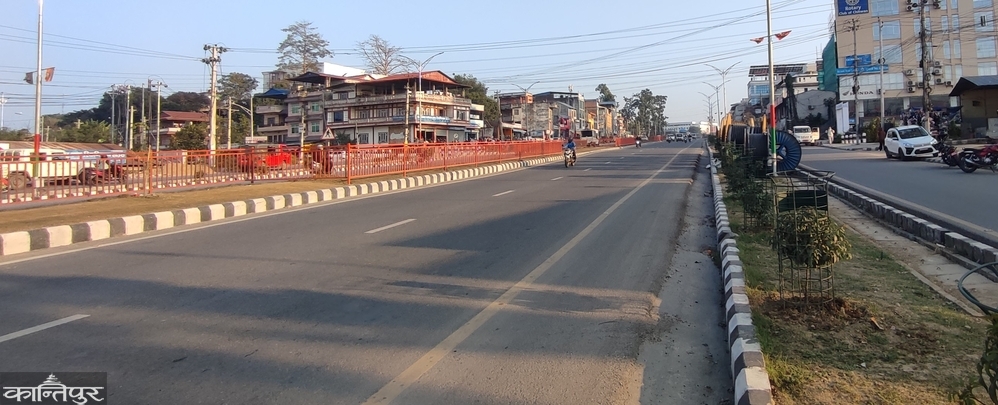
Despite being in the news in the metropolis, the construction of a systematic landfill site for dumping garbage has not been started. Although the work on the Gautam Buddha Cricket Stadium was started in 2075 BS with the promise of constructing it in two years, it has not even been half completed yet. The signature bridge in Narayangadh was promised to be built in four years, but after two and a half years, the foundation work has finally begun.
According to the 2078 BS census, the total population of Chitwan is 719,859. Of which the number of women is higher. There are 368,070 female voters. There are 442,082 total voters in Chitwan, which has three constituencies. The literacy rate of Chitwan was 83.68 percent in 2078 BS.