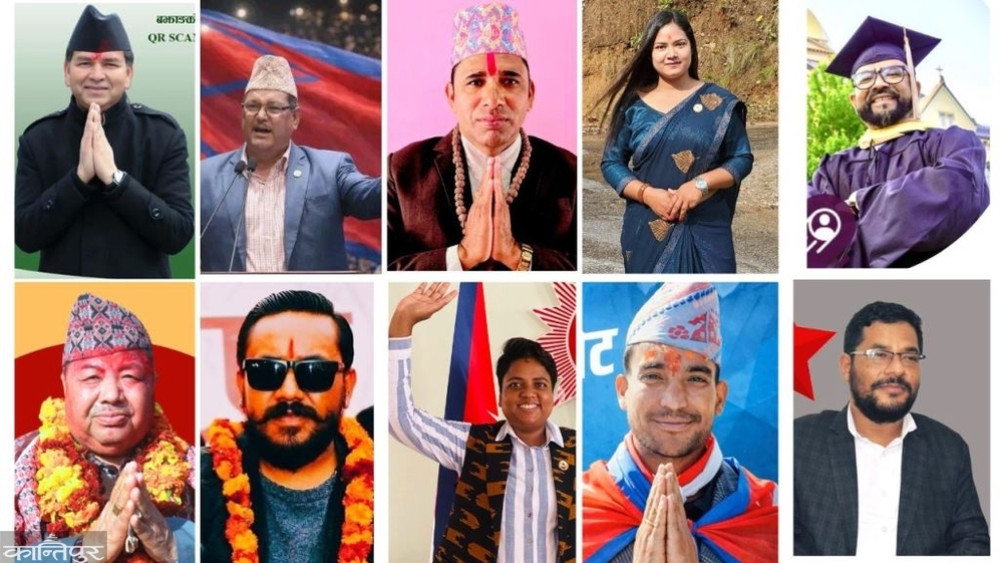
For the February 21 election to the House of Representatives, the National Independent Party has fielded three candidates, the UML, the Nepali Communist Party, and the Rastriya Prajatantra Party have fielded two each, and the Nepali Congress has fielded one. The CPN-Maoist has fielded the largest number of candidates, 20 from the Dalit community, directly.
We use Google Cloud Translation Services. Google requires we provide the following disclaimer relating to use of this service:
This service may contain translations powered by Google. Google disclaims all warranties related to the translations, expressed or implied, including any warranties of accuracy, reliability, and any implied warranties of merchantability, fitness for a particular purpose, and noninfringement.
Since direct candidates from the Dalit community have been nominated in various constituencies across the country, they are having to struggle for victory.
Dalit activists have said that candidates from their community have to struggle a lot because they have not fielded candidates in 'safe' areas. They say that candidates from the Dalit community have been fielded only in areas where the chances of winning are low. The activists say that this makes the inclusive policy of the parties only a show.
For the February 21 election to the House of Representatives, the Rastriya Swatantra Party has fielded three candidates, the UML, the Nepali Communist Party and the Rastriya Prajatantra Party have fielded two each, and the Congress has fielded one. The CPN-Maoist has fielded the largest number of candidates from the Dalit community, with 20.
There are 8 candidates from the Shram Sanskriti Party led by Hark Sampang, and 5 candidates from the Ujjwal Nepal Party led by Kulman Ghising. There are also independent candidates in some areas. ‘Even among those who got tickets, the basis for winning is weak,’ says Dalit activist and writer JB Bishwakarma. ‘It seems like Dalit candidacy is more like being ‘sent to accept defeat’ than inclusiveness.’
He said that this year’s House of Representatives elections have once again made clear how weak the status of the Dalit community is in Nepali politics. ‘The big parties that have been constantly advocating for inclusive democracy have given ‘tickets’ to Dalits this time,’ he said, ‘it seems like they have chosen areas where the ground for victory is weak.’ He said that this raises serious questions about how superficial the party’s commitment to inclusion is. According to him, women, Dalits, minorities and the marginalized should have been given tickets in areas where they can win. However, the party has been doing the exact opposite. ‘Our party has a tendency to worry about others only after it is safe first,’ he said.
The Congress has fielded only Joint General Secretary Prakash Rasaili 'Snehi' from Bajhang. UML has fielded Chakra Snehi from Dadeldhura and Bimala BK from Bardiya-2. The Nepali Communist Party has fielded Padam Bahadur Bishwakarma from Syangja-2 and Man Bahadur Sunar from Kanchanpur-3. The National Independent Party (NISP) has fielded Khagendra Sunar from Banke-3, Bimal Gadal in Ilam-1 and Bhuvan Tamta in Mugu. The RPP has fielded Anita Nepali in Salyan-1 and Bir Bahadur Kami in Bardiya-1.
The CPN-Maoist led by Netra Vitra Chand has fielded Som Bahadur Pariyar in Syangja-2. The Progressive Democratic Party has fielded Ran Bahadur BK in the same constituency. Manoj Nepali Darji is an independent candidate in Syangja-2. CPN-Maoist leader Khadga Bahadur Bishwakarma has become a candidate again from Kalikot after 18 years. He won from the then CPN-Maoist in 2064 and became a minister twice.
Dalit leader Man Bahadur Tiruwa has filed his candidacy as an independent candidate from Kalikot. Rastriya Mukti Party has nominated Amrit Rasaili as a candidate from Jhapa-5. UML Chairman KP Sharma Oli and Rashtriya Swayamsevak Sangh (RSS) senior leader Balendra Shah are the contenders in the much-discussed Jhapa-5.
Looking at the electoral history of the mentioned constituencies, it seems that Dalit candidates are less safe and more insecure. ‘Dalit candidates are being put forward in areas where there is strong competition or where the party is weak,’ says political analyst Rajendra Maharjan. ‘This is a strategy of the so-called big parties that show inclusiveness on paper but keep power and authority in their own hands.’
According to Dalit movement leader and former ambassador Padam Sundas, Dalit leaders also have as much contribution as other communities within the party. However, he said that there is a big problem of always forgetting the contribution of the party in the selection of candidates. ‘No tickets are given outright,’ says Sundas. ‘They give them without thinking about where they will win.’ According to Sundas, small and unknown parties have given tickets to Dalits. ‘What is the point of a party that is not winning and not winning by fielding candidates?’, adds Sundas.
Although the total population of the Dalit community is about 13 percent, they are unlikely to reach the decision-making level. Parties use the Dalit community only as voters to win elections. In the 2006 Constituent Assembly, there were 50 Dalits (8.32 percent) represented. In 2007, it dropped to 40 (6.65 percent). In the 2007 House of Representatives, there were 20 (7.27 percent). In 2009, it shrank to only 15 (5.81 percent). Dalit leaders say that this number may shrink further after the upcoming elections. ‘It is unlikely that we will find anyone to speak up for our issues in the upcoming parliament,’ said Sundas.
According to Dr. Man Bik, the first secretary from the Dalit community, Article 42 (1) of the Constitution has ensured the right of socially backward communities to participate in state bodies based on the principle of inclusion. But due to the lack of political will to implement it, this right is limited to paper. ‘Inclusion is not mentioned in the manifestos of the parties.’ "It looks good," he said, "but in practice it doesn't look good."