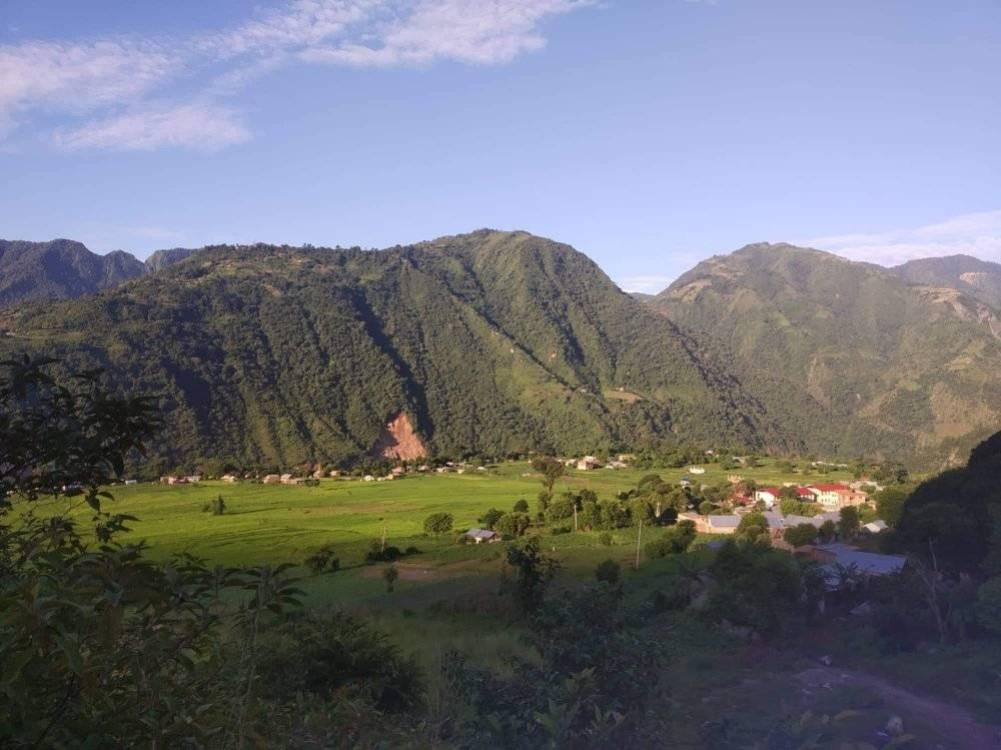
Lalitpur-1 is the largest constituency in terms of geography among the three constituencies of Lalitpur. This area, which encompasses almost all of the hilly terrain of southern Lalitpur, is not only geographically remote but also considered challenging in terms of development.
We use Google Cloud Translation Services. Google requires we provide the following disclaimer relating to use of this service:
This service may contain translations powered by Google. Google disclaims all warranties related to the translations, expressed or implied, including any warranties of accuracy, reliability, and any implied warranties of merchantability, fitness for a particular purpose, and noninfringement.
53-year-old Lal Bahadur Tamang does not live in Malta regularly. Malta has been popular among the Nepali youth of late. But this is not the Malta of Lalitpur, this is a European island country with a population of nearly 600,000. Where the per capita income is more than 43,000 US dollars.
Lal Bahadur's village is Malta in Lalitpur. Malta in Bagmati Rural Municipality-2 is located southwest of Lalitpur. It is connected to Bhattedanda by the Mahabharata chain.
There are two legends behind the name Malta. Earlier, chillies were grown abundantly here. The Newar community calls chillies Malta. That is why there is a legend that Malta was formed from Malta. Similarly, at one time, there was a place to safely store maltal when transporting consumer goods for trade from Bhimphedi, the commercial center of Makawanpur, to some parts of Lalitpur, Kavre and Sindhuli. It is understood that Malta came from the place where maltal was stored.
Lal Bahadur is currently living in a temporary tin hut by renting land between Godavari 6 and 7. He rented a two-ropani plot of land with a rent of 15,000 rupees a year. On Saturday, he was chopping green bamboo in front of his house. He was in a hurry to open the door of his two-room house made of zinc. ‘After this, I don’t have to go to Tikabhairav Bazaar. I can live on the hill. Otherwise, how will we pay the rent every month at Tikabhairav Bazaar?’, he said, ‘This house was also built by my eldest daughter.’
He has four daughters, three of whom are abroad. ‘The eldest has been living in Qatar for 7 years. Miley and Saili are in Dubai. They are married. They have their own family responsibilities on their shoulders. They also look after us when we need them,’ he said, ‘Saili’s daughter works in the evenings. He is also saving money to go out.’
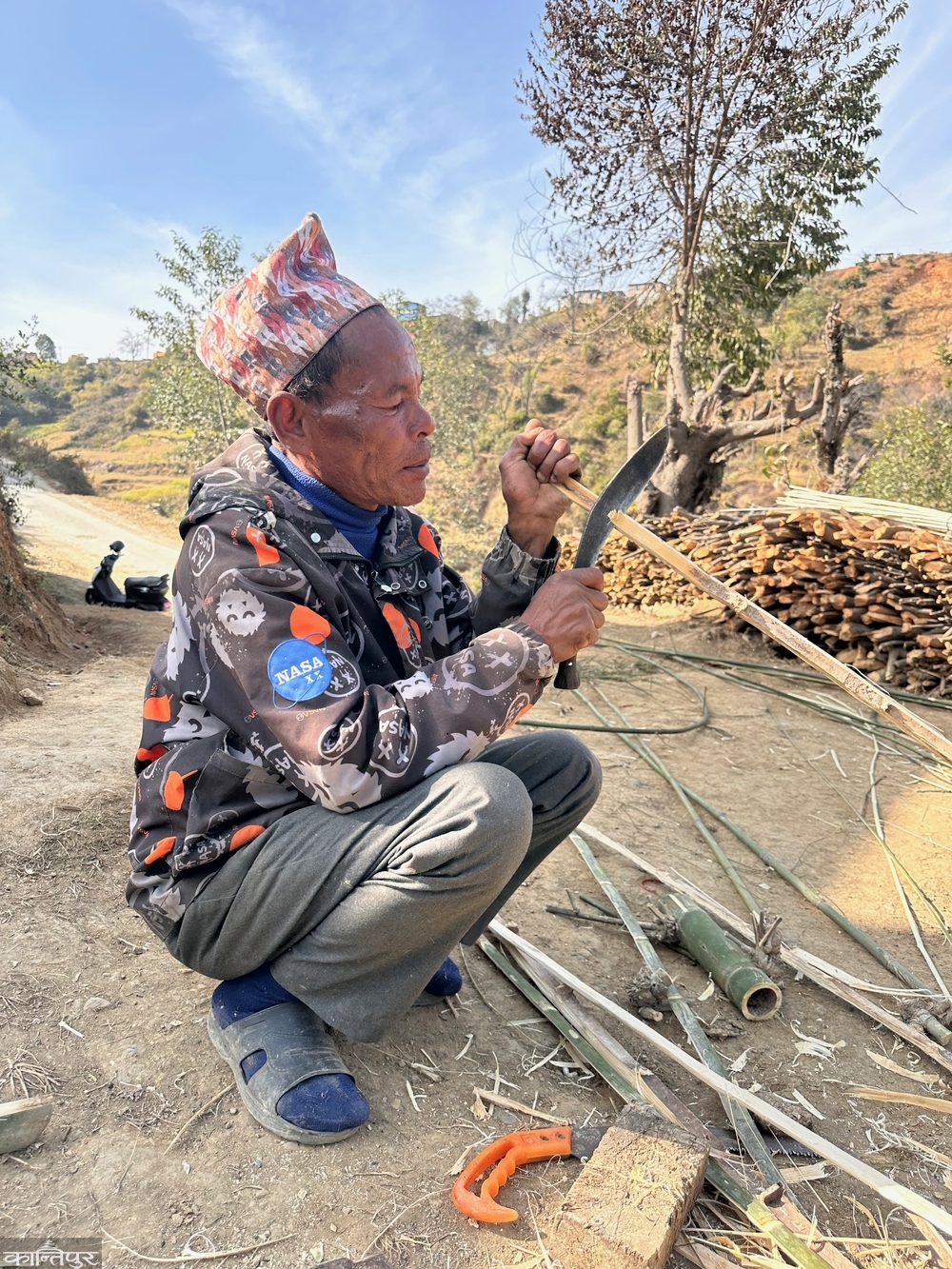 Lal Bahadur expresses his sorrow that although Malta is not as sad as before, the village is becoming empty. Malta is a Tamang-dominated village. It has also changed a lot. The road has arrived, and electricity is also on. ‘It is much better than before,’ says Lal Bahadur, ‘Even though roads and electricity are arriving in the village, people are not living there. There is no employment. There is no basis for survival in the village. That is why the village is becoming empty.’
The distance from Tikabhairav to Malta is about 25 kilometers. There are about 1,900 voters in Malta. Surrounded by mountains on all sides, Malta looks like a small valley. Chandra Bahadur Tamang, who is helping Lal Bahadur cut bamboo, also says that he entered the ‘city’ to earn a living. Chandra Bahadur also worked in a crusher for 9 years. He used to work as a night watchman and break stones all day. ‘If you work, you get money, if you don’t, you don’t,’ he says. ‘Nowadays, you work when you find it, and you don’t work when you don’t. Sometimes you chop firewood, sometimes you break stones. The daily wage for work is one thousand rupees, but you don’t get work every day.’
Lalitpur-1 is the largest constituency in terms of geography among the three constituencies of Lalitpur. This constituency, which encompasses almost all the hilly terrain of South Lalitpur, is not only geographically remote, but also considered challenging in terms of development.
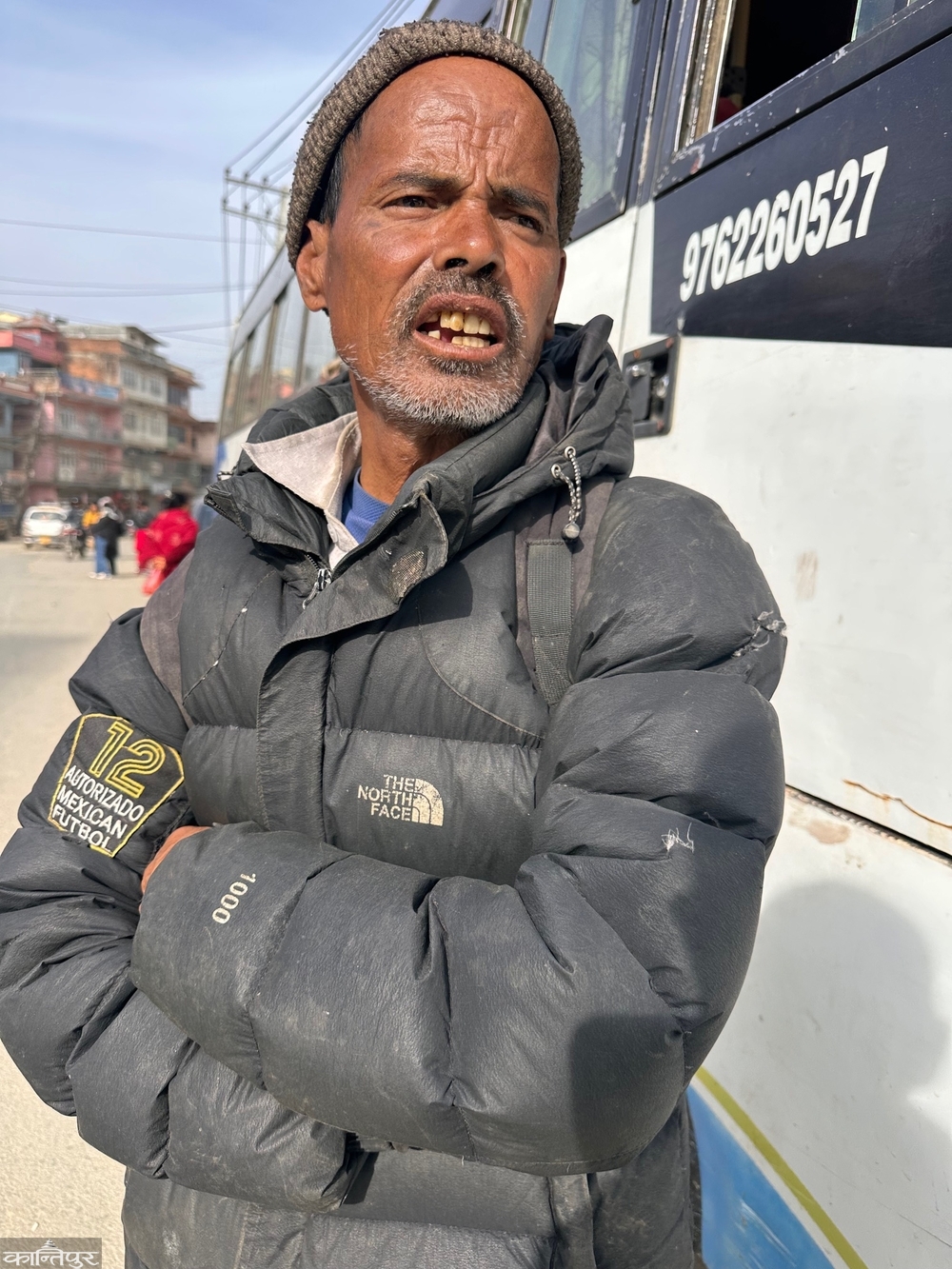 There are 77,737 voters in Constituency-1 of Lalitpur. This constituency includes Bagmati Rural Municipality, Mahankal Rural Municipality, Konjyosom Rural Municipality, and Godavari Municipality (except wards 12 and 14). The main places of Lalitpur-1 are Ashrang, Godamchaur, Damaitar, Toukhel, Godavari, Kitini, Lele, Tikabhairav, Dukuchhap, Champi, Chapagaon, Malta, Thuladurlung, Jharuwarasi, Bhattedanda, Pyutar, Ikudol, Gimdi, Gotikhel, Manichaur, Bhardeu, Bukhel.
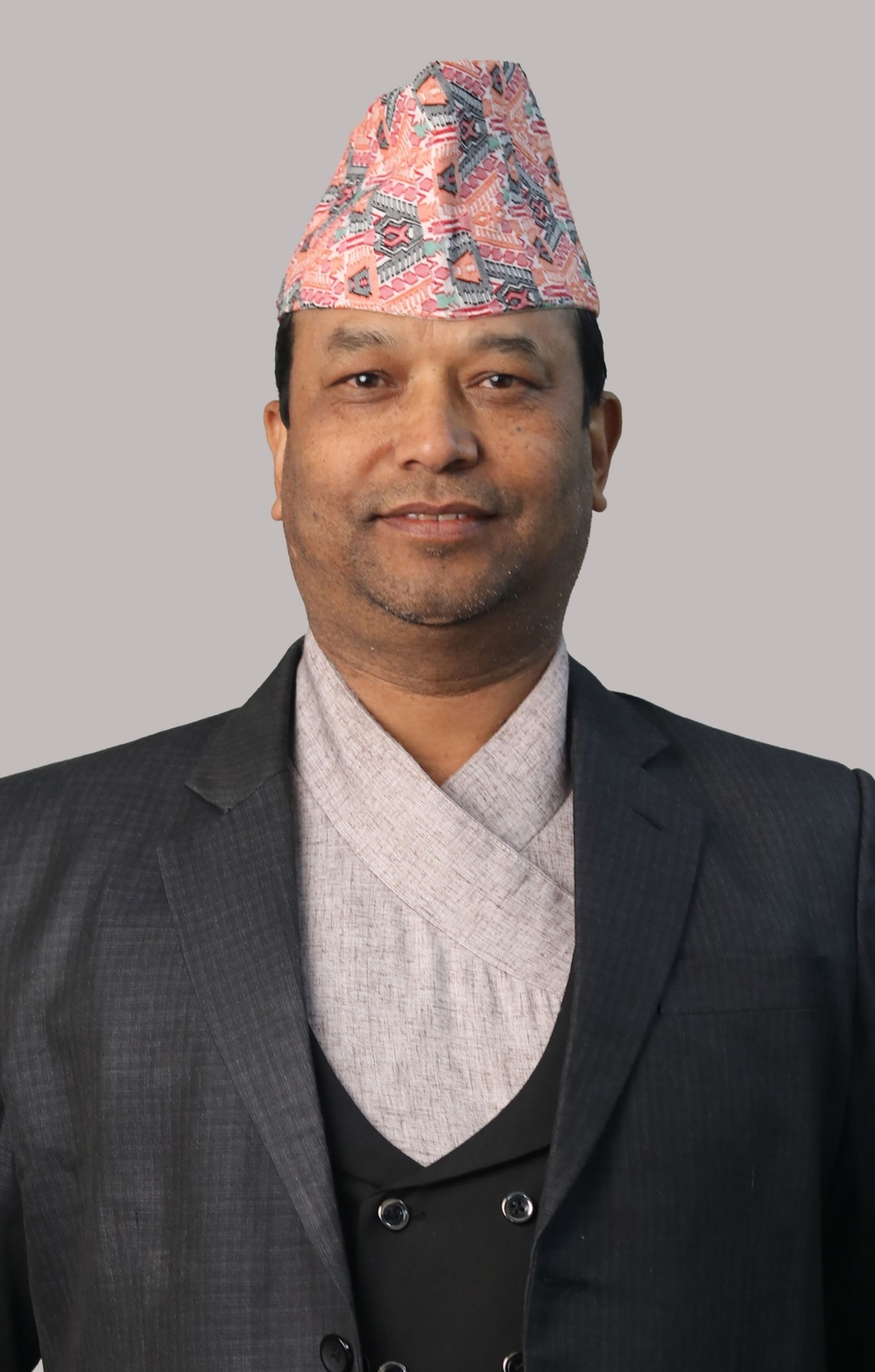
This time, 28 candidates, including independents, have entered the fray in Lalitpur-1. Among them, Congress Joint General Secretary Udaya Shamsher Jabra (56), who has been a candidate in every parliamentary election held in the past 64 years, is in the fray again. This is the fifth time he has entered the fray in the parliamentary election. Rana's competitors in Lalitpur-1 are Chetnath Sanjel (60) from UML, Sunil Maharjan (50) from NCP and Buddharatna Maharjan (47) from Rashtriya Swayamsevak Sanghar (47). All four are locals of the area.
Similarly, Padam Kumar Lama has been fielded by the Kulman Ghising-led Ujjaya Nepal Party, while the Hark Sampang-led Shram Sanskriti Party has fielded Gautam Thapa. Similarly, the Janata Samajwadi Party, Nepal has fielded Mahabir Syangtan Tamang, the Nepal Workers and Peasants Party has fielded Sarita Gosai, and the Pragatisheel Loktantrik Party has fielded Rohit Kumar Bastola. Similarly, the RPP has fielded 35-year-old Sajina Karki of Lagankhel.
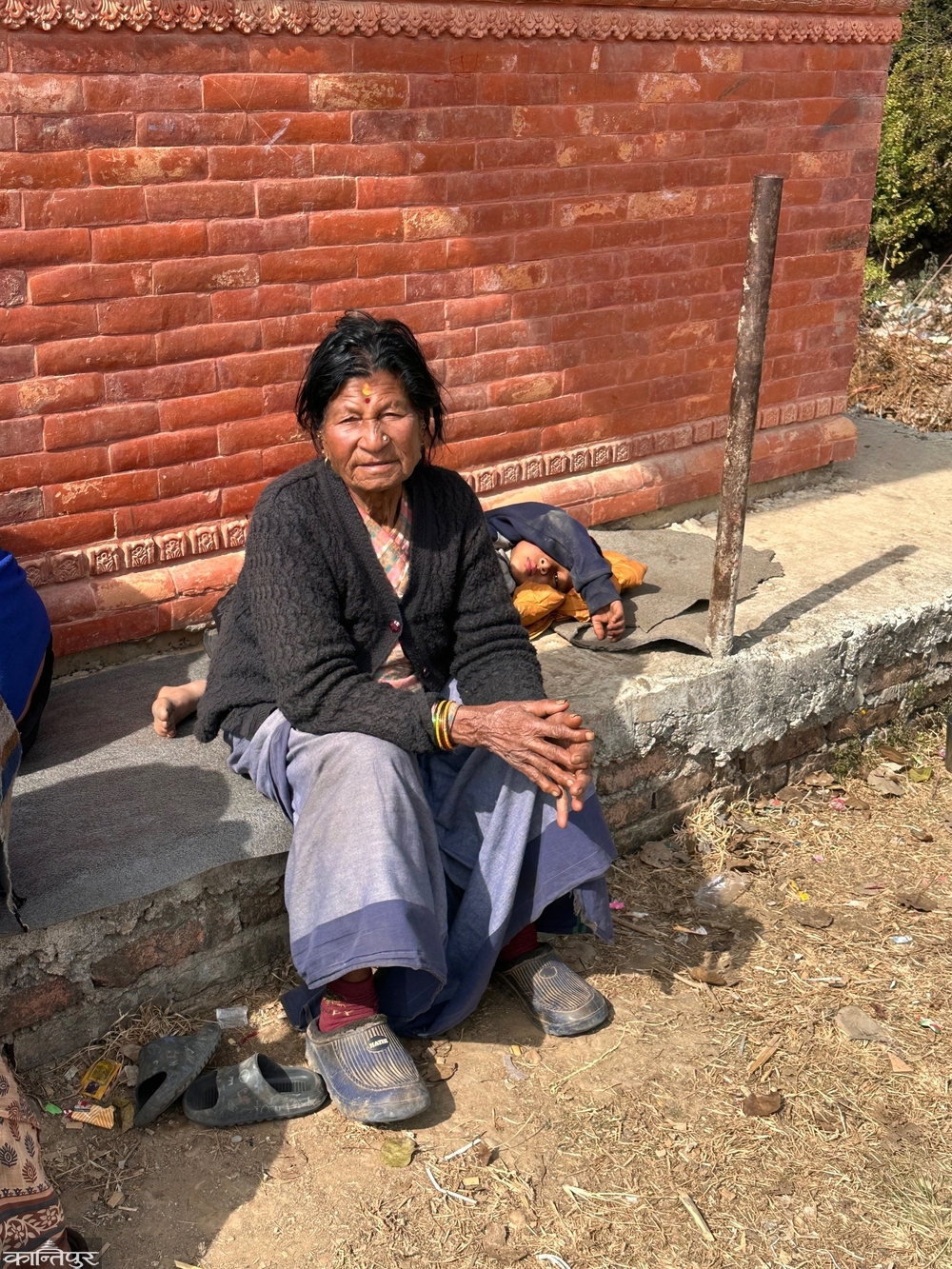 Krishna Bahadur Nagarkoti of Konjyosom Rural Municipality-3, Dalchauki, is not fond of elections. ‘When elections come, leaders come to greet. After winning, no one comes back to show their faces. Now it seems that we will not vote at all,’ he says, ‘Now people do not care. It is not like before, everyone is sad.’ No matter who comes, nothing has happened to us.'
There are 500 households in Konjyosom-3. The village has problems with basic infrastructure. 'There are no electricity poles, wires are on trees. It is difficult to walk on the motorway. Let alone vehicles. There is no control over landslides. Until the leaders win, they say, "I will do this and that." After they come, it's just like that,' says local Vedanath Timalsina, 'There are no vehicles in the village. Whoever needs them, has to take them. One bus runs to Shankhu in the morning and evening.'
There is a shortage of drinking water in places. 'Water comes from 20 kilometers away. You have to pay. There is a meter system. The lights are in a bad state. The electric wires are lying on the ground. What if it is touched?,' Nagarkoti said, 'Even if you can't do much, you have to do a little. You have to hang a wire from someone else's house to light the lamp. I am very angry.'
 As the election approaches, candidates have been going door to door. On Saturday morning, 80-year-old Meena Khadka asked the leaders and activists who had reached Champi in Godavari-9 for a land certificate. The house she lives in does not have a land certificate. 'I have been living in this place for 40-50 years. Anyone who knows me will get a land certificate. This is my hut. How many times have I gone to the ward to get a land certificate made? Nothing happened,' she said, 'Life is spent in sorrow and sorrow.' She has the same answer to everyone who comes to ask for votes, 'I will vote for the one who provides a stable life and looks after the suffering.'
What do the candidates say?
RSP candidate Buddharatna Maharjan is requesting voters to trust him since he is new. BA-pass Buddharatna says, 'I am not a leader who knows how to talk. I want to show myself as a leader who can work,' he says. In the previous election, the RSP candidate got 3,277 votes.
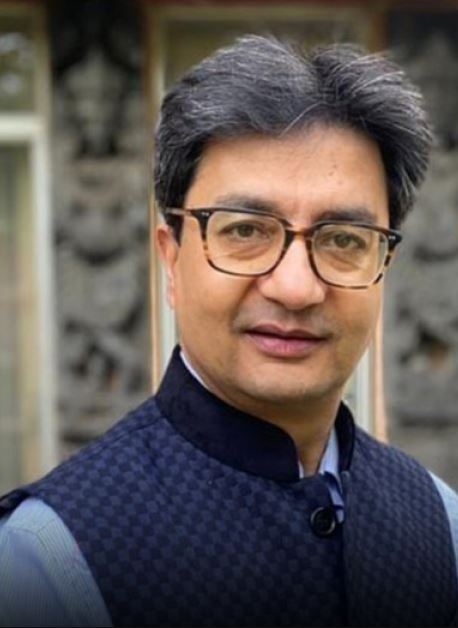 Congress candidate Rana, on the other hand, is saying that he has reached out to the voters again to complete the unfinished work. Out of the four parliamentary elections he contested before, he has won only in the 2069 and 2079 elections. He was defeated in the first Constituent Assembly election. While he was the chairman of Tarun Dal, he won the second Constituent Assembly election by defeating his opponent by a margin of nearly eight thousand votes. In 2074, he was defeated by Nawaraj Silwal, the candidate of the left alliance between the CPN-UML and the Maoists, by a margin of 6 thousand. He took revenge against Silwal in the 2079 election. In that election, Rana defeated Silwal by a margin of 4 thousand 600. While he got 23 thousand 892 votes, Silwal of the CPN-UML was limited to 19 thousand 278 votes.
'Politics is not a position for me, it is service. In the past, whether I won or lost, I have always been with you in your joys and sorrows,' said Joint General Secretary Rana. 'My main goal is to complete the many development plans I have started and to make this region even more prosperous. Some work has been completed, some is incomplete.' Love, blessings and support are needed again to complete those unfinished tasks.'
UML's Sanjel was elected as the provincial MP in 2074. Sanjel is an old and established leader in his area. He said that he has made significant contributions in areas such as roads, hospitals and tourism, which are the permanent lifelines of South Lalitpur. 'The people want us to complete the campaign that I started by prioritizing farmers, tourism, drinking water and youth employment,' he said, 'I don't feel like I have a main competitor.' NCP's Sunil Maharjan is also in the election fray. He is busy with door-to-door campaigning.
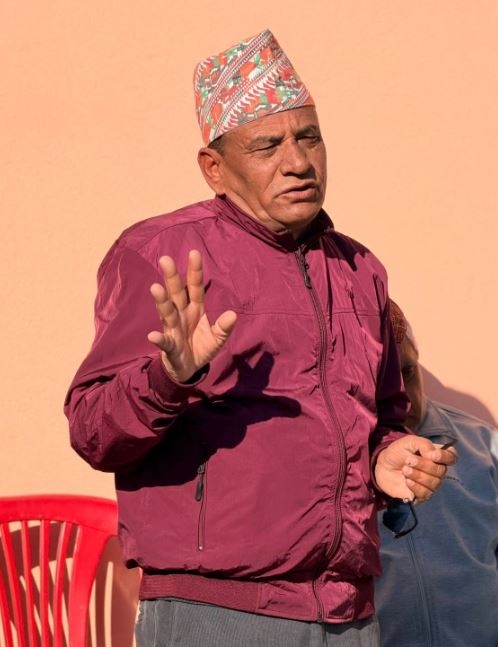 This is how voters say that the arithmetic of the last election
Gen-G movement and the political equation have changed, but the situation cannot be assessed according to the 2079 election results now. In the last election, the Congress and the Maoists had formed an alliance.
In the last election, the Congress came first in the proportional representation, while the UML came second. The Congress got 16,352 votes, while the UML got 15,508. The third-placed Rashtriya Swayamsevak Sangh (RSS) got 6,838 votes, and the then Maoist Center got 5,674 votes.
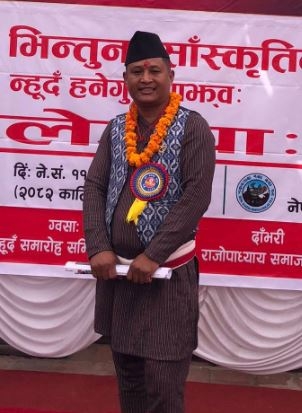 Deepak of Champi-9, Godavari, says that the government should select those who will make a policy of equitable development, accessible and quality health education that will not make Nepali citizens landless. ‘There is concern that the plan that came in the name of development will make us landless.’
There are rumors that a 62-meter-wide road is needed without criteria,’ he said, ‘I am not saying not to build a road. But the 62-meter-wide internal road is something that has not been thought of. It is unfair to move forward without compensation, alternative land, and clear criteria.’