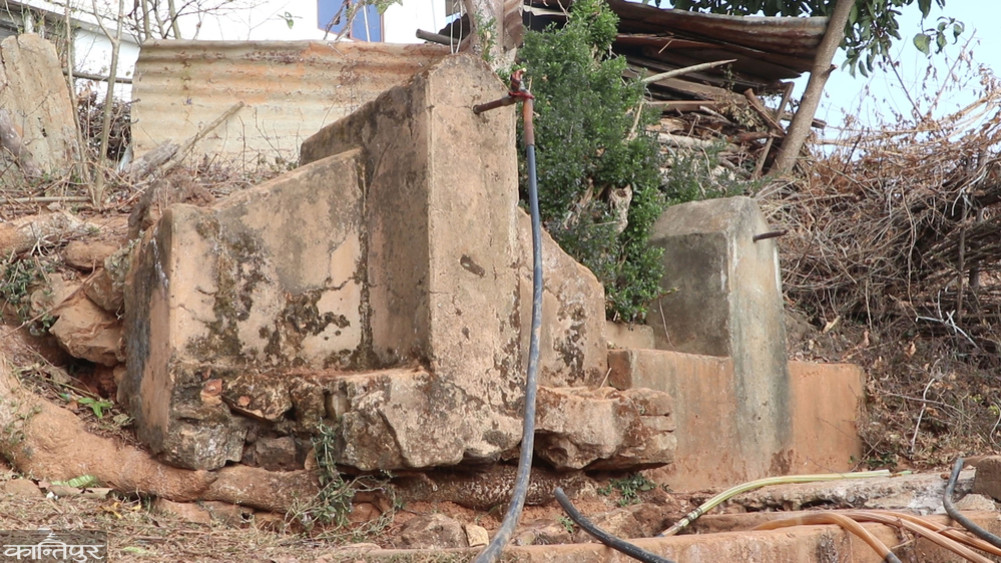
Along with unemployment, the slums lack health and education. Locals admit that this lack creates a 'vote bank' in every election.
We use Google Cloud Translation Services. Google requires we provide the following disclaimer relating to use of this service:
This service may contain translations powered by Google. Google disclaims all warranties related to the translations, expressed or implied, including any warranties of accuracy, reliability, and any implied warranties of merchantability, fitness for a particular purpose, and noninfringement.
Indrakala Kumal of Ghorbanda, Baganaskali-1, Palpa, got information about the candidates in her constituency for the February 21 election through social media. She said that after the election, leaders and workers would come to ask for votes.
According to her, even though candidates come to the village in every election and make promises, they do not solve the problems of the locals. That is why the problems of the settlement, where 50 percent of the Kumal community resides, are still there.
‘Ten years ago, it was possible to make a living by working as a wage laborer,’ she said, ‘Farming in the village was stopped. People went to the market in search of work, and there is a situation where they cannot get a wage laborer.’ She said that the number of young people in the village has decreased as young people have migrated to Gulf countries after not finding employment here.
Local Damanti Kumal says that she is not able to eat by working as a wage laborer. According to her, earlier, she used to get work carrying gravel and sand. Now tractors have started reaching the house. ‘Contractors hire people according to the cheapest price,’ she said, ‘After stopping getting work, young people have gone abroad. What will we women do, right?’
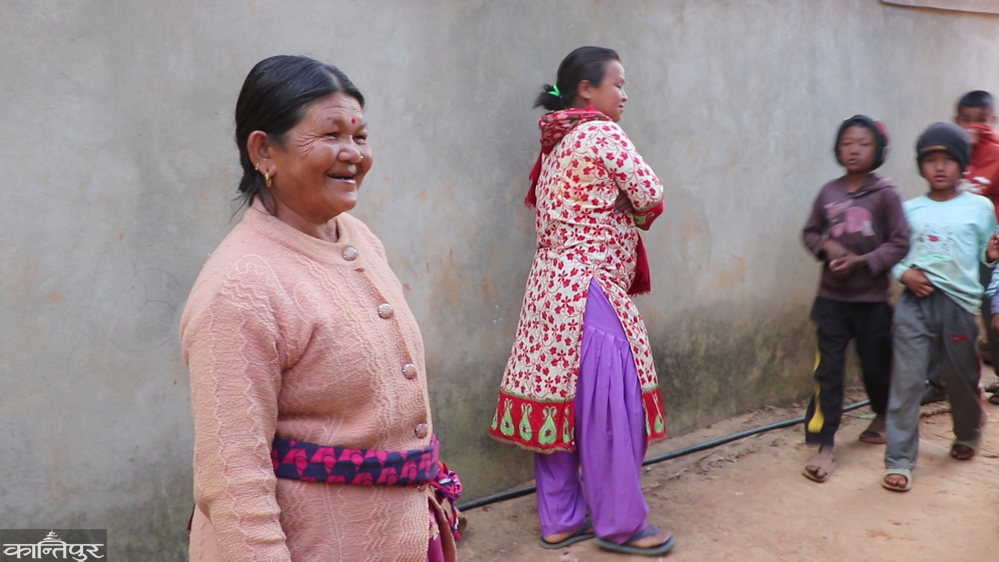 Half of the 125 households in Ghorbanda cannot eat unless they work as daily wage laborers. The settlement, which is under Palpa-2, is 5 kilometers away from the district headquarters, Tansen. Along with unemployment, there is a lack of health and education in the slum. Locals admit that this shortage makes them a 'vote bank' every time there is an election.
'Where have the elections come from,' said local Kumari Kumal, 'Elections are not for profit. It feels like voting in vain.' She said that the village leaders have been voting on the same symbol that they are entitled to vote on. She said that during the elections, they are forced to vote by feeding 'meat and rice'.
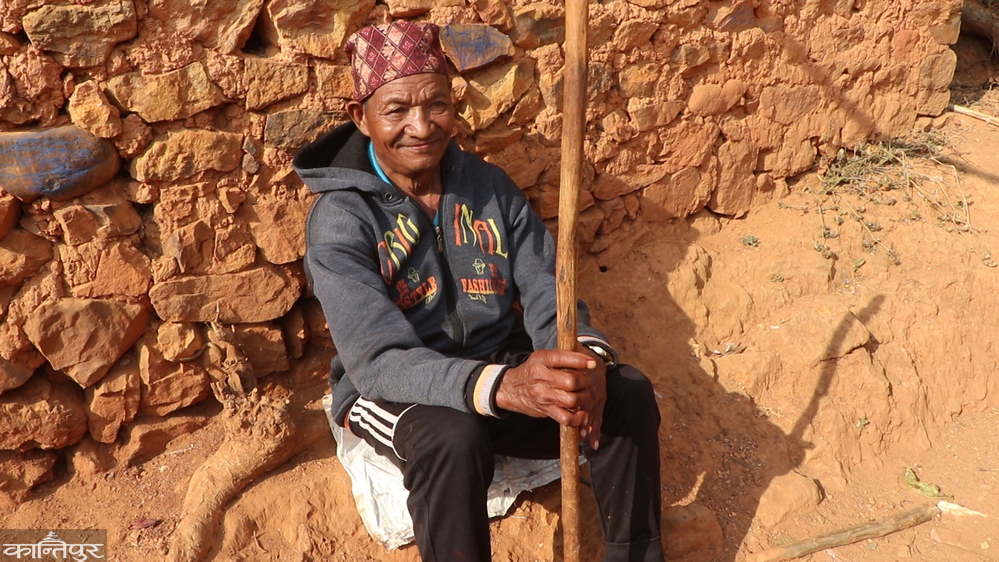
Thaman Kumal, 64, a resident of the village, has difficulty walking. He cannot vote himself. 'If his son does not vote, others vote for him,' he said. 'I have not known for 10 years who he votes for.' He cannot even work as a wage laborer. Now, since his sons are abroad, there is no big financial problem.
'We have reached a situation where we cannot even work as wage laborers here,' he said. 'We have been forced to take loans and send our son abroad. At least they will find happiness in the future.' He has been unable to go anywhere. Kumal complained that he had to work very hard to get a disability identity card. Sometimes he went to a government hospital and sometimes to the rural municipality, and now he has received a card that will give him 6,000 rupees a year.
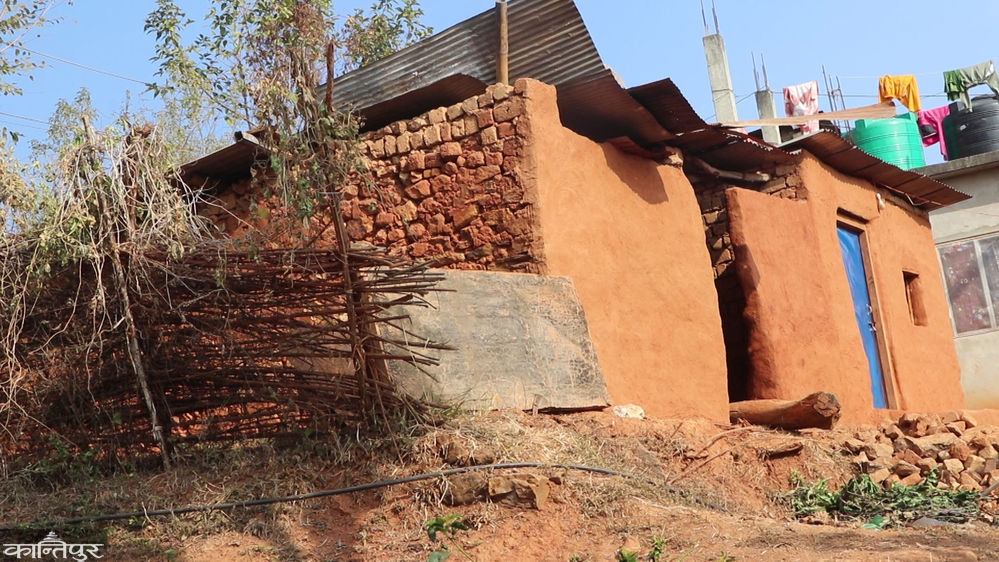
 During the elections, the residents here have not stopped telling their problems to the leaders, workers and candidates who come to the village. But so far, Rupa Kumal from Ghorbanda said that no one has helped to eliminate poverty and deprivation. Some do not have decent houses and jobs. They have not been able to find work as heavy lifters or wage laborers.
'During the elections, everyone says they will do this and that,' she said. 'Leaders do not come back after the elections.' She said that she has not received support for self-employment from the local, state and federal governments. 'There was a problem with water, but now water has come through lifts,' she said. 'Due to lack of irrigation, the fields have to remain fallow for six months.'
Most of the people in the settlement eat their evening meal with the money they earn throughout the day. Most of them do not have their own farms. They go to Tansen market to look for work. Some carpenters and masons go looking for work.
It is not that there has been no improvement in roads and drinking water in Kumal village in recent years. But they complain that due to lack of good irrigation management, they are forced to produce only one crop a year.
 Sher Bahadur Chidi, ward chairman of Baganaskali-1, said that a budget has been allocated for the slope of the road leading to the settlement. ‘There was no demand other than the road,’ he said. ‘Last year, although a budget was allocated for the transfer of pottery making skills, training was not conducted.’
Most of the residents of the settlement used to make and sell pottery. They have left this profession after the increase in plastic goods in the market for two decades. The municipality has been providing skill-based training to the Kumal community to increase their economic income, said Hari Prasad Pathak, vice-chairman of the municipality.
‘We have been trying to provide skill-based training in addition to awareness programs and link them with production after receiving the training,’ he said.
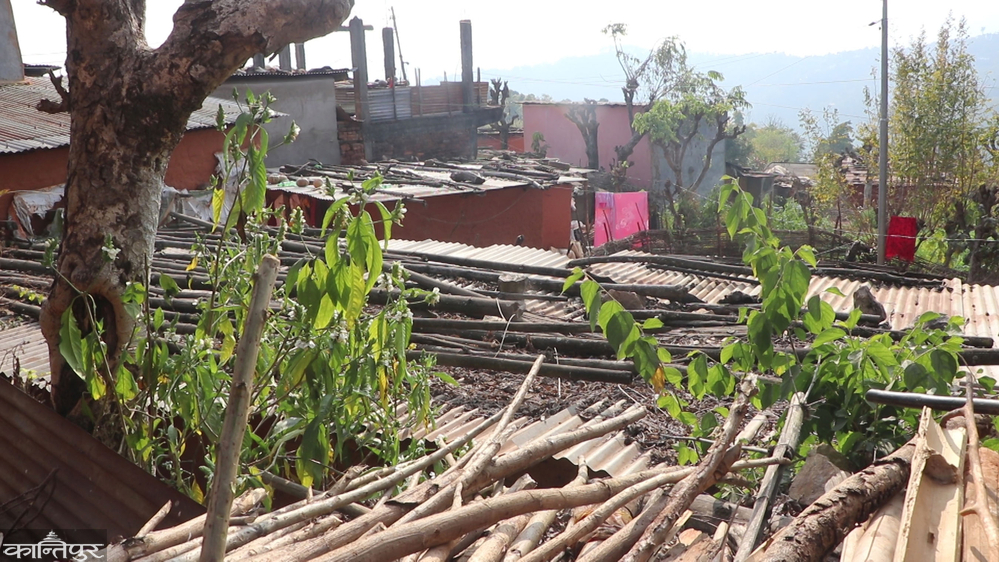 The Kumal community is settled in places such as Pakluhawa, Chirtungdhara, Gorsat, Pokharathok, Bhuwanpokhari, Siddeshwor, and Khyaha in Tansen Municipality-7 under Palpa-2. According to the 2078 census, the total population of the Kumal caste in Nepal is 129,702. Of which 62,259 are males and 67,443 are females.
According to the 2078 census, the population of the Kumal community in Palpa is 7,104. Of which 3,301 are males and 3,803 are females.