The report acknowledges the Gen-G movement as a rebellion against systemic corruption and good governance.
We use Google Cloud Translation Services. Google requires we provide the following disclaimer relating to use of this service:
This service may contain translations powered by Google. Google disclaims all warranties related to the translations, expressed or implied, including any warranties of accuracy, reliability, and any implied warranties of merchantability, fitness for a particular purpose, and noninfringement.
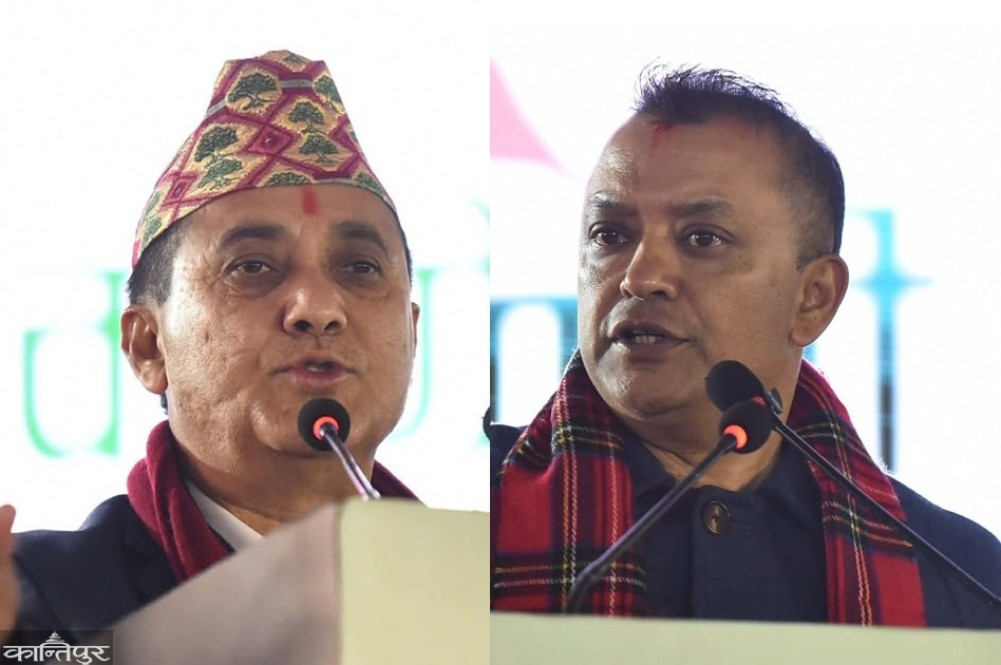
At the second special general convention of the Nepali Congress, General Secretaries Gagan Thapa and Bishwaprakash Sharma have submitted a report encompassing the sentiments and essence of the Gen-G movement. General Secretary Thapa has mentioned the essence of the Gen-G movement in his political proposal.
Admitting that the movement called by Gen-G on 23-24 Bhadra has established a new consciousness and awareness in Nepali politics, he has expressed high respect for those who have suffered from oppression and violent incidents.
Thapa has also said that he will assimilate the just demands raised by the movement, the issues of corruption control and promotion of good governance, service delivery and meaningful representation of the young generation. He has also mentioned that they are determined to conduct an independent and impartial investigation into the violent incident of 24 Bhadra and take legal action against the culprits involved in the incident.
The report has stated a commitment to make arrangements, including policy and structural arrangements, to ensure meaningful participation and decisive representation of the young generation at every level of the party, from internal organizations to state and public bodies of state administration.
‘The Nepali Congress has a firm view that the voice and campaign for ending corruption, ensuring good governance, transparency and the right to information is the natural voice of the common citizen. The Nepali Congress believes that a multi-stakeholder national dialogue is essential today to address and institutionalize the voices voiced by the Gen-G generation for change,' the report states.
General Secretary Thapa has also included issues related to education, employment, and service and facility needs of the youth in his report.
The organizational report submitted by another General Secretary, Bishwa Prakash Sharma, also prioritizes the demands and feelings of Gen-G and the younger generations. The report accepts the Gen-G movement as a rebellion not against the system but 'in favor of the evils within the system and good governance'. The report also states that the unemployed youth wandering in search of jobs and corruption cases are not happy with them.
General Secretary Sharma has proposed that numerical representation should be ensured in the constitution to bring the youth to the leadership level.
To ensure representation of youth and Gen-G from the central working committee to the grassroots level, General Secretary Sharma has proposed that 40 people under the age of 40 (20 under 30 and 20 between 30 and 40) should be included in the central committee and 10 people from both age groups should be included in the provincial working committee. Similarly, a minimum of 6 people should be represented in the district, federal area, provincial assembly area and municipal committees and a minimum of 4 people should be represented in the ward working committee.
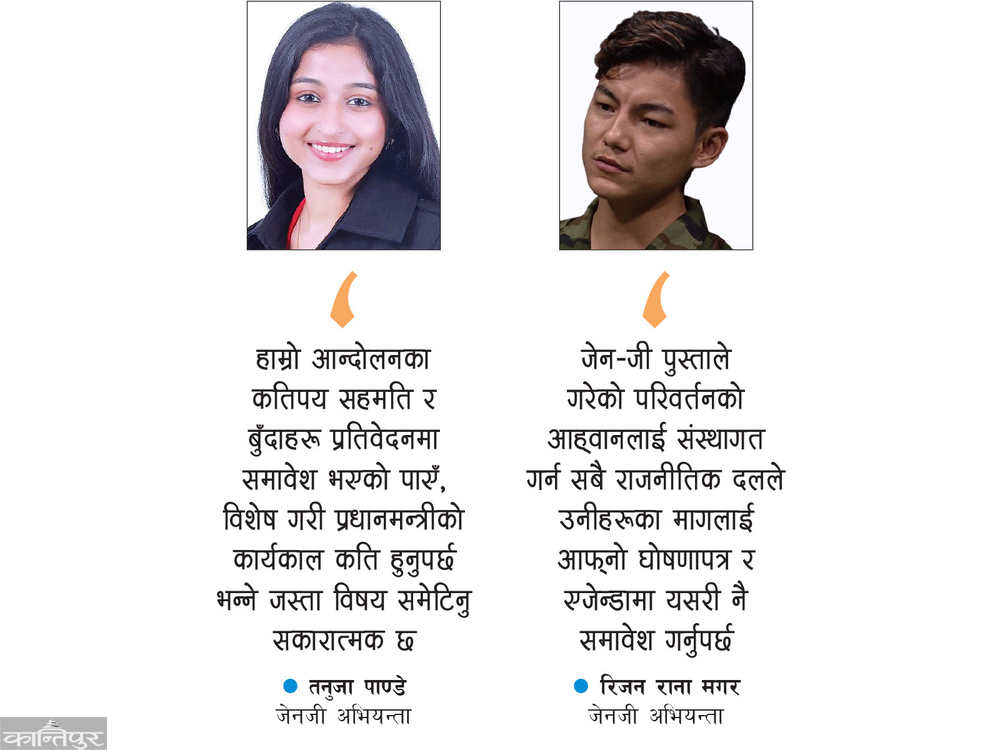
Gen-G activists have said that it is commendable that the spirit and sentiment of Gen-G is mentioned in the report of General Secretaries Thapa and Sharma. Gen-G activist Tanuja Pandey says, “I read the report that you made public. I found that it includes some of the consensus and points of our movement. Especially, it is positive that issues like the term of the Prime Minister should be included.”
According to her, the main objective of the movement was to reform the political party. Tanuja understands that the Congress is trying to advance this agenda more than other parties.
‘The political culture of realizing one’s mistakes and self-awareness had been lost in Nepal. The way they openly admitted their mistakes and apologized is something that not only party workers but people from every part of Nepal should learn,’ she says.
Gen-G activist Rijan Rana Magar also says that the things mentioned in the report are satisfactory. ‘In order to institutionalize the call for change made by the Gen-G generation in this time, all political parties will have to include their demands in their manifestos and agendas in this way,’ he says, ‘I have also taken the civil rebellion happening within the Congress positively.’
Similarly, Gen-G activist Arnab Chaudhary also says that it is welcome that their concerns are included in the report. ‘Including Gen-Gs from the center to the ward level indicates a transformation in the Congress.’ "Proposals such as including youth under the age of 30 as central members and not being able to serve as president or prime minister more than twice are positive," he says.