Gagan, who had gone ahead of the party and spoken in favor of the Constituent Assembly and the republic, had faced a treason case during the reign of King Gyanendra, and gained national recognition after clashing with the then President Girija Prasad Koirala on this issue. After 20 years, he had demanded a special general convention in the heat and fury of the Gen-G rebellion, but he has turned back and become a status quoist, and if he moves forward, the party is in a position to become divisive.
We use Google Cloud Translation Services. Google requires we provide the following disclaimer relating to use of this service:
This service may contain translations powered by Google. Google disclaims all warranties related to the translations, expressed or implied, including any warranties of accuracy, reliability, and any implied warranties of merchantability, fitness for a particular purpose, and noninfringement.
General Secretary Gagan Thapa is currently in a decisive struggle with the party leadership over issues related to the Congress general convention.
He is being supported by another general secretary, Bishwa Prakash Sharma. Party president Sher Bahadur Deuba and moderate leader Shekhar Koirala are in a different league.
Gagan was never an easy leader to establish a party. Gagan was in the opposition role even when Girija Prasad Koirala was in the party leadership. His independent identity was created because he raised his voice against the establishment of the party. But his independent identity is certain not to be enough when it comes to leadership; more importantly, control within the organization has become essential. How successful he is in this will determine the politics of Gagan Thapa and Bishwa Prakash Sharma and the future of the Congress.
His identity in politics began as a leader of the Nepali Students' Union at Trichandra Campus, when he was studying ISC. He was elected a member of the Nepali Students' Union in 2051 and became its president two years later. He became the vice president of the Nepali Students' Union in 2057 and the general secretary in 2059. He was arrested repeatedly on charges of sedition during the student movement that took place when he was the general secretary.
After the then King Gyanendra Shah took power, the then government led by Surya Bahadur Thapa arrested the then President of the Nepali Congress, Gururaj Ghimire, General Secretary Thapa, and leader of the Nepali National Federation of Students' Union (ANFSSU) Purushottam Acharya on charges of treason after the student movement against him on 1 Poush 2060.
They were released from custody after 10 days. At a program organized by civil society on 10 Shrawan 2061, Gagan gave a speech opposing the monarchy and in favor of a republic. Until then, his party was not in favor of a republic. Two days after speaking in favor of a republic, which was different from the party's decision, he was arrested on charges of treason and released after three weeks. At that time, the 10th General Convention of the Nepali Congress was on the verge of being held.
After being released from custody, Thapa went straight to Pokhara, the venue of the convention. The general convention was disrupted when it was seen that he would become the President of the Nepali Congress. The then party president Girija Prasad Koirala even accused him of being a 'court agent'. Koirala's argument was, 'If you want a republic, the court will oppress and democracy will be taken away. Therefore, those who raise the voice of the republic are courtiers.'
Gagan also challenged Koirala to confirm the accusation. After it became clear that the party leadership and the general convention delegates would not agree, the convention was adjourned. Instead, a few months later, Pradeep Poudel was elected as the president of the Nepali Congress with Gagan's support at the general convention held in Chitwan.
Gagan had been carrying the issue of a republic since 2059. For this, he was intimidated by the party leadership. But from the general convention held in Bhadra in 2062, the Congress withdrew its commitment to accept 'constitutional monarchy' from its statute. Gagan was at the forefront of the student leaders in the subsequent 2062/063 people's movement. A photo of him throwing stones at the peace park during the people's movement is still occasionally seen on social media.
After the success of the people's movement, Thapa entered parliament from the proportional representation side in the Constituent Assembly elections held in 2064. Gagan was then affiliated with leader Narahari Acharya's republican ideological group. Acharya was the rival of the then president Koirala in the party. While the entire party remained steadfast in favor of the traditional parliamentary system, some leaders like Acharya, Thapa, and Suprabha Ghimire advocated for a form of government with a directly elected executive prime minister. They were openly progressive on issues of inclusivity, federalism, and civil rights. The entire Congress was included in that line.
The issue of republic established Gagan in national politics. 'He is a leader who speaks the voice of the people. He is a very good communicator. He can present complex issues in a way that the common man can understand. He speaks only after studying, he does not speak lightly,' says former Congress MP and senior advocate Radheshyam Adhikari, 'He grew up in the organization. He has come from an organizational journey from student politics, he is a mass leader. During elections, he is sought to be called across the country because he has the ability to directly contact the people.'
Thapa was elected as a central member of the party from the 12th general convention held in Asoj 2067. Narahari Acharya had already joined the establishment side in the 13th general convention held in Falgun 2072. Gagan contested for the post of general secretary from the group of leader Krishna Prasad Sitaula, who was competing with Sushil Koirala. At that time, his father-in-law Arjun Narsingh KC was a competitor from Deuba. When both father-in-law and son-in-law were defeated, BP's son Shashank Koirala won the post of general secretary. After this, his relationship with Sitaula also weakened and broke.
Gagan stood with leader Shekhar Koirala at the 14th general convention held in Mangsir 2078. Although Koirala was defeated for the post of president, Gagan was elected as general secretary . After that, his relationship with another general secretary, Bishwa Prakash Sharma, became stronger and with Koirala weaker.
Lately, Thapa has also grown distant from Koirala. Thapa complains that Koirala has ignored his repeated requests to take the lead in the special general convention after the Gen-G rebellion. Koirala, who had silently supported Thapa and Sharma when they started the signature campaign for the special general convention, has recently come out strongly in favor of not holding the general convention immediately. This does not determine what the future of him, his generation, and the entire Congress will be.
He is also under immense pressure due to the deadline for active politics that he announced 10 years ago. He, who is about to turn 50, had announced at that time that he would only be active in politics until the age of 55. On the other hand, he has been a continuous member of parliament since 2064. The question is also on him how many more times he will be a member of parliament. He aspires to become the president from the upcoming general convention. Koirala is also an aspirant for the presidency. The mutual competition has made unity between the two leaders almost impossible. Although not in the establishment, Gagan's interference in the policy debates of the party and the government has been evident from time to time. During the alliance journey with the Maoists, during the Congress Mahasamiti meeting held in Godavari on 7-10 Falgun 2080, General Secretary Thapa had proposed that no alliance should be formed in any elections. The Congress Mahasamiti did not immediately decide on the proposal to save the ruling coalition led by Maoist Chairman Pushpa Kamal Dahal. But on the same pretext, less than two weeks later, on 21 Falgun, the Maoists surprised the Congress by forming an alliance with the UML and the Rashtriya Swayamsevak Sangh (RSS). After that, the Congress Central Working Committee amended the language of the proposal put forward in the Mahasamiti and passed it. This is still the institutional policy of the Congress on alliances. However, as the House of Representatives elections approach, leaders have confirmed that the Congress leadership is in talks to form an alliance with the UML and the Maoists.
This is not the first time that the two major parties of the country, Congress and UML, are coming together. They were in power together before the Gen-G rebellion. After the KP Sharma Oli-led government was formed on 17 Ashad 2081, Gagan was also a member of the high-level political mechanism. At that time, he was regularly seen in meetings in Baluwatar, saying that he would make policy reforms. He also took the floor on behalf of the ruling party on issues such as the Information Technology Ordinance. But when the government started to bear the brunt, he stopped going to Baluwatar. He says that he was not in the mechanism, especially after the government's decision to remove Kulman Ghising from the position of Executive Director of the Electricity Authority. But he did not officially inform the mechanism that he had left. 'At that time, the general secretaries had worked as the establishment party. Instead, we had distanced ourselves from the government,' comments Congress spokesperson Prakash Sharan Mahat. Gagan says that he tried his best in closed-door discussions up to a point, but he failed. "After a certain point, I started speaking in Parliament and public forums to increase pressure to stop the government's wrong steps," he told Kantipur. "Looking back now, I feel that even though I continued my political commitment and work style, whether in power, on the streets, or in the opposition, I felt that the common people treated me like a government official." Alternative forces have united after the Gen-G rebellion. The other major party, UML, has completed its general convention in a short time and is now preparing for the elections. The Congress, on the other hand, is embroiled in a dispute over whether to hold a special or regular general convention, or whether to hold the general convention before or after the House of Representatives elections. This dispute has also complicated the internal struggle. The establishment party has revised the schedule for the regular general convention, previously scheduled for 27-29 Pus, and proposed to hold the general convention on 28-31 Baisakh 2083, and has already passed it through the Central Working Committee.
General Secretaries Thapa and Sharma are preparing to call a special general convention on 10-11 December. They are in favor of going to the elections only after changing the party leadership and policy, taking into account the essence of the Gen-G movement. The establishment and Koirala factions, on the other hand, seem ready to go to the elections under the leadership of Deuba. The issue of where the power struggle between these two poles will take the party is of particular interest to Congress leaders and activists.
The general convention dispute in Congress is becoming more complicated
The establishment faction has clearly stated that the special general convention called by the general secretaries will be a gathering of only one group. They claim that such a gathering, which does not belong to the entire party, will not gain legitimacy. On the other hand, the general secretaries are saying that it is their responsibility to follow the provisions of the statute since 54 percent of the general convention delegates have applied for a special general convention.
There is a provision in the Congress statute that a special general convention must be held within three months if 40 percent of the delegates apply. A petition was filed with the party on October 29 demanding a special general convention. The establishment party, on the other hand, is arguing that the justification for a special general convention has ended after the regular general convention schedule was brought on December 15. According to Congress spokesperson Mahat, both general secretaries were initially in favor of holding the general convention in December 2083. It was only after the Gen-G movement that they suddenly started insisting on an immediate general convention. ‘Raising the issue of a special general convention after the Gen-G movement was a mistake. We all have shortcomings, it happened from the government, it happened from us too, we will improve, in this complex situation, we should have made the party more united, we should have resolved that we should go stronger,’ says Mahat. ‘As they said, a general convention in Poush was not practically possible, it would have been beneficial for them if they had created an environment for going united in the elections.’
The four-year term of the Deuba-led Central Working Committee ended in November. Using the facility of the statute that allows for a one-year extension, the Central Working Committee has extended the term until next Jestha. Gagan has admitted his weakness for not being able to take a stand in time towards holding a regular general convention.
At present, Thapa's main companion is another general secretary, Sharma. The two have almost the same views on issues of party and national politics. Sharma has already been putting forward Thapa as the future party president and prime minister. There is also a risk of the party itself splitting while the general secretaries are calling a special general convention. The general secretaries have been saying that the party will not split under any circumstances.
Leader Pradeep Poudel, who is also a contemporary, says that the position Gagan is currently in is not ordinary. Poudel says that the challenge has increased for him as he faces the election while waiting for the regular general convention. ‘The party president was defensive when he submitted signatures to the central office for the special general convention. The process of building an alternative force had not yet begun. If the decision to hold a special general convention had been made at that time, the leadership would have been under pressure,’ he says, ‘However, now the leadership has reached a point where it can gradually gain power and reprimand others and give assurances. There is also a psychology that says that this should not be done on the eve of the election. It is difficult to implement one’s agenda in this situation.’
According to political analyst Jhalak Subedi, Thapa is not only the party’s general secretary, but also a leader who carries hope and trust, and is also a symbol of generational change and change. He says, ‘Gagan did not emerge suddenly within the party, he is a leader who carries the torch of republic even in adverse circumstances. He is the result of the demand for generational change and a policy vacuum within the party. Now he is under attack from alternative forces and forces within the party. But unless he takes this risk, he will not get space.'
Thapa now has two paths - accept the electoral reality of the time and choose strategic silence or take a political risk and choose the path of clear polarization within the party? Both these paths are challenging for him. 'But he must take the risk and reach a place where he can implement his own ideas,' says Kedar Bhakta Mathema, former vice-chancellor of Tribhuvan University. 'Delaying the decision further will be an even more difficult moment for Thapa.'
Similarly, former Congress MP and senior advocate Adhikari says, 'Sometimes in politics, circumstances lead people to the point of making history. Now leaders like Gagan Thapa and Bishwaprakash Sharma are standing in that same position. A large group of people who love the Congress are supporting this step, so they are not alone. This is a historic moment despite the risks.'
000
'You cannot move forward by ignoring the Gen-G movement'
- Gagan Thapa, Congress General Secretary
What did you gain and lose while in the Oli-Deuba coalition?
In the first week of Deuba and Oli forming the coalition, I had said that the government would be supported and criticized based on its merits and demerits. I started supporting the government because my support should bring about positive changes in good governance and service delivery. My focus was especially on delivering results on issues such as the constitutional amendment written in the 7-point agreement between the two parties. I took initiatives to facilitate the business environment, improve the information technology sector, and bring in foreign investment, and I achieved everything in that. I tried my best in closed-door discussions to stop the wrongdoings of the coalition government up to a point, I succeeded in some, but not much. After that point, I started speaking from Parliament and public forums to increase pressure to stop the government's wrongdoings.
Looking back now, I feel that even though I continued my political commitment and work style of saying good is good and bad is bad wherever I am, whether in power, on the streets, or in the opposition, the common people still viewed me as a government official. Looking at it that way, something was lost.
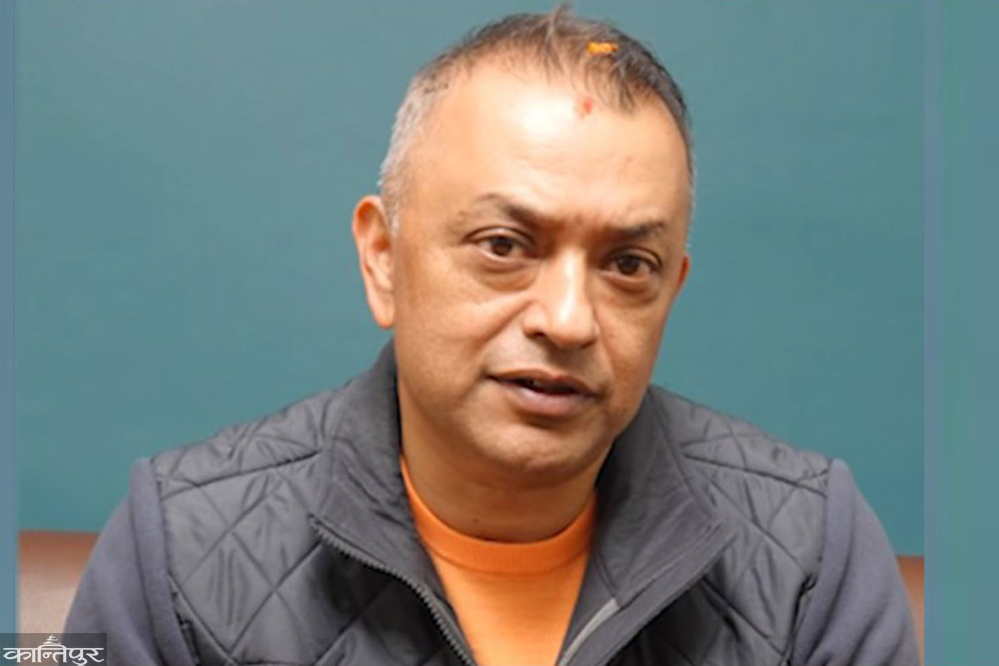
You are now with President Deuba regarding the elections, but on a different side in the general convention, isn't this a contradiction?
After the turmoil of 23 and 24 Bhadra, I realized that the common people wanted Sher Bahadur Deuba, Prachanda, and KP Oli to stay away from political affairs. I also took that 'position'. This is the main issue. I have nothing personal to say about it. Mr. Party President, the question of whether to stay away from political responsibilities or not is linked to whether to respect the spirit of that Gen-G explosion or not. We cannot move forward by ignoring and disregarding such public aspirations. What we should not forget is that this is not the character of the Congress Party. The Congress has always made decisions with the wishes of the citizens at the center. Am I the only one who said this? The majority of the Congress representatives have submitted signatures to the party office demanding a special general convention, saying that the party should send a message that the party has changed before going to the general elections, and for that, the party leadership should be changed in a legal manner.
After the party acting president read those signatures at the central office and informed the central working committee meeting about it, it is the property of the party center. According to Article 17 (2) of the party statute, it is the responsibility and duty of the party center to call a special convention within three months. If we had held a regular general convention within that date and elected the party center leadership, the proposal for a special general convention would have been null and void, but we could not do that. It is not that the signatures of the 54 percent of the representatives who elected us are more applicable to Gagan Thapa and less applicable to the party president. Since the party president is the highest person to ensure that the party statute is followed, I think he should be more serious.
No one is above the statute. The party is not just a few people in charge, but the feelings of the general members who are supporters. I represent the public sentiment that the party leadership should be changed. I am in favor of the general party members, not the president. That is the point, the rest is just details.
The general convention controversy has become so complicated now, how far will it go at this pace? Do you think of putting on the 'brake' after reaching a certain point? Because you are in the 'driving seat'.
The implication of the signatures of 54 percent of the delegates is not only the new agenda of the general convention. They submitted their signatures to us so that the party changes the leadership before the general election and that we can go among the people and get more votes in the party's ledger. Even if there is no special general convention, they wanted a new leadership to be elected within that period. But we could not fulfill that. That is why the party center could not violate the issue that was made mandatory by the statute.
We are not trying to reach the ‘point of no return’, we are just trying to implement and comply with the legislation. There is nothing to be too suspicious about this.


