”We worked to bring democracy, but the work of good governance and prosperity remained incomplete. The current Gen-G movement has taken the responsibility of completing it.” - Baburam Bhattarai
We use Google Cloud Translation Services. Google requires we provide the following disclaimer relating to use of this service:
This service may contain translations powered by Google. Google disclaims all warranties related to the translations, expressed or implied, including any warranties of accuracy, reliability, and any implied warranties of merchantability, fitness for a particular purpose, and noninfringement.
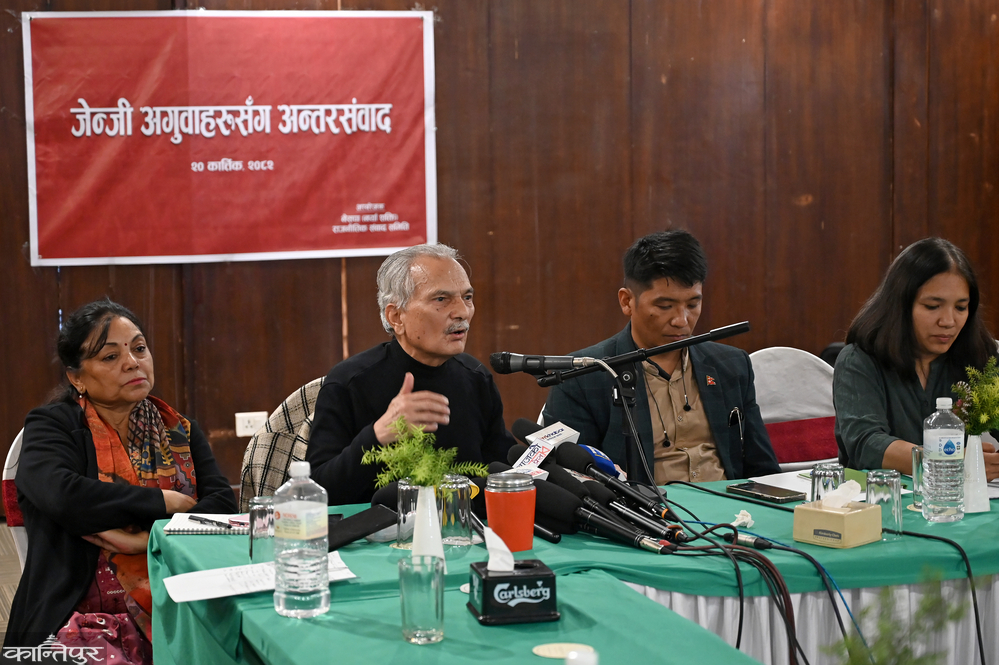
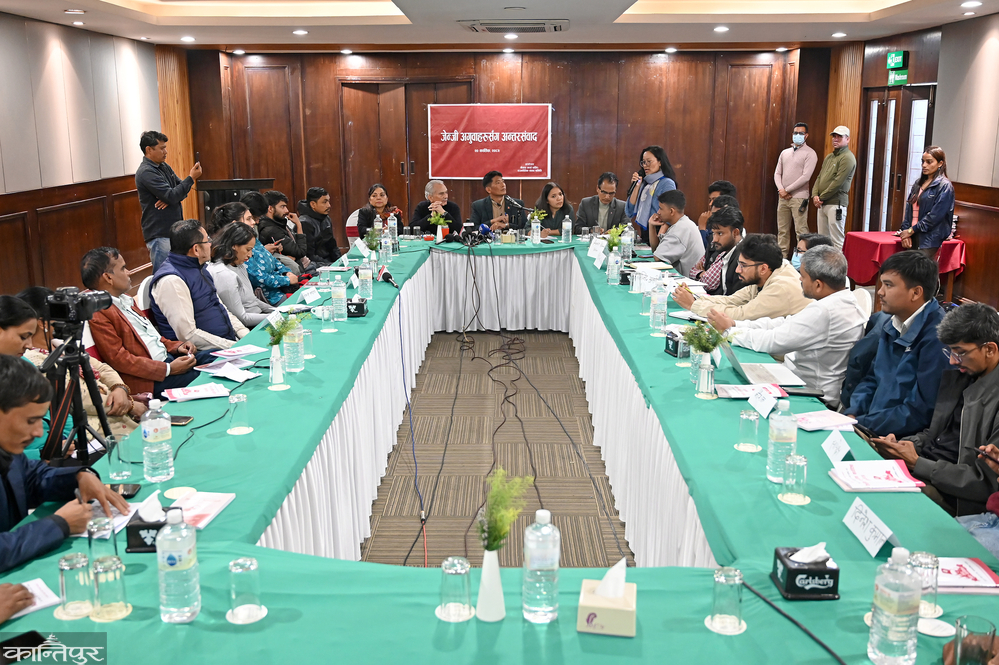
In a program titled 'Interview with Gen-G Leaders' organized by the Nepal Samajwadi Party (New Power) in Baneshwor on Thursday, the essence of the Gen-G movement, followed by a discussion on the political direction of the country and the possibilities of alternative politics, were discussed.
The program was attended by top party leaders including former Prime Minister and leader Baburam Bhattarai and leaders of the Gen-G movement.
Samajwadi Party leader and coordinator of the dialogue committee Manushi Yami Bhattarai praised the Gen-G movement and said that the future direction should be decided. She said that a common alternative force should be built by collaborating with the new generation.
'The Gen-G rebellion has dealt a big blow to the old parties, but we should introspect as to why you were forced to come to the streets despite our presence,' she said. 'This movement has raised new awareness in our society and politics. The challenge now is to transform it into an alternative and sustainable political direction.'
The Gen-G leaders participating in the program shared their views on politics, good governance, technology and transparency and suggested that the old parties should accept their failures and ensure the guidance and participation of the new generation. Saken Yampu Rai, a representative of the Gen-G Movement Alliance, said that the government should take the initiative to legitimize the movement and advance its demands institutionally.
 She said that the movement should be legalized to prevent it from being criminalized. She said, "This movement is not individualistic, it is the result of collective consciousness. It is not fair to try to criminalize it. Let's prevent it from being criminalized." She said that in the incident of Falgun 23, people were shot at without waiting for even 6 hours and there was a serious violation of human rights, and demanded that it be addressed.
Another leader, Majid Ansari, supported Rai's statement and said that even if there is chaos in the name of the movement, the hands that set fire to it should be held, but the Gen-G protesters should not be criminalized. He said that an attempt is being made to remove the 'culture' of the movement from the country by criminalizing the protesters of the Gen-G uprising. He alleged that the state is taking revenge instead of making the anarchic elements 'confess'.
Similarly, another leader Arnab Chaudhary also said that the current leadership should stop seeing Gen-G as a 'protected group'. He said, 'Let's stop seeing us as a protected group. You should accept us as a decision-making group.'
Gen-G leader Hem Chaudhary said that inconsistent orders such as not allowing unemployed youth to extract sand and gravel even when they are working for a living have caused problems. He stressed the need to identify the country's potential and encourage the technology and industrial sectors. Chaudhary, who returned after studying technology at MIT, said that it is necessary to include the voice of the Gen-G generation in economic policy and policy making. He said, 'There is no coherence in our economic policy. Without political stability and a production-oriented policy, employment and opportunity creation are impossible.' Stating that there is no coordination at the grassroots level in economic policy, he said, "People are unemployed, but the economic agenda is not clear. Political parties should bring clear policies in the agriculture, industry and technology sectors."
 Amit Khanal, a representative of the Gen-Z Alliance, opined that the electoral system itself should be reformed to increase the political participation of the youth. He said that the electoral system itself encourages corruption and that the system of having to deposit Rs 10,000 to contest in direct elections and Rs 50,000 in proportional representation is an attempt to keep the poor out of politics. He said, "Today's electoral system is designed in a way that does not allow politics without money. Candidate fees should be reduced in both proportional and direct systems."
Similarly, another leader, Bikash Rasaili, said that the movement should be linked to issues of social justice and identity and moved forward. He said, "The Gen-Z movement is not a split, it is an unstructured but spontaneous voice that has raised questions about the structural injustice and inequality in the country." He made it clear that the country cannot move forward without addressing the deep contradictions of caste, gender and economic inequality. 'Nepali politics has not yet been able to prioritize the issues of Dalits, women and economically backward classes,' he added.
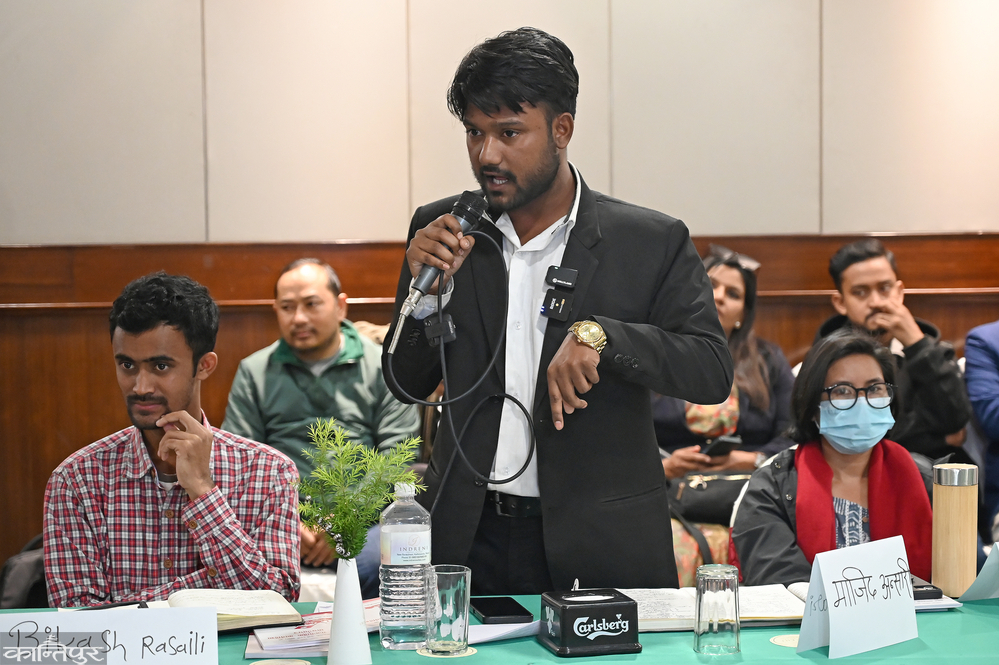 Majid Ansari also argued that the root of instability is the closed list-based proportional electoral system. He proposed to remove 110 proportional seats while maintaining 165 directly elected constituencies and implement 40% (or 49%) reservation in the direct election in a cyclical system. He suggested that a provision be made in the law that no person or organization can donate more than 40,000 rupees to political parties in a year to end the donation business model in politics. He also demanded that a system be implemented to make the income details public every two years from the Nayab Subba or officer level to control corruption in the bureaucracy.
Baburam's suggestion: Be alert
While Gen-G leaders continue to express fears that the movement will be criminalized, former Prime Minister and founding chairman of the Nepal Samajwadi Party (New Power) Dr. Baburam Bhattarai described the movement as the 'fourth step' in Nepal's democratic journey. He described the Gen-G uprising as a new generation's uprising that will complete the incompleteness of yesterday's democratic movements. Bhattarai said, 'We worked to bring democracy, but the work of good governance and prosperity remained incomplete. The current Gen-G movement has taken the responsibility to complete it.'
Recalling the previous movements, Bhattarai said, 'The movements of 2007, 2046, 2062/63 gradually removed colonialism and monarchy and brought democracy.' Now this movement of 2082 BS should set the direction of good governance and prosperity.'
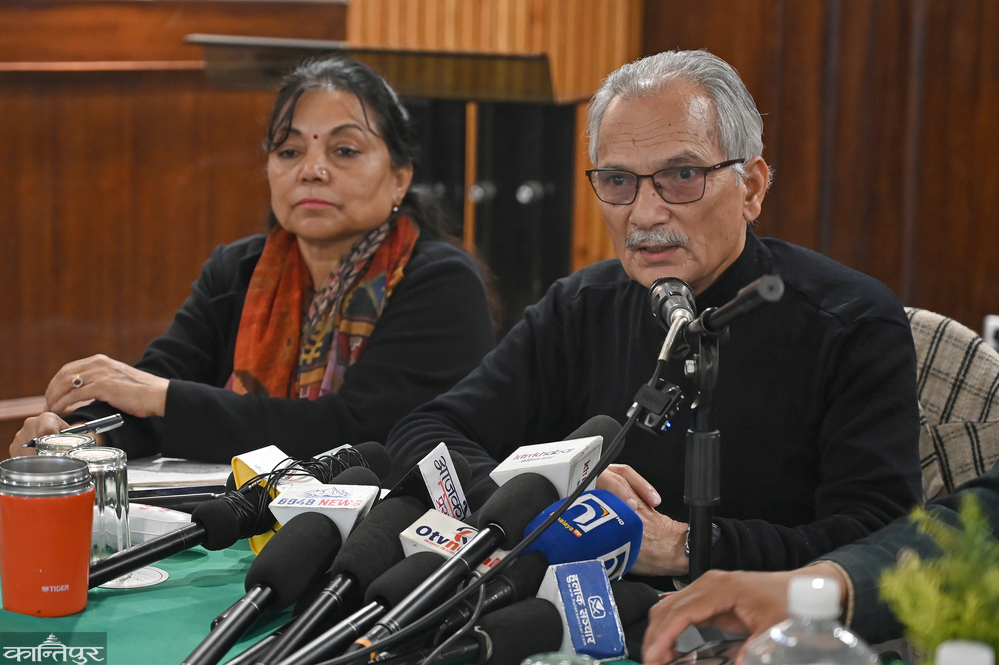 Former Prime Minister Bhattarai urged the new generation to move forward not only as rebels, but as carriers of political restructuring based on knowledge and technology. 'It is a thinking born during the period of rapid technological, social and cognitive change from 1997 to 2012,' he said, 'This generation is a generation that has grown up digitally. Just as new consciousness has been modifying the old structure at every stage of social development, the time has come to do the same.'
Similarly, Bhattarai argued that good governance and economic prosperity will not be achieved in the country due to the imperfections of the constitution. He said, 'The constitution is a glass half full and half empty.' The initiative of the new generation is necessary to fulfill that and bring about institutional good governance. He also urged Gen-G to be aware that the old mentality and the influence of invisible forces still exist in the current interim government and state machinery. He said, “It is difficult to implement new thinking until the old structure, old bureaucracy and courts are changed.” Responding to questions from the youth participating in the
program, he suggested the new generation to move forward with “knowledge, humility and curiosity.” “When a person stops learning, that is the day they grow old,” Bhattarai said. “The core of your rebellion should be new knowledge, new perspectives and the concept of inclusive and participatory democracy.”

