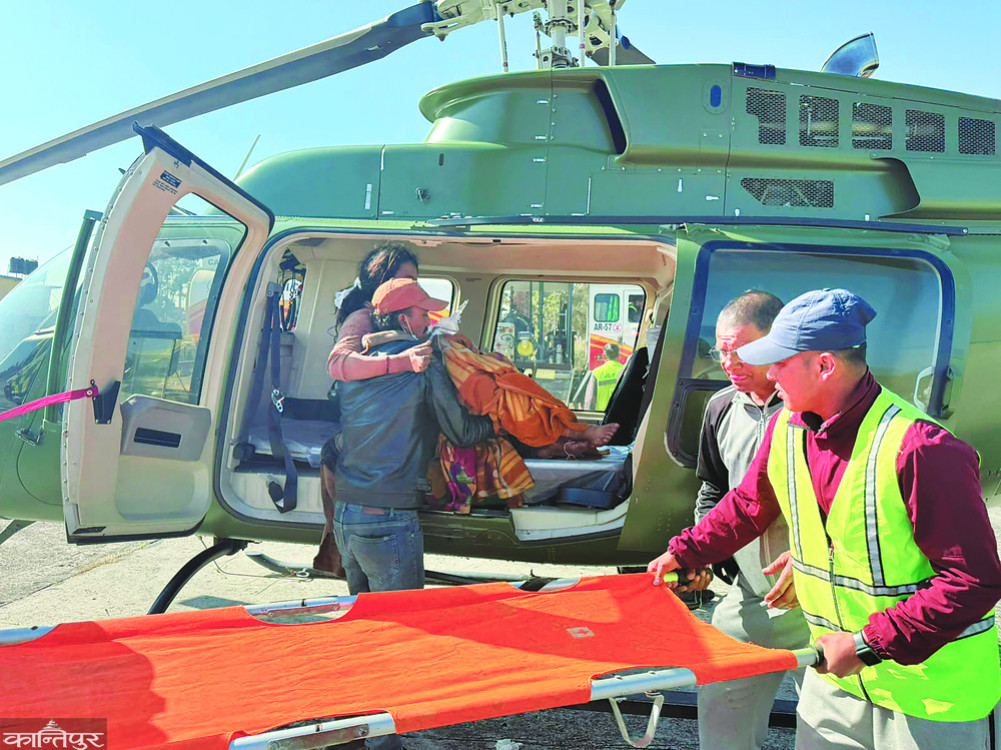
To reduce the risks associated with giving birth at a young age, it is necessary to prevent marriages that occur before the legal minimum age set by law.
We use Google Cloud Translation Services. Google requires we provide the following disclaimer relating to use of this service:
This service may contain translations powered by Google. Google disclaims all warranties related to the translations, expressed or implied, including any warranties of accuracy, reliability, and any implied warranties of merchantability, fitness for a particular purpose, and noninfringement.
Being pregnant means that a woman goes through a special condition. For many, this is an exciting and novel experience. However, when health complications arise and there is no access to regular health check-ups or consultations, it can also become distressing. Especially for women in remote areas, the lack of health check-ups and consultations forces them to experience pregnancy as a battle between life and death.
Due to lack of education and weak awareness, early marriage and the tendency to have children immediately after marriage are more prevalent in remote areas. These women do not receive effective health services during pregnancy and childbirth. As a result, many mothers and babies lose their lives during childbirth. To save the lives of mothers and babies, health services must be made accessible and effective. The rescue system should be made simple and convenient. For long-term improvement, awareness must be raised through access to education.
On June 4, 19-year-old Sushila Roka from Musikot, Rukum West, was taken to the district hospital after going into labor. Of the two babies in her womb, one was delivered normally, while the other had to be delivered by surgery. But after abnormal bleeding increased, she was taken to the provincial hospital. She remains in the hospital with both babies.
On December 7, 15-year-old Karuna Bista from Jagannath Rural Municipality, Bajura, gave birth to a baby while unconscious. Although she was taken to the district hospital, she did not regain consciousness for two days after the baby was born. In March, 18-year-old Asmita Nepali from Tila Rural Municipality, Jumla, was taken to the local health facility after going into labor. As her condition became more complicated, she was taken to the Karnali Academy of Health Sciences in Jumla. Although the baby was delivered by surgery there, her health became even more complicated. She was referred to Kathmandu, but due to bad weather, the helicopter could not arrive in time, and she passed away.
With the aim of rescuing women who experience complications during pregnancy and childbirth and getting them to the hospital in time, the Government of Nepal has been operating the ‘President Women’s Upliftment Program’ since fiscal year 2018/19. This program has been very helpful for locals in remote and inaccessible areas.
Although the program has helped and saved the lives of many women, there is a broader aspect that needs to be discussed. Because, according to data provided by the Nepal Army involved in rescue operations, 19 percent of mothers rescued by helicopter are under 20 years old. Although the minimum age for marriage registration in Nepal is 20, the number of people marrying and giving birth before 20 remains high. For example, according to data from the Karnali Province Health Directorate, in 2025, 21.34 percent of mothers in Karnali Province were under 20 years old.
To reduce the risks associated with giving birth at a young age, marriages that take place before the legal age must be prevented. There are two aspects to this. First, the situation for enforcing the law must be made effective. In Nepal, early marriage is not taken particularly sensitively. Therefore, unlike other legal violations, there is not much practice of filing complaints in this context. Even if adolescents marry with mutual consent, families and society tend to accept it. Therefore, complaints and enforcement must be made effective.
Second, the role of parents and school education is also significant. In many of our families, as children grow older, communication between parents and children weakens. Parents are occupied with work and other pressures, and children get caught up in their own complexities, resulting in a lack of communication—a common problem. If there were communication, children’s mental dilemmas could be resolved.
The ability to make prudent decisions would also develop. But when this does not happen, children tend to choose a life partner at a young age in search of parental love, support, and companionship. School education also does not provide enough information about the disadvantages of early marriage. Although these topics should be learned and understood at school, this has not happened. As a result, children’s awareness cannot blossom. This affects the poor decisions they make.
Another aspect is the decision to have children. When it is not possible to prevent marriage before the legal age, then having children immediately should be prevented. This can only be achieved through the awareness of the adolescents involved in marriage. Without knowledge about the childbirth process, potential risks, and necessary preparations, and without developing the ability to analyze what decisions to make in such situations, giving birth leads to complications for both mother and child.
In geographically remote areas lacking health services, when children are born during adolescence, there is little information and no facilities regarding the nutrition needed during pregnancy, self-care, and the step-by-step tests that should be done during pregnancy.
And only after the health condition becomes complicated are they taken to the hospital. In such cases, the pregnant woman’s medical history is not available, and it can be difficult even for health workers to manage the complications that arise simultaneously. As a result, the mother, the child, or both may lose their lives or face numerous severe adversities. Disruption of education and career during adolescence is a common problem.
Especially in remote hospitals, there is a lack of modern equipment and sufficient doctors. If complications arise, referral becomes necessary. For many, it is already too late. Therefore, the government’s efforts should focus on expanding health services. In the long-term strategy, the focus should be on ending child marriage.
To create a situation where people marry at the appropriate age and couples plan for children with maturity, a campaign for awareness must be launched. For this, such topics should be included in school education. In addition, with the help of the country’s famous celebrities on social media, the necessity of marrying and having children at the appropriate age should be communicated. Information about this should be disseminated through public media and other means.