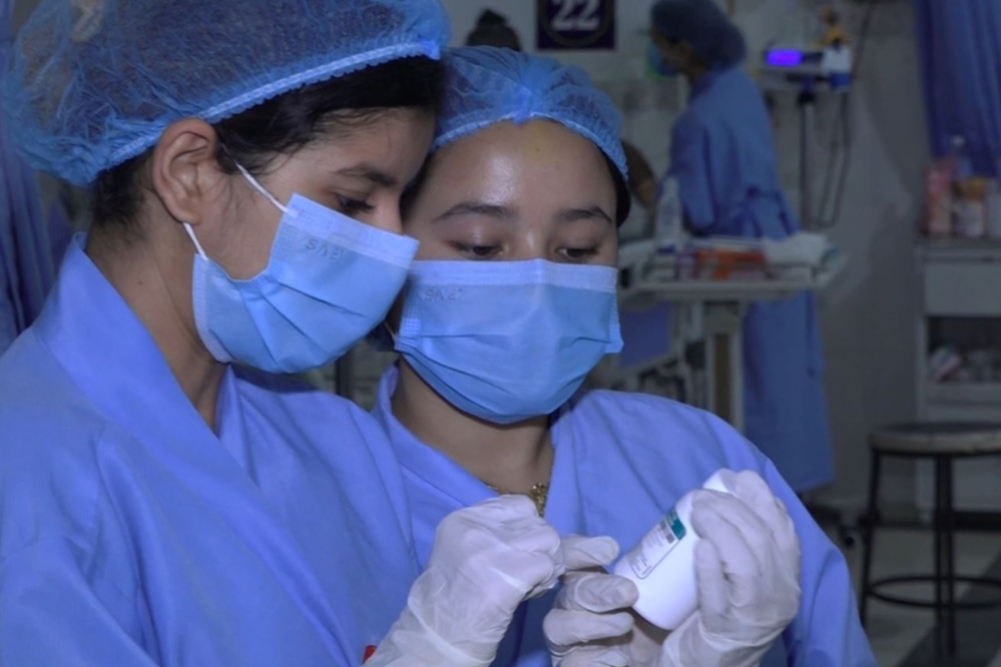
The continuous migration of skilled nurses abroad is a great misfortune for the health sector. When skilled personnel, prepared through years of investment, leave, hospitals inevitably face a shortage of staff, and the workload on the remaining health workers increases. Ultimately, this directly affects the quality of services received by patients.
We use Google Cloud Translation Services. Google requires we provide the following disclaimer relating to use of this service:
This service may contain translations powered by Google. Google disclaims all warranties related to the translations, expressed or implied, including any warranties of accuracy, reliability, and any implied warranties of merchantability, fitness for a particular purpose, and noninfringement.
2 a.m. The patient load in the hospital’s emergency room still hasn’t decreased. A nurse is continuously busy caring for patients—administering medication, assessing patient conditions, comforting family members, and following medical instructions. How does the time pass in all this? One hardly notices. When patients are the top priority, sometimes there isn’t even time to eat, drink water, or rest for a while. The question arises—who takes care of the health of the nurse who cares for others?
Nursing is not just a profession—it is a dedication to service, compassion, and humanity. According to the World Health Organization, there are about 29.8 million nurses working worldwide. Nurses are the largest group of healthcare workers globally and are considered the backbone of quality healthcare services. Without healthy, motivated, and skilled nurses, quality healthcare is simply not possible.
Sometimes, a patient’s hope for survival is strengthened by a nurse’s smile. Yet, the hands that save lives sometimes seek a little time for themselves, too. Ultimately, the greatest satisfaction in nursing is the patient’s smile.
The Reality Taught by Experience
Having worked as a nurse for a long time and currently pursuing postgraduate studies and research in counseling physiology, I have had the opportunity to understand the importance of nurses’ work-life balance, mental health, and job satisfaction more closely. Not only do research statistics highlight this, but daily work experience has also made me more sensitive to these issues.
Why is Work-Life Balance Necessary?
Work-life balance means maintaining a healthy equilibrium between professional responsibilities and personal life. However, this is not always easy in the nursing profession. Due to limited manpower, increasing patient loads, long working hours, night shifts, and emotional responsibilities, many nurses experience physical and mental fatigue. Although not all healthcare institutions are the same, in some workplaces, excessive workloads affect nurses’ work-life balance. This can impact job satisfaction, mental health, and ultimately the quality of care patients receive.
Nursing Workforce: Current Status
A nurse is not just someone who administers medicine—they are also a force that boosts a patient’s morale, inspires hope, and restores faith in life. Sometimes, a smile on a patient’s face and a simple ‘thank you’ can make one forget the fatigue of many days.According to the latest data from the Nepal Nursing Council, there are 88,232 registered nurses, 37,601 ANMs, and, including other specialist nurses and midwives, a total of more than 128,840 nursing personnel registered in Nepal. However, not all of them are working in Nepal. Many nurses have gone abroad in search of education, employment, and professional opportunities, while some are engaged in other fields.
There is currently no official national data on self-employed nurses. However, some nurses are contributing to healthcare by running their own clinics, providing home care, elderly care, health counseling, and training services.
Is Nursing Only About Hardship, or Is There Respect Too?
Nursing is not just a story of hardship, but also of respect. A nurse is not just someone who administers medicine—they are also a force that boosts a patient’s morale, inspires hope, and restores faith in life. Sometimes, a smile on a patient’s face and a simple ‘thank you’ can make one forget the fatigue of many days. Florence Nightingale is regarded as the icon of nursing. Serving patients all day and receiving respect and affection from patients and their families brings a different kind of energy. That energy provides lifelong satisfaction in this profession. Nursing is not just a profession but also a place to find satisfaction and serve. Nurses should work in a way that earns them respect. However, some patients’ relatives are unable to recognize the hardships and pain nurses endure.
Why Are Nurses Migrating Abroad?
The migration (brain drain) of skilled nurses abroad has become a serious challenge for Nepal’s health sector. Many Nepali nurses are going abroad in search of better pay, a safe working environment, professional respect, career development, higher education, and improved living standards. Seeking opportunities is natural, but to gain something, one must also lose something.
The pain of having to sell one’s labor in a foreign land is unique. One must live far from family, loved ones, one’s own soil, and culture. Festivals are missed, children cannot be watched grow up firsthand, and parents’ company is lost. Even if there are financial gains, much is lost emotionally. Therefore, the story of migration is not just one of success—it is also one of sacrifice, struggle, and pain.
However, in Nepal’s context, the continuous migration of skilled nurses abroad is a great tragedy for the health sector. When skilled personnel, trained over many years of investment, leave, hospitals face staff shortages, and the workload on remaining healthcare workers increases. Ultimately, this directly affects the quality of care patients receive.
How Can We Retain Nurses in Nepal?
The solution to this problem cannot come from just one side. The government, policymakers, hospital management, nursing leadership, educational institutions, nurses themselves, and the general public—all must play a shared role. To retain nurses in Nepal, they must be given respectable pay. If pay is low but the workload is high, services cannot be quality or effective. It is essential to ensure adequate staffing, a safe working environment, fair work schedules, professional security, career development opportunities, and regular training.
Leadership support and regular in-service education play an important role in enhancing nurses’ capacity, confidence, and quality of service. Nurses themselves must also prioritize their physical and mental health. Adequate rest, a balanced diet, regular exercise, opportunities to spend quality time with family, and seeking psychosocial support when needed should be considered part of professional responsibility.
The International Council of Nurses (ICN) has described investment in nurses’ health and well-being as an investment in patient safety and quality healthcare. This must be strictly implemented and effectively regulated in Nepal as well. Otherwise, this issue will remain just a slogan, and nurses will continue to be deprived of pay and benefits for years, gradually leaving the profession altogether. In recent years, nursing education has become more attractive, but pay has not kept pace.
We have the bitter reality that nurses working in private hospitals have had to protest for fair pay. Therefore, nurses’ work-life balance is not just a personal matter—it is directly linked to patient safety, quality healthcare, and a robust health system.
Today, what is needed is not blame, but a collective commitment to finding solutions. Every investment in nurses’ respect, health, work-life balance, and professional development ultimately benefits patients, health institutions, and society as a whole.
Nurses have the power to boost patients’ morale, inspire hope, and restore faith in life. It is this service, dedication, and commitment to humanity that has made nursing a respected profession.
Now is the time not to push nurses abroad, but to create an environment where they can stay in Nepal with respect. Because retaining nurses in Nepal is not just about preserving a profession—it is also about protecting the country’s health system, patient safety, and the health of future generations.