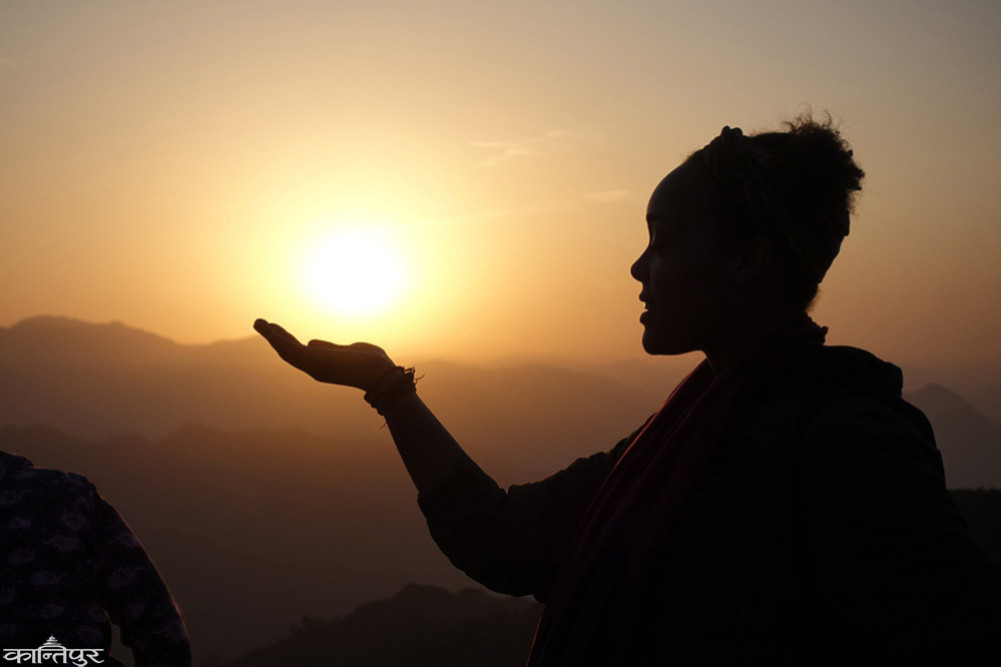
Health tourism is an important means of attracting tourists from all over the world by making Nepal a spiritual center, a land of knowledge, a land of tapo, and a land of peace. Nepal's rich culture and picturesque nature are excellent destinations for health tourism.
We use Google Cloud Translation Services. Google requires we provide the following disclaimer relating to use of this service:
This service may contain translations powered by Google. Google disclaims all warranties related to the translations, expressed or implied, including any warranties of accuracy, reliability, and any implied warranties of merchantability, fitness for a particular purpose, and noninfringement.
The government reform agenda prepared immediately after the formation of the current government stated that Nepal would be made a hub for health tourism and a health tourism strategy would be issued for that. There was a plan to form an inter-agency coordination mechanism to celebrate ‘Nepal Wellness Year-2027’ by taking health tourism as a national agenda for economic transformation.
Accordingly, the government has implemented the ‘National Health Tourism Strategy’ with the aim of transforming the tourism sector in a new direction. It has also prepared a blueprint with the goal of further organizing various tourism sectors. The government has considered this as one of the important achievements in the work done in 100 days.
The Ministry of Culture, Tourism and Civil Aviation claims that once the blueprint is implemented, it will help promote reliable tourism and embody the concept of health tourism. In the process, work has been done to identify religious as well as other multifaceted potential areas in the Chatara and Barah regions around Koshi. According to the ministry, the necessary framework for developing tourism infrastructure and destinations in tourist areas including Api, Saipal, Badimalika, Rara has been completed.
The government has prioritized health tourism by diversifying the tourism sector, which has been focused on mountaineering, trekking and cultural tours. The government has a strategy to transform the tourism industry, which has so far been limited to certain seasons, into a year-round, high-value-creating and sustainable economy-building business.
For this, it is said that Pokhara and the Annapurna region will be developed as 'Yoga Capitals' and nature-based treatment centers, and the mountains, lakes and peaceful environment will be used as a medium for treatment and meditation. There is a plan to develop Lumbini not only as the birthplace of Buddha but also as a spiritual health resort and to run monastery-based meditation and retreat programs.
The government aims to make at least 11 percent of the total tourist arrivals from health tourists by 2030 through such programs. The ministry has stated that the necessary preparations have been started to celebrate the year 2027 as 'Nepal Wellness Year-2027'. In this situation, we have an opportunity to develop Nepal's Himalayas, monasteries, beautiful natural heritage, peaceful environment and ancient knowledge, meditation, yoga and sadhana methods as suitable destinations through health tourism.
Health tourism is a journey with the aim of protecting health physically, mentally, emotionally and spiritually. It helps in the development of overall well-being, meditation, yoga and spirituality of a person. It helps in keeping the mind, brain, body, emotions and consciousness healthy.
If Nepal's beautiful natural heritage, enchanting mountains, cultural heritage and other places can be established as health tourism, Nepal can become a major destination for health tourism. Areas that reflect various diversity include yoga, yoga, trekking and ancient cuisine. Health not only protects a person's health, but also helps in improving their lifestyle. In today's busy and competitive society, the need for wellness is increasing. Because to move forward smoothly in every situation, every person needs physical and mental health as well as peace, joy and spirituality. To fulfill this, the current government has brought an agenda to develop the peaceful and picturesque mountains in Nepal as a destination for the spread of ancient meditation traditions and Ayurvedic knowledge.
Since wellness tourism is linked to human health and spiritual practices as well as entertainment, joy, peace and spirituality, the full support of the concerned bodies is equally necessary in its promotion.
The field of wellness tourism is expanding in recent times. It is estimated that by 2030, it will account for 20 to 25 percent of world tourism. According to the health tourism market data, Nepal ranks 91st out of 143 countries in wellness tourism. Nepal is not only a holy land for health - it is also a holy land for knowledge, meditation, spiritual practice and penance. The government aims to establish Nepal as a center of world spiritual tourism by launching the 'Devbhumi Nepal' national campaign and developing it as an emerging destination for religious, cultural, health, study, film, spiritual and leisure tourism. For this, the government's policy and program mentions the promotion of Pashupatinath, Lumbini, Janakpurdham and Muktinath regions through spiritual pilgrimage diplomacy.
When the word tourism comes to Nepal, the world community immediately thinks of scenic views of the beautiful mountains, trekking and mountaineering, and the sight of monasteries and temples. The policy and program for the fiscal year 2083/84 states that a new tourism ecosystem based on nature, culture and community will be developed to develop Nepal as an attractive destination for adventure tourism, including mountaineering, trekking, rafting, paragliding, bungee jumping, sky driving, and strengthening adventure tourism infrastructure, safety standards and international promotion. Health tourism encompasses a new concept that embodies such programs.
Earlier, the government had implemented various programs to promote tourism. The budget for the fiscal year 2080/81 had set a target of reaching 1 million tourists by 2023, and 2023 to 2032 has been declared a tourism decade. In the same year, the 'Let's travel Nepal, get to know Nepal' campaign was launched. It is stated that tourism arrivals will increase by 15 percent annually to 3.5 million by 2032, and an additional 1 million new jobs will be created in the tourism sector within the next 10 years. The goal is to increase the contribution of tourism to the country's gross domestic product to 10 percent. To achieve these goals, institutional strengthening, infrastructure upgrading, investment promotion, and tourism service strengthening and expansion are being carried out.
To achieve further progress from the tourism sector, it is useful to continue tourism activities and expand health tourism. Wellness is also considered important at the international level. The United Nations has called for the celebration of International Health Day (April 15), World Meditation Day (December 21) and World Yoga Day (June 21) globally, giving special importance to the health, happiness and overall well-being of every person. The combination of yoga, meditation and wellness brings balance to a person's physical, mental, social, cultural, emotional and spiritual state. Wellness tourism teaches a person to be inspired by social, cultural, emotional and environmental well-being.
Making Nepal a wellness destination will not only contribute to economic development, but also to the promotion of good health and wellness of individuals. The plans put forward by the government to link wellness tourism with the country's economic and social transformation, national pride, livelihood and long-term development should be effectively implemented.
The government should also be interested in creating a new foundation for prosperity through wellness tourism while preserving Nepal's originality and identity. Health tourism is an important means of attracting tourists from all over the world by making Nepal a spiritual center, a land of knowledge, a land of penance, and a land of peace. Nepal's rich culture and beautiful nature are excellent destinations for health tourism. Unless a person can stabilize his mind and keep his mind balanced, he cannot be happy and healthy. Since knowledge and happiness can be achieved through health, health tourism should be viewed not only in terms of economy but also in terms of spirituality.