MPs seem to have the illusion that they have too much power. They are displaying a sense of privilege and that whatever they want can happen immediately.
We use Google Cloud Translation Services. Google requires we provide the following disclaimer relating to use of this service:
This service may contain translations powered by Google. Google disclaims all warranties related to the translations, expressed or implied, including any warranties of accuracy, reliability, and any implied warranties of merchantability, fitness for a particular purpose, and noninfringement.
It is the responsibility of the parliament/MP to monitor various offices, workplaces, incidents, etc., to identify problems there and recommend solutions. Such responsibility is basically guided by the intention of resolving problems quickly or preventing wrongdoing. Many parliamentary monitoring in the past have achieved their intended objectives. However, the behavior of the MPs who went for monitoring is being criticized less than four months after the newly formed parliament began its work.
In the meantime, the behavior shown by the MPs in monitoring various bodies in the constituency, from requesting documents of cases under investigation at the Commission for the Investigation of Abuse of Authority, to disputes at the international airport, has started raising questions about their official roles. This raises questions about the dignity of the parliament/MP and does not provide a real solution to the problem, so the MPs should behave in a dignified manner. They should not be publicity-oriented, but problem-solving oriented.
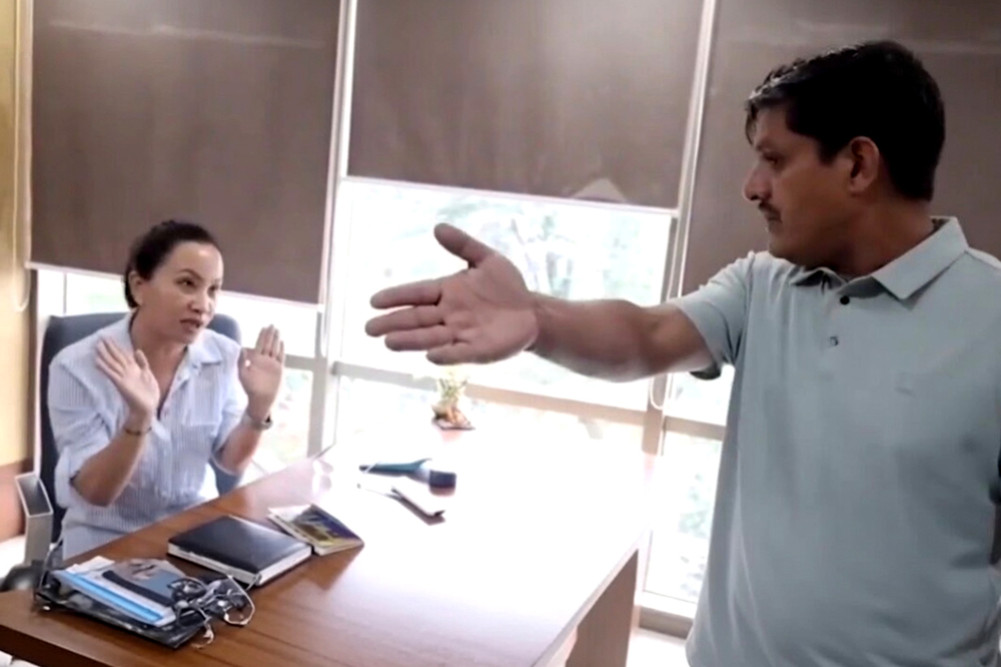
References such as bringing a cameraman, speaking loudly, shooting videos, and warning that they will 'publish in the media' and 'write in the report' confirm the tendency to try to go viral. Doing this is against the rules of the office. Last Monday, Jagdish Kharel, a member of the Finance Committee of the Parliament and the Rashtriya Swayamsevak Sangh (RSP) MP elected from Dolakha, and Sagar Bhusal, an MP elected from Parbat, reached the Tribhuvan International Airport. They are complaining that those who come to pick up and drop off their relatives at the airport have to pay between Rs 50 and Rs 100 to stay for a while, they are arguing with Charu Shrestha, CEO of the airport's terminal management company AEMS Services.
Earlier, a controversial incident was made public when a group of MPs from the State Affairs and Good Governance Committee of the House of Representatives went to the Itahari office of the Commission for the Investigation of Abuse of Authority and tried to see the details of the files under investigation. Not only those who went from the parliamentary committee, but also MPs in their constituencies have been threatening to monitor in this way. For example, MP Prakash Gautam, elected from Makawanpur-1, had set a deadline for the equipment that reached Hetauda Hospital in the second week of Asad to be put into operation. Looking at the behavior mentioned, it seems that the MPs have the illusion that they have more power. They are displaying a tendency to think that they have been given privileges and that whatever they want will be done immediately. The problems that can cause the work not to get done can range from the existing legal arrangements to lack of communication. There can be confusion in the process. There can be a lack of inter-agency coordination. There can be a lack of infrastructure and manpower. The MPs are supposed to identify and find solutions to such problems. The
is to recommend to the government. The law should be changed as needed. However, the MPs who went for monitoring have been found to use language of warning such as ‘printing in the media’ and ‘writing in the report’. Gautam, an MP elected from Makawanpur-1, visited the new ward of the NICU of Hetauda Hospital and warned that ‘if it cannot be started even in 2 weeks, we will have to take steps accordingly’. This makes it clear that the MPs do not want to work at all, and that the work will be done after they are tired. However, it is essential to understand the actual details of human resources and technical issues in such work.
There are also flaws in the process of going for monitoring. They should have taken a clear decision from the concerned committee and gone for monitoring. They should have coordinated beforehand. But the style of the MPs seems to be raiding. While the responsibility of raiding and preserving evidence lies with others. That has created misunderstanding. On the other hand, it does not seem that the MPs have made adequate preparations before going for monitoring. For example, before members of the Finance Committee reached Tribhuvan International Airport and asked why those who came to pick up and drop off their relatives were charged a fee to stay at a certain place, there would have been no dispute if they had done a little research on why this was happening, how long it had been happening, and whether it was legal or not. But it is shameful to get angry and immediately ask to show the agreement documents as if they had learned about the new problem. Such a tendency shows how weak the MPs are acting on.
In fact, there is a tendency among MPs to establish that they are harassing them rather than correctly identifying the problem and providing a proper solution. References such as bringing a cameraman, speaking loudly, making videos, giving warnings to ‘publish in the media’ and ‘write in a report’ confirm the tendency to try to go viral. Doing this is against the rules of the office. It is against responsibility. It does not solve the problem, but rather inflames it. In addition, it creates hostility between the organs that should be coordinated. Because, in a situation of reprimand, the path to finding a real solution to the problem and having a peaceful dialogue for that is closed. This tendency is harmful. It weakens the dignity of the parliament/MP. It reduces the credibility of the parliament/MP. Therefore, the MPs should be trained by the concerned party. In particular, they should be explained what the rights of parliamentary committees and MPs are and are not.
Another issue is that MPs are supposed to do legislative work, not to be obsessed with executive power. It is the job of the MPs to raise problems in parliament, force the government to find a solution, take initiatives to remove legal obstacles, and coordinate. Many MPs seem to be arrogant because they were elected by the people and must do as they say. But their behavior shows that they have little knowledge of what the people elected them to do and what the constitutional and legal responsibilities of the positions they hold are. Parties should also train MPs on such issues. The Speaker should also play a coordinating and parental role.