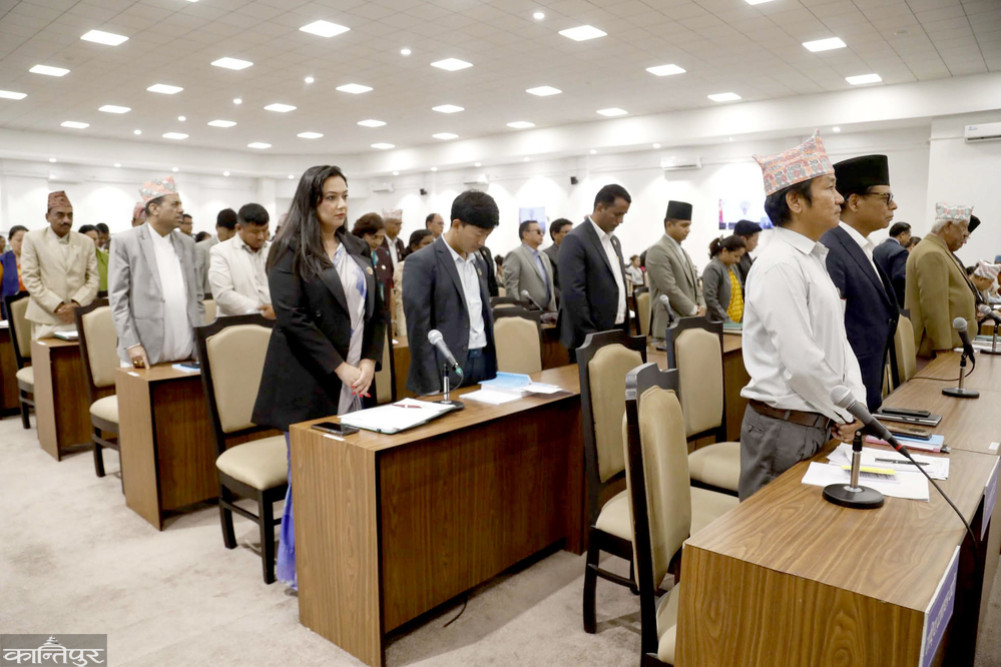
The responsibility of keeping opposition-free politics alive lies with a conscious community of writers, artists, journalists, and independent citizens.
We use Google Cloud Translation Services. Google requires we provide the following disclaimer relating to use of this service:
This service may contain translations powered by Google. Google disclaims all warranties related to the translations, expressed or implied, including any warranties of accuracy, reliability, and any implied warranties of merchantability, fitness for a particular purpose, and noninfringement.
Political scientists, development scholars, sociologists, and economists use the term “isomorphic mimicry” to criticize the tendency in developing countries to imitate Western-style facades and names, even though the social, cultural, and economic realities and ideological backgrounds are completely different. The series of generational divisions—Baby Boomers (1946–1964), Generation X (1965–1980), Millennials or Generation Y (1981–1996), and Generation Z (1997–2012)—are the product of a specific historical development in American society. According to Carl Mannheim, a leading thinker in the sociology of knowledge, historical events experienced together in youth rather than being born in the same period shape the worldview of a generational group. If we take the concept underlying Mannheim's 1928 classic article 'The Problem of Generations' as a basis, in the context of Nepal, nomenclatures such as the Agraj Pustha (pre-1950), the Lost Pustha (1950–1960), the Mahendramala Pustha (1960–1970), the Janamat Sanghra Pustha (1970–1980), the Digbhramit Pustha (1980–1990), the Individualist Pustha (1990–2000), the Internet Pustha (2000–2010) and the Kalbuddhi Pustha (post-2010) may be more relevant.
In the context of India, the illustrious Hindi writer Agneya interpreted the inability to even think of original names in the local language as 'poverty of imagination'. That conclusion is equally applicable to the intellectual discourse of most developing countries today. Categories ranging from ‘Baby Boomers’ to ‘Generation Y’ may have been rarely used in Nepali writing, but ‘Gen-G’ is now very popular even in tea shop chatter. Indeed, this generation may be more in the news because it has been associated with so much destruction in a short period of time. Struggles that do not fit together along ethnic, class, and cultural lines, such as ‘Occupy Wall Street’ and ‘Occupy Baluwatar’ or ‘Black Lives Matter’ and ‘Dalit Lives Matter’, are examples of ‘elite imitation’ by activists who are in a hurry to name them. The idea of giving the new government a ‘100-day honeymoon’ is exactly the same. The tendency to follow a concept developed in a particular context without testing it is to some extent ideological laziness, but it is also more accurate to call it ‘equalizing pomp’.
The practice of a 100-day honeymoon in politics is a combination of contrasting metaphors from two different sources. In 1933, after taking over the reins of an economy gripped by the Great Depression, US President Franklin D. Roosevelt began his term by passing a massive package of laws under the ‘New Deal’ in his first 100 days. His rapid performance surprised journalists and analysts around the world. Since then, the ‘first 100 days’ have become a global standard for measuring the political momentum of a new leadership. The word ‘honeymoon’ has been used in English since the 16th century to refer to the initial and happy period of a newlywed couple’s life after marriage, before the practical difficulties of real life have begun. The idea of a married life relatively free from the worries of having to pay for the roof, bread, flour, meat, and salt and oil has long since been reduced to a week or two or a few days after the concept of ‘honeymoon’ has been introduced into reality. In Nepali, the word ‘honeymoon’ is difficult to capture the meaning of ‘honeymoon’. The reason is clear – at least for women, the social obligation to bear the burden of the bride as soon as they enter their husband’s house! Perhaps that is why it is easy for writers to give a sensual meaning to ‘honeymoon’.
The tendency to follow a concept developed in a particular context without testing it is to some extent ideological laziness, but it is also more accurate to call it ‘equalizing pomp’. The irony is that both these metaphors have become mixed up and have become expressions of contradictory expectations. After the government is formed, allowing the first few months of easy-to-understand conditions for it to be in place is ‘honeymoon’, but expecting it to perform miracles within that easy period is the ‘100-day standard’. There are two serious flaws in this approach. First, honeymoon gives the leadership time to rest and find comfort – where chatting with friends from the ‘Nepal-making team’ in a tea shop along with the taste of walnuts, almonds, cheese and grapes is unacceptable. On the other hand, the ‘100-day standard’ creates intense pressure to increase the pace of work. If we were to look for both the flower-like softness of honeymoon from the newly formed government and the aggressive speed of a mountain stream that breaks stones within ‘100 days’, it is unlikely to be different from what is happening now – the government is hastily destroying everything and the loyal opposition, committed to permanent power, is lovingly showering the incumbents with bouquets of flowers.
For some, the 2025 Haritpiit Uprising was a revolution, while for others it was a kind of counter-revolution – even if the image and mirror image of a person or event are the same, the direction is different. Why was the 100-day honeymoon ritual to give the incumbent government the benefit of the doubt inappropriate? The election and its outcome had already determined the program and direction after the Haritpiit Uprising. After the government had set its course for Hawaii, where the US Pacific Command headquarters, where the ‘Indo’ prefix was removed, for 100 days, there is no point in complaining that there was no attempt to achieve a republic like France, a democracy like Denmark, or a federalism like Switzerland. A government that claims to have overthrown the old regime through elections conducted by an unconstitutional government should have been kept under constant surveillance and monitoring within a few hours of its formation, based on direction and vision rather than speed and deadline. After reaching 100 days, unnecessary fuss is nothing more than a showy ritual or a weak political game.
The end of the opposition
At least three political currents could be clearly seen at the end of the Rana regime. The loyal Rana family groups, including the Guru-Purohit, the Hookah-Baithake, and the Khardar-Subedar, were committed to the restoration of the ancient regime. The groups that would go to Patan's Mangal Bazaar under umbrellas to eat choyala when it rained in Beijing and the groups that would go to Bhotahiti with overcoats to drink aila when it snowed in Moscow could be analyzed in the same basket until 1960. Although it was the forerunner of the democratic revolution until 1950, the Nepali Congress had already begun to transform into a traditional partner in power after the restoration of the Shah in 1951. Almost like now, the period 1951-1960 can be interpreted as a period of political opposition emptiness. Along with the competition between geopolitical powers to expand their sphere of influence, internal politics without opposition also cleared the playing field for King Mahendra's royal military 'coup'.
After King Mahendra imprisoned almost the entire leadership of the Nepali Congress without any charges, about three-quarters of the party's MPs had become supporters of the royal regime within a few years out of fear or greed. Ideological politics is not just a matter of counting heads, but also a moral force that is produced by the mind and brain together. Even though the Male-Mandala-Masala united under the pretext of nationalism and fought the forces called 'non-national elements', they could not eliminate the Nepali Congress. The instruction given by Indian Prime Minister Indira Gandhi to her ambassador in the 1970s - 'Nepalis are not our friends' - was not only aimed at the ruling class, but also included irritation with the Nepali Congress in her statement. When Indian socialist politician Chandrashekhar was about to come to Kathmandu to support the 1990 people's movement, Rajiv Gandhi had told him, 'My mother did not do justice to the Koiralas. Tell Girija Babu, I will correct that mistake.' Even when all internal and external forces came together, the unannounced but well-known opposition of the 1960-1990 period was the Nepali Congress.
The political tragedy after 1990 was in the rejection of the opposition concept. The totalitarian ideology formed by merging with the revolutionary Jhapali Ma-Le-Ma structure of traditional Marxists has a class enemy and can be a friendly force, but Leninism or Maoism do not accept the opposition concept of the parliamentary tradition. Perhaps if Madan Bhandari had lived, he would have tried to make the parliamentary system, which was ridiculed as 'selling dog meat by showing a goat's head', acceptable in the same way as it was in West Bengal and Kerala in India. But for three decades, the Nepali followers of Naxalism, who were imprisoned or exiled for their dream of establishing a 'dictatorship of the proletariat', have not allowed the various nominal communist parties to fully commit to the parliamentary system for the next three decades. The quarter century between 1990-2015 can be called a political period of pro and anti, but despite ideological differences, the concept of an opposition that would agree on values and norms could not even begin.
The 16-point conspiracy in 2015 to promulgate a constitution through the fast track, considering the Madhesis as an internal threat and India as an external threat in the name of national consensus, can be considered the starting point for institutionalizing a political theory without opposition. After that, among the various factions of the Nepali Congress that were the guardians of the parliamentary system, Krishna Prasad Bhattarai's 'Shishya Mandal', Girija Prasad Koirala's 'Bhajan Mandali' and Sher Bahadur Deuba's 'Bhojan Mandali', the Khas-Arya community's headman Khadga Prasad Sharma Oli became the leader of all the ethnic Congressmen. More or less, that situation still persists. In the cauldron of power, the milk has solidified no matter which party's government boils, but in institutionalizing the 'great glorious tradition' in which all parties will have a share, Pushpa Kamal Dahal, who landed in Baluwatar directly from Kaski in a Maoist helicopter in 2006, played no less role than any leader of the Congress and UML.
If there had been an opposition, the House would have been heated and the streets would have been heated to stoke the discontent that was spreading by 2025. Nepal's experts and expert consultants must have gone into the bedrooms of politicians and warned them. Journalists active in the public sphere must have made appropriate comments. Even if it goes beyond the limits of literary decency, which is not to blow one's own trumpet, it must be said that some of the articles published in the 'Shabd Sakshi' column before the terrible September, 2025, had titles like - 'The risk of restlessness', 'The lament of a wasted spring', 'The frustration of the common man' and 'A period of widespread anxiety'. One column went so far as to point out - 'External players are also perhaps preparing for another upheaval within Nepal.' The three tycoons have probably also tired of their geopolitical promoters' tricks since 2015.' However, many of those addicted to (un)social media do not read newspapers, some of those who do read do not understand, and the arrogance of those who can read and understand does not allow them to accept the reality in front of their eyes. The responsibility of keeping opposition-free politics alive lies with a conscious community of writers, artists, journalists, and independent citizens. On the one hand, the greed for sharing in the cream distributed by the government and on the other hand, the attraction of sweets provided by the wind industry financed by the West has made the concept of a 'permanent opposition' of independent citizens unacceptable in Nepal.
The drought of resistance
The government produces facts according to its convenience and forces favorable ideas to be established as truth through propaganda. The 'opening the file' response of the politicians of the opposition party can be understood as a threat made by turning facts into a sword. The policy of ‘first arresting and understanding’ the businessman works to ‘bring him into line’. There is not much to do to level the employees, as soon as the likes are embraced and the dislikes are sidelined, not only the sufferers but also the listeners stop talking. Therefore, the responsibility of resisting the government is basically to be carried out by the writers. However, even there, the illusion of merit and demerit is created. What those who preach impartially to praise good work and criticize bad work forget is that the voice of those who criticize in a dirty voice, risking their lives to play the drums of the government, is drowned out.
After the government has taken away the right to define words like nationalism, democracy, prosperity, development, etc., those who disagree are dismissed as unnational elements, anti-democratic, enemies of prosperity and those who do not like development. The then Prime Minister KP Sharma Oli had presented such a trend in a narrative style – ‘Nepal’s intellectuals are like rats. Rats cut the sari of a daughter-in-law who is about to go to her parents’ house and make her stranded. Rats cut the coat of a son-in-law who is about to go to her in-laws’ house and misbehave. Rats don’t understand. Nepal’s intellectuals sharpen their teeth against the country. Just by bringing a university certificate, one cannot become an intellectual; one must also be able to support good deeds.’ Perhaps, in the group of writers and journalists who carried his burden, no one seemed to him like an intellectual.
Lord Acton’s point that resistance is the religion of those who hold the pen becomes relevant here. Mandel Creighton, who was writing the history of medieval popes, was of the opinion that powerful rulers like popes or kings should be understood in the context of their time and circumstances, and it is not appropriate to evaluate them with stricter moral standards than ordinary people. Disagreeing with that view, some lines of Lord Acton’s letter to Creighton on 5 April 1887 are like a timeless warning about the inherent character of power.
Lord Acton writes – ‘I cannot accept your theory that the Pope or the King should be judged by a different standard from other men and that there should be a favourable presumption that they have done no wrong.’ If any presumption is to be made, it must be against those in power, and the greater the power, the stronger the presumption must be. Responsibility to history must make up for the lack of legal responsibility. Power tends to corrupt, and absolute power corrupts absolutely. Great men are often bad – even when they are exercising influence, not formal authority. And when power adds a tendency or certainty to corruption, it goes beyond limits. There is no greater mistake than the illusion that a person in office is automatically holy.’
The expansion of propaganda and the spread of (un)social media have increased the number of admirers and apologists of the ruling party by many times. More is said about the ruling party than about the ruling party itself. Perhaps that is why the reality that the support base of the ruling party and the ruling party is shrinking has not penetrated the intellectual luxury of ‘100-day honeymoon’. One by one, scholars are still unable to free themselves from the spell of ‘Gen-G’ terminology.