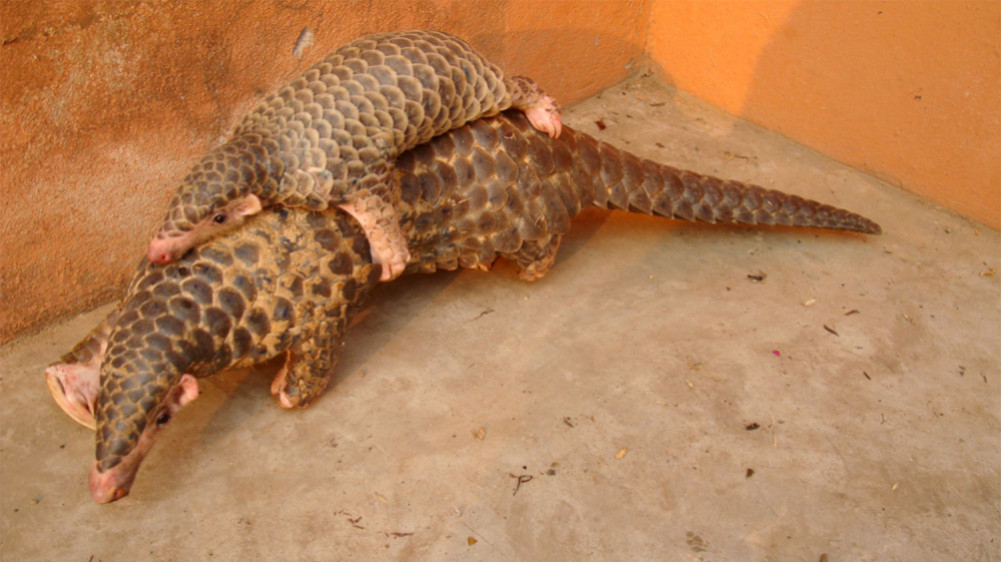
The lizard that has long been called the 'Chinese lizard' in Nepal has been confirmed to be a 'Himalayan lizard', not a Chinese one. As conclusions based only on samples from central Nepal are incomplete, a nationwide genetic study is essential to identify the true existence of the Chinese lizard.
We use Google Cloud Translation Services. Google requires we provide the following disclaimer relating to use of this service:
This service may contain translations powered by Google. Google disclaims all warranties related to the translations, expressed or implied, including any warranties of accuracy, reliability, and any implied warranties of merchantability, fitness for a particular purpose, and noninfringement.
Recently, Pokhara University Associate Professor Narayan Koju shared a post on his social media. He had shared an article related to genetics. Genetics was also interesting and new. After reading the article, my attention was drawn.
Why not, it was a scientific article published in the famous Nature journal Communication Biology. Koju himself was the main author of the research. Many researchers in the field of genetics were involved in it as co-authors.
The findings of the research are important for Nepal. The Chinese pangolin, known as the black salak in Nepal, will no longer be called that name. The study by researchers including Koju proved that the creature is a different species. That is, the species known as the Chinese salak in Nepal has been named 'Himalayan salak'. Its scientific name is 'Manis arita'.
Current status of salamanders in Nepal
There are two species of salamanders in Nepal, the black salamander and the copper salamander. The black salamander is listed as critically endangered on the IUCN Red List. A recently published study has confirmed that this salamander is a Himalayan salamander. The Indian pangolin, also known as the copper salamander, is listed as endangered.
Researchers had long suspected that there were two different genetic groups within the Chinese pangolin. But it took time to genetically confirm the three. The salamander found in Nepal, Bhutan, northeastern India and southern Tibet has become a separate species. The only salamander found in China and Southeast Asia is the true 'Chinese pangolin'.
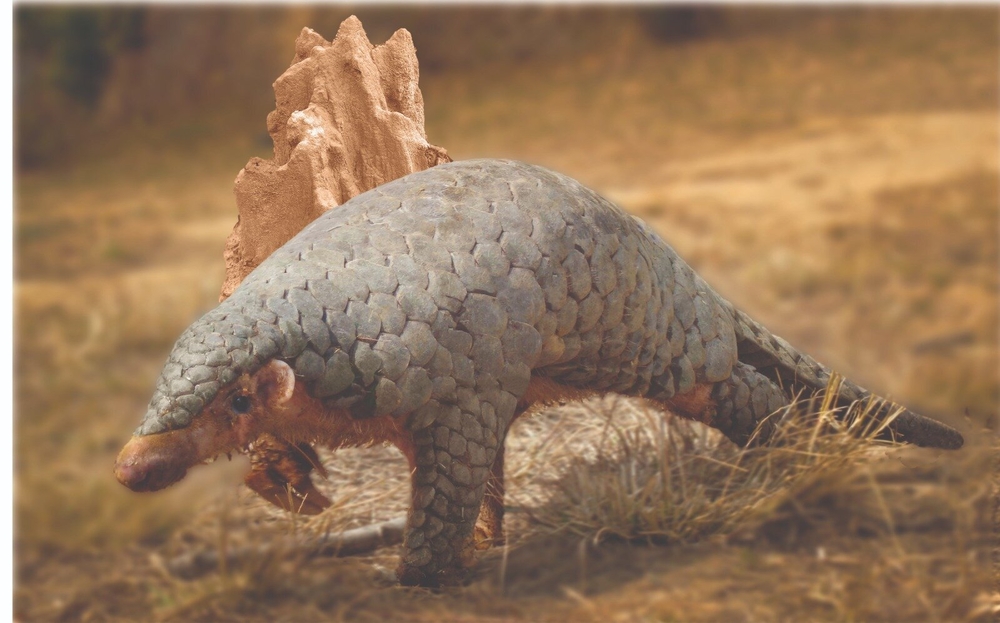
The salamander is a mammal with a clawed snout. This creature, which is also considered a nocturnal species, eats ants and wasps. Its long tongue plays a role in balancing nature by eating wasps and ants. It is especially hunted by poachers and people for its tusks.
This lizard was previously called Manish Arita. But later it was forgotten. The famous British researcher and diplomat Brian Hudson was the first to collect its specimen. While studying the nature, flora and fauna of Nepal, Hudson collected more than 9,000 specimens and sent them to Britain about 200 years ago.
The specimens he collected are still preserved in the Natural History Museum in London. Hudson collected the specimen of this lizard while he was living as the British Resident Representative in Kathmandu. He initially named the lizard Manis arita. But later researchers forgot this name. It was considered to be only a subspecies of the Chinese pangolin.
A specimen of the lizard collected by Hudson around 1836 remained in the London Museum. For about 200 years, this specimen has been designated BNHM 43.1.12.85.
Scientific confusion and clarification
About 200 years later, in 2025, a study was published. The lizard found in the Himalayan region was considered a completely new species. It was named 'Manis indo-burmanica'. This caused great debate and confusion among lizard researchers. Were the lizards found in Nepal and Myanmar really a new species? Or were they already the same species that Hudson had named in 1836?
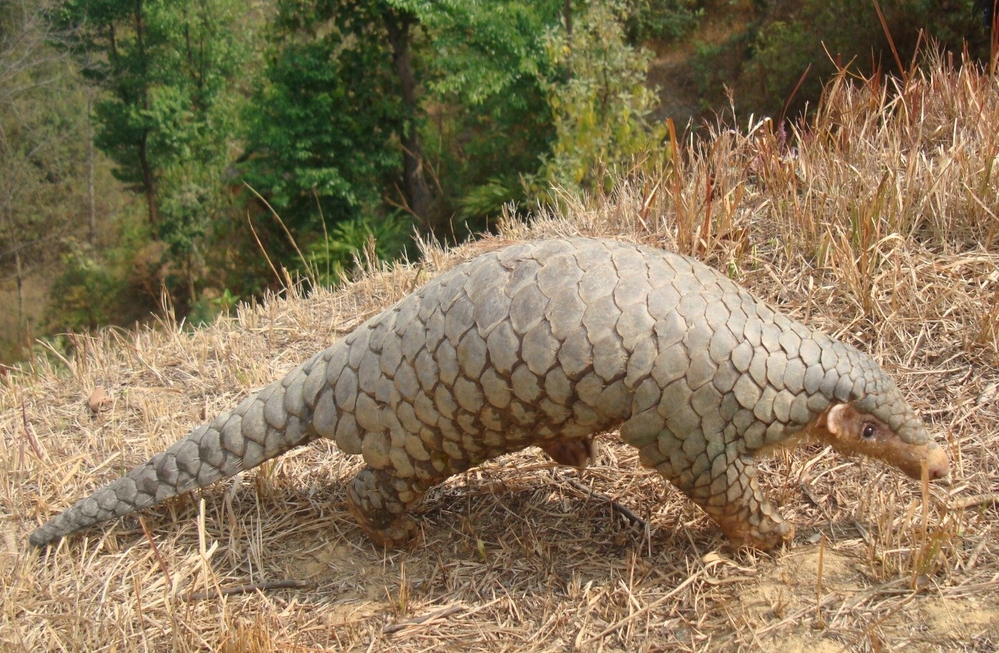
A year later, in 2026, research published in the journal Nature provided the answer. The new study has cleared up all the confusion. Genetic information was extracted from the old specimen collected by Hudson. The DNA of the specimen matched exactly with the present-day Himalayan salamander.
And, the rules of the International Code of Zoological Nomenclature (ICZN) were applied to it. This organization sets the rules to be followed while naming animals around the world. It also legally removes the confusion in the name. According to this rule, the ‘Law of Priority’ was applied. According to this rule, if two names belong to the same species, the old name is valid. Therefore, the name given by Hudson in 1836, Manish Arita, became official.
Two-century-old DNA reveals secrets
Scientists have used modern technology to reach their conclusions. DNA was extracted from bones and teeth of a 190-year-old lizard specimen collected by Hudson. This was a very difficult task. DNA in old specimens is often damaged.
The researchers used Next Generation Sequencing (NGS) technology to piece together the broken DNA to create a genetic map of the animal. And, genomics was done. On the other hand, blood, tissue and cell samples, including other samples, were collected from living lizards in Nepal and India.
The recently collected samples were compared with the old Hudson samples. And as a result, both samples were found to belong to the same genetic group. A museum specimen that was about two centuries old formed the basis of modern scientific decisions.
It can be a bit difficult to distinguish between the Himalayan salak and the black salak. Both these species look similar in general. But there are differences in their body shape, tail length, ear shape, skull, and skin color and shape. Research suggests that these differences can only be detected in the laboratory. Research suggests that it would be very difficult to distinguish the two species when someone works in the field. The new study suggests that these two groups diverged about 1.8 million years ago during evolution.
Both opportunities and challenges
Most salak species found in Nepal are recorded in community forests. Their presence is higher outside protected areas, mainly in community forests. More than 23,000 community forest user groups are currently active in the country. Some groups have also done exemplary work in salak conservation. Among them, recording the presence of salak, Basic poaching control units have also been formed in the community, such as patrolling and removing traps.
Our literature on this new species of lizard refers to the old Chinese pangolin. Forest action plans and policies are revised over time. Once it is proven that it is a new species, community members should be informed about it.
Currently, Schedule 1 of the National Parks and Wildlife Conservation Act, 2029, only mentions the copper lizard and the black lizard. This act is based on the scientific name of a specific species. If it is confirmed that the lizard found in Nepal is only the Himalayan lizard and not the Chinese lizard, then legal complications may arise. Traffickers and criminals can technically escape prosecution in court against a species not mentioned in the schedule of the act.
To resolve this, it seems necessary to amend Schedule 1 of the act and explicitly include Manish Arita. For a long-term solution, it would be appropriate to declare the entire salak genus protected by the Act. If this is done, even if any new species is found in the future, there will be no room for play in the law. There is relief in the CITES law. All salak species are already listed in Schedule 1. In addition, the common list of Manis spp. also includes all species of this genus.
With this study, the importance of forensic science has increased in Nepal. Nepal's forensic science has also sought to update. The current genetic data base of our country's laboratories is based on old classification.
New genetic reference data is now required to distinguish which species the seized salak skin or meat came from. Only if it is available will the evidence be strong in court and will also help in controlling poaching.
Need for new research
This study has drawn conclusions based mainly on samples from central Nepal. It shows that salak is found in The geography of Nepal, the situation of the other districts near the China border, does not clarify . Districts like Taplejung, Sankhuwasabha, Ilam and Panchthar are geographically close to China . A small population of the true Chinese pangolin may still remain in these areas . These districts are already known as wildlife smuggling routes . Therefore, further genetic research is needed .
The study has shown Nepal the way to test not only the presence of the salak but also its genetic identity . It seems that we need to collect the shells or other samples of the salak from our border districts and study .
If the true Chinese pangolin is found in eastern Nepal, Nepal will have to separate and protect both species . If not found, our policies and laws can be focused on a single species . However, it would be hasty to amend the schedule and finalize the national action plan without researching these issues . The re-identification of this species has opened up new possibilities for study and research in our country .