No indicators are prepared to measure various issues such as what is the purpose of the program? What are the goals? What are the achievements? What is the population that will benefit from it?
We use Google Cloud Translation Services. Google requires we provide the following disclaimer relating to use of this service:
This service may contain translations powered by Google. Google disclaims all warranties related to the translations, expressed or implied, including any warranties of accuracy, reliability, and any implied warranties of merchantability, fitness for a particular purpose, and noninfringement.
We are ashamed to be ourselves. We are small, and others will look down on us for something. This illusion hides the reality and makes everyone happy when it becomes formal. Development, whether it is of an individual or a country, is something that happens when everyone does good work. If we make a quick change and become hypocritical, forgetting our own status, it cannot achieve good results.
It is necessary to study our daily routine deeply once. Any body, even while running any kind of program, has increased unnecessary expenses on the issue of formalities. The proper utilization of time has decreased. The achievement of the program has not been achieved. The main reason for this is the same and similar formal framework for any program we run.
No indicators are prepared to measure various issues such as what is the purpose of the program? What is the goal? What is the achievement? How many people will benefit from it? On the other hand, when organizing a program, we have a weak mindset that the program is successful only if we carefully plan the details such as who will be the chairman, who will invite the chief guest, who will invite the guests and how many, who will be allowed to speak, how to inaugurate the program, what kind of badges and who will give them, who will give the welcome speech, what will be served for lunch, how to arrange the seating portfolio, who will conduct the program, who will give the vote of thanks, etc.
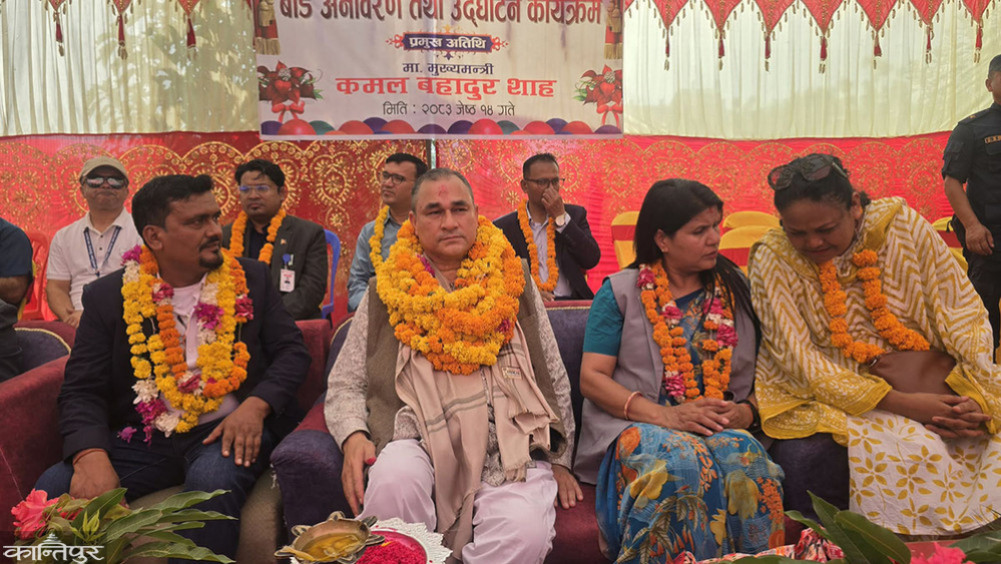
Even the programs organized by NGOs and INGOs tend to be very formal. It is customary to consider the program completed by providing good service and facilities in big hotels, writing a long report along with delicious food. There is a tendency to consider the achievement of any program to be the seating, tea ceremony, and closing. How long will we listen to one person's unreasonable long speech on the issue of completing the program and spending the budget? Isn't it too much to serve a meal that is not used anywhere in the name of welcoming the guest, to hang more than fifty meals around the neck of one person, and to put a seventy-kilogram garland around the neck of one person with the help of five or seven other people in the name of garlanding?
Respect and honor should be shown, but it should be done according to one's own and the country's capabilities. The government budget is the common purse of the common citizen. It is necessary to confirm regularity, thrift, efficiency, effectiveness and propriety while spending it. None of us have the right to spend extravagantly on the issue of enjoying formalities.
Before conducting every program, we should not have a formality blueprint but a blueprint of the program's purpose, goals, achievements, number of beneficiaries, support for sustainable development, social justice situation and so on, and conduct the program in a way that achieves results.
Even in programs that need to be a little formal, we can give a handkerchief instead of Nepali products that are used in food. We can welcome with a single bunch of flowers instead of a seventy-kilogram garland.
In the formal programs we currently hold, the chief guest does not arrive on time, says he is in a hurry to inaugurate the program after he arrives, and goes beyond the topic and makes long speeches that he knows and cares about, and then rushes to the next program. The one who is invited as the chief guest with respect, does not know anything about the relevant topic, and does not have time to be the chief guest and even stay for the opening session of the program, does not listen to what others say, accepts the welcome, carries a sign of love and claps - isn't this too much? Isn't it a violation of the dignity of being the chief guest? Therefore, the current confusion of formality should be gradually removed and reduced. The common citizen should be able to feel that he has achieved something according to the purpose and goal of the program.
Even the programs held by NGOs and INGOs are very formal. It is customary for people to consider the program as completed by providing good service, facilities in big hotels, writing a long report with delicious food. Where the participating members are also somewhat educated and from the affluent class, on the other hand, the group in whose name the program is being conducted is not informed if it has its own program, that is, they are not invited. Now is not the time to be confused in formal confusion. The practice of spending extra money on stage decoration in the name of hospitality must be stopped. Unnecessary rude seating arrangements, speech without achievement, and the destination of a program without development must now be eliminated.
Now, before conducting the program, let us prepare a clear indicator of its statistical achievement. Let us leave all the current long-winded formalities. Let us conduct the program centered on the program. In which, let us eliminate all unnecessary things like stage decoration, chief guest, seating arrangements. Let us collect the opinions, consultations, and discussions of the concerned experts in writing. Depending on the nature of the program, even an online program can be easily conducted. When the program is conducted by focusing on the objective of the program, then it is easy to achieve positive results.