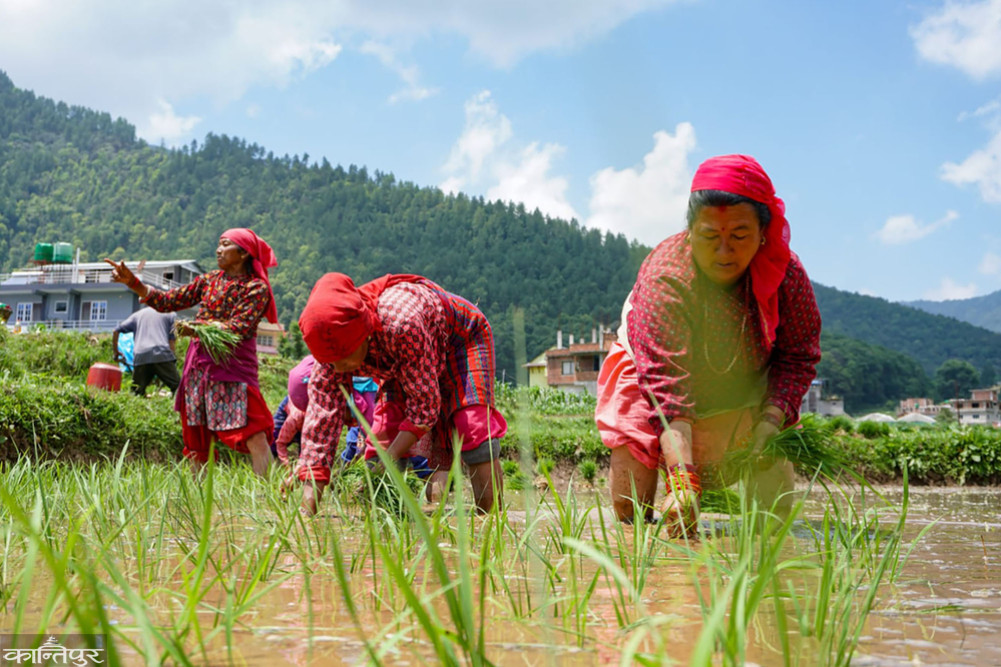
Any agricultural transformation model imported from outside, completely ignoring Nepal's unique terrain, hilly and mountainous ecology, and the uniqueness of Nepali society, can never be successful in Nepal.
We use Google Cloud Translation Services. Google requires we provide the following disclaimer relating to use of this service:
This service may contain translations powered by Google. Google disclaims all warranties related to the translations, expressed or implied, including any warranties of accuracy, reliability, and any implied warranties of merchantability, fitness for a particular purpose, and noninfringement.
The industrial development of the plains and the commercial agriculture carried out for it are continuously decreasing the carrying capacity of the earth. After the regenerative imbalance it has brought to the environment and biological cycle, it is having a fatal impact on the entire biological life of the earth and human life. Due to the rapid impact of climate change, increasing chemical pollution of the environment and soil, and the continuous decline in biodiversity, new, complex and unexpected challenges have been added to the world food system today.
These challenges are continuously destroying the fundamental basis of our lives and livelihoods from within. Rising temperatures, uncertainty in the water cycle, drought and the outbreak of new diseases in farming have become the daily fate of our ordinary farmers. Indigenous seeds and technology have been destroyed by external fertilizers, seeds, technology and knowledge. Now, along with the traditional aroma and taste of farming and food, our indigenous crops are on the verge of extinction and are confined to the pages of history.
Science and technology must be used to make our agricultural system advanced and up-to-date. But, what kind of technology and whose science? The current technology-driven science and technology that only increases profits is itself confused and confused within a narrow scope. Since agricultural science is only related to business rather than life and soil, today's educated and literate youth are afraid to do agricultural work because this subject has not been taught in schools since childhood. Therefore, it is too late to free the agricultural sector from a forced profession or labor done only by the poor and disadvantaged and transform it into a dignified social enterprise of self-respect.
The basic and lower-level tasks such as soil regeneration, environmental adaptation, nutrition management and indigenous seed improvement, which are urgently needed to increase local production and make Nepali land self-reliant, have been completely ignored. Instead of working on the actual ground and soil, state mechanisms, policy makers and stakeholders are only busy arranging paper points and reports on agricultural food system reform.
For the past few decades, Nepal has been adopting a completely imported agricultural model based on external resources, foreign subsidies and the world market without any periodic self-evaluation. This over-reliance on artificial chemical fertilizers, deadly pesticides, imported technology and sterile seeds has not only reduced the quantity of our production, but has also seriously damaged and ruined our fertile soil, biodiversity and the entire environment that has been there for generations. Such a huge loss and reality is before our eyes. However, if we continue to pursue agriculture on a destructive and chemical path, the Nepali agricultural sector is certain to go into a 'coma' from which it will never recover in the near future.
Science and technology must be used to make our agricultural system advanced and modern. But, what technology and whose science? The debate on agricultural transformation and self-reliance has been raised with great urgency in Nepal. Interest, research and ideological debate have begun within and outside the country about the path to the revival and upliftment of agriculture that Nepal should take. At the same time, various proposals and strategic program documents from various donor agencies and consultants are being prepared. However, some of these programs are entering Nepal, burdening the country with additional debt in the name of foreign aid. Currently, there is a fierce debate going on in the Nepali agricultural sector mainly between three ideological perspectives.
First, the perspective of market-oriented industrial agriculture believes that the current corporate and market-oriented industrial agriculture structure should be further expanded. The policy key to how Nepal's agriculture should be developed is indirectly in the hands of such commercial powers. Therefore, instead of building a 'self-reliant agriculture-based food system' while increasing the self-esteem and food sovereignty of Nepali farmers, who are forced to make a living by importing even basic food grains, they are selling a false and misleading dream of 'export-oriented industrial production and its market expansion'.
This vested interest group that promotes industrial agriculture has no concern for Nepal's soil, the health of its citizens, and the standard of living of its indigenous farmers. The recent government decision to spend nearly 70 percent of the total agricultural budget annually on purchasing chemical fertilizers is a direct result of this misguided vision of industrial and imported development. This path is certain to further destroy Nepal's remaining traditional and environmentally friendly agricultural system. In fact, this industrial agricultural pattern is also the main factor in the multifaceted crisis that the Nepali agricultural sector is facing today. This toxic agricultural path, entangled in the entanglement of the vested interests of a few limited powers, forces, and middlemen, has brought us to this dependent and miserable situation today.
The second approach is inspired by the idea of industrializing the current agriculture based on this industrial knowledge and technology. It is trying to show a colorful dream of agricultural transformation by applying a superficial and theoretical coating of 'organic agriculture' on the current ugly industrial agricultural structure.
Some of the policy and organizational reform debates raised by this perspective sound positive and attractive. However, its inner motives and intentions are ultimately plagued by the commercial mindset of pushing agriculture into the abyss of the multinational industrial market. They are working to block the real path of far-reaching and progressive fundamental reforms by showing the artificial burden of the so-called lip service to the people.
Most of the policies, strategies and roadmaps made in the name of agricultural reform today are blinding the same plain industrial modernity. By chanting the slogan of 'global food system reform', they are working to obstruct the path of a fundamental, farmer-oriented and dynamic agricultural transformation that is suitable for Nepal's soil. Saying 'this imported thinking is the real agricultural transformation' is sheer delusion. Such policies are making a serious mistake of understanding and presenting the transformation of our agriculture and food system as just a simple technical tool or ‘industrial agricultural upgrading’.
The third perspective believes that we should stand on the foundation of Nepal’s original, indigenous, traditional and nature-friendly farming system and transform it in a multidimensional and dynamic way. Our food journey from ‘ali to thali’ should actually be prepared on a historical foundation that is conducive to our local microclimate, specific geography and indigenous food identity. Merely changing external technology, slightly reducing pesticides or mechanization alone cannot assimilate the true essence and philosophy of organic agriculture. Any model of agricultural transformation imported from outside by completely ignoring Nepal’s original soil, hilly and mountainous ecology and the uniqueness of Nepali society can never be successful in Nepal.
The main thing we need to understand seriously is that this is not just a moment to prepare and put away a report on a general administrative action plan or technical plan for agriculture, but rather a historical moment to bring about a dynamic, radical and structural change in the entire agriculture and food system. Overall, Nepal's unique geo-ecological context, its rich biodiversity and diverse food culture demand a fundamental-revolutionary change in the current dependent food system. Organic or natural agriculture cannot and should not be forcibly molded here into a prepared format prepared in a closed room or imported from other developed countries.
If we have an honest thought of increasing the country's total production by making the ali and kanla strong and productive, there is a huge, historic, golden opportunity within the barren land of Nepal. While many of Nepal's arable lands have remained barren due to long-term uncultivated lands, those lands have automatically been freed from the vicious cycle of chemical pollution and deadly pesticides.
In other words, those lands have now returned to their natural and sacred state, and are completely safe for the production of clean, non-toxic food. If the state and citizens make a firm determination that ‘we will no longer apply any artificial chemicals and pesticides to almost one-third of the country’s barren land’, then no one can stop the journey of organic agriculture in Nepal. A very serious, egotistical and complicated question is before us today – can indigenous and clean food be brought directly to people’s plates by improving the ali-kanla without increasing local production?
Today’s leadership should have a clear, fearless and honest answer to this question. Which path of agriculture will our local, provincial and federal governments and stakeholders choose now? That is why the food security of our future society, the health of citizens and the national future of Nepal will be determined. In this sense, the destiny and future of Nepali society's entire journey from the cradle to the plate awaits the future policies, the strong will of the political leadership, and the historic decisions they will take.