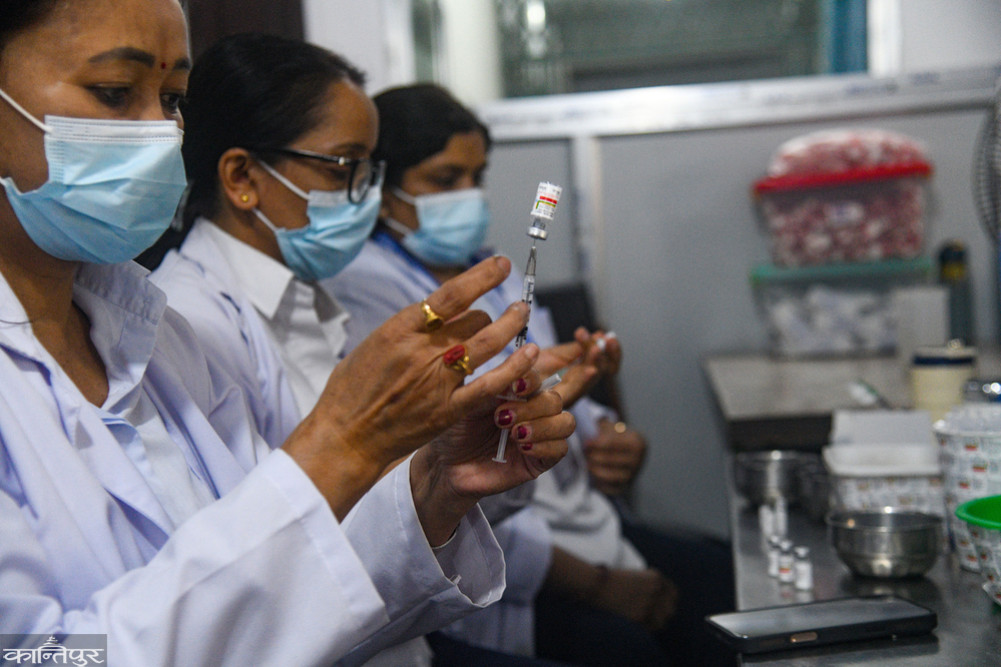
The problem of rabies vaccine started last November. However, the shortage is worsening as the tender process for vaccine procurement has not started. The current shortage will end after some time. However, this is a lesson.
We use Google Cloud Translation Services. Google requires we provide the following disclaimer relating to use of this service:
This service may contain translations powered by Google. Google disclaims all warranties related to the translations, expressed or implied, including any warranties of accuracy, reliability, and any implied warranties of merchantability, fitness for a particular purpose, and noninfringement.
Even if bitten by a rabies-infected animal, the chance of saving a person's life is '100 percent' if they are fully vaccinated on time, but the chance of death is also '100 percent' if they are not vaccinated. Therefore, rabies infection is considered a fatal disease in one sense, and an easily preventable disease in another sense. The vaccine against rabies plays a role in between these two possibilities. Currently, there is a shortage of this vaccine in Nepal.
There is a rush of people to get vaccinated at the government hospital in the capital, but it is not certain whether they will get the vaccine or not. The situation is similar in large hospitals in various districts. People are panicking because it is almost certain that they will die if they do not get vaccinated. Or, they are forced to buy the vaccine from private pharmacies by paying expensive fees. The government should address the fear that has arisen across the country. Alternatives should be used to prevent a shortage of vaccines.
Rabies is a deadly viral disease. The disease is spread through the saliva of animals such as dogs and foxes infected with rabies. In Nepal, almost all cases of rabies are caused by dog bites. In Nepal, more than 60,000 people are vaccinated against rabies annually from government health institutions alone, while thousands more receive treatment in private hospitals. It is estimated that more than 100 people die from rabies every year in Nepal. The data shows that there is still no awareness or facilities for vaccination in people who are bitten by animals like dogs and foxes.
On the other hand, there is also a lack of easy access to vaccines, which is also confirmed by the problem of vaccine shortages currently seen across the country. However, as per the World Health Organization's goal, Nepal has committed to reducing rabies from dog bites to zero by 2030. However, the data from the Ministry of Health shows that the number of dog bites is increasing every year. Which shows that the challenge remains to fulfill the commitment.
In a situation where it is inconvenient to get the vaccine for free from a government hospital, some may not be able to afford to pay a high fee to get vaccinated from a private one. This puts their lives at risk. More than 500 people who have been bitten by dogs come for vaccination every day at the Shukraraj Tropical and Infectious Diseases Hospital in Teku, Kathmandu. According to the hospital, this number has increased further as people have started coming from Sindhupalchowk, Dhading, Kavrepalanchowk, Nuwakot, Rasuwa and other districts. However, hospital officials have said that the amount of vaccine in stock is decreasing.
This hospital used to provide rabies vaccination services around the clock, but as the shortage increased, the second dose of the vaccine has been stopped from the emergency room. Similarly, Lumbini Provincial Hospital in Butwal, which receives up to 100 dog-bite patients daily, has been short of rabies vaccine for three months. At Narayani Hospital in Birgunj, 20 to 30 people come for rabies vaccination daily. The hospital has been turning them away empty-handed for a month. A similar situation is prevailing across the country.
The problem with rabies vaccine started last November. However, the shortage is worsening as the tender process for the purchase of vaccines has not started. The current shortage will end after some time. However, this is a lesson. To prevent the shortage of essential medicines or vaccines from being met, a balance must be maintained between demand and supply. For that, detailed analysis and projections on these two aspects are indispensable. The government has failed here. This is not only the case of rabies vaccination, but also applies to other medicines.
Rabies infection is especially prevalent among the lower classes of society or the working class working in open areas. Since they have to move around at all times for work, they are especially at risk of being bitten by street dogs. Just as the chances of being bitten are high, the chances of getting vaccinated are also low for this group. Because the journey to the government hospital where free vaccination is available may not be easy for everyone. If a person is bitten by a dog in a remote area, it is difficult to reach the hospital and get vaccinated with different doses.
Secondly, in a situation where it is inconvenient to get free vaccination from government hospitals, some may not have the financial capacity to get vaccinated by paying expensive fees from private ones. This puts their lives at risk. This is not just a Nepali reference, but global data also shows the same. According to WHO, one person dies of rabies every 9 minutes worldwide, most of whom are children and the underprivileged. The gist of the above references is that the government should ensure that rabies vaccination is free and easily available.
Due to the increasing shortage of rabies vaccination, it is necessary to be especially vigilant in some aspects. First, one should be personally vigilant to avoid bites from animals like dogs or foxes. Although such bites are accidental for many. Dog bites in homes are usually caused by negligence. Therefore, one should avoid them as much as possible and avoid contact with such animals.
Dogs in public places can be vaccinated by the government or related organizations and dogs in homes can be vaccinated individually, which will reduce the risk. Similarly, if bitten by animals like dogs and foxes, first aid should be provided and the full dose of rabies vaccine should be administered as soon as possible. The symptoms of rabies infection may not be immediately apparent, which is why many people neglect to get vaccinated. By the time symptoms appear, it is already too late.
Therefore, special precautions must be taken in this regard. Second, the government's active participation in the supply of life-saving rabies vaccines is essential. The government can use alternatives or establish a method that can be provided quickly if it wants. The government is expected to take similar steps at this time.