The Rashtriya Swayamsevak Sangh (RSS) has been calling itself the 'party that develops the country'. But what is that 'development of the country'? For whom will the country be developed? And who will benefit from the development first, as in the past?
We use Google Cloud Translation Services. Google requires we provide the following disclaimer relating to use of this service:
This service may contain translations powered by Google. Google disclaims all warranties related to the translations, expressed or implied, including any warranties of accuracy, reliability, and any implied warranties of merchantability, fitness for a particular purpose, and noninfringement.
The country has become a party of the Rashtriya Swayamsevak Sangh (RSS). The votes that the RSS has received today are not only the result of the good work done by the leaders of that party. The votes have shifted towards the RSS due to the mismatch between the thinking, speech and working style of the big parties that have been in power and around power for years. On the one hand, the old parties were inactive, the old parties had their old faces. On the other hand, the RSS had a new style, there were new candidates. Amidst this reality, voters were drawn to the new.
The votes that the RSS has received were once with the Congress in a multi-party system, sometimes with the UML, sometimes with the Maoists. It is not that they did nothing, but they could not give results according to the demands of the time and need. Even though the parties changed in the party system, the group leading the party never changed. And, who was in the leadership? To understand that, we need to understand the software of society. That is, the software of religion. Those who created the religious system, the governance system and policies, also created the policy makers. The result of that is the caste system in society. They created a style where the caste system would not weaken. And they strengthened the social system of who would be honored and who would be humiliated. Dalits, women and sexual minorities are still suffering from its effects.
The hatred expressed by the new and alternative parties towards the old leaders has created a social commentary saying ‘others are bad, therefore we are good’. Look at the Congress, Maoists or UML - everyone has a caste system within them. They strengthened the rule of the caste system, due to which a section of society always felt neglected and oppressed. They saw the promises, behavior and results given by the leaders of the old parties (unemployment, discrimination, Nepo Baby, extreme state of nepotism-graceism in the country, corruption scandals, abuse of authority) and became dissatisfied. Anger grew. Such anger also spread on social media. Gradually, this thing was also manifested in the Gen-G rebellion. Against this background, a new party, the Rashtriya Swayamsevak Sangh (RSS). Now, the hatred expressed by the so-called new and alternative parties towards the old leaders has created a social commentary that says, 'Others are bad, so we are the good ones now'.
Ujjwal Thapa, the founding leader of the Bibeksheel Nepali Dal, had charted the path of alternative politics. He had clear ideas on some issues – why do we do politics? How do we do it? What results should we bring? He had some political values. That was – not to win no matter what? To win by honest and healthy competition. To be good by one’s own behavior, to be grateful for the good things done by others. He was grateful for those who lost their lives for democracy. But, do the current so-called alternative parties have the knowledge of the political values shown by Thapa?
Whenever Madhesh is discriminated against, he has added a new word that creates a sense of human compassion and belonging – ‘samanubhuti’, breaking the vision of compassion that his friends from the hills see towards Madhesh. Now, not sympathy, but empathy is needed. Today's Balendra Shah and Ravi Lamichhane are the effects of that movement.
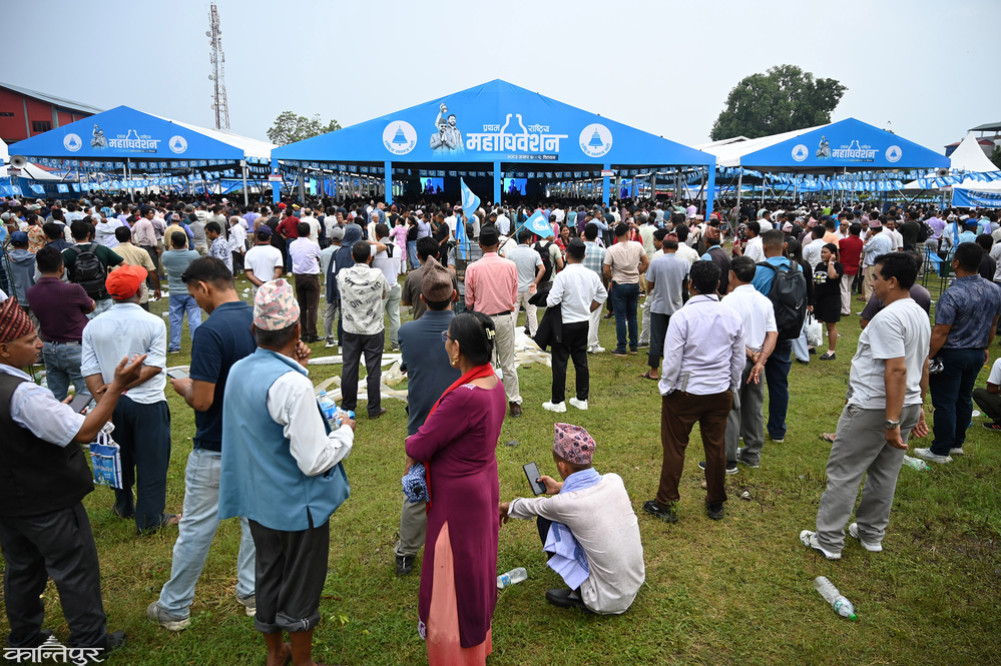
One of the messages given by the Rashtriya Swayamsevak Sangh (RSS) general convention is that people should not be divided into factions in their villages, but should come together for a common purpose, and become each other's companions. All the parties in the country are open to building a country. If we look at their dissatisfaction, we can see that somewhere or other they differ in three things. To understand these three things, we need to understand the concept of the 'Golden Circle' of the famous entrepreneur and American writer Simon Sinek. It has three circles, in which, going from the inside out, the first circle is - Why? The second is - How? And, the third is - What? The main meaning of the first circle is, why do we do politics? And, to be clear about it. The meaning of the second circle is - What are the demands and strategies for achieving what we do? What do we do to achieve it and how much price should we pay for it? Who has to lose what? How long does it take? The third circle means – what will be praised? What is the checklist for praise? Who will be satisfied? What will be the indicator of success? What will we not do in the process of achieving these results? What will be the minimum code of conduct?
Do the first, second and third things appear in the speeches, actions and thoughts of the leaders of the Rashtriya Swayamsevak Sangh (RSS) or not? Clarity is needed on this matter. In our country, policies and programs based on leaders, not on policies, dominate. The country's statistics do not work on the indicators that tell us to work and pour money into, but on the indicators that make us 'popular', and instead create a situation where we pour money into them.
If the practice of finding trust in the words of the so-called new leaders is not practiced, the RSS will also end up on the same path that the old parties took over time. The RSS has apologized to the Dalits, but how will that be seen in practice? Will the RSS implement that in practice? How will the ongoing general convention of the Rashtriya Swayamsevak Sangh (RSS) shed light on this issue? It remains to be seen. Because what the RSS has been saying for Dalits does not match its party and organizational behavior.
The same question still remains. Who are the ones running the state? Who are the ones doing business? And who are in the place of making laws? Has the style of power and resources of the state not changed. Has the legal essence of the proportional list of MPs been followed? And does the ruling RSS have an answer to this?
In the past, it is not that people from the Dalit community were not ministers. Nor did they not reach the center of the state. However, they were only in name. Their representation was only in name. The situation is almost the same at the local level. Currently, the RSS is in the process of building an organization. Will the same mistake that happened in the past be repeated in the RSS? This is the concern. Because the RSS also did not seem to have tried to make arrangements for the implementation of the practice of proportional inclusion within the party.
Is the Rashtriya Swayamsevak Sangh (RSS) different from previous parties on the issue of Dalits and inclusion? Is it honest with its promises? Has the Rashtriya Swayamsevak Sangh (RSS) shown goodwill in accepting leadership not only for Dalits but also for sexual minorities and Muslim women? This question needs to be answered.
The Rashtriya Swayamsevak Sangh (RSS) should be able to explain – is it a rightist party or a leftist or a centrist? It has been calling itself a party that will develop the country. But, what is the ‘development of the country’ it means? For whom will the development of the country be done? And like in the past, who will get the benefits of that development first? The Rashtriya Swayamsevak Sangh (RSS) has said that it will develop, but what will it develop? What are its development priorities? It must answer such questions. So that it is known, how will the marginalized and minority communities get the benefits of the development that the Rashtriya Swayamsevak Sangh (RSS) does? When will they get it?
Does the Rashtriya Swayamsevak Sangh (RSS) do development through hardware or software? It has not said that. Development through infrastructure or through the awakening of social consciousness? It has not made that clear either. A large population in this country is still not able to be human due to the caste system. They are living in fear of untouchability. Hasn't such a social practice brought shame on our society before the world?
The Rashtriya Swayamsevak Sangh (RSS) should not sell the idea of 'I will build the country alone' or 'only the RSSSP can build the country'. Accept the existence of others so that everyone feels a sense of belonging in the development of the country.