The campaign against corruption is not just an administrative process of filing cases. It is a national campaign directly related to democracy, the rule of law, and public trust.
We use Google Cloud Translation Services. Google requires we provide the following disclaimer relating to use of this service:
This service may contain translations powered by Google. Google disclaims all warranties related to the translations, expressed or implied, including any warranties of accuracy, reliability, and any implied warranties of merchantability, fitness for a particular purpose, and noninfringement.
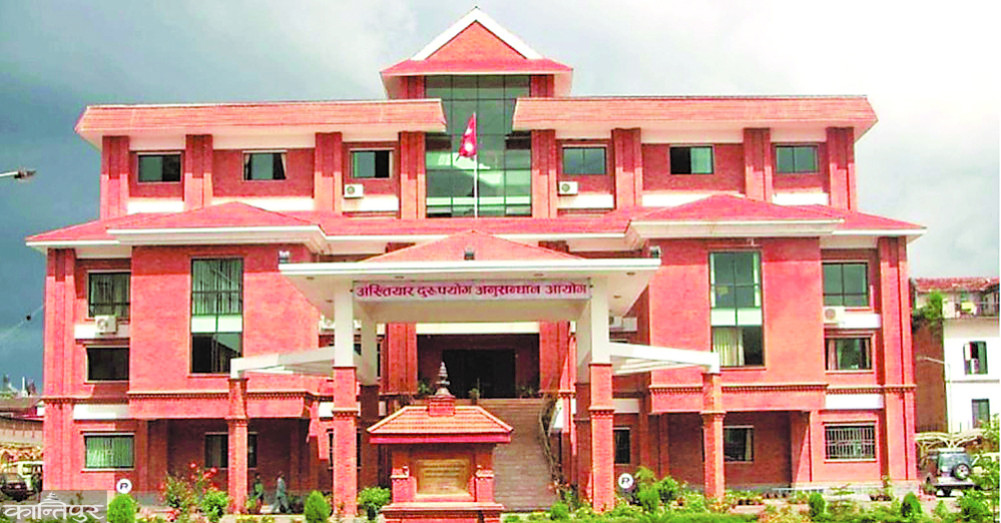
The campaign against corruption is at the center of political debate, public interest, and legal debate. State agencies are presenting corruption control as a key pillar of establishing good governance. The Commission for the Investigation of Abuse of Authority is regularly showing its proactivity through investigations, arrests, filing of cases, and public reports. But despite this, a serious question remains in the minds of the common citizen - is the campaign against corruption really being conducted to establish the rule of law and public accountability? Or, has it become only a means of managing political pressure, alleviating public anger, and balancing power?
The Prevention of Corruption Act, 2059, has made both the act of accepting and giving bribes a punishable offense. Section 2(b) of the Act defines 'bribe' as any undue advantage in cash, kind, or any other form. In fact, bribery is only one form of corruption; not all corruption is bribery. Corruption also includes acts such as illegal acquisition of wealth, embezzlement of public property, use of forged documents, unlawful gain or loss, and abuse of authority. According to Section 3 of the Commission for the Investigation of Abuse of Authority Act, 2048, abuse of authority is considered to be abuse of authority by a person holding a public office, acting beyond the limits of his authority, not fulfilling his duties, or acting against the national interest.
Some important precedents on corruption in Nepal's judicial history have developed legal principles. The annual report of the Commission shows that corruption-related complaints have increased significantly in the last three fiscal years. In the fiscal year 2079/80, 28,067 complaints were registered with the Commission. During that period, 162 corruption cases were filed in the Special Court. In the fiscal year 2080/81, the number of complaints increased to 36,186. During the same period, the number of cases filed in the Special Court reached 201. However, in the fiscal year 2081/82, although the number of complaints increased again to 37,026, the number of cases filed seems to have decreased to 137. This presents an interesting paradox. Complaints are increasing, citizen participation is increasing, but prosecutions are decreasing. If corruption control is being effective, complaints should decrease, and if corruption is increasing, prosecutions should also increase proportionally. This imbalance has created a basis for questioning the actual effectiveness of the anti-corruption campaign.
In the fiscal year 2080/81, the CIAA filed 201 cases, making more than 1,545 people defendants and claiming about Rs 8.35 billion in damages. But in the fiscal year 2081/82, the number of defendants decreased to 753 and the amount of damages also fell to Rs 5.97 billion. Of the 137 cases filed that year, 37 were bribery, 36 were illegal gain or loss, 27 were fake educational certificates, 23 were of public property loss, 8 were of illegal acquisition of wealth, 2 were of money laundering and 4 were of other nature. This indicates that the nature of corruption is becoming diverse and complex. In particular, the presence of cases related to fake educational certificates and illegal acquisition of wealth is a matter of indicating a crisis in administrative ethics. If the campaign is limited to displaying statistics only, then increasing the number of cases may seem like an achievement, but the real achievement is reducing the amount of corruption, increasing trust in public institutions and ensuring final punishment for the guilty.
Merely filing a case is not enough, conviction and execution of the sentence are necessary. According to the report of the Authority, in the fiscal year 2080/81, the prosecution was successful in about 65.67 percent of the decisions made by the special court. But in 2081/82, this rate seems to have decreased to 52.67 percent. However, the conviction rate among newly decided cases is 67.23 percent. These figures show the gap between prosecution and judicial conclusion. If the investigation is weak, the case will not survive in court. If there is a mistake in the collection of evidence, the guilty may escape. This is why the Authority has had to file hundreds of appeals in the Supreme Court. The success of corruption control should not be measured only in guerrilla-style action, but in the final judicial outcome.
Some important precedents on corruption in Nepal's judicial history have developed legal principles. The case of 'Chiranjivi Wagle v. Commission for the Investigation of Abuse of Authority' strengthened the principle that assets whose legitimate source of income cannot be confirmed are considered corrupt assets. The case of 'Khum Bahadur Khadka v. Government of Nepal' clarified the right of the state to investigate and prosecute the issue of unnatural wealth. In ‘Ramji Prasad Rauniyar v. Government of Nepal’, misuse of public funds through false billing was considered corruption. The ‘Government of Nepal v. Kedar Chandra Khanal’ case explained the concept of misuse of authority in detail. These precedents have strengthened the legal framework against corruption. But the question remains – why has the expected success not been achieved in controlling corruption despite the strong legal principles?
The answer must be sought in Nepal’s political economy. Corruption is not just a result of personal greed, but is linked to the structure of power, patronage, access and impunity. In Nepal, the campaign against corruption often tends to intensify after high-profile incidents and slow down with the passage of time. In some cases, even when investigations are initiated against high-ranking individuals, it is difficult to reach a final conclusion. This strengthens the accusation of selective justice. Although the Authority claims that investigations are being conducted against individuals at all levels, public opinion is still not satisfied. There is constant criticism that the expected rigor has not been seen, especially in cases related to policy-level corruption, large public procurement, infrastructure projects, cooperatives, revenue and natural resources. For the anti-corruption campaign to be seen as fair, it is necessary to rise above political power, administrative access and economic influence and apply the law equally.
The anti-corruption campaign is not just an administrative process of filing cases. It is a national campaign directly related to democracy, the rule of law and public trust. The data for the fiscal years 2079/80, 2080/81 and 2081/82 clearly show the increase in complaints, the fluctuation of prosecutions, the change in the conviction rate and the changing nature of corruption. This confirms that the challenge of controlling corruption in Nepal is still serious. If the aim of the campaign is only to present statistics, show a few high-profile arrests and convey a political message, it cannot be called successful. Success will only be proven when the actual rate of corruption decreases, trust in public institutions increases, illegal assets are confiscated, final punishment for the guilty is ensured, and the law is applied equally to all.