The need of the day is to establish a prosperous and just society by developing the democratic system established through the people's sacrificial struggle and historic people's movement into a more advanced, liberal, and inclusive system.
We use Google Cloud Translation Services. Google requires we provide the following disclaimer relating to use of this service:
This service may contain translations powered by Google. Google disclaims all warranties related to the translations, expressed or implied, including any warranties of accuracy, reliability, and any implied warranties of merchantability, fitness for a particular purpose, and noninfringement.
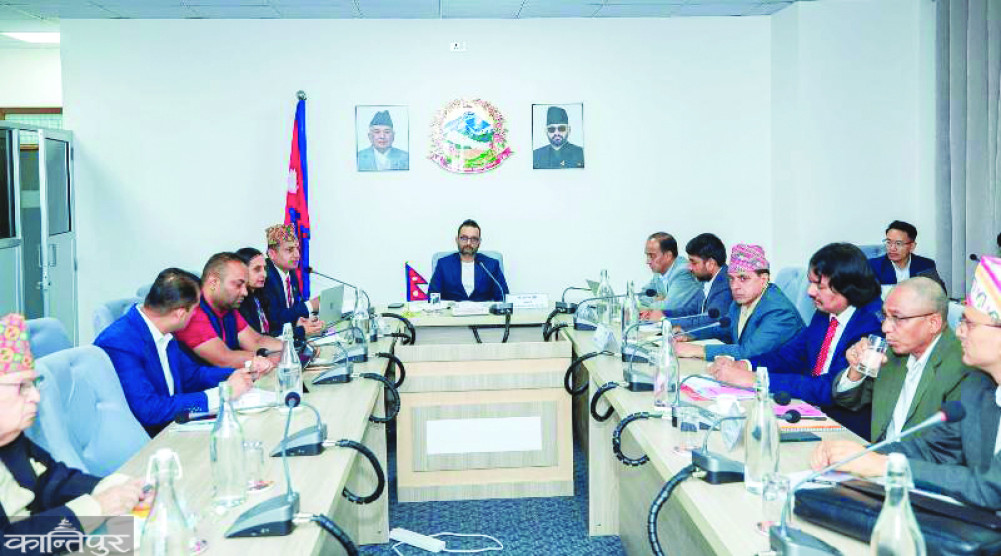
The government has started a debate on the agenda after forming a task force under the coordination of Prime Minister's advisor Asim Shah with the aim of amending the constitution made through the historic Constituent Assembly. The government has made public some agendas regarding the amendment, although preliminary and brief, but it has created a serious wave in political circles. It is natural for discussions and debates to take place since the constitution has been in force for a decade and almost all the parties represented in the parliament are in favor of the amendment. The main opposition party, the Nepali Congress, which played an important role in the constitution-making process, has also started its homework by forming a Constitution Amendment Study and Suggestion Committee under the coordination of Vice President Pushpa Bhusal. However, the Nepali Congress has not participated in the government task force so far, raising questions about its jurisdiction and role. UML, NCP and other parties have not yet made their concrete views public.
According to the government proposal, a directly elected executive, a fully proportional parliament, no MPs as ministers, restructuring of the federal system, and non-partisan local bodies are the main priorities of the government. The government seems to have set the agenda according to the RSP's pledge. Such a proposal has created serious suspicions in the background of Prime Minister Balendra Shah not addressing the first parliament session held after the elections and not even participating in the debate on the government's policies and programs and ignoring the parliament. What is the purpose of amending the constitution of a government with a two-thirds majority and the RSP? What is the process? What are the agendas of the Congress, UML and other parties? Is now the right time to amend? Questions have been raised. It is necessary to objectively analyze these questions and reach a concrete conclusion.
Advanced and liberal democratic system
The constitution is democratic, liberal, pluralistic, federal and rights-friendly. The constitution has made the people truly sovereign and has developed Nepal as a nation-state. The constitution of Nepal is considered one of the most popular in the world in terms of democratic, liberal and rights-friendly principles. But some political parties, as well as women, Madhesi, tribal, Dalit, minority and marginalized communities, have some complaints and disagreements with the constitution. That is why they have been raising their voices to address their demands by amending the constitution. After the Gen-G rebellion, some Gen-G communities have also been making such demands. Since the constitution is a dynamic and changing document, it is a natural process to amend, modify and update it from time to time according to the feelings of the people. This is a more natural and regular process in a democratic system. Therefore, it is necessary to fully assimilate the democratic and pluralistic principles of the constitution and develop it into a common and prosperous document that the entire people will take ownership and ownership of through its liberal and progressive amendments.
The important question today is how democracy can be transformed into a functional, result-oriented and accountable system. Citizen supremacy, civil rights, separation of powers, independent judiciary, periodic elections, freedom of expression and press, rule of law, human rights are universal principles of democracy. These principles are the prerequisites of any democratic system. Developing the democratic system established through the sacrificial struggle of the people and the historical people's movement into a more advanced, liberal and inclusive system and establishing a prosperous and just society is the need of the day. But the audacity to narrow the democratic system and the rights-friendly constitution under any pretext or name is not acceptable to the people. If such a conspiracy is made, the people will definitely fight for democracy and their rights.
In a multi-religious, multi-ethnic, multicultural, and multilingual country like Nepal, a mixed system is appropriate. The proportional system is not a problem as portrayed by some parties. Advanced and Responsible Parliamentary System
After the Gen-G movement, the debate on the form of governance has resumed. Now, the government and the Rashtriya Swayamsevak Sangh (RSS) as well as some parties and some Gen-G communities have been advocating for a directly elected executive, calling the parliamentary system a failure. There was extensive debate and controversy about the form of governance in the first and second Constituent Assembly. Finally, an agreement was reached between the parties on a reformed parliamentary system and a mixed electoral system. Now, after the government's proposal, has the parliamentary system failed and created a situation where a directly elected executive system should be followed? The question has been raised.
The parliamentary system is an indirect democracy and representative system, while the presidential system is a direct and participatory system. In a parliamentary system, the people elect the MPs and the parliament elects the prime minister. In a parliamentary system, the prime minister is accountable to the people through the parliament. Only in this system, which embodies the values and norms of parliamentary supremacy, is the parliament truly sovereign and accountable to the people. However, parties, groups, and individuals in favor of the directly elected executive system have been arguing that the parliamentary system is the main source of political instability and crisis. Instead of such a failed and unstable system, it is necessary to adopt a directly elected system for political stability. Only a directly elected system can run the state responsibly towards the people and also guarantee development, good governance and delivery. The people are also found to be meaningfully hypnotized by such proposals and conclusions.
But when analyzed based on national and international experiments and results, the parliamentary system is the most suitable for Nepal. The existing problems, distortions and inconsistencies of the parliamentary system can be resolved by amending the constitution and this system can be made more sophisticated, responsible and effective. Adopting another authoritarian and totalitarian system in the name of political stability to escape the cycle of political instability is like the proverb 'a fish escaping from the frying pan falls into the sea'. When analyzed based on the irresponsible and authoritarian style of Prime Minister Shah for about three months, the inevitability of the parliamentary system has been further confirmed. Let's imagine, what would the political situation be like if there was a directly elected executive system now?
What kind of electoral system?
The electoral system is another controversial and complex agenda. The constitution promulgated in 2072 followed a mixed electoral system with direct and proportional representation. However, in the two elections held in 2074 and 2079, no party from the union to the provinces got a majority, which led to political instability. The province is still in a vicious cycle of political instability with frequent changes of government, unholy alliances and hateful games between parties for power and authority, and the production of Chief Ministers and ministers. Therefore, concluding that the electoral system itself is a source of instability, there has been a strong voice from political parties to the public level to amend the constitution and follow a system that guarantees a stable government. However, the reality of forming a stable government with a majority through this system has been confirmed after the Rashtriya Swayamsevak Sangh (RSS) secured a landslide majority in the elections held on Falgun 21. Therefore, no electoral system is and cannot be an absolute source of stability or instability.
Formal and informal proposals such as making the House of Representatives directly elected and the National Assembly proportional, increasing the threshold by reducing the number of proportional representatives, reducing the number of federal and provincial ministries and MPs have been debated. The government has now proposed a fully proportional system. But another reality is that the history of political stability not being achieved even when one party wins a majority is alive. In the 2048 and 2056 elections, the Congress had a clear majority. But not only was there no stable government, but both times the parliament was dissolved and the game of instability started. Similarly, in 2074, the then NCP had a majority. But due to internal disputes and power struggles, on the one hand, the House of Representatives was dissolved twice, and on the other hand, the NCP itself was divided. Therefore, even though the Congress and the NCP (formed from the unity of the UML and the Maoists) both got a majority, they failed to maintain stability.
A mixed system is appropriate in a multi-religious, multi-ethnic, multi-cultural, multilingual country like Nepal. The proportional system is not a problem as portrayed by some parties. If an alternative to the proportional system, which is considered the basic pillar of the constitution, is sought, another complex dispute may arise. Therefore, the current solution is to review the proportional system and balance both by providing political stability and proportional representation. By addressing the anomalies seen in the course of practice, the proportional and inclusive system should be further expanded, not narrowed, in accordance with the values and beliefs of the constitution and the spirit of the constitution. Therefore, it would be appropriate to amend it not only in proportional representation, but also in the direct elections of women, Madhesi, indigenous peoples, Dalits, minorities and marginalized communities in the House of Representatives and the Provincial Assemblies to ensure more representation.
A functional and people-oriented federal system
Since the constitution and the governance system have been a laboratory for a long time, there has been a controversial debate about the need and justification of federalism since the date of its announcement. Although it was announced in 2065, the federal system was implemented only after the constitution was promulgated in 2072. But federalism has become so controversial and unpopular that federalism has led to negative comments about the democratic republic and the constitution. Federalism has been called an 'unwanted baby' and a system imposed by foreigners, and there has been intense criticism and widespread negative comments in public discourse, social media, and digital media. In the context of Nepal, federalism is a process of restructuring a unitary and centralized state. But given the public opinion that has been created, there is no justification for the federal system and provinces in the status quo. Such a federal system must deliver, otherwise it will be abolished.
Is the abolition of federalism a solution? Not in the opinion of the columnist. The alternative to federalism is a more advanced and people-oriented federalism. But the alternative to federalism is not and cannot be a unitary and centralized system. Power should be vested in the lower-level government and the people through the federal system. If the government moves towards abolishing federalism, it will not only create unwanted political complications, but may also lead to unimaginable political conflicts. But another harsh truth is that federalism has no future in the status quo. The principle of federalism should be assimilated and transformed into a system with more rights and resources, people-oriented and action-oriented. The provincial structure should be further improved and strengthened. To make federalism successful and the provincial structure effective, the constitutionally granted powers should be vested without delay. This is the letter and spirit of the constitution, this is also the appropriate model for Nepal. It is a democratic and people-oriented system that not only empowers the people in political, economic and natural resources, but also ensures social, cultural and linguistic rights and identity. The fundamental principle and main objective of federalism is to ensure the direct participation of the people in all levels of government and make the government accountable. स्वशासन तथा साझा शासनको अवधारणाबाट अभिप्रेरित संघीयता सबै तहका सरकारबीच समन्वय, सहअस्तित्व र सहकार्य गर्ने प्रणाली हो ।
सबै जनताको पहिचान, पहुँच र प्रतिनिधित्व सुनिश्चित गर्ने उदार मूल्य–मान्यता संघीयताले आत्मसात् गरेको हुन्छ । जनताको सहभागिता, प्राकृतिक साधन–स्रोतमाथिको अधिकार तथा सांस्कृतिक–भाषिक पहिचानका दृष्टिले श्रेष्ठ मानिन्छ । तर विगतमा कुनै पनि सरकारले संघीयता पूर्ण रूपमा लागू गर्न इमान्दार प्रयास गरेनन् । प्रदेश संरचना नयाँ भएका कारणले प्रदेशसभा पनि प्रभावकारी भएनन् र प्रदेश सरकारले पनि डेलिभरी गर्न सकेनन् । जनभावनाअनुसार डेलिभरी गरेर प्रदेशको औचित्य पुष्टि गर्न पार्टी र प्रदेश सरकारले पाएको अवसर गुमाए ।
दलीयकरण अन्त्य
राज्य संयन्त्रको अवाञ्छित राजनीतीकरण र विकृत दलीयकरण गरिएको कारणले लोकतान्त्रिक प्रणाली नै बदनाम र अलोकप्रिय भएको सत्य हो । विगतमा न्यायपालिका, संवैधानिक निकाय, विश्वविद्यालय तथा प्राज्ञिक संस्था, निजामती प्रशासन तथा सुरक्षा निकायहरूमा समेत दलीयकरण, हस्तक्षेप र भागबन्डा गरिएको थियो । त्यसैले ती संस्थाहरूको संस्थागत साख र विश्वसनीयतामाथि गम्भीर प्रश्नचिह्न खडा भएको छ । लोकतन्त्रका नाममा यति विकृत दलीयकरणको नमुना विश्वका अन्य लोकतान्त्रिक देशमा सायदै होला । नेपालको लोकतन्त्रका लागि योभन्दा ठूलो दुर्भाग्य अरू के हुन सक्छ ? दलीयकरण अन्त्य गर्ने शाह सरकारको प्रस्ताव सकारात्मक छ । तर यसको विधि, प्रक्रिया र नियतका बारेमा गम्भीर प्रश्न उठेका छन् ।
लोकतन्त्रका आधारस्तम्भ मानिने यस्ता संस्थालाई अवाञ्छित दलीय हस्तक्षेपबाट मुक्त गरी स्वतन्त्र र स्वायत्त ढंगले कार्यसम्पादन गर्ने संवैधानिक प्रत्याभूति गर्नु अपरिहार्य छ । शक्ति पृथकीकरण, विधिको शासन, संस्थागत स्वायत्तता र नागरिकको अधिकार सुनिश्चित गर्न ती संस्थालाई राजनीतिक प्रभाव, दबाब र सौदाबाजीबाट मुक्त गर्नु अनिवार्य छ । ती संस्थाहरू अझै सबल, स्वायत्त र निष्पक्ष हुनुपर्छ । दलीय सिफारिस र बफादारिताका आधारमा नियुक्ति गर्दा संस्थागत विश्वसनीय, कार्यसम्पादन र उत्तरदायित्वमा गम्भीर आँच भएको कटु वास्तविकतालाई सरकार र दलहरू सबैले स्वीकार गर्नुपर्छ । यदि सरकार र दलहरू लोकतान्त्रिक मूल्य–मान्यता र संस्थाको अस्तित्व, पवित्रता र साखप्रति प्रतिबद्ध छन् भने यस्तो विकृत दलीयकरण अन्त्य गर्न ठोस नीतिगत र संरचनागत सुधारका मार्गचित्रप्रति सहमत हुनु आवश्यक छ ।
निष्कर्ष
उपरोक्त बृहत्तर आयामबाट विश्लेषण गर्दा संविधान संशोधनसम्बन्धी सरकारी कार्यदल होइन, राजनीतिशास्त्री, संविधानविद् तथा नागरिक समाजका प्रतिनिधिसमेत सम्मिलित उच्चस्तरीय आयोग गठन गर्नुपर्छ । संविधान संशोधन जस्तो अत्यन्त संवेदनशील मुद्दामा सरकार र दलहरूबीच गम्भीर छलफल र परामर्श गर्नु आवश्यक छ । यसैगरी बौद्धिक समुदाय, नागरिक समाज, सञ्चारमाध्यम, सामाजिक सञ्जाल, चौतारा, चिया पसलका साथै घर–घरमा समेत व्यापक र सुसूचित बहस हुनुपर्छ । अब संशोधन हुने संविधान राष्ट्रिय सहमतिको दस्ताबेज हुन सकेन भने कल्पनातीत राजनीतिक दुर्घटनासमेत हुन सक्छ । यो मुद्दा जटिल र संवेदनशील मात्रै होइन, जोखिमपूर्णसमेत छ । तर सरकार न संवेदनशील छ, न उत्तरदायी र पारदर्शी । प्रधानमन्त्रीको अधिनायकवादी प्रवृत्ति र अनुत्तरदायी कार्यशैली तथा प्रत्यक्ष निर्वाचित कार्यकारीको प्रस्तावले ऐतिहासिक जनआन्दोलन र संविधानका उपलब्धि संकुचित हुन सक्ने आशंकासमेत सिर्जना भएको छ । त्यसैले यस्तो जोखिमप्रति उच्च सचेत र सतर्क हुँदै ऐतिहासिक जनआन्दोलन र संविधानका उपलब्धिको संरक्षण गरी थप उदार र राष्ट्रिय सहमतिको दस्ताबेजका रूपमा विकसित गर्न संविधान निर्माणमा निर्णायक भूमिका निर्वाह गरेका कांग्रेस र एमालेलगायतका पार्टीले थप नेतृत्वदायी भूमिका निर्वाह गर्नु आजको आवश्यकता हो ।