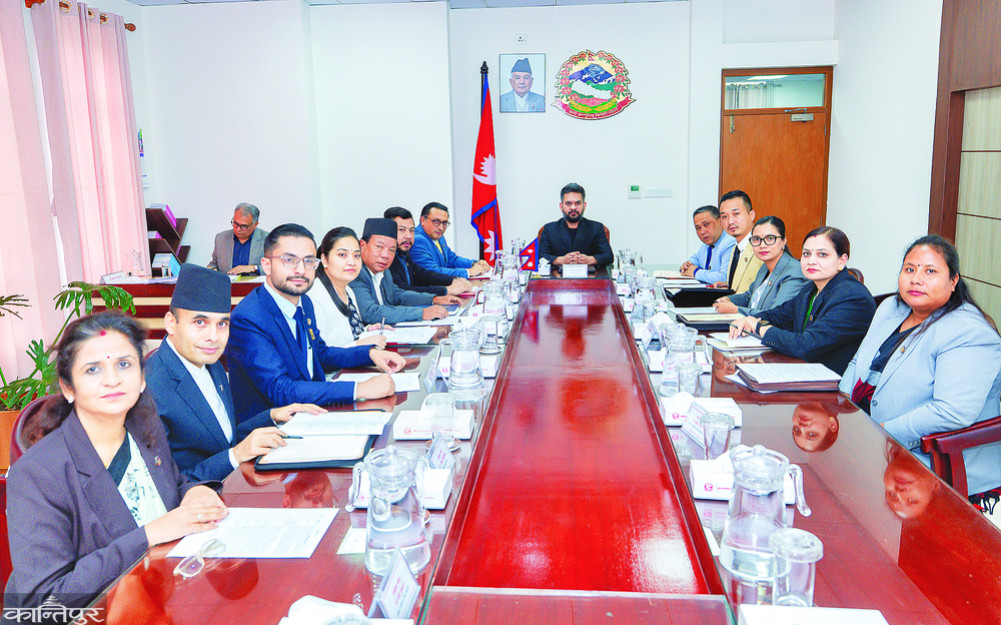
Courts, parliament, public hearings, the press, the opposition – all of these make the state somewhat sluggish, but this sluggishness is the safeguard of democracy, and democracy is a system that is deliberately slowed down so that the power of the government is not unlimited.
We use Google Cloud Translation Services. Google requires we provide the following disclaimer relating to use of this service:
This service may contain translations powered by Google. Google disclaims all warranties related to the translations, expressed or implied, including any warranties of accuracy, reliability, and any implied warranties of merchantability, fitness for a particular purpose, and noninfringement.
In a popular Netflix documentary, ‘How to Become a Tyrant’, an interesting question is asked – ‘What is a tyrant government?’ Most of the answers are quite common – a government with autocratic tendencies, making chaotic decisions, ruling in a dictatorial manner, violating civil liberties. This is how we usually understand autocracy.
But the documentary also presents a different and uncomfortable definition. According to it, an autocratic government is ‘a government created for the people who only want results’. This statement may seem exaggerated, but in modern democracies, tyranny does not always come only through tanks, guns and direct repression. Sometimes it also comes under the guise of a ‘result-oriented government’ and the narrative is built that ‘we deliver results, so don’t ask too many questions, let us work quietly’ and the government gradually convinces the people that asking questions, criticizing, seeking transparency and demanding accountability are obstacles to development.
This dangerous trend is increasing in today’s world politics. The slogan ‘We don’t talk much, we show by doing’ is being created. It feels good to hear this. In fact, the people are also suffering from the tendency of talking a lot and doing little. Therefore, those who work quickly, make decisions, build roads, drive bulldozers, and move files forward are considered strong leaders.
But the problem begins when the state starts putting results above ‘methods and procedures, civil rights, democracy, humanity’. When the state starts moving forward with this as its main slogan, then the result-oriented government gradually starts becoming autocratic. Because democracy is not just a system of results and there is no solid basis to measure whether a work has been successful or not. The same issue may seem successful to the ruling party and unsuccessful to the opposition. In fact, the core essence of democracy is linked to methods and processes. Democracy is also accountability, sensitivity, the ability to listen to criticism, and the culture of regular dialogue with the people.
If the government starts making ‘work’ the only source of legitimacy, it will soon start to see criticism as an obstacle, question as an enemy, and conclude that it is a factor that slows down the process. And from there, the essence of democracy begins to weaken. The famous book ‘How Democracies Die’ by American politicians Steven Levitsky and
Daniel Ziblatt says the same thing – democracies often do not die all at once with a military ‘coup’. They die gradually. By weakening constitutional institutions, making parliament irrelevant, considering the opposition as the enemy, ignoring the press, and suppressing criticism by calling it ‘anti-development’. The death of democracy occurs gradually, like the effects of ‘slow poison’.
Signs of these trends are now starting to appear in Nepal too. The government repeatedly says – ‘We work, we don’t talk much’, but speaking is also an important aspect in a democracy. The people are not just consumers of roads and bridges, they are sovereign citizens. It is their natural right to ask questions, anytime, anywhere. And, remember – the person asking the question is not always the adversary. He can be a victim, a taxpayer too. And, a voter too. It is the minimum duty of the government to answer the questions asked by the people or the questions asked by the people's representatives. The character of the state is not enough to just 'do the job', while performing that work, the state power must also have a minimum of human sensitivity. It must respect the rule of law. It must have the courage to answer the question. The state should not see the citizens as obstacles, but in a humane manner. At the beginning, everyone likes quick decisions. But when that decision starts trampling on human dignity, starts flouting the rules and procedures, from there, fear spreads among the people and that is a grave failure of the state. In a democracy, when the citizens are terrified of the state, democracy is like dying.
Recently, Minister for Physical Infrastructure and Transport Sunil Lamsal expressed his dissatisfaction over the delay in road construction and gave a chaotic statement to the contractor concerned, saying, ‘If you don’t do the work, I will break your legs’. Public anger over the delay in construction work may be natural, but the role of a minister in the rule of law is not to threaten anyone with physical violence. This statement raises a serious question, are we so obsessed with ‘results’ that the law and procedure do not matter?
The effectiveness of the state in a democracy is not seen only in making quick decisions. In recent times, effectiveness is wrongly equated with speed. If the government builds a road quickly but the rights of thousands of people are violated in the process, that is not effectiveness. Not only this, be it the mistreatment of a woman selling kafal in Surkhet by the city police or the humiliating treatment of ordinary citizens at customs checkpoints, such incidents raise serious questions about the character of the state. When the state starts to care only about ‘law and order’, control and results, it starts to see citizens as objects to be managed, not as people. If the state considers itself effective by publicly humiliating its own citizens or treating them like potential criminals, then that is not the efficiency of the state, but a failure of sensitivity. The power of the state is not to humiliate citizens, but to protect them. Law enforcement is necessary, but respect for citizens and humane treatment cannot be abolished in its name.
The state's behavior in the problem of squatters is still a serious question. After the displacement of squatters, some people have even lost their lives due to lack of proper food, lack of health care, and lack of psychosocial counseling. Lack of management, interventions without adequate preparation, insensitivity to human life - all these show that the state sometimes treats people's lives as mere statistics in the name of solving problems. The problem of squatters is not just a problem of illegal structures, it is a matter of life, poverty, displacement, and long-term failure of the state. If the state does not have an adequate rehabilitation plan, no dialogue, no sensitivity, then using a dozer was just a show of power. But the state has to show results – why was a decision made? On what basis was it made? Why did people die? What are the rehabilitation plans? Neither the government nor the head of government has spoken openly about this.
This trend has been seen not only in Nepal, but in many places around the world. During the ‘Great Leap Forward’, Mao Zedong-led China, driven by political ambition, implemented unrealistic production targets and policies in the name of rapid development and production, suppressed criticism and real facts, which resulted in a horrific incident like the ‘Great Chinese Famine’, where millions of people lost their lives. The ‘Great Leap Forward’ taught an important lesson that a government that prioritizes only ‘results’ and ‘speed’ and ignores criticism, reality, and human life can be extremely dangerous. In the name of political stability, rapid decision-making and ‘effective governance’, Turkey’s President Erdogan has concentrated executive power excessively in the name of political stability, rapid decision-making and ‘effective governance’, which has gradually weakened democratic institutions such as parliament, judiciary and press. Turkey is a prime example of how ‘results-oriented governance’ can lead to democratic decline when criticism, dissent and institutional balance are ignored along with the rhetoric of development and the leadership. History has repeatedly shown that a state focused solely on results eventually becomes autocratic.
The effectiveness of a state in a democracy is not only measured by making quick decisions. In recent times, effectiveness is wrongly equated with speed. If the government builds roads quickly but thousands of people’s rights are violated in the process, that is not effectiveness. If the government passes laws quickly but does not allow for parliament, debate and the process of amendment, that is not effectiveness. The very notion that working quickly is effective governance is dangerous. There are many criteria for measuring real efficiency. Was there transparency in the decision-making process? Was there consultation with the affected communities? Were human rights respected or not? Are decisions sustainable in the long term? Did citizens get the opportunity to get justice or not? Did the state keep the mechanism open to correct its mistakes or not?
An autocratic government often seems to make quick decisions and be result-oriented, but hasty decisions made in the pursuit of immediate results often undermine civil rights, justice, and long-term stability. But in a democracy, popular decisions taken without following due process are weakening the very pillars of democracy. In a democracy, procedure and procedure are not luxuries, but a protective shield. The state is often powerful and the citizen is weak. Therefore, procedure and procedure protect the citizen from the state. Courts, parliament, public hearings, the press, the opposition – all of these make the state somewhat sluggish, but this sluggishness is the security of democracy, and democracy is a system that is deliberately slowed down so that the power of the government is not unlimited.
The tendency in Nepal today to introduce laws through ordinances is also a sign of this mentality. The government says, ‘There is a lot of work to be done, so an ordinance is necessary.’ Of course, an ordinance is a constitutional provision, but its purpose is for special situations where parliament is not functioning or immediate legal intervention is required, not to provide an alternative to the regular law-making process. But resorting to an ordinance when parliament is functioning, the government has almost a two-thirds majority, and has sufficient political power to pass a bill, shows an excessive impatience with the parliamentary process. In such a situation, what does a decision to enact a law through an ordinance do? It ‘bypasses’ the parliamentary process itself. It deprives the opposition of the opportunity to propose amendments. It shortens the debate. It limits law-making to the convenience of the executive and all power is concentrated in the executive. In a parliamentary democracy, parliament is not just a machine for passing laws. It is a place for national debate. Questions should be raised here, amendments should be made, and disagreements should be heard. If the government starts considering parliament a burden, that is a dangerous sign for democracy.
And, in parliamentary democracy, the Prime Minister's accountability to Parliament is also a fundamental element. However, if the Prime Minister does not attend Parliament, does not answer MPs' questions, and does not consider it necessary to address the nation, it sends a dangerous message that the institution that directly represents the people is not that important. Not listening to the voices of the people's elected representatives is the same as not listening to the people's voices.
The crisis of democracy does not always start with bullets, it starts when questions start to disappear, it flourishes in the absence of accountability. Today, a commentary is being created in Nepal, 'Don't ask too many questions to a working government.' But from the day questions stop in democracy, civil power begins to weaken. The government must understand that the people are not only looking for results. They are also looking for respect. Justice. A listening ear. Sensitivity. And, fair treatment. If the state only looks for results and effectiveness and forgets humanity, then that is not development, but rigidity. If the government only sees speed and forgets the legal process, then that is not good governance, but impatience. If the government only sees results and forgets democracy, it is ultimately a journey towards autocracy.
Therefore: The greatest power in democracy is not ‘results’, but legitimacy. That legitimacy does not come just by winning elections. It is a continuous process – it comes by respecting citizens. It comes by listening to criticism. It comes by respecting parliament. It comes by following the rules and procedures. Because ultimately, history does not just remember the beautification of the city. History also remembers how the state treated its citizens while making the city beautiful.