The Nepal government should immediately take initiatives with India to resolve the tea problem. Necessary arrangements should be made to remove such recurring non-trade barriers in the long term.
We use Google Cloud Translation Services. Google requires we provide the following disclaimer relating to use of this service:
This service may contain translations powered by Google. Google disclaims all warranties related to the translations, expressed or implied, including any warranties of accuracy, reliability, and any implied warranties of merchantability, fitness for a particular purpose, and noninfringement.
Nepal's major export to India has been disrupted once again. The export, which was opened for some time after various efforts for export last time, has been stopped again due to non-tariff barriers.
After the export was halted due to the new standards implemented by the Indian Tea Board for Nepali tea exports, 53 tea industries in Ilam and 30 in Jhapa have been announced to close. This is also a kind of protest by industrialists due to the business being disrupted due to repeated disruptions. It has also been urged that the government should take this seriously and resolve it through talks with India this time. Taking this sensitively, the government should find a way out of the problem through diplomatic initiatives.
The 'Standard Operating Procedure' (SOP) implemented by the Indian Tea Board since May 1 has made it mandatory to test the quality of every consignment of tea exported from Nepal. However, industrialists say that this has increased the business risk significantly as it takes more than two weeks to receive the test report, the tea cannot be sold until the report is received, and if the sample fails, the tea has to be destroyed or returned.
Previously, problems had sometimes arisen at customs. This time, the sale of tea that has already crossed the customs and reached various parts of India has also been hindered due to testing. It can take weeks to get the report if the testing process is followed according to Indian standards. In such a situation, even though the customs clearance is easy, the industrialists cannot export tea. The negative impact of this has created a situation where the industry is closed.
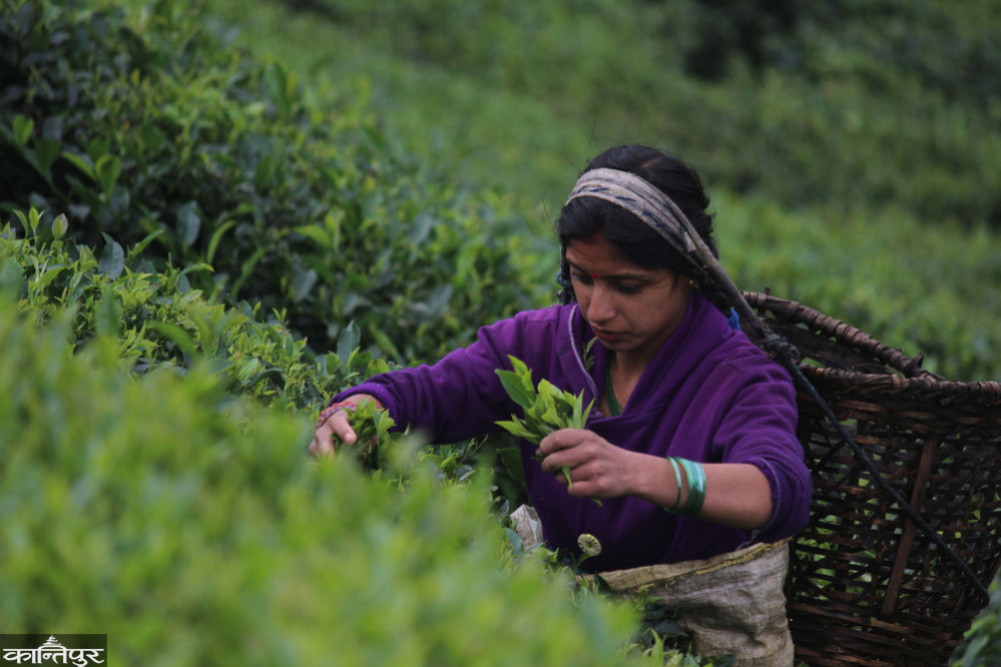
Nepal has been exporting prepared tea worth about 4.25 billion rupees annually. The industrialists argue that the operation of the industry is becoming impossible due to the inability to sell the produced tea. 50,000 people, including workers and farmers, are directly involved in the Nepali tea industry. If the current sales disruption and industry shutdown situation is prolonged, many more people in addition to those 50,000 will have to suffer indirectly. Mainly, workers working in the industry may be unemployed. Workers who pick tea leaves may also be unemployed. If the industry shutdown continues, farmers will also suffer as green tea leaves grow on the plant. The payment process to each other may also be affected, disrupting the economic behavior of all parties. Therefore, immediate initiatives by the government are indispensable.
Tea is the current context. India had previously created an environment of obstacles to various goods exported from Nepal. India is Nepal's largest trading partner. More than two-thirds of trade is done with India. The Nepal-India Trade Agreement has given most Nepali products duty-free access to India. There is no situation where customs duties can be imposed or increased. However, the export of Nepali agricultural products has been affected due to the non-tariff barriers imposed by India.
When India suddenly changes its policies and standards or raises questions about quality, the export of Nepali goods has been affected. A similar problem is seen in ginger and cardamom from time to time. Non-tariff barriers have been continuously imposed on jute. The issue of exporting agricultural products to India has become a challenge for Nepali farmers. Different problems have been seen in the export of different types of goods.
The issue of ensuring the quality of tea or other products and the Indian side seeking its assurance cannot be considered unnatural. The Nepali side should also pay attention to it. But the time and method of testing the quality can be determined. In the South Asian Free Trade Area (SAFTA), member countries have the issue of providing easy access to products certified by each other's laboratories. This should be implemented. Nepal and India have also repeatedly discussed this issue and there is also a positive attitude towards recognizing the tests of Nepali laboratories.
If the capacity of the laboratory is to be increased, it should be decided by mutual agreement and the quality should be improved. And, each other's tests should be recognized. It should also be clear in the case of tea. Bilateral trade should be made trustworthy. If there is no assurance of a market in trade, producers are discouraged. There can be huge losses. Many people can become unemployed.
Although this is a small part of India's import share, it is a big issue for the businessmen and workers involved in it. Therefore, the Nepalese government should immediately take initiatives with India to solve the tea problem for the time being. In order to address problems that may arise from time to time, the mechanisms established for bilateral trade facilitation should immediately discuss and find solutions. Necessary arrangements should be made to remove such recurring non-trade barriers in the long run.