We have moved forward with a plan to continue playing our role with the goal of making a substantial contribution to Nepal's agricultural development and food security through agricultural cooperation.
We use Google Cloud Translation Services. Google requires we provide the following disclaimer relating to use of this service:
This service may contain translations powered by Google. Google disclaims all warranties related to the translations, expressed or implied, including any warranties of accuracy, reliability, and any implied warranties of merchantability, fitness for a particular purpose, and noninfringement.
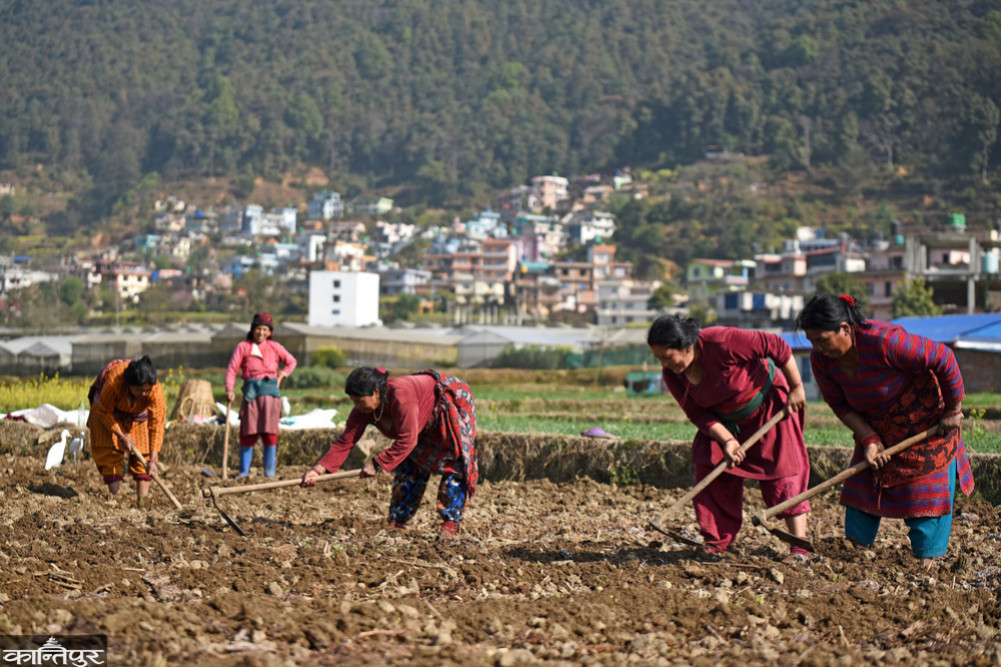
Nepal's agriculture sector accounts for two-thirds of total employment. However, in Nepal, which has failed to ensure food security, agriculture accounts for about 25 percent of the gross domestic product. The impact of climate change, long-term fertilizer shortages, and labor shortages caused by foreign employment have left Nepal in a quagmire of extremely low productivity in the agricultural sector.
Let's look at rice production as an example. Nepal produces an average of about 3.8 tons of rice per hectare and Korea 7.2 tons. The global average is 4.8 tons of rice. Considering the wide gap in the productivity of rice, which is an important part of agriculture, there are possibilities for various improvements to increase production. In November 2023, the Korean Minister of Agriculture visited Kathmandu and signed an agreement on agricultural partnership between the two countries. The agreement sets the basis for partnership in the agricultural sector. The minister who was visiting Nepal at that time is an agricultural technology expert himself, who has been working in the agricultural sector for more than 40 years.
I remember, we discussed how to increase agricultural productivity in Nepal during tea chat. The minister had said, ‘Agriculture is an industry – where what is planted, the same species is harvested.’ Explaining this issue, he had said in simple language, ‘Planting good seeds and providing the necessary nutrients increases crop production and naturally the business will be successful.’ An agricultural policy should be identified to prioritize seed improvement and distribution systems for Nepal’s major crops. My role as an ambassador in expanding cooperation between Korea and Nepal in the agricultural sector will always be there.
The Government of the Republic of Korea has prioritized agriculture, education, health and information technology for its development partnership with Nepal. And, it has also been cooperating through ‘KOICA Nepal’. KOICA is supporting Nepal's agriculture sector to increase climate adaptation capacity, connect it to markets through value chain strengthening, and improve productivity in the livestock sector. However, we have focused on the expertise and long-term collaboration of Korean agricultural experts to develop seeds suitable for Nepal. Based on the agreement on agricultural cooperation exchange between the Ministers of Agriculture of Nepal and Korea, Korea's 'Rural Development Administration' was given the responsibility of introducing technology to Nepal. Accordingly, the Nepal office of the 'COPIA Center' (Korea Partnership for Agricultural Innovation) has been established in Kathmandu by the end of May 2025. The office has been playing a role in sharing innovative agricultural technologies since a year ago.
The establishment of the COPIA office in Nepal is one of the most important achievements of my tenure as the Korean Ambassador to Nepal. The Rural Development Administration is playing a pioneering role in increasing Korea's food security and agricultural productivity. In the 1970s, our country Korea was not self-sufficient in food. And, at that time, President Park Geun-hye issued special instructions to develop improved rice varieties and provided full support in managing the necessary staff and budget. Park was so enthusiastic about developing rice varieties suitable for Korean soil that he personally evaluated the taste of newly developed rice varieties. The Green Revolution was established in Korea due to the tireless efforts and research of the relevant agencies. And, today, with a dramatic increase in rice production, we have been able to transform Korea into a self-sufficient food nation. Korea has also been sharing policy experience and expertise with other countries to ensure food security in the agricultural sector.
The ‘Copia Nepal’ office has been established as the 29th agricultural partnership office established worldwide. The establishment of this office in Kathmandu by the Korean government is a result of its strategic commitment to providing assistance based on Nepal’s needs. We have moved forward with a plan to continuously play our role with the goal of making a substantial contribution to Nepal’s agricultural development and food security through agricultural cooperation.
Keeping in mind the realities of Nepal's agricultural sector and in consultation with the Government of Nepal, the COPIA Nepal Office is currently pursuing two major projects. Among them, we are focusing on the development of climate-resistant rice seeds and disease-free potato seed production technology. Globally, the COPIA Office is conducting specific agricultural technology support projects in each country based on the needs and suitability. We are committed to developing rice varieties, prioritizing Nepal's food security. We have also implemented 25 relevant projects in Nepal, giving high priority to potato seeds.
We are fully confident that the COPIA Office has proven to be excellent in the field of rice varieties and potato seeds. Dr. Song Yong-ju, a leading Korean agricultural technologist in the rice sector, has been collaborating with various government agencies of Nepal as the Director of COPIA Nepal since last March. It is not possible to directly apply Korea's experience and technology in rice and potato farming that COPIA has started on the ground in Nepal. However, to achieve concrete results, our journey will be set towards giving good returns through long-term collaboration with the Government of Nepal, agricultural experts, farmers and stakeholders.
As mentioned above, agriculture is a business. We harvest the same crops as we plant. This is an accepted fact. Planting good seeds ensures good production. However, looking at the agricultural reality of most countries, including Nepal, it is not possible for individual farmers, communities or the state government to develop high-quality seeds. Since this is an important project of a nation, the central government should take the initiative. Through the 2026-2027 budget announced at the end of May, Rs 42.9 billion has been allocated for the agriculture sector.
In this budget, chemical fertilizer subsidy is Rs 32.5 billion, which is about 70 percent of the total agriculture budget. It has not been confirmed how much of the new agriculture budget has been allocated for the production of high-quality rice seeds and potato seeds. Through the collaboration between the COPIA Nepal Center and the Government of Nepal, we are committed to ensuring Nepal's food security in agriculture by building a Nepal capable of increasing rice and potato productivity (quality rice seeds and potato seeds). Various countries around the world where COPIA offices are active have focused on managing the necessary budget from the government sector for the development and distribution of customized seeds. The Korean government has started another chapter of cooperation through the COPIA Center established to cooperate in Nepal's agricultural business. We are clear that we need to increase investment based on the needs of the two countries and based on the results of our achievements and the satisfaction of the governments of the partner countries.
The Employment Permit System (EPS) is playing an important role in agricultural cooperation between Korea and Nepal. Currently, about 20,000 Nepalese workers are working in the agricultural and livestock sectors of Korea through the EPS. After completing their work period in Korea, some Nepalese have returned to Nepal with agricultural skills and experience. Many of those who returned to Nepal have successfully started businesses in the agricultural sector. Their entrepreneurship and startups have introduced themselves as a means of transferring and using agricultural technology learned in Korea to Nepal.
I am confident that as the COPIA Nepal Center celebrates its first anniversary, it will achieve tangible results in the rice seed and potato seed sectors. And, in the future, agricultural technology support will continue to improve productivity in other priority agricultural crops and livestock sectors. Nepal's food security is facing challenges due to the negative effects of climate change, increasing water scarcity, and labor migration. As the Korean Ambassador to Nepal, I will make unremitting efforts to increase agricultural productivity and ensure Nepal's food security. During my visit, I also express my commitment to continue multifaceted cooperation through the Korean government's missions, KOICA, COPIA, and the employment permit system.