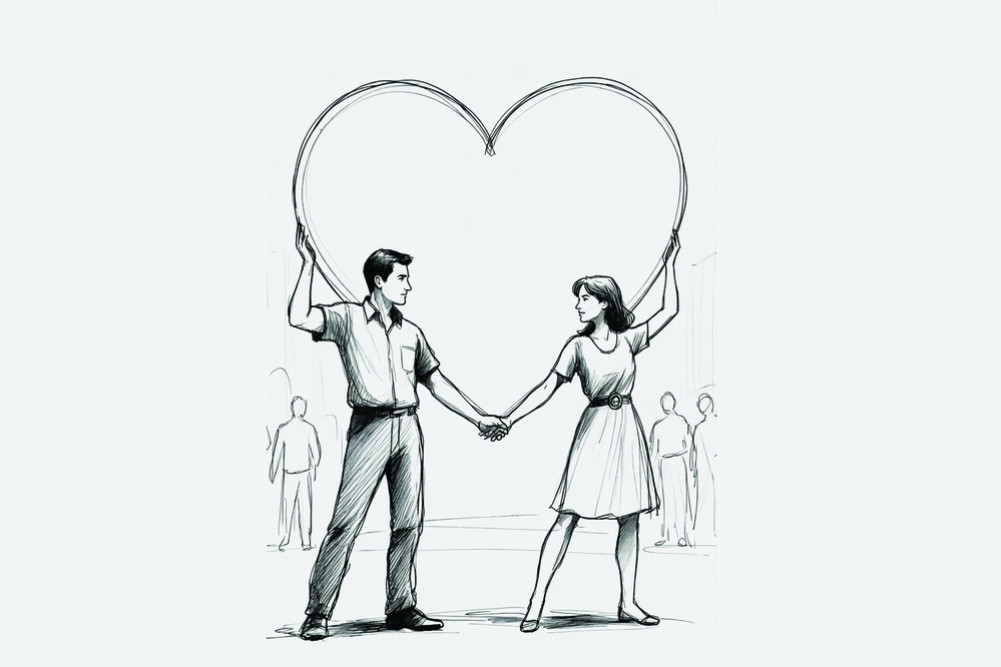
No one should consider women as dependent, and men should not consider themselves as money-makers and protectors of responsibility.
We use Google Cloud Translation Services. Google requires we provide the following disclaimer relating to use of this service:
This service may contain translations powered by Google. Google disclaims all warranties related to the translations, expressed or implied, including any warranties of accuracy, reliability, and any implied warranties of merchantability, fitness for a particular purpose, and noninfringement.
The idea that women become dependent on men after a certain age is also viewed in terms of some biological changes and economic dependence. However, in modern and progressive societies, women have shown themselves to be working more than men. Therefore, women are not dependent. However, the question raised here is – in the context of self-reliant, capable, professional and conscious women, the issue of ordinary women (who show themselves to be dependent on men and are dependent to a large extent) is different.
I was going somewhere in a taxi, the FM was playing – a man was reciting the poem ‘Kinki Ma Purush Hun’ in a poetic style. In the poem, he was talking about the pain of being a man. Men cry when they are weak, not when they are strong, the burden of having to bear the expenses of their wives and girlfriends on men’s shoulders, the pain of having to bear the stigma of being a criminal-rapist were the raw materials of his poems. While listening to that male-dominated poem, his voice sounded right in many places. After all, men are also victims of the roles that society has told them, made them, and expected of them.
I write my feelings and disagreements on social media. I write articles with women as the centerpiece. However, I find it uncomfortable to use various apps on my mobile. One day, I had to go somewhere on a ride. I told my son, ‘Can you book me a ride?’ But, my son said, ‘Can’t you even do that yourself? Book it yourself?’ The answer felt bitter. It also hurt my heart to say, ‘My children are grown up.’ But, I kept realizing, ‘Yes, of course! In this era of technology, cars come to pick up at home, but we educated women are busy with our husbands or sons without paying attention to technology. It is a small thing, but we hope that someone else would have done such small things. We are looking to men when making special decisions. Now I have learned that women should also be technologically aware and aware. However, the new generation of young women are a little aware of such things!
In ancient times, the roles of men and women were different according to society, culture and time. Men participated in farming, animal husbandry, hunting, trade and war. Men played the main role in the leadership and decision-making process of the village or state. Men's responsibility was to protect and protect the family. Women took care of the household, cooked food, raised children and managed the house. In many societies, women also contributed to farming, animal husbandry, and handicrafts. Women also play an important role in passing on tradition, culture, and knowledge to the new generation.
Our Puranas and other religious literature, as well as the old male writers of Nepal, have also seen women as inferior, entertainers, and caretakers of men.
Generally, even in the present day, our society expects women to not only love, but also to give up their ego to save the relationship. This statement also sounds like ‘blackmailing’. Society expects women to be the embodiment of sacrifice and dedication. And, such expectations force women to have desires, wishes, desires, and independence. Such social expectations make women more optimistic about men. Women imagine powerful, financially wealthy men to fulfill their desires of dressing, eating, and traveling. Let's look at some educated women - even when women are self-reliant and able to earn, there are examples of them paying all the family expenses to their husbands without spending what they earn together with the family. Even those financially capable and employed women feel that the entire responsibility of the house belongs to men. The radio program with the expression 'Because I am a man' mentioned above is perhaps an example of the financial burden on men.
In our society, jokes are also created that are such as to confuse self-respecting women. For example - someone asks how to keep their wife happy? And someone answers - keep your wallet open, keep your mouth closed.
These and other such jokes have created a narrative that a woman or wife is happy only if her husband has money. To break such narratives, women have to abandon the behavior of showing dependence on men and adopt a method of self-reliance. When a family discusses income and expenses, discusses division of labor, discusses who will do household and outside work, and reaches a conclusion and makes a decision, women can move forward as a co-existence without depending on men. However, when a wife always considers her husband a money-making machine, only orders him, and taunts him instead of providing emotional support, the relationship and family atmosphere can definitely deteriorate. There are many such examples in our society.
The educational, social, political and economic status of women today did not come so easily. Let's talk about the context of Nepal - let alone women's equal rights with men, if the husband dies first among the spouses, we are people of a society where the wife is also burned on a pyre and committed sati together. We are in a time when awareness is being awakened that women and men are equal, that equality, equity and justice are equally needed by both men and women, after breaking through the situation of being deprived of their rights and being made inhumane by their families. Now we must also understand that, regardless of whether we are women or men or sexual and gender minorities, we must move forward as good human beings and respect each other.
We can be each other's helpers, partners, and humanitarians - as husband and wife within the family or as social beings outside. No one should consider women as dependent and men should not consider themselves as money-grabbers and supporters of responsibility. Let there be cooperation, understanding, support, love and respect between women and men as a family. No bitterness and coldness.