It is essential to include the voices of those who fought for the establishment of a federal system and those who disagreed with the promulgation of the constitution in the debate. The issue of promoting strong and empowered federalism, along with a review of the impact and weaknesses of federal practice, should be an essential topic of the debate.
We use Google Cloud Translation Services. Google requires we provide the following disclaimer relating to use of this service:
This service may contain translations powered by Google. Google disclaims all warranties related to the translations, expressed or implied, including any warranties of accuracy, reliability, and any implied warranties of merchantability, fitness for a particular purpose, and noninfringement.
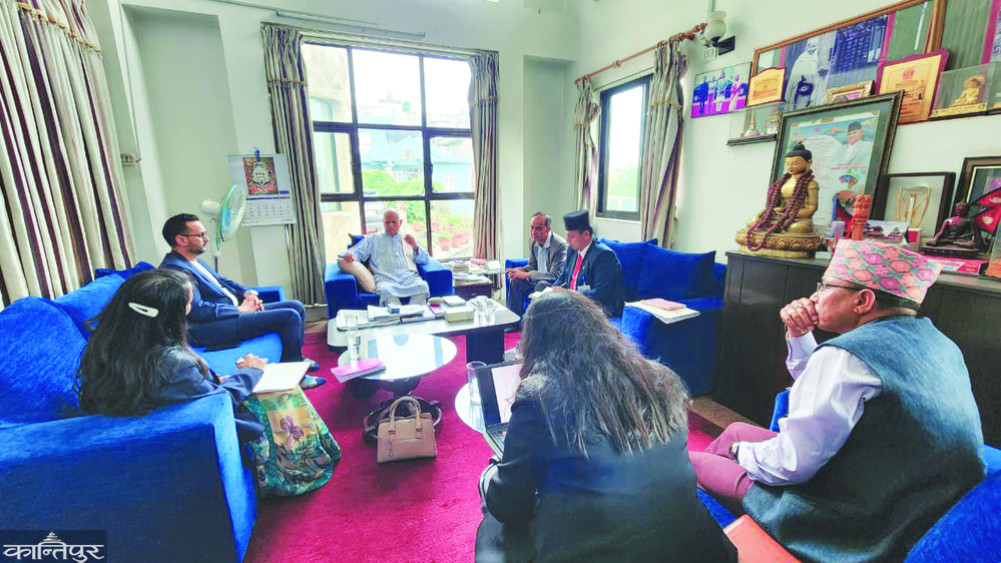
The Balendra Shah-led government formed a task force on the preparation of a debate paper on constitutional amendment on Chaitra 16 under the leadership of Prime Minister's advisor Asim Shah. The task force is discussing various issues of constitutional amendment, however, questions have arisen - what is the need and justification for a 'Constitutional Amendment Debate Paper'? Is the preparation of a debate paper to identify the agenda of constitutional amendment and hold a broader debate? If so, how is such a debate held, where is it held? What kind of results are expected from such debates? What kind of debate paper would be prepared without clear answers and perspectives to such basic questions? How will such a debate paper play a role in constitutional amendment? Amidst such countless questions, the task force is consulting stakeholders.
While preparing the debate paper on constitutional amendment, it is also necessary to remember the huge political tension that occurred during the drafting of the constitution. Originally, there was a very complicated power struggle in terms of the form of government of the state, federalism, electoral system and secularism. At that time, different political and community groups had their own stances. The new constitution was promulgated amidst political disagreements. The voices of those disagreements are occasionally being heard in the public forum. The question of whether or not those issues will find a place in the debate paper on the amendment of the constitution has also been clearly seen.
Basic concerns about the debate paper
On the day the Constitution of Nepal, 2072, was promulgated, some political parties celebrated Diwali, while some parties and communities burned it. This means that even though the constitution was promulgated on the basis of a political agreement, dissatisfaction remained. Constitutional amendment is necessary to address those dissatisfactions and to make the constitution more timely and progressive by reviewing a decade of its implementation. Although the agreement between the UML and the Congress to form a coalition government before the Gen-G rebellion was made, constitutional amendment was made the main agenda, but there was no discussion about the need, justification, and basis for constitutional amendment. After the Shah-led government prepared a debate paper for the constitution amendment and started work, it seems that the constitution amendment will establish its legitimacy. However, while preparing a debate paper in this way, it is necessary to pay attention to some basic concerns.
First, the Constitution of Nepal is a document written through the great struggle and sacrifice of the people. The representatives of the people issued this constitution through the Constituent Assembly on the basis of the past political and social struggles to establish a republic by ending the feudal monarchy in Nepal, to transform the unitary and centralized system of governance into federalism, and to make the state system with the monopoly of certain castes, genders, and classes inclusive. The spirit of those historical revolutions, struggles, and movements must be addressed by the constitution amendment debate paper. Since the current constitution is the result of the struggle to establish democracy with social justice through state restructuring, the debate paper should focus on the agenda of the country's progressive transformation. The influence of right-wing politics spread all over the world is also present in Nepali politics. Therefore, the constitutional amendment debate paper should not be made into a political document that legitimizes Nepal's right-wing politics.
Two, the preamble of the constitution mentions building a prosperous nation by being committed to socialism based on democratic values. However, for a decade after the promulgation of the constitution, there was no substantive debate about the socialist system model in Nepal's parliamentary political parties or parliament. Instead, the state has been legitimizing the looting of capitalists, brokers, and middlemen. The task force that prepared the constitutional amendment debate paper also does not seem to have had any debate or discussion about the socialist model. If the country is to be led towards a socialist system in principle, there should be a debate about the socialist system model and the conclusions of the debate should become the agenda of the constitutional amendment.
While the form of government, electoral system or any other system is not amended, mandatory proportional representation of all castes, genders and communities should be ensured. Three, since the process of promulgating the constitution, various political parties and communities have been registering disagreements. An important agenda of the constitutional amendment debate paper should also be the issue of the forces that have been misunderstanding the constitution since the past. The debate on constitutional amendment cannot move forward without debating the issues of dissatisfaction, especially among Madhesi, indigenous peoples, Tharu and marginalized communities. There is no justification for a debate or amendment to the constitution while keeping the wounds of past dissatisfaction intact. Therefore, those disagreements and dissatisfaction should be an essential condition for the debate on constitutional amendment.
Four, the federal system of governance is the result of decades of struggle by the people. However, the series of anti-federalist rhetoric is gaining momentum in Nepal. Moreover, the ruling Rashtriya Swayamsevak Sangh (RSS) does not seem committed to federalism. Therefore, the RSSS does not seem to have any vision to make the federal system strong and effective. Instead of strengthening the autonomy and rights of the provinces, the idea of abolishing the provincial assembly itself has been coming out. This also risks weakening the federalism debate. It is necessary to include the voices of those who fought for the establishment of a federal system and who disagreed with the promulgation of the constitution in the debate. The issue of promoting strong and powerful federalism, along with a review of the impact and weaknesses of federal practice, should be an essential topic of the debate. The country cannot and should not back down from federalism under any circumstances.
Five, ensuring proportional inclusion is another important issue in the constitution amendment debate. Women, Dalits, indigenous peoples, Madhesis, Tharus, Muslims, etc. have been fighting for decades for a state with their own identity by ending the monopoly of certain castes and communities. Although the constitution has accepted the principle of proportional inclusion, the practice of proportional inclusion sought by the oppressed communities is not being implemented. The state belongs to everyone, so proportional representation and participation of all castes, communities and genders in all organs of the state should be mandatory. Whatever method is adopted for this, proportional representation should be ensured as a result of marginalized communities. Mandatory proportional representation of all castes, genders and communities should be ensured without amending the form of government, electoral system or any other system. This is an uncompromising condition of the oppressed community, which should become an important agenda of the debate paper. For example, the issue of ensuring mandatory proportional representation of all oppressed communities, including women and Dalits, in the people's representative bodies, the House of Representatives, the National Assembly, the Provincial Assembly and all three levels of government should be included in the debate paper.
The state is standing in contradiction with the principle of proportional inclusion. The proposal made by the Election Commission to reduce the number of people's representatives is against proportional inclusion, while it seems to have come with the intention of reducing the representation of Dalits and women at the local level. Countering such anti-inclusive intentions and ensuring proportional inclusive representation must become a mandatory issue in the agenda. Not only this, the method of making the entire structure of Nepal's civil administration, judiciary and law enforcement completely proportional and inclusive should also be included in the debate paper so that these issues get priority when the constitution is amended.
, Nepal is a constitutionally secular country. This means that there is no state religion. In the view of the state, all religions are equal and everyone is free to practice religion or be an atheist. The activities and behavior of the state are promoting traditional Hinduism in Nepal rather than promoting secularism. The way secularism is defined in the constitution, it is contributing to the promotion of a Hindu state. Therefore, secularism should be included as an issue in the debate paper on the amendment to the constitution.
Seven, state restructuring was necessary to ensure social justice. The justification for drafting a new constitution through the Constituent Assembly was to establish a constitutional basis for building a just society by ending injustice, oppression, discrimination and exclusion. The constitution also provides for the right to social justice. However, in practice, exclusion, violence and discrimination based on caste, gender, class and community persist. A state system in which the voices of the poor, working class, laborers and farmers of society are heard has not been built. The practice of focusing on the self-interest of the state capitalists, rich class, middlemen and brokers persists. Therefore, the issue of ensuring social justice for the weaker sections and communities of society should be made an agenda for the debate paper on amending the constitution so that the state can fulfill its constitutional obligation to end the continuous exploitation, oppression and oppression of the poor, working class and laborers.
Multi-stakeholder consultation
Constitutional amendment is not only a matter of concern for the ruling party and the party represented in the parliament. The constitutional amendment debate paper cannot be complete without dialogue and consultation with the groups that contributed to the establishment of a federal democratic republic in Nepal. The power that struggled the most to bring this system also has a greater sense of responsibility to strengthen the system. Therefore, a meaningful debate paper can only be prepared through intensive discussions and consultations with all the forces that struggled to bring this system or contributed to the socio-political transformation of Nepal. If the basic agenda of the constitutional amendment is to be made clear and strong, a large-scale political conference should be organized during the preparation of the constitutional amendment debate paper, so that a comprehensive discussion can be held on the basic agenda of the amendment.
Some political parties that struggled to bring Nepal to a federal democratic republic are currently outside the parliament. Some political parties are in the movement for an alternative to the parliamentary system. Among the main stakeholders in the establishment of the federal democratic republic, marginalized communities including Madhesi, indigenous peoples, Tharu, Dalit, and Muslims played a very important role. Therefore, consultation with these communities is mandatory in the context of amending the constitution. Not only this, Nepal's academic sector, intellectuals, and civil society movements also played an important role in the process of constitution-making. It is also necessary to consult with such enlightened classes and communities in the process of preparing the debate paper.
The youth movement of last Bhadra has changed the landscape of Nepali politics. A new government has been formed after the election on the basis of the same movement. The debate on amending the constitution cannot be complete by ignoring the country and future desired by the youth. Therefore, the debate paper should reflect the needs and feelings of women, indigenous peoples, Dalits, Madhesis, Tharu, and Muslims among the youth. The task force formed by the government is led by the Rashtriya Swayamsevak Sangh (RSS) and has a strong presence in parliament. Constitutional amendment should not be done solely by the arrogance of two-thirds power. Decisions should be made keeping the wishes of the majority of the people in mind. For this, the voices of historically oppressed classes, genders, regions, and communities should be represented in the constitutional amendment process, from the preparation of the debate paper, so that there is no forced situation of having to struggle again after the constitutional amendment.