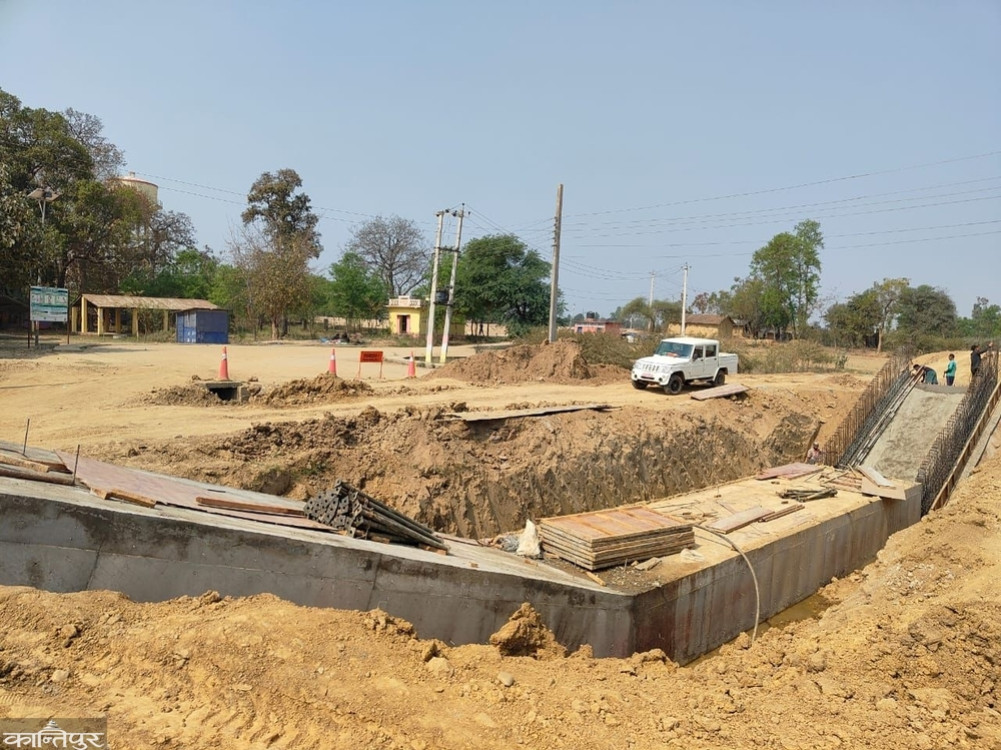
The project is expected to gain momentum if the 'Sunset' law, which aims to remove all obstacles related to infrastructure construction work, is implemented.
We use Google Cloud Translation Services. Google requires we provide the following disclaimer relating to use of this service:
This service may contain translations powered by Google. Google disclaims all warranties related to the translations, expressed or implied, including any warranties of accuracy, reliability, and any implied warranties of merchantability, fitness for a particular purpose, and noninfringement.
The construction pace of the 'proud projects', which are supposed to have huge costs, benefit a large population, and contribute significantly to the country's economic development, is pitiful. Some projects have already spent four decades. The deadline has been extended repeatedly. The cost has increased. But the target community has not been able to benefit due to the lack of timely construction work. The country has been deprived of the economic development envisioned by the project and the cyclical benefits created from it. This confirms that we have weaknesses in all aspects, from the selection process of the project to the policy, law, procedure, and sensitivity to complete it on time. This trend is ultimately a mirror of our poverty and underdevelopment. It is unfortunate for the country's development to continue like this. Therefore, the government must make rigorous and practical efforts to create a situation where other regular or proud projects can be completed on time.
In the fiscal year 2068/69, 17 projects were included in the list of national pride. Such projects were placed here, the construction of which the state itself considered it necessary to give extra importance to complete. Projects such as the Babai Irrigation Project, Pushpalal (Mid-Hill) Highway, Kathmandu-Terai/Madhesh Expressway, Nijgadh International Airport and others are included in this. Such projects are expected to add convenience, increase business and commercial potential, attract investment, create employment, create capital, and increase confidence among citizens that development work is underway. When the construction work of large projects is completed and put into operation in the expected manner, they help accelerate the pace of development of the country. At the same time, when the people see large projects being constructed, their trust in the country and the system increases. They can feel that development is taking place. This ultimately increases the confidence of the nation.
As glorious as the expectations associated with projects of national pride are, the reality is as pitiful. The main reason for this is the speed of construction. For example, the Babai Irrigation Project was started with the aim of providing irrigation facilities to 36,000 hectares of arable land in Bardiya district. But the project, which was started 38 years ago, has not been completed yet. The target was to complete it by 2082/83 as per the revised schedule after repeated extensions. But since it was seen that the work would not be completed even within this period, the time has been extended to 2085/86. If the construction work had been completed decades ago, it can be estimated how many farmers would have benefited, how much production would have increased, and how much their socio-economic capacity would have increased. Similarly, the construction of the Postal Highway, which was started from the fiscal year 2066/67 according to the concept of connecting the area from Kechanakawal in Jhapa to Dodhara Chandni in Kanchanpur in the west, is also slow. As a result, about 10 million people from 21 districts of Tarai-Madhesh have not been able to benefit from this project. The situation is similar with other projects.
If the project is not completed on time, not only will they be deprived of benefits, but they will also have to bear an additional burden. The cost of a single project will increase and the return from it will not only lead to a lack of budget to select other projects and complete their construction work, but will also weaken enthusiasm.
Even though it is called a project of national pride, why is it difficult to complete the construction work on time? There are some theoretical and practical reasons for that. There is a problem in the budget system for selecting projects. The Public Procurement Act is not scientific. Obstacles at the project construction site have been a big problem. But there is no strong and practical system to remove them. The selection of project leaders is not transparent. There are obstacles from locals. Similarly, there is a lack of resource consensus and budget. There is no effective coordination between different ministries and agencies. As a result, it is difficult to cut down trees, remove electricity poles, or remove drinking water pipes. There is also no scientific method for land compensation and indemnity. As a result, obstacles have arisen. The shortage of construction materials has also caused problems. For example, road projects are currently facing a shortage of bitumen. There is also a shortage of technical manpower. There are many types of
problems. To solve them, it is not enough to focus on just one or two aspects. The entire system needs to be restructured. The government is working on a draft of the 'Sunset' law. If such a law, which aims to remove all obstacles related to infrastructure construction work, is implemented, it is expected that projects that have been facing delays so far will gain momentum. At that time, new practices can be implemented by learning from the current delays and the effectiveness of the 'Sunset' law. But the current approach will certainly not meet the expectations of citizens for any type of project and will also stifle the potential for development and economic progress.