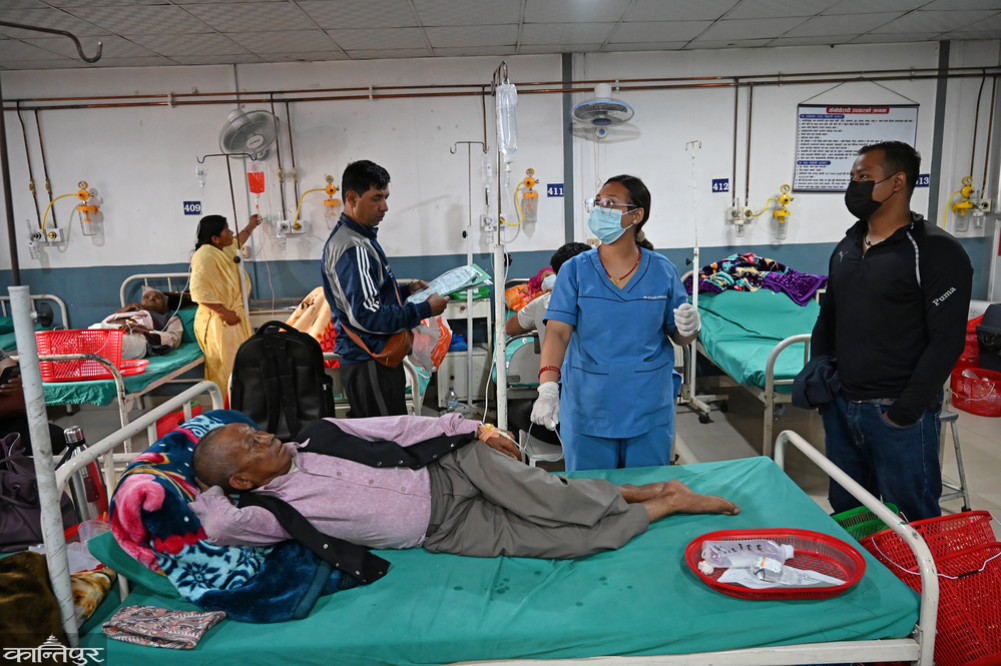
Cancer patients also face financial and mental pressure on a regular basis. Moreover, when faced with a shortage of medicines and having to travel to obtain them, both the patient and their relatives have to endure additional hardship.
We use Google Cloud Translation Services. Google requires we provide the following disclaimer relating to use of this service:
This service may contain translations powered by Google. Google disclaims all warranties related to the translations, expressed or implied, including any warranties of accuracy, reliability, and any implied warranties of merchantability, fitness for a particular purpose, and noninfringement.
When someone falls ill, the first things that come to mind are doctors and medicines. In most cases, both of these are available to patients. Treatment is also completed easily. Some may have to face the shortage of both or one. In such a situation, they may be deprived of timely and prescribed treatment. The condition of patients who are struggling with serious diseases may be more complicated. At present, there is an extreme shortage of medicines used in the treatment of various types of cancer.
Even cancer patients have to face financial and mental pressure even in regular situations. When they have to face the shortage of medicines and have to wander around to obtain them, both the patient and his relatives have to face additional distress. Suppliers have been presenting the reason that they cannot sell medicines at the price fixed by the government and do not supply them at all. Therefore, the government should find an alternative that will not cause shortages and will not impose a financial burden on the patient. The patient and his relatives should be freed from the current extreme shortage.
According to the estimates of the ‘Global Cancer Observatory’, more than 22,000 cancer patients are added every year in Nepal. Similarly, 14,000 people die every year. It is estimated that 60 percent of cancer patients undergo chemotherapy. But at present, there is an acute shortage of the carboplatin drug required for chemotherapy. In addition, chemotherapy drugs like cisplatin and oxaliplatin are also not available in hospitals. Therefore, there are some who leave the patient in the hospital and go in search of medicine.
There are also those who reach India or order it from there. There are also those who obtain medicine from black marketers here. Hospitals have also experienced that some patients who need to complete a course of different medicines use only the medicine that is available due to the lack of medicine, and the treatment is not effective. The patient's self-confidence is also considered a significant aspect in treatment. But the lack of medicine has created additional pressure.
Businessmen are not ready to sell at the old government price, which is directly affecting patients. As a result, there is a shortage in the market. Those who come into contact with the black market have had to pay several times more. The shortage of medicines has not only created mental pressure and anxiety for the patients, but has also added to the financial burden. In 2072, on the recommendation of the Department of Drug Management, the government had fixed the price of Carboplatin 150 mg at Rs 1,393.87. Similarly, the price of the same medicine for 450 mg was fixed at Rs 4,130.77. The price of Oxaliplatin 50 mg was Rs 4,358.8. However, family members of cancer patients say that they are forced to pay up to Rs 15,000 to buy 150 mg of Carboplatin, which costs around Rs 1,400. However, the cost to the relatives of the patient is not only related to the price of the medicine. The cost of running around for it is also very high. This has made the treatment process more expensive overall. But the government has not taken any initiative to solve this problem for the patients and their relatives.
The reason for the current price shortage is that suppliers are showing indifference towards imports, saying that they cannot sell at the price set by the government. Such medicines that are not produced in Nepal are mainly brought to Nepal from India and Bangladesh. Due to the increase in the price of raw materials, drug manufacturers have reduced production and increased the price of medicines. But the price set by the government 13 years ago is still the same. Businessmen are not ready to sell at the old government price, which is directly affecting patients. As a result, there is a shortage in the market. Those who come into contact with the black market have had to pay several times more. In addition, the quality of the medicines has not been ensured. Because such medicines need to be stored at a certain temperature, there is no such assurance in medicines bought from the black market.
There are some things that the government should do to eliminate the shortage of medicines and provide relief to patients. First, find a middle ground so that medicines can be imported and do not impose a financial burden on patients. For that, the government can announce relief or subsidies. But before that, it is necessary to identify whether there is a direct link between the increased price by the manufacturer and the shortage of medicines in the Nepali market.
The government should be able to say transparently whether the shortage was created only to pressure the government to increase prices or whether it is really the case. Similarly, surveillance and monitoring should also be intensified. The guilty should also be punished. But before controlling the black market, the government should create an environment where medicines can be easily obtained from pharmacies.
Second, the possibility of producing medicines domestically should also be explored. However, Nepal does not have the expensive technology to produce such drugs, and since the selling price is lower than the production cost, manufacturers are not showing interest in producing such drugs within Nepal. Manufacturers may not be ready to produce drugs in the current situation. But if the government provides facilities and incentives, they may be ready. The government can also prioritize that possibility. The government can make different strategies for the immediate and long-term, but it cannot remain silent about the frustration of the citizens.