Now the government itself should take the initiative to implement the recommendations without any insistence or bias. In doing so, its style should not be selective.
We use Google Cloud Translation Services. Google requires we provide the following disclaimer relating to use of this service:
This service may contain translations powered by Google. Google disclaims all warranties related to the translations, expressed or implied, including any warranties of accuracy, reliability, and any implied warranties of merchantability, fitness for a particular purpose, and noninfringement.
The recommendations section of the National Human Rights Commission's report, which investigated and investigated the Gen-G movement of 23 and 24 Bhadra, has been made public, albeit late. In the two days of turmoil, 76 people died, the then government was dissolved, buildings where important institutions of the country were operated, private establishments and residences were set on fire and looted, and many other significant incidents took place.
However, doubts remain in Nepali society regarding the incidents of 23 and 24 Bhadra. The report of the Human Rights Commission was awaited after the inquiry commission formed by the government under the leadership of former Special Court President Gauri Bahadur Karki failed to address the doubts of the citizens. The public recommendations section on Wednesday also failed to fully address the doubts. However, the government should show initiative to implement the recommendations of the commission. Only that will play a role in saving the dignity of the commission and increasing the credibility of the government.
The commission has found that the then Prime Minister KP Sharma Oli, Home Minister Ramesh Lekhak and Communications Minister Prithvi Subba Gurung violated human rights in the incident of 23 Bhadra. They have been recommended to take action by enacting a new law. Similarly, the then Inspector General of Nepal Police Chandrakuber Khapung, the then Inspector General of Armed Police Force Raju Aryal and the then Chief of the National Investigation Department Hutraj Thapa have also been taken as human rights violators and have been recommended not to be given any government responsibilities in the future.
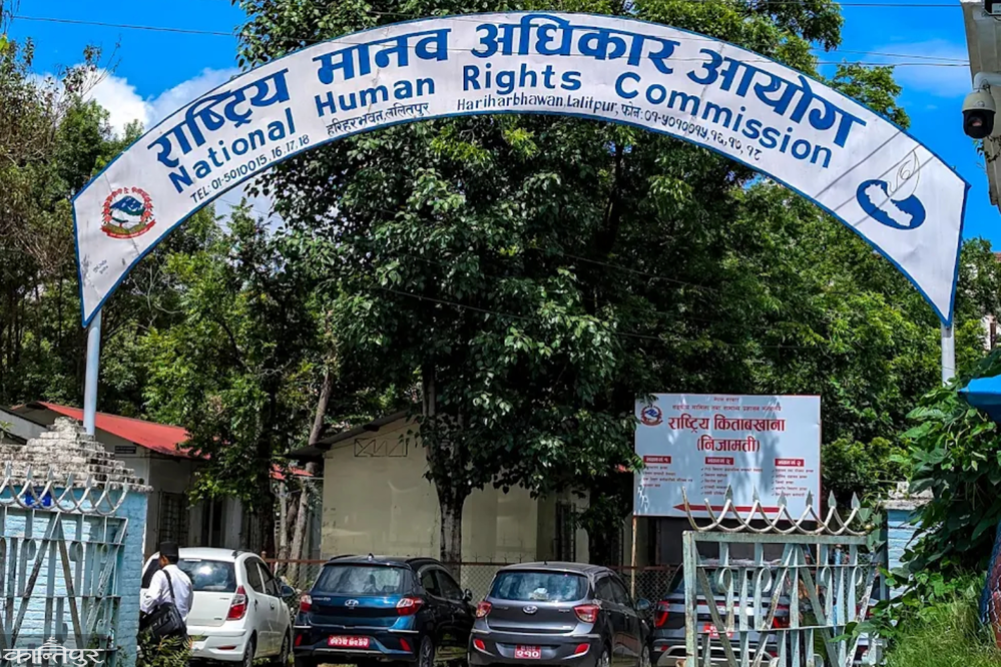
The National Human Rights Commission is a constitutional commission. There is concern and interest in the activities of the commission not only within the country but also outside. The commission has named 52 people, including 17 Rashtriya Swayamsevak Sangh (RSS) MPs, who were involved in the 24 Bhadra incident and recommended them for investigation. The commission has concluded that the 23 Bhadra movement turned violent due to the instigation of 'TOB'. Two groups, including 'TOB', have also been recommended for investigation and action. The commission has stated that a thorough investigation should be conducted into the role played by former Home Minister and Rashtriya Swayamsevak Sangh (RSS) MP Sudhan Gurung in exacerbating the Gen-G movement.
The National Human Rights Commission is a constitutional commission. The activities of the commission are of concern and interest not only within the country but also outside. Therefore, the study and report prepared by the commission in any incident is of special importance. The credibility of the report of the temporary commission formed by the government is often questioned. For example, the commission led by Gauri Bahadur Karki faced a lot of criticism. But the report and recommendation of the Human Rights Commission cover a broader issue. The government is also forced to implement the recommendations made by the Constitutional Commission.
Now the government itself should take the initiative to implement the recommendations without any request or prejudice. In the process, its style should not be selective. If the method of investigating and taking action against favorable characters and ignoring or making excuses against unfavorable characters is adopted, the government's intentions will be questioned. If the recommendations are not implemented and attempts are made to push them into oblivion by confusing them, it will be counterproductive in terms of the country's reputation and credibility.
The issue of implementing the Commission's report is not only meaningful to create a sense of rule of law within the country and to maintain the dignity of the Constitutional Commission, but it is also a matter of international accountability. Because, the international community will basically know what the human rights situation is like within the country from the report of the Human Rights Commission. The report of the Human Rights Commission is considered a strong source in the 'Universal Periodic Review' held at the Human Rights Council under the United Nations.
The Nepalese government will have to be held accountable when questions are raised in important forums around the world. If the Commission's recommendations are not implemented at this time, Nepal's employees and security officials may be deprived of international opportunities as human rights violators. Basically, it will affect the country's reputation. The world community will understand that it is a country where impunity prevails. In the current situation where a strong government has been formed, the government should not make the mistake of weakening the country's image among the international community.
The Commission has now made the recommendation section of the report public. It has received mixed reactions. Therefore, the Commission should now make the full report public, which will resolve the questions expressed in the recommendation section. This is also necessary from the perspective of transparency. Similarly, the government should also implement the recommendations of the commission literally.
Implementation is also inevitable due to the national and international prestige of the recommending organization. The international community is also closely watching the recommendations and implementation status of the commission, and the government cannot ignore that. The most important issue is that someone is guilty of human rights violations, murders, vandalism, arson, looting and terror in the country, and the issue of punishment for the guilty should also be implemented to make it meaningful.