Interest is itself political, because it creates a profound distance through symbols – the distance between the ruler and the ruled, the line between purity and pollution, the wall between discipline and luxury, and the chasm between civilization and chaos.
We use Google Cloud Translation Services. Google requires we provide the following disclaimer relating to use of this service:
This service may contain translations powered by Google. Google disclaims all warranties related to the translations, expressed or implied, including any warranties of accuracy, reliability, and any implied warranties of merchantability, fitness for a particular purpose, and noninfringement.
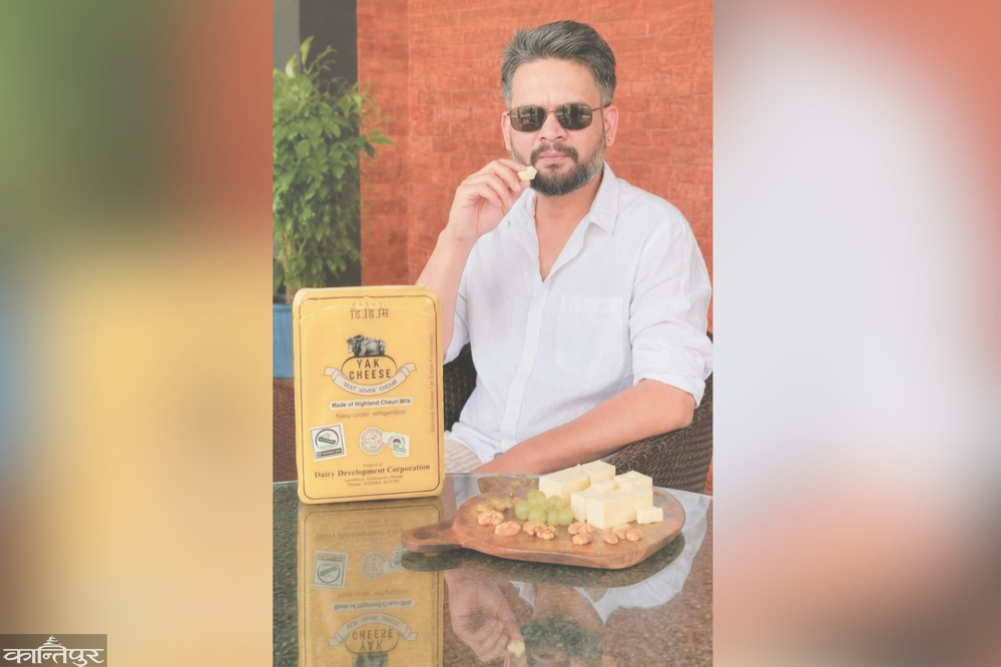
These are bad times. In this strange metropolis that carries the pure spirituality of Kashi and the auspicious beauty of Kashmir, citizens are being monitored instead of being monitored. Before saying or writing anything, one should clarify. One should defend oneself and make one's point. So let us say that this column is not about the Prime Minister of a country who indecently leaves the Parliament building in the middle of the President's formal address in white shoes and black. This comment is also not about some trendy rapper who promotes the market by placing pieces of walnuts, almonds, grapes and yak cheese on a wooden plate. It is even less about the rich youth who eat lightly steamed kurilo, fried black mushrooms, humla beans, marsi rice and roasted boar meat.
This sentiment is not particularly inspired by the thoughts or satire of the neo-liberal co-commentator of this newspaper, who has become a professor of literature, a lecturer in manufacturing, a promoter of liberalism, a fan of the Davos Club, and a fan of the wind industry of international NGOs. The main goal of this commentary is to share the columnist's superficial understanding of the political sociology of elite interests. After all, the work of measuring depth begins from the surface. There is a famous line in the ghazal of Hindustani poet Sahir Ludhianvi - 'Kal aur aayenge... mujhe behbehar kehneh wale.'
Now, if we talk theoretically, it is impossible not to follow the ideological tail of some famous philosopher. The point could also have been raised from the French philosopher Michel Foucault's governing phenomenon of self-discipline. One could have gone for an explanation of propaganda by quoting Theodor Adorno. But rather than that profound interpreter, it is appropriate to remember here with respect the French thinker Pierre Bourdieu, who theorized on issues such as taste and distinctiveness, cultural capital, and the reproduction of class legitimacy and dominance. His concept of ‘distinction’ seems to have more relevance to today’s ‘neo-elite’ aspirants than to the established indigenous elite. According to these subtle explanations of social dominance and taste, the elite class of society establishes its cultural priorities, art consciousness, language, lifestyle, and standards of ‘high’ beauty as universal and legitimate tastes. In this way, ‘taste’ becomes not just a neutral or natural personal sense of beauty, but a tool for maintaining the cultural dominance of the dominant class.
Politics is never conducted and communicated solely through the provisions of the law, the speeches of parliament or the maps of formal institutions. It is expressed through the trends and taste culture existing at the inner level of society, i.e. ‘tests’. Eating habits, choice of clothing, body gestures and posture, decoration of the living room and consumption style of the media – all these are such rituals of self-presentation that reveal the inner self of the ruler. The aesthetic preferences of any leader have already presented the unspoken blueprint of his social outlook long before his formal political doctrine is declared. Taste itself is political because it creates a deep distance through symbols – the distance between the ruler and the ruled, the line between purity and pollution, the wall between discipline and luxury, and the gap between civilization and chaos.
The aesthetic discourse of a new trend in contemporary politics did not come about by chance. Shiny white shoes on the feet, dark black clothes like crow's wings on the body, selected jewels on the table and controlled communication only through the screen of technology are not just a contemporary fashion trend. It is an entire symbolic language linked to unreal power, metropolitan elitism, aspiring class and social control.
Until a few decades ago, white shoes were only made of cloth. School children would reach school on the appointed day wearing canvas shoes with their uniform, protecting themselves from mud and dust, and by the time they returned, the shoes would be brown. Since the Barkhi Barne people were not allowed to wear leather shoes, they would wear white shoes with white clothes. In the 1970s, the villains of Hindi films made the shiny white shoes a symbol of power. For some time after the 1990s, 'sports shoes' were mostly only white. The elites of Sanepa, who used to park their cars at the gate of Tribhuvan University and walk around complaining about the miserable state of higher education during their ‘morning walk’, were only later attracted to the quiet campus of the nearby Institute of Engineering Studies.
The Maoists had popularized cheap, strong, and Nepali-made brown shoes. When they entered the peace process, their attire also changed from revolutionary red to status quo gray. After 2010, their opponents adopted the color white. Perhaps after the urban elite began a series of peace demonstrations wearing ‘white shirts’ in protest against the Maoists’ protests, white gradually became the color of an attempt to stop change and a kind of counter-revolution. Then ‘one day in an era’ was replaced by ‘red and moon and sun’, and white and white ‘sports shoes’ became the choice of those who rarely got out of their cars. The credit for bringing white shoes to the center of the aesthetic governance of the neo-elite should be given to the anti-Maoist peace rally that gathered at Basantapur Durbar Square on a Friday morning in May 2010. After the end of the first Constituent Assembly, white shoes were no longer just a piece of clothing, they became a symbol of ‘managed purity’.
Eating habits, choice of clothing, body language and posture, decoration of the living room and media consumption style - all these are rituals of self-presentation that reveal the inner self of the ruler. What about the rest of the country, it is not possible for ordinary people to keep their white shoes spotless on the muddy or dusty streets of the capital. After being dropped off by the driver, those who take a short stroll towards the granite-paved ‘Fashion Avenue’ need not fear mud and dust. Looking at the shiny cleanliness of the white shoes, it is clear that the wearer of those shoes is completely protected from the friction and dust of the floor. Air-conditioned vehicles instead of crowded public transport, industrial noise and mud instead of pollution-free grand buildings and safe walking away from uncontrolled contact with the road are the essence of white shoes. White shoes do not only show financial wealth, they also present the wearer's ego and confidence - they are saying in a subtle way, 'I am not a man of the earth, the ground I walk on should be more suitable for my taste.'
It is not just the white shoes that have become a hot topic in the public sphere due to the photo taken while leaving the parliament building that has heated up the public sphere. Those in the know say that to judge a person's status, one should look at their feet more than their clothes. I don't remember the name of the narrator now, but I remember the gist. A character, when going to his in-laws' house, polishes his shoes, wipes off the dust, and tightens the laces. When he reaches the mud, he takes off his shoes and puts them on his head, and after crossing the mud, he washes his feet and puts them back on. In that endeavor, his clothes get soaked. Another experience is from New Delhi in the 1970s. A shop in Connaught Place had very expensive shoes decorated. The sales assistant said, "Dami hai, it will last for years." The friend who was with him commented in Nepali, "Who would wear such expensive shoes? After decorating them, they will last for a lifetime." I still remember the laughter and reply of the Hindi-speaking sales assistant, "Aap bhi ham jase hi ho!"
The spotless white shoes try to portray politics as a conflict-free administrative system. It conceives of society as a machine that can be optimized, cleaned, and molded into a certain aesthetic pattern. There, ‘dirt’ or ‘dust’ is no longer just physical disorder, it begins to appear as symbolic chaos. The anger of the grassroots, street protests, unexpected questions, ideological conflicts, student organizations, labor movements, visible poverty, and riverside settlements – all these are ‘dirt’ and ‘noise’ for such an elitocracy. The aesthetics of white shoes always favors only the bright surface, silent acceptance, and invisible characters.
Declarative consumption
The meaning of white shoes is what it is, but when a monochromatic black dress is added to it, the political signal of the outfit becomes even more stark and abstract. Black represents rigor, strict discipline, self-control, and a certain absoluteness. In contrast to the colorful festive attire seen in traditional or democratic traditions, the minimalist black outfit declares a managerial authority. It transforms the leader's personal uniqueness into a brand. By his choice, the dictator begins to appear among the masses not as a common political character, but as a controlled and sophisticated image that can be viewed on the digital screen. In India, the authoritarian form of monochrome attire is being used more effectively by the Chief Minister of the state of Uttar Pradesh, Yogi Adityanath, through his 'saffron attire', than the white shirt, gray suit, and black shoes of bankers.
The attire, which includes a clean and white foot-wear and black dress, presents a strange contradiction – the technology of modernity and elite casualness on the feet, but the expression of emotional toughness and complete control on the body. Together, both create a new image of non-democratic (post-democratic) leadership – which is both informal to look modern but equally harsh and ruthless to impose its decisions. The eating habits of the dictator can also be examined in this way.
In the political arena, the choice of walnuts, almonds and yak cheese made from cow's milk is not just a taste, it is also a luxurious genre-symbol of political science. These food items come from the lexicon of global citizens' taste and disciplined consumption. Walnuts and almonds are seen as enhancing intellectual performance, indicating health awareness and as elite nutritional consciousness. The mixture of yak cheese adds a touch of originality imported from Western Europe and indigenous production. Yak cheese not only shows the interest and access of the new elite within the safe confines of the urban palace to the remote geography and indigenous labor of the Himalayan community, but at the same time it also conveys the message that the physical distance from that production process remains.
Walnuts, almonds, grapes and yak cheese can also be considered a luxury without being luxurious, because the unspoken message that the balanced and nutritious snacks chosen for the elite living in the city are better than the conventional pet food (junk food) – ‘she cheese’ – is conveyed. The days of those who run to the Madhesh and mountains to do politics by chewing corn-soybean or chiura-murhi had already started to accelerate since 2015. After the lockdown due to the Covid pandemic, the main medium of propaganda – smartphones – has reached the hands of the people. In order to ensure that their children’s education is not disrupted, families with weak financial conditions were forced to take out loans to buy cheap but internet-enabled mobile phones. After that, even photos of drunk people with a mustache were limited to being taken for display on (un)social media.
Traditional democratic politics revolved around drumsticks, bread, tea-biscuits, dal-rice, meat broth, sweets or public feasts. There was an inherent sense of collectivism and celebration in it. But today’s neo-elite food and snack culture looks completely different. There, food is not just a means of satisfaction, but rather a demonstration of controlled self-management. ताजा फलफूल, सलाद, टुसाएको अनाज, काजु–बदाम, तोफु र चिज जस्ता वस्तुहरू एकान्तमा वा साना सामाजिक वृत्तभित्र अत्यन्त सावधानीपूर्वक, लगभग चिकित्सकीय शुद्धतासहित उपभोग गरिन्छन्– मानौं शरीरलाई स्वादले होइन, उच्चताको मानकले निर्देशित गरिरहेको हो ।
त्यस्तो प्रदर्शित अभ्यास केवल आहारको चयन होइन, बरु ‘अनुशासित शरीर’ निर्माण गर्ने एक प्रकारको सूक्ष्म प्रविधि हो, जहाँ खानपान नै आत्मनिगरानीको नियमितता बन्न पुग्छ । अधिशासकको शरीर अब स्वतःस्फूर्त जैविक इकाइ रहेन । त्यो एक प्रबन्धित, अनुकूलित र निरन्तर निगरानीमा राखिएको प्रणाली बन्न पुगेको छ । यस्तो शरीरले उत्पादन गर्ने सन्देश सरल हुन्छ– शक्ति अब केवल शासन गर्ने अधिकार होइन, पूर्ण नियन्त्रण कायम गर्न निरन्तर व्यवस्थापन गर्ने क्षमता पनि हो ।
यस प्रक्रियामा राजनीतिक शरीर (बडी पोलिटिक वा राज्य शरीर) पनि रूपान्तरित हुन्छ । त्यो सहभागितामूलक सार्वजनिकता होइन, बरु अधिशासकको कार्यक्षमता, अनुकूलन र प्रदर्शनको एउटा संरचित यन्त्र बन्छ । नागरिकता त्यसपछि सहभागिताको अभ्यासभन्दा बढी नियम मान्ने र अनुसरण मापन गर्ने सूचकांकमा रूपान्तरित हुँदै जान्छ । राज्य स्वयं एक प्रकारको प्रबन्धित शरीर जस्तै व्यवहार गर्न थाल्छ– जहाँ गति, नियन्त्रण र अनुकूलन नै वैधताको नयाँ भाषा बन्छ ।
भोजनमार्फत आत्मानुशासनको सार्वजनिक प्रदर्शन किन पनि महत्त्वपूर्ण छ भने आधुनिक अभिजात्य राजनीतिले जनसहभागिताभन्दा बढी अधिशासकीय कार्यकुशलताको अनुकूलनलाई बढी महत्त्व दिन्छ । शासकहरू सधैं ऊर्जावान्, स्वस्थ, भावना–नियन्त्रित र प्रशासनिक रूपमा चनाखो देखिनुपर्ने बाध्यता देखाइन्छ । उनीहरूको ‘डाइट चार्ट’ नै उनीहरूको शासकीय दर्शनको एउटा हिस्सा बन्न पुग्दछ । सामाजिक सञ्जालमा नीतिगत वक्तव्यहरू पोस्ट गर्दै गर्दा ओखरको टुक्रा चपाउनु भनेको एउटा प्राविधिक–तन्त्रको पहरेदार जस्तो देखिनु हो– जो सधैं जागा छ, जसले सूचनाहरू विश्लेषण गरिरहेको छ र जो आफ्नो बिम्ब निर्माणमा अहोरात्र खटिएको छ ।
राजनीतिक सञ्चार
जीवनशैलीमार्फत अधिशासकीय स्वरूपको सन्देशसँगै संवादको प्रवृत्ति पनि फेरिन थालेको छ । राजनीतिक सञ्चार संसद्का बहस र पत्रकार सम्मेलनहरूबाट सरेर सामाजिक सञ्जालका पर्दाहरूमा सीमित हुन पुगेपछि प्रजातान्त्रिक संस्कृतिको चरित्र नै बदलिएको छ । संसद् त्यस्तो ठाउँ हो, जहाँ व्यवधान सम्भव हुन्छ– टेबल ठटाउन मिल्छ, नारा लगाइन्छ र घेराउ गर्नु पनि असंसदीय व्यवहार होइन । पत्रकार सम्मेलन त्यस्तो स्थल हो, जहाँ अनपेक्षित प्रश्नहरूको जोखिम रहन्छ । दुवै अवस्थामा शासकले नियन्त्रणविहीन संवादको सामना गर्नुपर्छ । तर सामाजिक सञ्जालले उसलाई पारस्परिक जवाफदेहिताबिनाको एकतर्फी प्रसारणको सुविधा दिन्छ । शासक निरन्तर बोलिरहन्छ तर वास्तविक द्वन्द्वको जोखिमलाई कर्पोरेट ढंगले न्यूनीकरण गरिन्छ ।
डिजिटल प्लाटफर्ममार्फत जनतासँग सिधै जोडिने यो शैलीले निकटताको भ्रम त पैदा गर्छ, तर प्रजातान्त्रिक संस्थाहरूको मध्यस्थतालाई कमजोर बनाइदिन्छ । अधिशासक सधैं उपस्थित देखिन्छ तर भौतिक रूपमा ऊ अझ दूरस्थ, अभेद्य र अप्राप्य बन्दै जान्छ । सामान्यजनले निकटताको आभास त पाउँछन् तर निर्णय प्रक्रियामा उनीहरूको कुनै अर्थपूर्ण सहभागिता हुँदैन । राजनीति अन्ततः सामूहिक विमर्शबाट च्युत भएर रंगमञ्चीय प्रसारणमा परिणत हुन पुग्छ ।
यहीँनेर सेतो स्निकर्स, एकरंगी पोसाक, न्यूनतमवादी कोठा र काठको थालमा कलात्मक रूपमा सजाइएका स्वस्थकर खाजाका दानाहरूले नयाँ अर्थ ग्रहण गर्छन् । तिनीहरू अब केवल व्यक्तिगत रुचिका वस्तु रहँदैनन्, डिजिटल स्क्रिनका लागि अनुकूलित बिम्ब बन्छन् । अधिशासक अब संस्थागत प्रतिनिधिभन्दा बढी अल्गोरिदमले रुचाउने एउटा गुडिरहेको तस्बिरमा रूपान्तरित हुन्छ । राजनीति ‘जीवनशैलीको ब्रान्डिङ’ को सिकार बन्छ ।
यस सौन्दर्यशास्त्रभित्र गहिरो सहरी सम्भ्रान्त पूर्वाग्रह लुकेको छ । प्रविधि, वित्त, मिडिया र वैश्विक उपभोक्ता संस्कृतिबाट हुर्किएको महानगरीय व्यावसायिक वर्गले गतिशीलता, आत्मप्रदर्शन, पोषणको अनुशासन र डिजिटल निपुणतालाई आधुनिकताको मापदण्ड ठान्छ । बिस्तारै यिनै व्यक्तिगत प्राथमिकताहरूलाई विश्वव्यापी दक्षताको संकेतका रूपमा स्थापित गरिन्छ । परिणामतः हिलो लागेको चप्पल लगाएको किसान, धुलाम्मे जुत्ता लगाएको मजदुर, सामूहिक भोजमा सहभागी ग्रामीण नेता वा भीडबीच चिच्याएर भाषण गर्ने श्रमिक संगठनका अगुवाहरू मूर्धन्य कथाकार गोविन्दबहादुर मल्ल ‘गोठाले’ को कथा ‘म जुजुमान’ का पात्र जुजुमान जस्तै आफसेआफ ‘असभ्य’ वा ‘आउटडेटेड’ देखिन थाल्छन्, जबकि प्रजातान्त्रिक जीवनको वास्तविक धरातलसँग तिनै पात्रहरू बढी नजिक हुन्छन् ।
यस प्रकार रुचि र फेसनले सुटुक्क वैधानिकताको पुनर्परिभाषा गरिरहेका हुन्छन् । स्वच्छता, सुन्दरता, कोमलता र तौरतरिका मिलेको व्यक्तित्वका लागि उर्दू भाषामा ‘नफासत’ भनिन्छ । त्यस्तो कृत्रिम स्वच्छता र सुसंस्कृतपनको ढोंगलाई बुद्धिमत्तासँग, नियन्त्रणलाई क्षमतासँग र प्राविधिक दक्षतालाई प्रगतिसँग जोडिन्छ । भुइँमान्छेको अस्तव्यस्तता र धूलोलाई अविवेकी वा पश्चगामी ठहराइन्छ । यो सौन्दर्यशास्त्रीय सोपानतन्त्रले वर्गीय असमानतालाई केवल सुन्दर आवरण दिएको हो ।
सामाजिक सञ्जालमा आश्रित अधिशासकले प्रजातान्त्रिक संस्थाहरूलाई प्रत्यक्ष रूपमा भत्काउँदैन तर उसको सौन्दर्यशास्त्रीय शैलीले सहभागितामूलक संस्कृतिलाई भित्रभित्रै मक्क्याउँछ । प्रजातन्त्र आफैंमा कोलाहलपूर्ण हुन्छ । त्यस्तो व्यवस्थाको क्रियाशीलता र जीवन्तताका लागि व्यवधान, असहमति, कठिन प्रश्न र असजिलो संवाद चाहिन्छ । तर अधिनायकवादी सौन्दर्यशास्त्रले सधैं चिल्लो, नियन्त्रणयुक्त र आलोचनाविहीन वातावरण खोज्छ । त्यही नै सम्भ्रान्तीय सौन्दर्यशास्त्रको अन्तर्निहित जोखिम हो । राजनीति सामूहिक विवेकको मन्थन नभएर जनभावनाको व्यवस्थापनमा सीमित हुन थाल्छ । नागरिकहरू नीति र न्यायभन्दा बढी अधिशासकको अनुशासित बिम्ब, पोसाक र डिजिटल प्रस्तुतिबाट प्रभावित हुन पुग्छन् । त्यसपछि फेसनले राजनीतिलाई सजाउने मात्र होइन, राजनीतिको विकल्पकै रूपमा काम गर्न थाल्छ । त्यस्तो नहुन सक्छ तर राम्रो हुने विश्वासका साथ जोखिमका लागि पूर्वतयारी गर्नु एकादेशका सचेत समुदायको कर्तव्य हुन आउँछ । कथा हो, सुन्नेलाई सुनको माला... ।