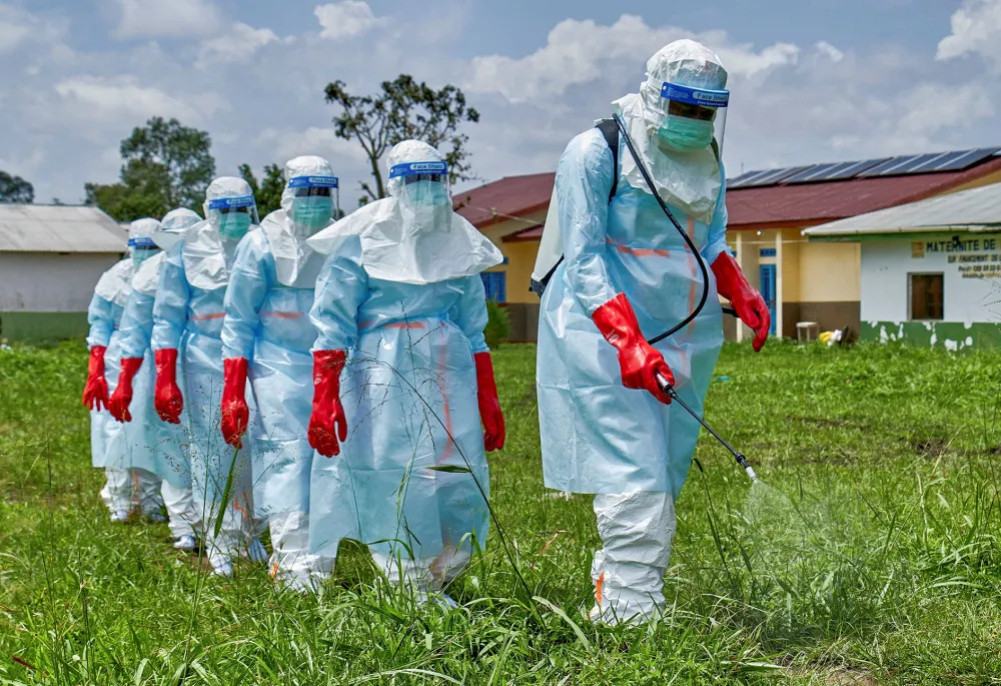
It is time to be vigilant about Ebola. Although it was first reported in 2014-16, it has become a matter of renewed concern now that deaths have started in Congo and Uganda.
We use Google Cloud Translation Services. Google requires we provide the following disclaimer relating to use of this service:
This service may contain translations powered by Google. Google disclaims all warranties related to the translations, expressed or implied, including any warranties of accuracy, reliability, and any implied warranties of merchantability, fitness for a particular purpose, and noninfringement.
The increasing interconnectedness between people around the world has not only facilitated the exchange of goods, services, experiences, art, culture, inventions, technology, etc., but has also increased the possibility of spreading deadly viral infections. It does not take long for various types of infections that cause epidemics or health crises to reach one corner of the world. Infections such as cholera, SARS, swine flu, COVID-19, HIV, Spanish flu, and smallpox have afflicted many people around the world, caused many deaths, and caused countless people to suffer.
However, infections that were once considered more deadly have proven to be less deadly over time due to vaccines or mutations in the virus. Nevertheless, new infections continue to spread fear. Now is the time to be aware of Ebola. Although its outbreak was previously reported in 2014-16, it is now necessary to be alert again after people started dying in Congo and Uganda.
The WHO has declared a 'global health emergency' after the Ebola outbreak spread in the eastern Ituri province of the Democratic Republic of the Congo. About 170 suspected deaths and more than 900 cases of infection have been reported in Congo. Five people have been infected and two have died in neighboring Uganda. There is no proven vaccine available to prevent the Bundibugyo variant of Ebola that is currently spreading. According to the US Centers for Disease Control and Prevention (CDC), this virus can cause severe and often fatal disease, with a mortality rate of 80 to 90 percent. Therefore, the world is on high alert at this time. Many countries are planning to prevent the infection from entering their countries. Since Nepal is also connected to the world in many ways, the infection can spread here too. Therefore, the Nepal government also needs to adopt an appropriate strategy.
Many countries are making plans to prevent the infection from entering their countries. Since Nepal is also connected to the world in many ways, the infection can spread here too. The Ebola infection currently seen in the African country of Congo may or may not reach Nepal. It can be analyzed that Nepal is also at risk for two main reasons. First, citizens of many countries of the world are moving around daily. Nepali workers have reached many countries of the world and they are also returning home or leaving, so the infection can reach Nepal through them. Such an infection can also reach Nepal through international passengers using Nepal's Tribhuvan Airport. Nepal has an open border with India and a large number of people are moving around daily.
Global movement using Indian citizens or Indian soil increases. If an infection is detected there, the possibility of it reaching Nepal is high. Secondly, there are currently more than 970 Nepali peacekeepers deployed under the UN peacekeeping mission in Congo. They have been instructed to adopt strict security standards. If any of them get infected and proper care is not taken when they come to Nepal, the infection can spread. However, the Nepali Army has adopted a policy of mandatory isolation for 21 days for peacekeepers returning from Congo. This should be followed effectively and strictly.
Although it is not clear whether Ebola will reach Nepal or not, there are two main reasons why Nepal should be alert. First, Ebola itself is deadly. Therefore, if it reaches Nepal, it can cause huge human losses. Its family, social and economic losses will also be huge. Second, Nepal's health system to deal with Ebola infection is not strong. This has been felt at the public level during the Corona pandemic that spread in 2076/77. It was clear at that time that there were weaknesses in all areas such as health supplies, dedicated hospitals, training for health workers and security personnel, identification and surveillance systems for infected people. Neither was the government's information effectively communicated, nor was the class leading the government accountable.
That made citizens more victims. Therefore, if Ebola spreads, there is a high possibility of repeating the same weaknesses at that time. On the other hand, if the infection starts to appear, everything should be done in a hurry. There is also a high possibility of making mistakes at that time. If a proper strategy is started now, taking the advice of experts, it can give effective results. The government should always make its health system strong and citizen-friendly, not only when there is a possibility of any infection.
At this time, the government should mainly create a systematic system of surveillance and testing at Tribhuvan Airport. Dedicated hospitals should be designated. From health supplies to testing kits, the initiative should be taken. Such infections spread even during periods when symptoms are not visible. The same thing happened with Corona. Therefore, a profile should be prepared for people coming from areas where the infection has spread or those who have been in contact with them and an environment should be created for them to live in isolation. Ebola infected people show symptoms such as fever, headache, vomiting, extreme weakness, stomach pain, nosebleeds, and vomiting blood.
If someone has such symptoms, he should contact the hospital himself. One should stay away from people who have such symptoms. Wearing a mask, following information issued by official bodies, and not spreading unverified information-photos-videos on social media are the regular responsibilities of an aware person. Rather than panicking about the infection, one should follow a strategy of being aware. However, since Ebola infection has not been seen in Nepal so far, all the issues mentioned are only matters of preparation and awareness. Our strategy should be not to panic but to be prepared.