If the criteria of 'competence' are left to the discretion of those in power, then the path may be opened for any government that comes in the future to see as 'competent' those who work in its interests and elevate them to leadership.
We use Google Cloud Translation Services. Google requires we provide the following disclaimer relating to use of this service:
This service may contain translations powered by Google. Google disclaims all warranties related to the translations, expressed or implied, including any warranties of accuracy, reliability, and any implied warranties of merchantability, fitness for a particular purpose, and noninfringement.
The judiciary is the last pillar of democracy, on whose foundation the rule of law and civil liberties are based. The post of Chief Justice is not only an administrative leadership but also the supreme responsibility of protecting this Constitution and keeping alive the principle of separation of powers and the principle of checks and balances.
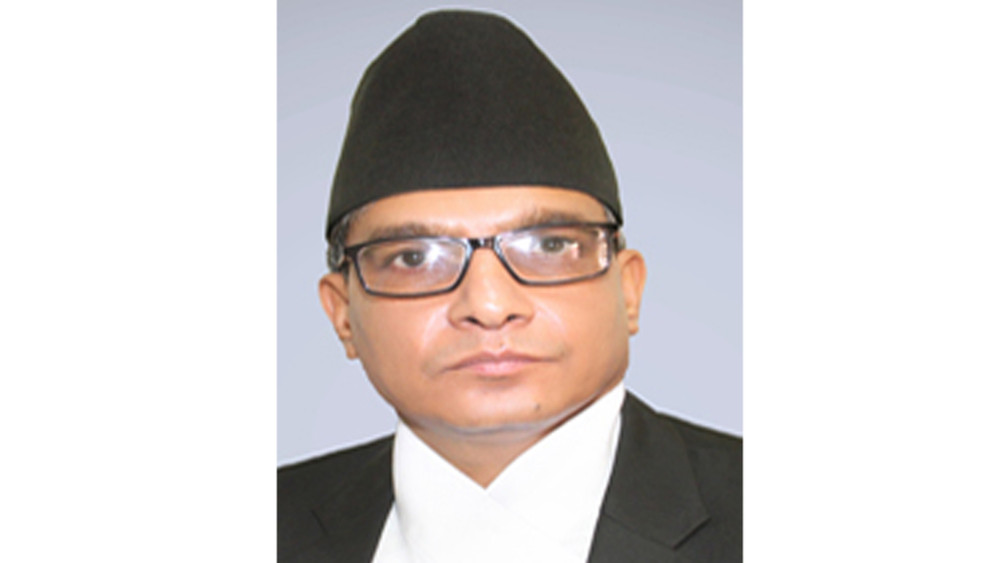
In the judicial history of the Supreme Court, leadership has been selected according to the order of seniority. Recently, the Constitutional Council recommended Justice Manoj Kumar Sharma, who is fourth in the order of seniority, as the Chief Justice, creating a new and complicated debate on the established tradition and judicial system.
The reason behind Sharma's recommendation has been discussed due to his qualifications and expertise. This seems to be an attempt to make 'meritocracy' or efficiency the standard rather than the 'tradition of seniority'.
If the parliamentary hearing committee approves the recommendation of the Constitutional Council, Sharma will be appointed by the President and will hold office for about 6 years, a rare and long tenure in the judiciary. However, there is no consensus even within the Constitutional Council on this recommendation. The leader of the opposition party and the Speaker of the National Assembly have expressed their disagreement in writing with this recommendation, raising questions about the violation of seniority.
It seems necessary to mention the provision in Article 129(3) of the Constitution of Nepal. The Constitution stipulates that a person must have served as a permanent judge in the Supreme Court for at least three years to become the Chief Justice. A serious constitutional question arises here: If seniority was the only basis, why was it not stipulated in the Constitution itself that the ‘senior judge’ would be the Chief Justice? What does it mean for the Constitution to give the Constitutional Council the power to select from among all the qualified judges on the ‘roster’?
On what basis were established and capable personalities found ineligible when talking about competence and efficiency? What is the objective basis for evaluating efficiency? But, on the other hand, on what basis were established and capable personalities found ineligible when talking about competence and efficiency? What is the objective basis for evaluating efficiency? The answer to the question can be expected from the Council. Similarly, in what capacity was acting Chief Justice Sapna Pradhan Malla, who was number one on the seniority list, removed? It should be clarified. If both these aspects are not objectively explained, the dignity of the judiciary will be tarnished.
How will this recommendation, made without a clear basis as to why three judges in the seniority order were found ineligible for the Chief Justice position, maintain faith in justice among the general public? Former Chief Justice and former Prime Minister Sushila Karki has strongly commented on this process – the Chief Justice was selected ‘like a goat’s hooves’, which should never have happened.
Malla, who has made historic contributions to the field of women’s rights, is an internationally renowned figure. In addition, the search for a new definition of ‘qualification’ by ignoring the experience and expertise she has worked as a judge of the Supreme Court since 17 Shrawan 2073 BS has undermined the system of predictability of the judiciary.
The principle of seniority in the judiciary is not just a tradition, it is also an important link in ensuring the morale of judges and judicial impartiality. When leadership is transferred according to the established role, then a kind of predictability remains in the leadership of the judiciary, which minimizes the possibility of political interference. However, when the political leadership distorts the role by defining ‘qualification’ in its own way, there is a possibility that judges in the future may be loyal to the government to secure their future. If the criteria of ‘qualification’ are left to the discretion of the government, then the path may be opened for any government that comes in the future to see a person who works in its own interest as ‘qualified’ and to promote him to leadership. Due to which there is a suspicion that the judiciary itself will not fall into the shadow of the executive.
Finally, the issue of appointing the Chief Justice in Nepal is currently at the crossroads of constitutional ethics. Although violating seniority in itself is not a literal violation of the constitution, it has raised serious questions about established practice and judicial dignity. It is not enough to simply follow the constitution literally, the spirit of the constitution must also be preserved. The lack of a transparent explanation of why and on what basis established competent individuals were found ineligible while searching for qualifications and expertise can create institutional distrust.
The way forward is to adhere to constitutional deadlines, respect seniority, and adopt complete transparency in the appointment process. A sensitive organ like the judiciary should always work with integrity and impartiality. Its dignity and independence can only be preserved when it stands as the protector of the constitution without becoming a shadow of any government. It seems necessary to understand in time that if the foundation of justice itself is shaken, the rest of the structure of democracy cannot last for long.