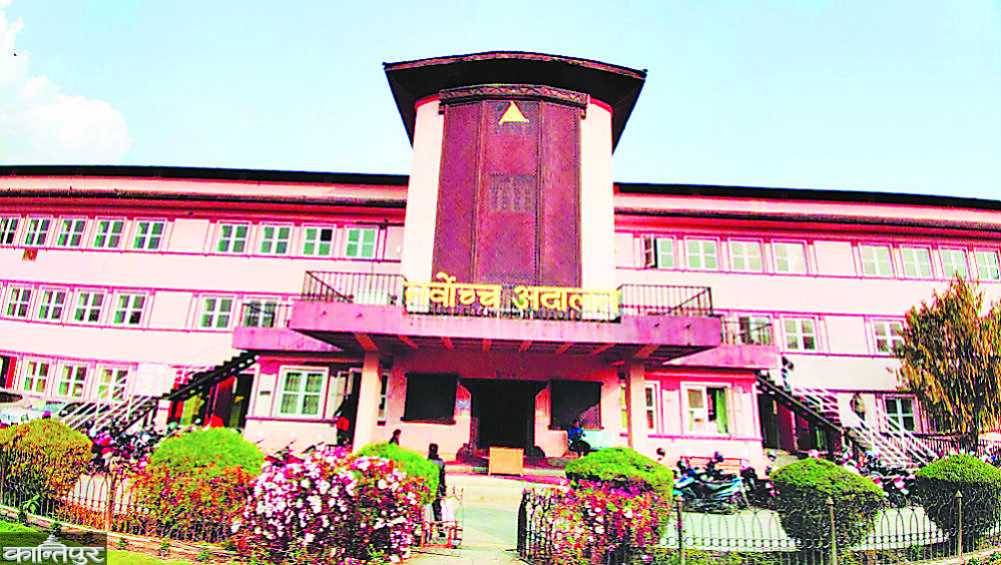
People who raise issues of public concern go to court not for personal gain, but for the benefit of society and the public. But when they have to face discouragement, delay, and inconvenience at the administrative level, trust in the justice system weakens.
We use Google Cloud Translation Services. Google requires we provide the following disclaimer relating to use of this service:
This service may contain translations powered by Google. Google disclaims all warranties related to the translations, expressed or implied, including any warranties of accuracy, reliability, and any implied warranties of merchantability, fitness for a particular purpose, and noninfringement.
The Constitution has granted every citizen the fundamental right of access to justice. The Constitution has given the Supreme Court the special right to intervene in matters of public concern, so that the weaknesses, negligence of the state or the impact on the rights of the people can be corrected through judicial review. Matters of public concern are not only related to the personal interests of an individual, but are also related to society, public health, consumer rights, food rights, environment and civil security. However, in practice, the process of bringing matters of public concern to the court is still not easy. In many cases, such matters seem to face unnecessary obstacles, delays and inconveniences in the court administration.
I myself have had a similar experience while filing writ petitions in the Supreme Court on two important matters of public concern. Those experiences have forced me to ask a serious question, if it is so difficult to bring matters related to people's lives, health and constitutional rights to the court, how can ordinary citizens trust in justice?
Around Falgun 2081, there were incidents of cooking gas explosions in various cities of Nepal, causing fire and loss of life and property. I came to know that the inspection date or expiry date is not clearly mentioned on the cylinder. Since it is a sensitive item, regular testing and inspection are essential . But the cylinder is mandatory to be inspected for the first time after 10 years and then every 5 years thereafter. If the inspection date is not clear, the consumer cannot know whether the cylinder they are using is safe or not . Considering the issue as a matter of public concern, I completed the process and submitted a writ to the Supreme Court on 11 Falgun 2081 with the demand that the inspection date be clearly mentioned on the cylinder. But the court administration said, 'Please come after a week'. When I went after a week, I was pressured to withdraw the writ, saying, 'The bench does not look into such a matter'. More seriously, if there was a legal problem in the writ, the administration should have filed a complaint. But they said orally, 'Take the writ'. I did not accept. They said again, 'Come after a week'. Later, it was appealed and finally accepted by the bench and registered on 12 Chaitra 2081.
Trust in the court is determined not only by the decision of the judge, but also by the behavior of the court administration. Once a citizen reaches the court door, he should at least get the opportunity to have his matter heard fairly. This experience made me realize that taking a matter of public concern to the court is a struggle in itself. If there are administrative obstacles even in matters related to public safety, how complicated will the process of seeking justice be for the common man?
My second experience is also related to cooking gas. After the US-Israel and Iran wars, there was a shortage of gas in Kathmandu, but the press release of the Nepal Oil Corporation claimed that there was no shortage. The shortage of cooking fuel is not just a problem of market management, but is also a matter related to the right to food. The Constitution of Nepal has recognized the right to food as a fundamental right. Therefore, I raised the issue as a matter of public concern and filed a writ petition in the Supreme Court on 8 Falgun 2082 with the demand that ‘the public be ensured easy access to cooking fuel’. But using insensitive language, I was asked to come after three days. Later, I was pressured to withdraw the writ.
Finally, I exercised my right to information. I demanded information as to why the writ was not registered and why a hearing was not held. I even filed a complaint with the secretariat. Only then was the writ registered 18 days later, on 25 Falgun. More importantly, after registration, the court considered the writ to be a sensitive issue related to people’s access to food and cooking fuel and even granted it priority.
This raises a serious question, if the issue was not really important, why would the court give priority? This clearly shows the gap between the court administration and the judicial approach and also makes it clear that the court administration is misusing its powers. These experiences have led me to a conclusion that filing a petition on a matter of public concern in Nepal is sometimes like winning a war. People who raise issues of public concern go to court not for personal gain, but for the benefit of society and the public. But when they have to face discouragement, delay and inconvenience at the administrative level, then faith in the justice system is weakened.
Conclusion
Going to court on a matter of public concern is not a personal interest of an individual. It is an effort made in favor of society, the constitution and the public interest. The court is the last hope in a democracy, so such efforts should be treated with respect, facilitation and sensitivity in the state. My own experience has shown that filing matters of public concern in court can sometimes be a very difficult process. Such a situation is not a healthy sign for the justice system in the long run. Faith in the court is determined not only by the decisions of the judge, but also by the behavior of the court administration. Citizens should at least have the opportunity to have their matter heard fairly once they reach the court door. The behavior of the court administration in matters of public concern should reflect the spirit of the constitution. The administrative process should be citizen-friendly, transparent and accountable. If the court is the guardian of the constitution, the court administration is the first guardian of access to justice.
The need today is not only for legal reform, but also to develop sensitivity, responsibility and respect for the public interest in the judicial culture. As long as a citizen who seeks to register a matter of public concern in the court has to experience it as if he has won a war, the constitutional ideal of access to justice cannot be considered fully realized. The court is the last hope in a democracy. Therefore, the path to the court should be easy, respectful and fair. Every voice raised on a matter of public concern should be welcomed not with administrative obstruction, but with a sense of constitutional responsibility.