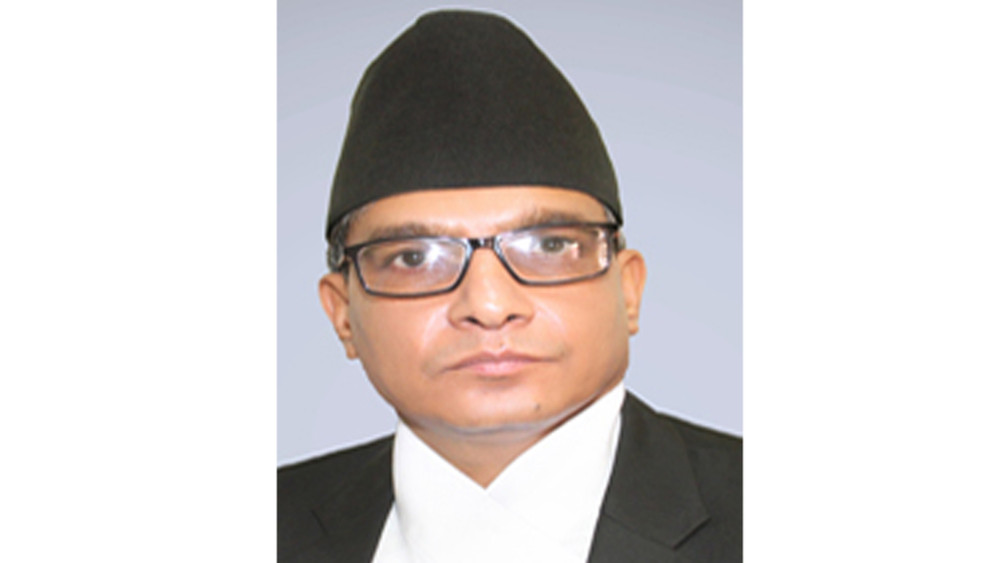
It is not appropriate to create suspicion that a decision made with the initiative and involvement of the government, which came with strong public opinion, should convince the society. If the government presents more credible grounds for recommending Sharma, the suspicion may weaken. To reduce the long-term suspicion, it will have to depend on the role Sharma will play as the Chief Justice.
We use Google Cloud Translation Services. Google requires we provide the following disclaimer relating to use of this service:
This service may contain translations powered by Google. Google disclaims all warranties related to the translations, expressed or implied, including any warranties of accuracy, reliability, and any implied warranties of merchantability, fitness for a particular purpose, and noninfringement.
The recommendation of the fourth-ranking judge of the Supreme Court, Manoj Kumar Sharma, as the Chief Justice by postponing the Parliament session, bringing an ordinance and ignoring seniority has created political and judicial suspicions. Constitutional/legal experts, bar associations, former Chief Justices, and others have raised questions on this issue. Although the ruling party continues to claim that Sharma was recommended as the Chief Justice based on his performance, it has not been able to present a strong basis to confirm it. It is not appropriate to create suspicions when the decision made with the initiative and involvement of the government, which came with strong public opinion, should convince the society. If the government presents more credible grounds for recommending Sharma, the suspicions may weaken. To reduce long-term suspicions, it is necessary to rely on the role Sharma will play as the Chief Justice.
Before recommending Sharma, the fourth-ranking judge, as the Chief Justice by the Constitutional Council, the series of decisions taken by Prime Minister Balendra Shah should also be examined. He had adjourned the already-called parliament session. At that time, it was said that it was postponed due to lack of preparation, but the Council of Ministers had revealed its hidden purpose by advancing several ordinances. At the same time, an ordinance was also issued to amend the Constitutional Council Act, in which the traditional definition of majority has been changed. If the votes of 3/3 of the 6 members of the council are divided, there is no majority, but through the ordinance, a provision was made that three members of the party represented by the Prime Minister will be considered a majority. And, the council meeting held on Thursday recommended Sharma as the Chief Justice despite the written 'note of dissent' of two members. In this process, the established tradition of recommending a senior judge as the Chief Justice was broken.
Before recommending Sharma, who is ranked fourth, as the Chief Justice by the Constitutional Council, the series of decisions taken by Prime Minister Balendra Shah should also be examined. He had ended the already called session of Parliament. Although it was said that it was postponed due to lack of preparation at that time, the Council of Ministers had revealed the hidden purpose by advancing several ordinances. Article 129 (3) of the Constitution states that a person who has served as a judge of the Supreme Court for at least three years is eligible for appointment to the post of Chief Justice. Accordingly, the Judicial Council had sent a list of six people to the Constitutional Council on 26 February. Therefore, the recommendation made by the Constitutional Council is not unconstitutional. But the chairman of the council and the proposer of the proposal, Prime Minister Shah, is not free from questions. First, tradition is followed on some issues that are not contradicted by the constitution and law. When tradition is tried to be broken, then public justification has to be confirmed. The government has failed in this. Due to this, there is a suspicion that the government through the Constitutional Council is trying to take a suitable person to the leadership of the Supreme Court rather than a qualified person. If this cannot be overcome immediately, the trust in the judiciary will weaken further.
Although it is not a constitutional question, this recommendation is not beyond the question of political morality. An easy formula to find out whether any work is ethical or not is – is it acceptable for others to do the same thing as you do? Keeping the Gen-G movement and the election results of 21 Falgun in the background, one of the responsibilities of this government is to strengthen the system. This time, the Chief Justice was recommended through activities ranging from adjourning the parliament session to violating seniority. Can similar activities be acceptable for other Prime Ministers? Can the Rashtriya Swayamsevak Sangh or civil society accept that? Similarly, does it provide the benefit of the doubt? It is inevitable for the Prime Minister and his party, the Rashtriya Swayamsevak Sangh, to seriously introspect on this. Adopting such a method may lead to the risk of Supreme Court judges making executive-friendly decisions or running to be close to the center of power with the ambition of becoming the Chief Justice. There may be competition between them to please the ruling party. The Rashtriya Swayamsevak Sangh (RSS) should be ready to take moral responsibility for this.
Society is unanimous about many problems in the Supreme Court and other courts. The complaint that the party image is visible on the faces of many judges is an old one. The committee coordinated by Harikrishna Karki has identified areas of corruption within the judiciary, which is why there is a strong belief that the judiciary itself is not a corruption-free sector. There has also been criticism of poor access to justice and delays. On average, 60-80 cases are heard daily in the Supreme Court, out of which a lot of the Supreme Court's time is spent on hearing writs of a political nature and petitions of public concern, making it difficult for people's cases to get a turn. As a result, citizens' cases have been entangled for years. Honest, strong and determined leadership is necessary to improve such overall problems. The Constitutional Council probably expects similar leadership from Sharma, who was recommended as the Chief Justice on the initiative of the Prime Minister.
The Parliamentary Hearing Committee and Parliament should be serious about the questions raised now. In fact, Sharma may be approved by the Parliamentary Hearing Committee. After that, he will also be appointed by the President. But he will not be beyond challenge. Sharma's main challenge will be to improve the weaknesses seen in the Supreme Court and the overall judicial process. On the other hand, the Supreme Court has a history of standing firmly in accordance with the spirit of the Constitution in political cases involving constitutional questions. The Supreme Court not only protected the Constitution by reversing the dissolution of the House of Representatives twice by the then Prime Minister KP Sharma Oli, but was also able to explain the scope of the Constitution and the law to the Prime Minister. This is just one reference.
When a powerful government is in power, the responsibility of strengthening the principle of separation of powers is basically the responsibility of the Supreme Court. Whether Sharma allows the shadow of the executive to cast its shadow on the judiciary or not will test his ability and will also expose the doubts expressed about the current recommendation. In conclusion, the government should clarify the controversy and questions raised by the recommendation process of the Chief Justice. It should take moral responsibility for the new traditions established in a few days, including the adjournment of the Parliament session.