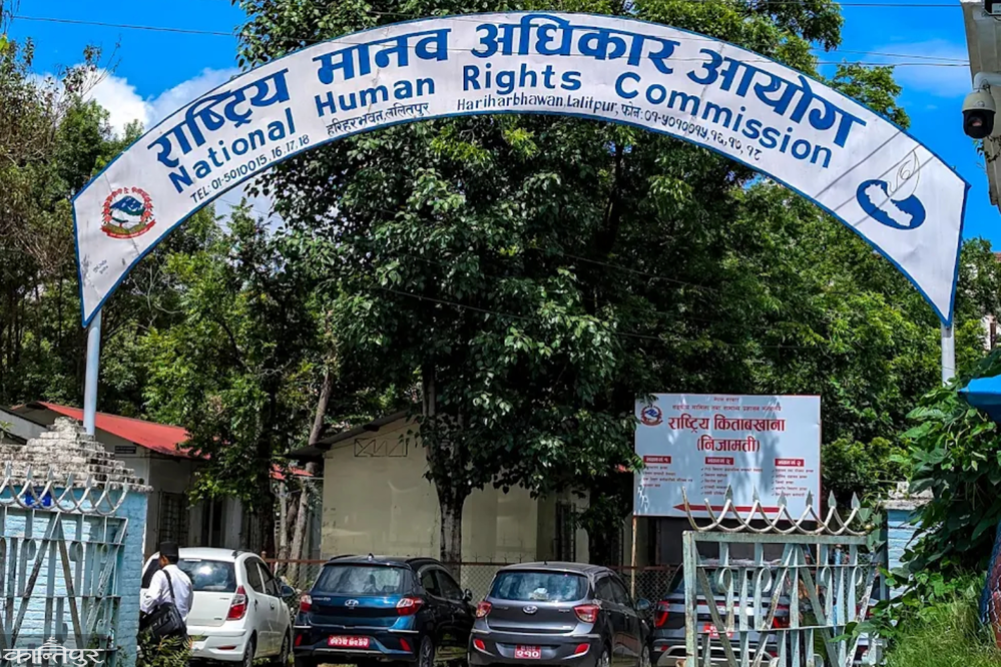
The study and report prepared by the commission in any case is of special importance. The credibility of the reports of the temporary commissions formed by the government is often questioned. However, the reports and recommendations of the commissions are considered impartial.
We use Google Cloud Translation Services. Google requires we provide the following disclaimer relating to use of this service:
This service may contain translations powered by Google. Google disclaims all warranties related to the translations, expressed or implied, including any warranties of accuracy, reliability, and any implied warranties of merchantability, fitness for a particular purpose, and noninfringement.
The country has experienced many ups and downs in the eight months since the Gen-G movement on 23 and 24 Bhadra. 76 people died and hundreds were injured during the movement, the resignation of the then Prime Minister KP Sharma Oli, the formation of an electoral government led by Sushila Karki, the election of the House of Representatives and the appointment of Balendra Shah as Prime Minister, one can feel the rapid pace that the country has picked up. The political power equation that was determined by the 21 Falgun election is believed to take the country in a new direction from many angles.
However, questions remain among people about the incidents of 23 and 24 Bhadra. The inquiry commission led by Gauri Bahadur Karki formed by the government was expected to dispel the curiosity in the minds of the people, but after it prepared an incomplete report, many are waiting for the report of the National Human Rights Commission. However, the commission has delayed making the report public. This has increased suspicion. Therefore, the prepared report should be made public immediately.
21 people died on the same day due to the repression of the 23 Bhadra movement. Hundreds were injured. The next day, after the demonstration, symbolic institutions of the country including the Parliament Building, Singha Durbar, and the Supreme Court were set on fire. In addition, many government offices, commercial and business centers, and media houses across the country were also set on fire. The National Human Rights Commission had formed an investigation team led by Commission member Lily Thapa on 24 Bhadra.
The Commission team has already submitted the report on 6 Chaitra. But the task of making it public has not been a priority for the Commission. Instead, two members of the Commission, Mihir Thakur and Manoj Duwadi, have been given the task of further study, preparing a brief report, and making a summary. This has increased the possibility that the full report will not be made public or only a selective part will be made public. Instead of dispelling confusion, there is a risk of expanding it. Therefore, the Commission should make the full report public as soon as possible.
The Constitution of Nepal states that it is the duty of the Human Rights Commission to ensure respect, protection and promotion of human rights and their effective implementation. The activities of this commission are of concern and interest not only within the country but also outside. Therefore, the study and report prepared by the commission in any case is of special importance. The credibility of the report of the temporary commission formed by the government is often questioned. But the report and recommendations of the commission are considered impartial.
The report of the Commission is also viewed with importance outside the country. Because the international community can basically know what the human rights situation is like in the country through the report of the Human Rights Commission. The report of the Human Rights Commission is considered a strong source in the 'Universal Periodic Review' held at the Human Rights Council under the United Nations. The commission is expected to write a report fearlessly, especially in cases of human rights violations committed by the state. This can create strong pressure to bring the institutions and individuals found guilty to justice. The commission makes public the names of officials, individuals or bodies who do not follow or implement the recommendations or instructions of the commission and keeps a record of them as human rights violators. This also makes the role of the commission significant in ensuring respect and ensuring human rights within the country.
The report of the Commission is also viewed with importance outside the country. Because the international community can basically know what the human rights situation is like in the country through the report of the Human Rights Commission. The report of the Human Rights Commission is considered a strong source in the 'Universal Periodic Review' held at the Human Rights Council under the United Nations. The world can also know whether or not human rights-related treaties or agreements have been implemented through the report of the Commission. Periodic and special reports present Nepal's image to the world. Therefore, the report of the Commission also has a direct/indirect impact on Nepal's presence in international forums.
The report of the Human Rights Commission remains a strong reference source for participating in peacekeeping or international forums. Therefore, there is no room for negligence in preparing the report of the Human Rights Commission. Because, it is a matter that is linked to the dignity of the entire country, including the Commission. Therefore, the Human Rights Commission and its report are considered more credible than the previous commissions formed by the government.
The issue of making the report public after the Commission prepares it is also a question of its transparency. Despite some weaknesses, the Human Rights Commission is still considered an independent and fearless commission. If the Commission does not report, then its autonomy, independence and fearless image are questioned. Earlier, the Commission has not even made public the study report of the Tinkune incident that took place on 15 Chaitra 2081. Therefore, questions are being raised about it. In this situation, if the report of 23 and 24 Bhadra is not made public, it will be considered that it has not fulfilled its responsibility.
The report has been made public in an informal manner, stating that the then Prime Minister Oli, including the responsible officials of the National Security Council, and those involved in the sabotage of 24 Bhadra should be investigated and action should be taken. It is also said that pressure has increased from the government not to make the report public at this time. In the past, there was pressure from the government, but the commission easily withstood it. This time too, the report should be made public, even if it is to protect its independent image and trust in itself. The government should not create formal/informal pressure on the commission.
In conclusion, after the Karki Commission gave an incomplete report, the country is waiting for the report of the commission to understand the incidents of 23 and 24 Bhadra in depth. The main opposition Nepali Congress has decided in its Central Working Committee meeting on 3 Baisakh that it ‘urges to immediately make the study report of the Human Rights Commission public’.
If the report is made public, it will help to remove suspicions about the incident in many people. Otherwise, suspicions will remain in society. Therefore, making the report public is the responsibility of the commission in terms of transparency and responsibility. Only if it is made public quickly can the dignity of the commission be maintained. On the other hand, since the report was prepared at the expense of government funds, it is the right of the people to read the issues contained in it. Similarly, making the report public is also indispensable for enhancing the effectiveness and credibility of the Human Rights Commission among the international community.