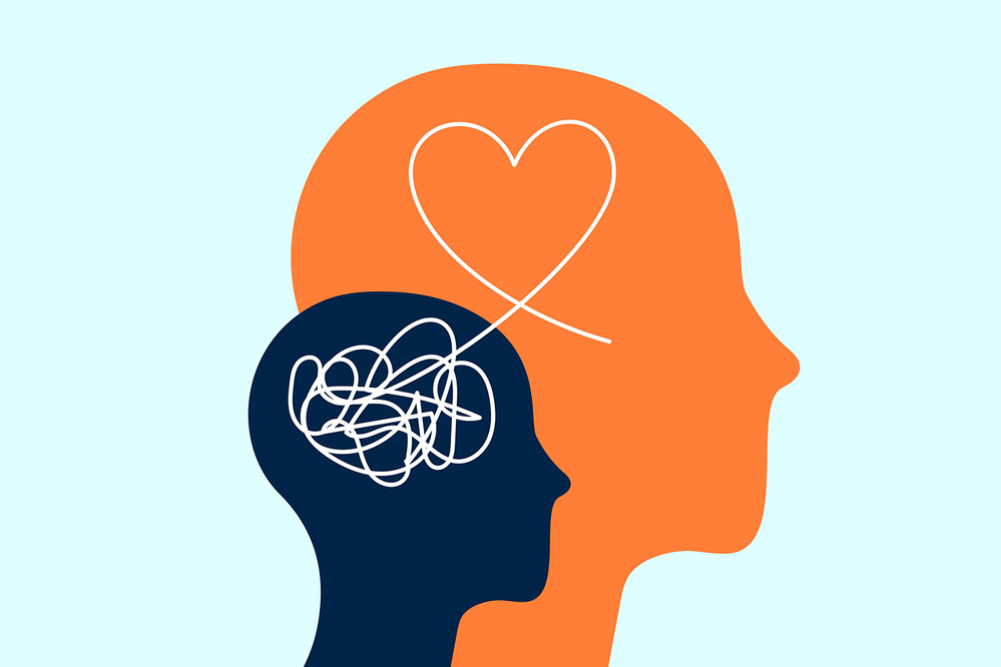
It is expected that this government will bring concrete ideas that will strengthen the psychology of the lower class, lower middle class, middle class, and slum dwellers, and make their minds creative and scientific.
We use Google Cloud Translation Services. Google requires we provide the following disclaimer relating to use of this service:
This service may contain translations powered by Google. Google disclaims all warranties related to the translations, expressed or implied, including any warranties of accuracy, reliability, and any implied warranties of merchantability, fitness for a particular purpose, and noninfringement.
Watching the video of Swami Yogananda dancing in Osho Tapovan, you think – this is how life should be. But is it possible for all people to become yogis and dance gracefully? Psychologists say – in Nepal, it seems that mental health needs to be invested in the most. Many generations of Nepalis are going through mental health problems. People here are affected in one way or another by natural disasters, different cultures, conflicts, caste systems and other problems. Can yoga camps and bhajan mandalis improve a person's physical and mental health? Yoga and bhajan mandalis may recognize one or two religions and cultures, directly or indirectly. But can the grassroots community easily participate in those spiritual mind and body improvement centers?
The viral videos of former and current government representatives doing yoga and meditation in their offices certainly mean that people should be mentally healthy as well. The question arises here whether only the government and those with access should be healthy, young, and fit, or should the grassroots of society also be physically and mentally healthy? While receiving treatment for their health problems, the mental health of those whose financial situation is also in a shambles has deteriorated. Similarly, many young people who thought they would make financial progress by doing some business have suffered losses and have become mentally weak. Have the stakeholders thought about this too?
The state's investment in mental health is very low. In particular, one of the issues that needs to be changed in the education sector in Nepal is how to make mental health positive. Subjects are being discussed on one side and policies and plans on the other. Now, news has come out that the new government is planning to teach moral education at the school level. Education itself is a moral issue, be it science, social studies, mathematics, or geography. Individuals, families, and society should all be moral. That means being disciplined and honest with themselves.
Where has the world come from, but in this world there is war, poverty, and backwardness. A developing country like Nepal, where people live a subsistence-oriented life. Some are middle-class and elite. There is no standard, industry, or modern agricultural system to connect the people of working age with production.
Many of those who have migrated to the Terai, who have become squatters and do not own a piece of land, because the hilly areas and the remaining fields and fields cannot support their growing families, have spent their entire lives in the enterprise of making ends meet. Where can the children of such families get creative education, that is, moral education?
They also raise animals such as dogs, cats, and some pigs as if they were members of their own family. The sight of children hugging and crying when the government recently removed the squatter settlements is not only emotional. What kind of emotional problems will those children have now, what kind of generation will be born due to their mental state? Has the state paid attention to the incident that will have a long-term impact on the community?
There are rulers who like to make the city neat. They have also gained the majority of the people. While saying this, if the people had 'agreed' and cleared the slums, the government would certainly have done something positive. To call themselves squatters would make the slum dwellers feel inferior. But does the government have time to think about the mental health of the actual squatters who have to endure the stigmas imposed by the nearby society in order to survive? The new government, which has started to quickly gain praise for its popular work, may build clean cities and paved roads like those in Europe and America, but it is doubtful whether it will do anything for humanity. Two people have already lost their lives amid the pressure created by the government's haste to clear the slums. What will happen to the mental health of the remaining members when family members who were already struggling in the course of their lives choose death?
Will Nepal, which has signed the Convention on the Rights of the Child and is reporting on child rights to the United Nations every year in the field of children, really advocate for a debate on the growth, development and mental health of marginalized, squatter, landless, and Dalit children?
It may be relevant to mention here the story of a woman who, despite many physical and mental hardships, raised her son by selling vegetables and brought him up to adolescence, but who is still worried that she will have to endure more stress than before.
Manmaya, who was thrown out of the house, has been earning a living alone with her son, leaving her alcoholic husband, for more than fifteen years. Her vegetable customers like us can easily understand that she is struggling with many physical and mental problems while living alone and struggling day and night to make ends meet. She has resorted to witchcraft to fight diseases including gastritis and arthritis. She, who belongs to a tribal community, has stopped eating fish and meat for ten years. In informal conversations with women who come to her to buy vegetables, she would give them advice by saying, "Make a vow to this or that goddess, go to such and such a temple, and this will be good." She has also finished her work of selling vegetables and has also finished her work of making ends meet and educating her son up to Plus Two. Her son should now study for a bachelor's degree, but she has not been able to provide him with higher education through that business, and the son has not been the kind of person to help his mother. Some of the customers say, "Where is my son?" They say, "Send him abroad." But she has become very irritated by people's comments about her son and her son's inactive life. In such a situation, one day she replied with a start - Should I make ends meet with the money I sell vegetables or send my son abroad? If I had been a sex worker, I would have earned a little more money.
She kept adding her stories and life experiences. She said that she has been suffering since childhood and has been struggling every day to this day. She has given her son an urban lifestyle, educated him in boarding school, and completed his Plus Two, but when she returned to her room from 6 am to 1 pm selling vegetables, her son did not even boil water and eat. She says that her son does not know how to make tea or wash clothes.
The education sector has not yet been able to cover aspects such as creative and practical education, easy access to marginalized communities, education according to the interests of students, and parental awareness. The attention of educational experts should be diverted to how to increase science and technology and science-oriented awareness, but the issue of moral education that supports the same old Sanskrit, Vedas, and Puranas cannot be said to have come to the surface. Will the state really make today's children conscious citizens of the future? Will there be any plans to strengthen the mental health of Manmaya, her husband, and the family of her son, who is young but not interested in work? This is just one example. There are many such families with stories, who are trying to escape the hustle and bustle of life amidst the stressful daily life.
The country has entered a new era. Highly educated people are also participating in the government. It is expected that this government will bring in concrete forms of thinking that will strengthen the psychology of the lower class, lower middle class, middle class and slum dwellers, and make their minds creative and scientific.